The man whose name is carved over every gate of Vanderbilt University never set foot on the campus, never visited the South, and died before the first class graduated. Cornelius Vanderbilt was a profane New York shipping magnate who had been talked into the gift, in his New York mansion, by a Methodist bishop who happened to be married to his young wife's cousin. The school he funded for a million dollars in 1873 sits on a 330-acre hilltop arboretum in midtown Nashville, Tennessee — and almost every tree, every building, every piece of moral history on it was put there by someone other than him.
Vanderbilt is a paradox you can walk through in an afternoon. A national arboretum doubles as a working campus. A limestone Gothic tower marks the spot where the original main building burned to the ground in 1905. A Divinity School quietly trained the strategist who taught John Lewis and Diane Nash how to sit at a lunch counter without flinching — and then expelled him for it.
Most visitors come for football Saturdays in the SEC, or because a child is interviewing at one of the country's most selective universities. Stay longer. The campus rewards the kind of looking that historic European cities ask for: read the building names, count the tree species, notice what's been renamed since 2016 and what hasn't.
This is not a tourism stop in the conventional sense. It's a working institution that has, over 150 years, served as a Methodist seminary, a Confederate-memorialising Southern school, a civil-rights flashpoint, and a top-tier research university — sometimes all four within the same decade. The Nashville you see downtown was reshaped, in part, by people who were in class here.
Researched by the Audiala editorial team from historical records, architectural archives, and local expertise.
What to see
Kirkland Hall and Its Twin Gothic Towers
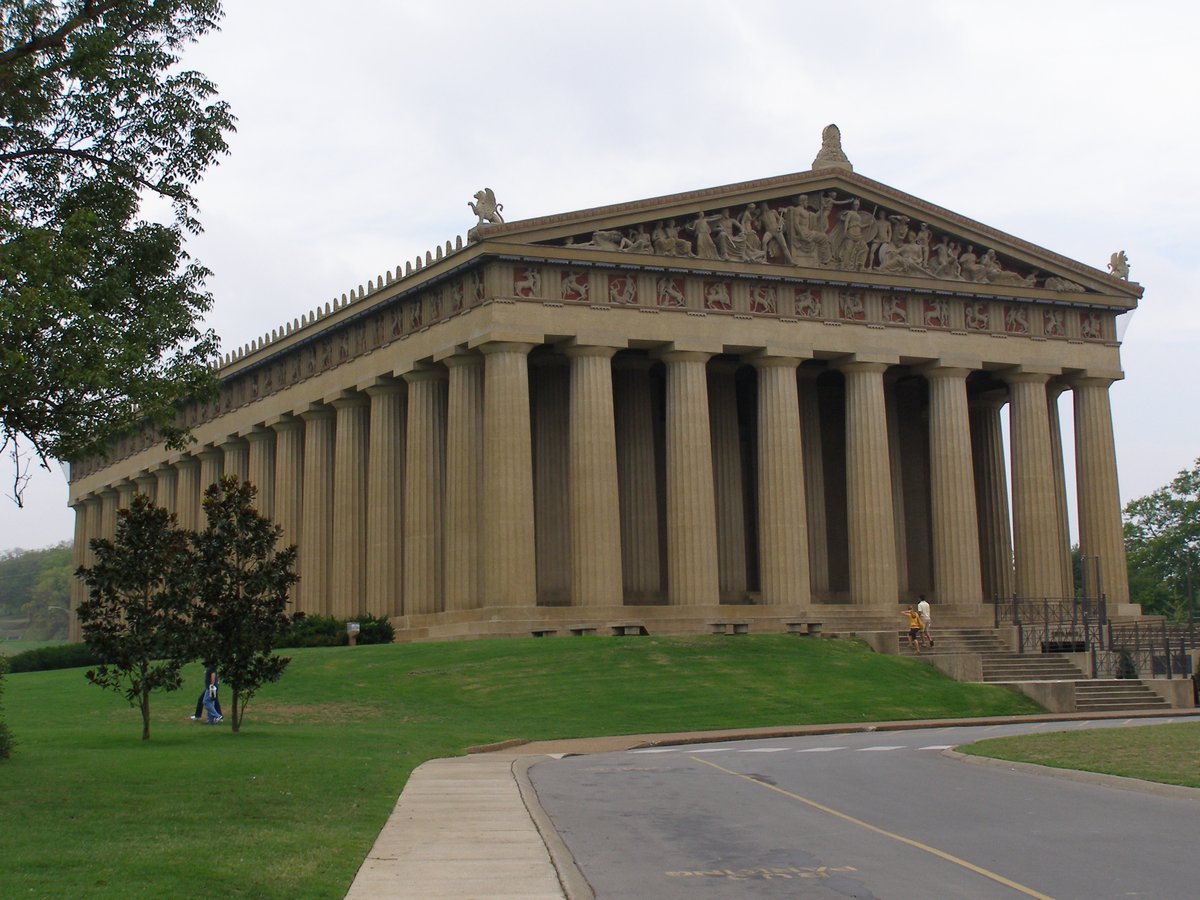
Start here, because everyone does. Kirkland Hall went up as plain "Main Building" in 1875, designed by William Crawford Smith — the same architect who, a few blocks west in Centennial Park, would later build the world's only full-scale Parthenon replica. Stand at the base of these asymmetric Victorian Gothic towers and you're looking at one man's range: red brick verticality here, Doric horizontality five minutes that way.
The building you photograph isn't quite the original. A fire gutted it in 1905, and what stands now is the reconstruction — meaning the silhouette every Vanderbilt brochure sells is itself a memorial to what burned. Look up at the towers and notice they don't match. They never did.
For its first decades Kirkland held everything: classrooms, labs, chapel, library, museum. The whole university, one building. Walk around it slowly. The oldest oaks shading the lawn were planted in the 1870s by Bishop Holland McTyeire, who picked this hilltop himself — meaning the trees and the building are exactly the same age, and both were chosen by the same man.
The Peabody Campus and Wyatt Center Rotunda
Peabody is a National Historic Landmark and the part of campus most students vote as the most beautiful — especially in October, when the canopy turns and the central lawn becomes a tunnel of color. This is the postcard. Bring a camera at golden hour and you'll understand why Architectural Digest keeps putting Vanderbilt on its lists.
Duck inside the Wyatt Center, built 1914–15, and find the rotunda. Footsteps echo here in a way they don't anywhere else on campus — a grand circular room scaled for a different century of education. It's now a teaching center for education students, so weekday afternoons you'll hear lectures bleeding through doors, but the rotunda itself stays quiet. Look up.
The whole Peabody quad sits on the south side of campus, separated from the older Gothic core by a pedestrian bridge over 21st Avenue. Cross it slowly. The transition from West End brick to Peabody's gentler classicism is the clearest architectural seam on the property.
The Arboretum Walk: McTyeire's Trees and 80 Sculptures
Here's what almost no visitor realizes. The entire 330-acre campus is a designated national arboretum — 6,000 trees, 190+ species — and scattered through it are more than 80 sculptures. You think you're walking across a university. You're walking through an outdoor museum that happens to have classrooms in it.
The Incunabula program publishes four self-guided sculpture routes, each about 30 minutes, downloadable as an interactive map. Pair one with the bench-lined walking loops Facilities laid out specifically for slow movement — benches placed for pausing, not for waiting on a bus. Bring water. The oldest oaks on the original quad were planted by Bishop McTyeire in the 1870s, and on a July afternoon the temperature drops noticeably the moment you step under them.
Finish at Old Central, a small house tucked into the modern campus that predates the university itself — built by the Confederate congressman who sold the land in 1873. It's the only building older than Vanderbilt on Vanderbilt's grounds, and most people walk right past it.
Plan your visit
Getting There
WeGo Routes 3A, 3B, and 7 stop along West End Ave and 21st Ave at the campus perimeter — 8-11 minutes from downtown Broadway for about $2 cash or via the app. From Hillsboro Village it's a 10-minute walk north on 21st Avenue; from downtown it's roughly 2.5 miles or 45 minutes on foot via West End. Skip driving unless you've prepaid a garage — there's no free public parking and VUPD tickets aggressively.
Opening Hours
As of 2026, the 330-acre arboretum campus is effectively open 24/7 — there are no gates and no tickets for the grounds. Free guided admissions tours run weekdays during the academic year (about an hour, 1.5 miles, reserve at myappvu.vanderbilt.edu/portal/touronly). Individual buildings, libraries, and the rec center are card-access only; don't try doors without an appointment.
Time Needed
A quick photo stop at Kirkland Hall and Magnolia Lawn takes 20-30 minutes. A proper self-guided arboretum walk with Peabody quad and the original campus core runs 2-3 hours. Add lunch in Hillsboro Village and you've spent a full half-day.
Accessibility
Main quads and paths are paved, mostly flat, and wheelchair-friendly — the interactive Campus Accessibility Map (fis-gls.app.vanderbilt.edu/campusaccessibility) plots accessible routes between buildings. Handicap spaces sit near most major lots and garages. Older buildings around Kirkland Hall still have stepped entrances; the FutureVU plan is working through 1,200+ outstanding exterior fixes, so expect occasional missing curb cuts.
Cost
Free. The campus, the arboretum walk, and the official admissions-led tours all cost nothing — no booking needed for casual visits. The only money you'll spend here is parking (hourly at 25th Avenue Garage or Terrace Place Garage) and food in the surrounding neighborhoods.
History
A Bishop's Houseguest and a Million Dollars
Records show Vanderbilt was chartered in 1873 with a $1 million endowment from Cornelius "the Commodore" Vanderbilt, then in his 79th year and one of the richest men in American history. The Commodore had perhaps five years of formal schooling, no record of philanthropy, and a working vocabulary that contemporaries described as profane even by waterfront standards. He had never crossed the Mason-Dixon line.
The school exists because Bishop Holland N. McTyeire of the Methodist Episcopal Church, South — whose wife was a cousin of the Commodore's young second wife Frank Crawford — convalesced as a houseguest in the Vanderbilt mansion in early 1873 and used the time to lobby. McTyeire chose the Nashville hilltop, hired the first chancellor Landon Garland, supervised the construction, and personally planted many of the trees that still shade the campus today.
The turning point
James Lawson, Expelled
In the autumn of 1958, a 30-year-old Methodist minister named James Morris Lawson Jr. enrolled at Vanderbilt Divinity School. He had spent three years in India studying Gandhian satyagraha and had been told personally by Martin Luther King Jr. to come South and teach Black college students how to absorb violence without returning it. Lawson ran his workshops in the basement of Clark Memorial Methodist Church, a few blocks from campus. The students in those rooms included John Lewis, Diane Nash, James Bevel, Bernard Lafayette, C. T. Vivian, and Marion Barry — the people who would, within a decade, lead the Freedom Rides, SNCC, and Selma.
On March 3, 1960, three weeks into the Nashville lunch-counter sit-ins, Chancellor Harvie Branscomb and the Board of Trust expelled Lawson. The stated reason was his organizing role in the sit-ins. The Divinity School faculty revolted. Most threatened to resign. Several did. The dean of the medical school publicly protested. The institution nearly came apart over its own decision.
The turning point came at dawn on April 19, 1960. A dynamite bomb destroyed the North Nashville home of Z. Alexander Looby — the city councilman defending the arrested student protesters — and shattered 147 windows at Meharry Medical College across the street. Looby and his wife survived. By that afternoon, roughly 3,000 people walked in silence from Tennessee A&I to City Hall. On the steps, Diane Nash asked Mayor Ben West whether it was wrong to discriminate against a person solely because of their race. He answered yes. Three weeks later, six downtown lunch counters served Black customers for the first time. Vanderbilt eventually made Lawson a Distinguished Professor; the question of what the school owed Nashville's Black colleges, which did most of the actual organizing, is still being worked out.
The Fire and the Tower
The limestone tower visitors photograph as Kirkland Hall is not the original. In 1905, fire consumed the Main Building and everything inside it — records, books, instruments, the institutional memory of the school's first 32 years. The building was rebuilt and, according to Vanderbilt's own history office, renamed in 1937 for Chancellor James H. Kirkland, who served from 1893 to 1937, the longest tenure in the school's history. Kirkland presided over both the reconstruction after the fire and the 1914 court fight that severed Vanderbilt from the Methodist Episcopal Church, South — a rupture the Cambridge Companion to American Methodism still describes as the most dramatic instance of an American university breaking with its founding denomination.
Trees Older Than the Buildings
Walk the central campus and you are walking through a 19th-century planting plan. Bishop McTyeire treated the 66-acre original tract as an arboretum from the start and put many specimens in the ground himself in the 1870s. The campus is now formally recognized as a national arboretum, with more than 190 species. Several individual trees are older than every building you pass. The Commodore funded the place; McTyeire physically planted it. Most maps and brochures still credit only the first.
Tips for visitors
Walk It As Arboretum
The entire campus is a designated arboretum with labeled species — locals jog and walk dogs here even without university ties. Pick up the self-guided map from admissions.vanderbilt.edu and treat the trees as the actual attraction, not the buildings.
Tripods Need Permits
Phone snaps on outdoor paths are fine, but tripods, drones, and any commercial shoot trigger Vanderbilt's non-news filming process — written agreement, location fees, Facilities Review Committee for drones. Don't photograph through classroom windows.
Buildings Are Private
Kirkland Hall, residential colleges, and anything with a card-swipe door are off-limits without an appointment — VUPD will escort unannounced visitors off. Stick to public walkways and the arboretum paths; the 2024 Kirkland Hall sit-in made the no-trespass posture stricter, not looser.
Eat In Hillsboro Village
Skip campus dining (mostly meal-plan only) and walk 10 minutes south to Hillsboro Village. Pancake Pantry for breakfast lines (Nashville institution since 1961), Fido for coffee and brunch, or Elliston Place Soda Shop for meat-and-three since 1939 — all budget to mid-range.
Splurge On Henley
If you want the high end near campus, Henley at the Kimpton Aertson Hotel on West End Avenue is the consensus pick — modern American, around $80-100 per person. Reserve ahead, especially during commencement week in early May.
When To Come
March-April catches the arboretum bloom; late October-early November gives you the foliage. Summers hit 90°F with thick humidity — visit before 10am if you're here June through August. Avoid home football Saturdays unless you want the tailgating energy; parking goes feral.
Cross To The Parthenon
The full-scale Parthenon replica everyone confuses with campus actually sits across West End Avenue in Centennial Park — 10-minute walk northwest. Pair it with the Vandy arboretum for a free morning, then bus 10 minutes east to the Frist or Country Music Hall of Fame.
Night Walk Smartly
Campus itself is well-lit and VUPD-patrolled, low risk. The Elliston Place bar strip just northeast (Exit/In, The End) is fine but gets rowdier after midnight — stick to lit streets and skip the Broadway honky-tonk scams 1.5 miles east if you want the real Nashville side of town.
Where to Eat
local_dining
Don't Leave Without Trying
Nashville Hot Chicken—cayenne-spiced fried chicken on white bread with pickles, a 1930s–40s invention from Prince's Hot Chicken ShackMeat-and-Three—one protein with three vegetable sides, a Southern institutionButtermilk BiscuitsCheese GritsSouthern BBQCountry Breakfast Plates
Verna Café & Bar
cafe
Cafe & Bar€€star4.9(117)
Order: The banana pudding latte—a unique Southern twist on your morning coffee—paired with overnight oats or matcha ginger corn cakes. Return in the evening for cocktails at the dive bar hidden in the back.
This is no ordinary coffee shop. Verna transforms from a morning cafe into an evening cocktail bar, with a distinctly Japanese-inspired aesthetic that feels both intimate and alive. Every detail—from the barista's skill to the food—shows owners who genuinely care.
Order: Start with the salmon crudo and buffalo egg rolls, then order the Cajun chicken pasta—one reviewer called it a '10/10'. The cocktails are thoughtfully crafted, not generic crowd-pleasers.
With 4,600+ reviews, The Finch has earned its reputation through consistent excellence. Every plate arrives beautifully presented and genuinely delicious. The service is some of the best in town—staff who actually know their food and give solid recommendations.
Order: Order the hot chicken sandwich on thick, perfectly-toasted bread with creamy ranch on the side. The grits are legendary—locals rave about them. Strong vegetarian options too, because the kitchen genuinely respects all diets.
A Nashville institution getting it right for years—art lines the walls, the room feels intimate and lived-in, and people return for breakfast, lunch, and dinner. The staff genuinely seem happy to be there, which shows in every plate.
Order: The chicken and waffles + catfish and grits combo is unstoppable. Come for weekend brunch with bottomless mimosas. The hookah is smooth, portions are generous, and you're getting real value.
This is where Nashville's brunch culture comes alive. The music selection sets the mood without overwhelming the room, servers are genuinely fun, and the kitchen knows Southern classics inside and out.
checkTip 20% of the bill for servers and bartenders—it's the Nashville standard.
checkValet parking? Hand the attendant $3–$5 cash when they bring your car around (in addition to any parking fee).
checkNashville Farmers' Market (900 Rosa L. Parks Blvd) is year-round: indoor Market House daily 8am–8pm; outdoor farm sheds Fri–Sun 9am–2pm (Mar–Oct) or 10am–2pm (Nov–Feb).
checkNeighborhood farmers' markets run seasonally—East Nashville and 12 South on Tuesdays, Wedgewood-Houston on Wednesdays. Check specific locations for exact hours.
checkMany Nashville restaurants now add automatic service charges instead of traditional tipping—always check your bill before adding extra.
checkHot chicken was born in Nashville's Black neighborhoods in the 1930s–40s and stayed a local treasure for nearly 70 years before going mainstream. Know the history.
Food districts:Nolensville Road—dense international corridor with Central/South American, Indian, Vietnamese, Mexican, Caribbean, and Jamaican cuisineWest End—campus-adjacent to Vanderbilt, casual and eclectic diningHillsboro Village—cafés and indie restaurantsThe Gulch—brunch and health-forward spotsGermantown—elevated dining12 South—boutique brunch destinationsEast Nashville—indie restaurants and cocktail bars
Restaurant data powered by Google
Watch & Explore Vanderbilt University.
Vanderbilt University: The pros, the cons, and how to get in
Ivy Admission Help5 min18K
EXCLUSIVE TOUR: Inside Vanderbilt's NEW $350 Million Facility
All Hail Cullen21 min194K
Vanderbilt University Admissions Presentation and Campus Tour | Nashville, Tennessee
Julia Lives8 min10K
Frequently asked
Is Vanderbilt University worth visiting?
Yes, especially if you like trees more than buildings. The entire 330-acre campus is a designated national arboretum with 6,000+ trees across 190 species, many planted by Bishop McTyeire himself in the 1870s. Pair it with the Parthenon replica in Centennial Park across West End Avenue and you have a half-day that costs nothing.
How long do you need at Vanderbilt University?
Plan two to three hours for a proper self-guided walk. A quick photo stop at Kirkland Hall takes 20-30 minutes, the official admissions tour runs about an hour over 1.5 miles, and a thorough arboretum loop through Peabody and the original quad fills three hours easily.
How do I get to Vanderbilt University from downtown Nashville?
Take WeGo bus routes 3A, 3B, or 7 west along West End Avenue — about 8 to 11 minutes for roughly $2. Walking is also doable: 2.5 miles, 45-50 minutes straight down West End. Don't drive unless you're prepared to pay garage rates at 25th Avenue or Terrace Place — VUPD tickets aggressively.
Is Vanderbilt University free to visit?
Yes, the campus and arboretum are free and open to the public, as are the official admissions tours (advance booking required at myappvu.vanderbilt.edu). What costs money is parking. The grounds are effectively walk-through 24/7, though individual buildings, libraries, and residential colleges require student or staff ID.
What is the best time to visit Vanderbilt University?
Late October through early November for the foliage on Peabody campus, or March through April when the magnolias bloom. Summer is hot and humid (90°F-plus) but the canopy makes the original quad noticeably cooler than the surrounding streets. Avoid home football Saturdays and graduation week in early May — parking turns into a nightmare.
What should I not miss at Vanderbilt University?
Kirkland Hall, designed in 1875 by William Crawford Smith — the same architect who designed the Parthenon replica five minutes away. Then the Wyatt Center rotunda on Peabody, Old Central (a pre-Civil War house older than the university itself), and the 80-plus outdoor sculptures most visitors walk straight past. Pick up the sculpture map from the Incunabula site before you go.
Can you tour the inside of Vanderbilt buildings?
Mostly no. Administrative buildings like Kirkland Hall and the residential colleges are private property, and unannounced visitors get a VUPD escort. The Sarratt Student Center, Central Library lobby, and Wyatt Center rotunda are generally accessible during open hours, and the admissions tour briefly enters a few buildings.
Where should I eat near Vanderbilt University?
Walk ten minutes south to Hillsboro Village. Pancake Pantry has been doing breakfast since 1961 (expect a line), Fido runs the student coffee scene, and Elliston Place Soda Shop on the northeast edge has been serving meat-and-three since 1939. For a splurge, Henley at the Kimpton Aertson on West End is the top-rated room on the doorstep.
Sources & attribution15
Researched and written by the Audiala editorial team from historical records, architectural archives, and local expertise. Last updated May 2026.
Vanderbilt Admissions — Visit — Official tour booking, info session details, campus access policy, and the 330-340 acre figure.
Strictly necessary cookies keep the site working. Analytics (PostHog, Google Analytics) measures how each visitor uses our pages. Marketing loads YouTube videos and walking-route maps without a tap and lets Google Analytics set advertising cookies. We never sell your data. You can change this any time from the footer.
Privacy
Cookie preferences
Pick what you're okay with. You can change this any time from the footer.
Strictly necessary
Always on
Sign-in, language, navigation. Always on.
Product analytics
PostHog (EU) and Google Analytics record which pages you view and how you use them, under a random identifier stored in your browser. Helps us see which pages work and which need fixing. Google's ad personalisation stays off. No selling.
Marketing
Loads YouTube videos and the walking-route maps (OpenFreeMap) without a tap; without it, they load only when you tap them. If analytics is also on, Google Analytics may set advertising cookies. Ad personalisation stays off.