Plan and listen to Statue Of Henry Bergh with Audiala.
Audio guide in your pocket, itinerary in your browser. Built for the way you actually visit.
Introduction
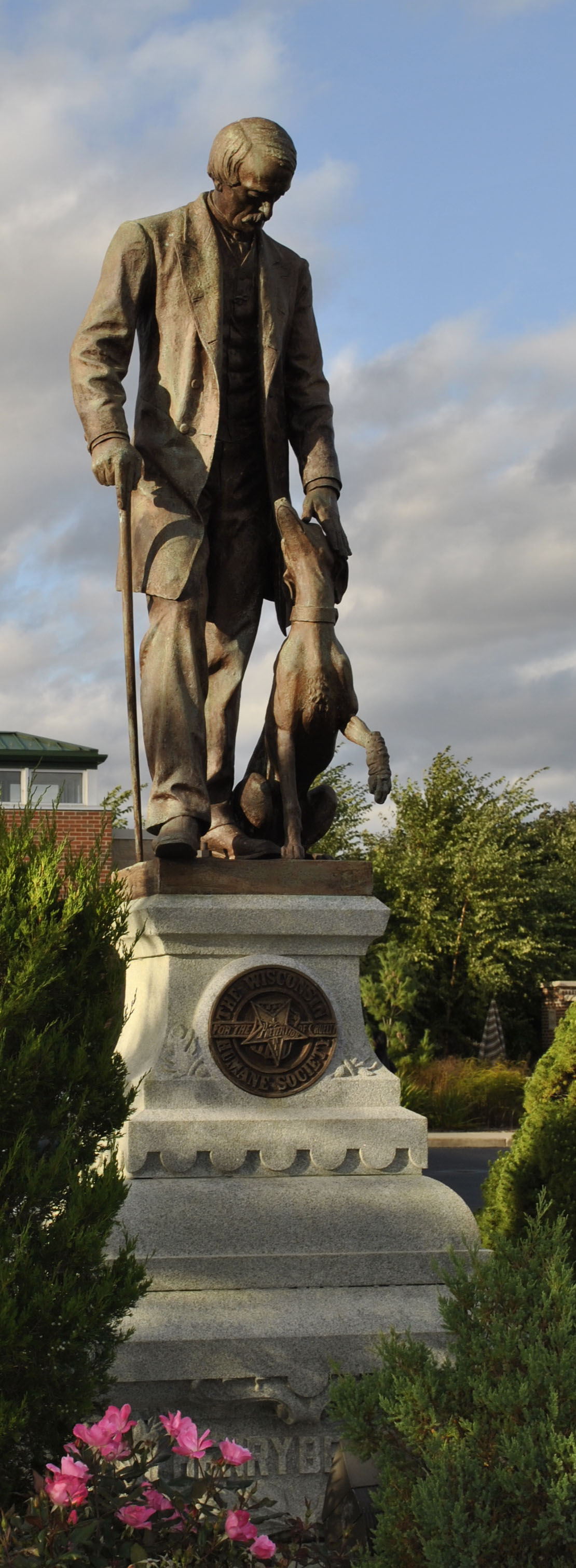
The Statue of Henry Bergh in Milwaukee stands as a powerful tribute to the founder of the American Society for the Prevention of Cruelty to Animals (ASPCA) and the humane movement in the United States. Commissioned by the Wisconsin Humane Society in 1891, this bronze monument honors Bergh’s lasting legacy as a pioneer in animal welfare, showcasing his compassion through a lifelike depiction of him tending to a dog. Located at the Wisconsin Humane Society’s Milwaukee Campus on West Wisconsin Avenue, the statue is both a historical landmark and a symbol of the city’s commitment to social reform and public art. This guide provides detailed insights into the statue’s origins, artistic significance, visitor information, and practical travel tips to help you make the most of your visit. (Wikipedia: Statue of Henry Bergh, Wisconsin Humane Society, Milwaukee Tourism Information)
Historical Origins and Commissioning
The Statue of Henry Bergh was commissioned in 1891 by the Wisconsin Humane Society to honor Henry Bergh’s pivotal role in founding the ASPCA and advancing animal welfare in America (Wikipedia: Statue of Henry Bergh). Milwaukee’s humane movement was inspired by Bergh’s activism, and the society’s leader, Richard D. Whitehead, led a successful fundraising campaign that gathered $14,000—a remarkable sum at the time (Kids Kiddle: Statue of Henry Bergh). The statue was unveiled on April 29, 1891, at Market Square in a public ceremony, reflecting the city’s growing awareness of animal rights and humane values.
Artistic Design and Symbolism
Sculpted by James H. Mahoney, the bronze statue stands approximately 9 feet tall. It depicts Bergh in a full-length pose, dressed in period attire, with a cane in his right hand and his left hand gently patting a dog’s head. The dog’s bandaged paw is a poignant detail, symbolizing the compassionate mission that defined Bergh’s life (AroundUs: Statue of Henry Bergh). The granite base is inscribed with “HENRY BERGH,” while a commemorative plaque added in 1941 celebrates the monument’s 50th anniversary (Wikipedia: Statue of Henry Bergh). The original base also featured a watering trough for horses, emphasizing Bergh’s advocacy for working animals.
Placement, Role, and Relocation
Originally, the statue was installed in Market Square near what is now Milwaukee City Hall, where it quickly became a focal point for public gatherings and a visible reminder of humane values (Kids Kiddle: Statue of Henry Bergh). Its location was chosen for high visibility in a bustling urban hub frequented by horse-drawn carriages. As the city modernized and the use of horses declined, the watering trough was repurposed as a flower bed. In 1966, due to urban redevelopment, the statue was relocated to the Wisconsin Humane Society’s campus, where it remains a prominent fixture and continues to inspire visitors (AroundUs: Statue of Henry Bergh).
Restoration and Preservation
To ensure the monument’s longevity, the statue has undergone several restoration efforts. Notably, a comprehensive cleaning and restoration project in 2013 preserved the bronze’s dignity and detail (Kids Kiddle: Statue of Henry Bergh). Continued care by the Wisconsin Humane Society and local historians helps maintain the statue as a valued piece of Milwaukee’s public art.
Henry Bergh and the Humane Movement
Henry Bergh (1813–1888) was a New York-born philanthropist and diplomat who founded the ASPCA in 1866 after witnessing animal cruelty firsthand (Wikipedia: Henry Bergh). His advocacy led to the establishment of humane organizations nationwide, including the Wisconsin Humane Society in 1879. Bergh’s tireless work contributed to both animal and child protection, setting precedents for future social reforms (Animal People Forum: Henry Bergh).
Visiting Information: Hours, Tickets, and Travel Tips
Location:
Wisconsin Humane Society Milwaukee Campus
4500 West Wisconsin Avenue
Milwaukee, WI 53208
Visiting Hours:
- Monday–Friday: 1:00 PM – 6:00 PM
- Saturday: 10:00 AM – 6:00 PM
- Sunday: Closed
The statue is outdoors and can be viewed during daylight hours, even when the main building is closed. For the most current information, check the WHS website or call +1 (414) 264-6257.
Admission:
No tickets or admission fees are required to visit the statue or the WHS grounds.
Nearby Attractions:
- Milwaukee City Hall
- Milwaukee Public Museum
- Veteran’s Park
- Grohmann Museum
- Lynden Sculpture Garden
Photography:
Visitors are welcome to take photos for personal use. Please be considerate of staff, animals, and other guests.
Accessibility and Directions
Accessibility:
- Wheelchair-accessible walkways and parking
- Accessible restrooms available during public hours
- Visit Milwaukee Accessibility Guide
Getting There:
- By Car: Ample on-site parking, including accessible spaces
- By Public Transit: Multiple Milwaukee County Transit Authority bus routes serve the area; the Milwaukee Intermodal Station connects Amtrak and local transit
- By Bike: Bublr Bikeshare stations with adaptive bikes available (Bublr Bikes)
On-Site Facilities and Etiquette
- Restrooms: Accessible restrooms during public hours
- Visitor Services: Information desk with brochures and educational materials
- Gift Shop: Merchandise available to support WHS programs
- Etiquette: Only service animals permitted; please supervise children and respect the campus rules
Community Impact and Educational Programs
The statue is a focal point for animal welfare education and public events hosted by the Wisconsin Humane Society. Programs include:
- Guided Tours: Explore WHS history and humane education
- Lectures & Workshops: Topics range from animal care to advocacy
- Volunteer Opportunities: Support animal welfare initiatives (Donate to WHS)
Community members and historians have played a crucial role in the preservation and interpretation of the statue, highlighting Milwaukee’s tradition of civic engagement (WUWM: Milwaukee City Hall Square).
Frequently Asked Questions (FAQ)
Q: Do I need a ticket to visit the statue?
A: No, visiting the statue and WHS grounds is free.
Q: When is the statue accessible?
A: The outdoor statue is viewable during daylight hours, regardless of indoor facility hours.
Q: Is the site wheelchair accessible?
A: Yes, walkways and facilities are accessible.
Q: Can I bring my pet?
A: Only service animals are allowed on campus.
Q: Are guided tours available?
A: Occasionally, yes. Check the WHS events page or inquire at the information desk.
Contact Information
-
Wisconsin Humane Society Milwaukee Campus
4500 West Wisconsin Avenue
Milwaukee, WI 53208
Phone: +1 (414) 264-6257
WHS Contact Page -
Milwaukee Visitor Information
Visit Milwaukee
Phone: +1 (414) 273-3950
Email: [email protected]
Listen to the full story in the app
The whole Statue Of Henry Bergh,
told well.
Audio guides for 1,100+ cities across 96 countries. History, stories, and local insight — offline ready.

Verified, and shown.
Researched and written by the Audiala editorial team from historical records, architectural archives, and local expertise.
Last reviewed
Researched from Wikidata, Wikipedia & official sources · fact-checked · How we make our guides →


