Plan and listen to Milwaukee County Stadium with Audiala.
Audio guide in your pocket, itinerary in your browser. Built for the way you actually visit.
Introduction to Milwaukee County Stadium: Legacy and Visitor Experience
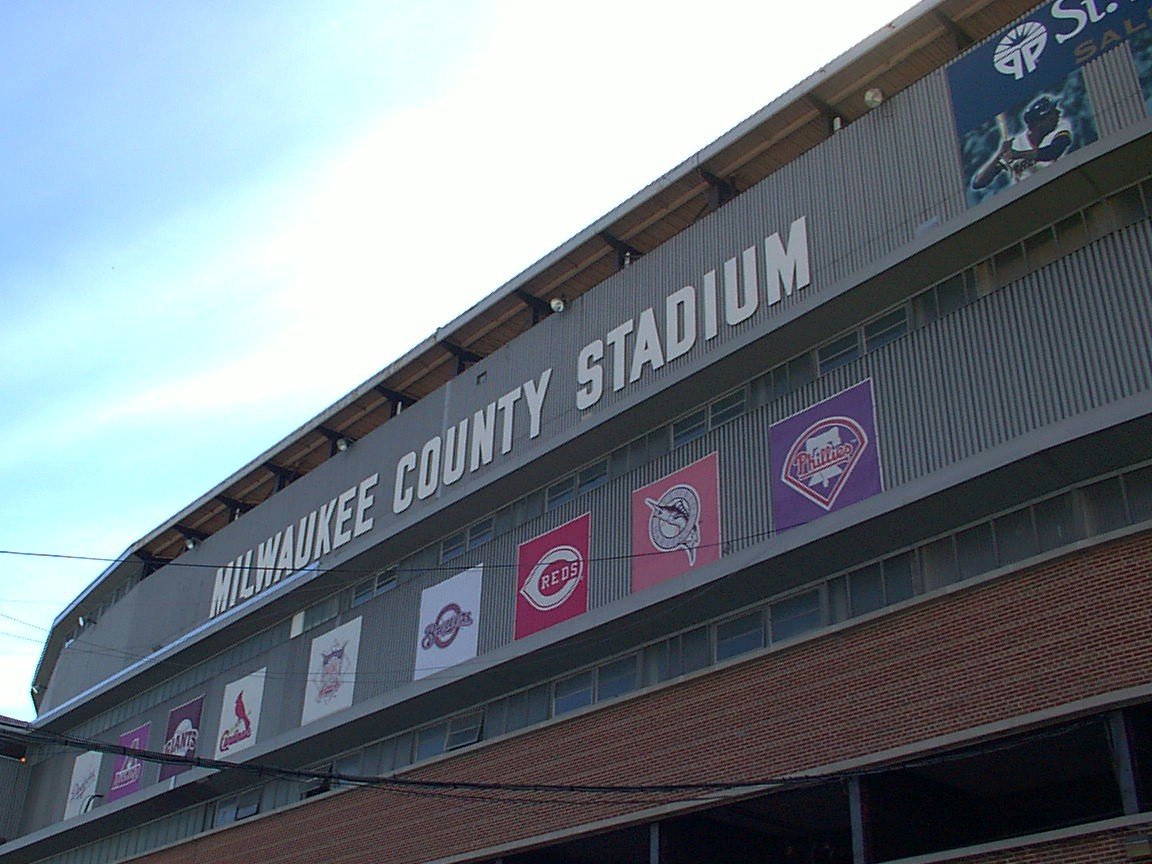
Milwaukee County Stadium is deeply woven into the fabric of Milwaukee’s sports and cultural identity. From its opening in 1953 to its closing in 2000, the stadium was home to legendary teams, historic moments, and community celebrations. As the first major league ballpark funded entirely by public money and equipped with lights upon construction, the stadium symbolized Milwaukee’s ambition to join the nation’s sports elite (Encyclopedia of Milwaukee; Ballparks of Baseball).
Throughout its nearly five decades, County Stadium hosted the Milwaukee Braves—who delivered the city’s first World Series title in 1957—the Milwaukee Brewers, and the Green Bay Packers. Beyond sports, it was the stage for concerts by The Rolling Stones and Paul McCartney and a variety of community events that unified Milwaukeeans (Historic Baseball; Milwaukee County Historical Society).
Though the stadium was demolished in 2001, its legacy endures at Helfaer Field, a Little League venue preserving the spirit of youth baseball, and nearby American Family Field, which continues Milwaukee’s rich sporting tradition (Wisconsin Historical Society). Visitors can explore commemorative plaques, statues, and historical markers that honor the site’s enduring impact.
This guide offers a detailed look at the stadium’s history, its significance to Milwaukee, and practical information for visitors—including current site hours, ticket details, travel advice, and highlights of what to see and do.

Early Planning and Construction (1909–1953)
The dream of major league baseball in Milwaukee began as early as 1909. By the late 1940s, city leaders targeted the Menomonee Valley—then a garbage dump—as the site for a world-class stadium. Construction started in October 1950 and, despite delays, was completed in time for the 1953 season (Ballparks of Baseball; Stadiums of Pro Football). County Stadium was the first major league venue built with lights from the start and the first to rely entirely on public funding (Encyclopedia of Milwaukee).
The initial design featured steel and concrete construction, double-decked grandstands, and a seating capacity of 28,111—soon expanded to over 43,000. Its Miller High scoreboard and iconic Longines clock became familiar sights to generations of fans.
Milwaukee Braves Era (1953–1965)
The Boston Braves’ relocation to Milwaukee in 1953 marked a new era. The Braves’ arrival set National League attendance records and ignited a citywide baseball fervor (Milwaukee County Historical Society). Major expansions followed, including new seating and family-friendly picnic areas. The Braves delivered Milwaukee its first World Series championship in 1957 and the National League pennant in 1958.
After a decade of success, attendance began to decline, and the team moved to Atlanta following the 1965 season (Stadiums of Pro Football).
Green Bay Packers at County Stadium (1953–1994)
For over four decades, the Green Bay Packers played part of their schedule at County Stadium, making Milwaukee their “second home.” The unique football setup—with both teams sharing one sideline and the end zone abutting the baseball dugout—created a memorable fan experience. The Packers played their last game at County Stadium in 1994 after renovations at Lambeau Field (Stadiums of Pro Football).
The Brewers Era (1970–2000)
Baseball returned when Bud Selig relocated the Seattle Pilots to Milwaukee as the Brewers in 1970 (Milwaukee County Historical Society). The stadium saw further expansions—including the upper deck and a new press box—and became famous for its beer barrel chalet, Bernie Brewer’s slide, and the racing sausages (Ballparks of Baseball).
Historic milestones included three World Series (1957, 1958, 1982), Hank Aaron’s final home run, and Robin Yount’s 3,000th hit. The venue also hosted legendary concerts and large-scale community events (Encyclopedia of Milwaukee; MKE County Stadium).
Visiting the County Stadium Site: Hours, Tickets, and Tips
Although County Stadium no longer stands, the site remains a destination for sports fans and history buffs. Helfaer Field—built on the stadium’s original infield—serves as a living tribute to baseball’s role in the community.
- Helfaer Field: Open to the public during daylight hours when not reserved for Little League games. No admission fee is required.
- Commemorative Markers: Explore the Hank Aaron plaque, statues of baseball legends, and remnants of the stadium’s original features.
Tickets:
- No tickets required to visit Helfaer Field or outdoor memorials.
- Tickets are required for Brewers games, stadium tours, and special exhibits at American Family Field (MLB.com).
Getting There:
- Address: 201 S. 46th Street, Milwaukee, WI
- By Car: Accessible via I-94 with ample parking (fees apply on event days).
- Public Transit: MCTS buses, including special Brewers lines, serve the area.
- Rideshare: Uber/Lyft from Milwaukee Mitchell International Airport takes about 20 minutes.
Accessibility:
The site and its facilities are ADA-compliant, with paved paths, ramps, and accessible parking.
Architectural and Cultural Legacy
County Stadium was the first major league ballpark built with lights and public funds, setting the standard for modern multipurpose stadiums (Encyclopedia of Milwaukee). Its design allowed for football, baseball, concerts, and civic gatherings—establishing it as a true community centerpiece.
Generations of Milwaukeeans grew up attending games, tailgating, and enjoying local traditions that continue today at American Family Field (Baseball Biographies).
County Stadium’s Enduring Community Role
Symbol of Civic Ambition
Milwaukee’s decision to build the stadium without a guaranteed major league tenant reflected bold civic ambition and a belief in the city’s future (Milwaukee Magazine). The move paid off when the Braves arrived, sparking celebrations and record crowds.
Family and Local Traditions
Attending games was a family tradition, with tailgating in the stadium’s lots becoming a quintessential Milwaukee ritual. The sights, sounds, and smells of game day fostered lifelong memories and intergenerational bonds (Historic Baseball).
Economic and Social Impact
The stadium supported local businesses and helped shape the surrounding neighborhoods. Its public funding model set a precedent for future sports venues (RetroSeasons).
Inclusivity and Accessibility
From Little League days to school trips, County Stadium was accessible to all, nurturing future generations of fans and players. Its central location and ample parking made it a gathering place for the entire city (RetroSeasons).
Site Today: Markers and Memorials
Although the stadium is gone, Helfaer Field and the Hank Aaron plaque mark its legacy. Visitors can enjoy self-guided walks through the area, viewing historical markers and statues (Trip101).
American Family Field: Carrying the Legacy
Transition and Modernization
By the 1990s, the need for a modern facility led to the construction of Miller Park (now American Family Field) adjacent to the old stadium (Wisconsin Historical Society; Forbes). The new venue opened in 2001 and features a retractable roof, natural grass, and seating for nearly 42,000 fans.
Visiting Hours and Tickets
- Game Days: Gates open two hours before first pitch and close about one hour after the game.
- Non-Game Days: Access is limited; guided tours are offered seasonally—check the Brewers’ official site for details.
- Tickets: Purchase online, at the stadium box office, or via authorized sellers.
Accessibility & Visitor Tips
- Full ADA compliance with accessible seating, restrooms, and parking.
- Tailgating is encouraged in the stadium lots.
- Use the MLB Ballpark app for digital tickets, stadium maps, and concessions.
- Memorials to County Stadium, including statues and plaques, are located near Helfaer Field.
Frequently Asked Questions (FAQ)
Can I visit the Milwaukee County Stadium site today?
Yes, Helfaer Field and outdoor memorials are open to the public during daylight hours when not reserved for games. No tickets are required.
Are there guided tours of the old stadium?
While there are no formal tours of County Stadium itself, American Family Field offers ballpark tours with historical context.
Is the site wheelchair accessible?
Yes, all public areas at Helfaer Field and American Family Field are ADA-compliant.
Where is the Hank Aaron plaque?
It is located in the parking area near Helfaer Field, marking the spot of Aaron’s final home run.
What are the best spots for photos?
Helfaer Field’s home plate, commemorative statues, and Bernie Brewer’s chalet are popular photo ops.
Listen to the full story in the app
The whole Milwaukee County Stadium,
told well.
Audio guides for 1,100+ cities across 96 countries. History, stories, and local insight — offline ready.
Verified, and shown.
Researched and written by the Audiala editorial team from historical records, architectural archives, and local expertise.
Researched from Wikidata, Wikipedia & official sources · fact-checked · How we make our guides →