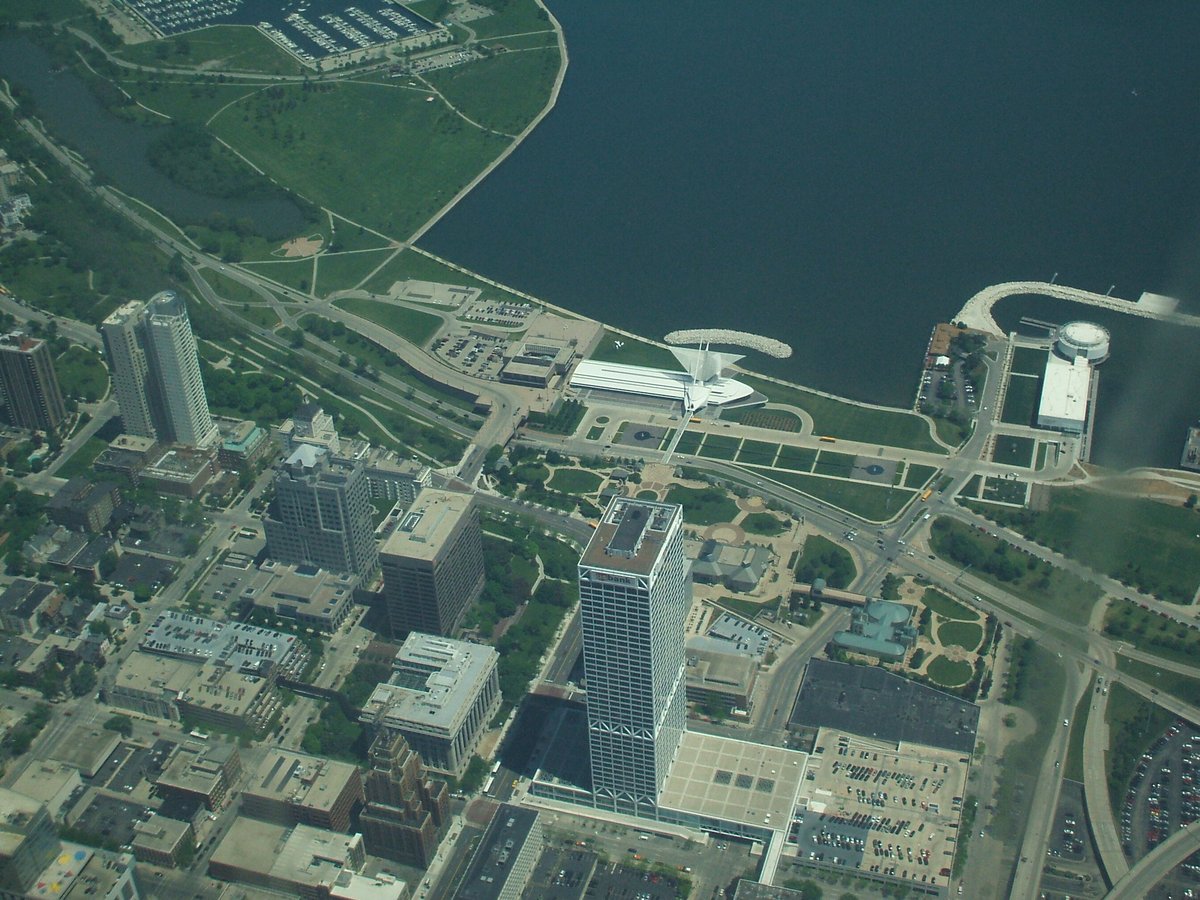
Indigenous Foundations and Early Settlement
Long before European arrival, Milwaukee was a key gathering place for Native American tribes including the Potawatomi, Fox, Sauk, and Ojibwe. The city's name likely originates from the Potawatomi word "Mahn-ah-wauk," meaning "gathering place by the water," highlighting its significance as a council ground along Lake Michigan (city.milwaukee.gov; oneweirdglobe.com). Archaeological evidence indicates habitation for over 13,000 years. The region was ceded to the United States in 1833 after the Black Hawk War and the Treaty of Chicago, initiating a period of rapid transformation (oneweirdglobe.com).
19th Century Growth: Immigration and Industrialization
Population Boom and Ethnic Diversity
Milwaukee’s expansion accelerated in the early 1800s, beginning with French-Canadian fur trading posts and culminating in the city’s official incorporation in 1846. By 1850, the population exceeded 20,000, and by 1860, it reached more than 45,000, making Milwaukee a significant urban center in the United States (milwaukeehistory.net; oneweirdglobe.com). The influx of German, Polish, Irish, Scandinavian, Serbian, Russian Jewish, and African American immigrants shaped distinct neighborhoods and introduced enduring cultural traditions (milwaukeehistory.net).
Industrial and Brewing Powerhouse
German settlers were pivotal in driving Milwaukee’s industrial growth, particularly in machinery, metalworking, and brewing. By 1860, Milwaukee had nearly 35 breweries, with names like Pabst, Miller, Schlitz, and Blatz becoming national icons (oneweirdglobe.com). The brewing industry shaped not only the city’s economy but also its social life, introducing beer gardens and festivals as community focal points.
Social Movements and Political Innovation
Germanism, Socialism, and "The Milwaukee Idea"
By the 20th century, Milwaukee was renowned for its German cultural influence, progressive "Sewer Socialism," and, of course, beer (milwaukeehistory.net). The city’s reform-minded socialism prioritized public health, clean government, and social welfare, leaving a legacy of parks, public works, and pragmatic civic policies.
Neighborhoods and Social Fabric
Milwaukee’s historic districts, such as those with Cream City brick architecture, and evolving neighborhoods like the Third Ward, reflect its ethnic mosaic and community spirit (mkewithkids.com). The Great Migration brought a significant African American community, enriching Milwaukee’s culture and contributing to its ongoing social narrative (milwaukeehistory.net).
20th Century Challenges and Urban Renewal
Segregation, Civil Rights, and Urban Change
Despite a progressive reputation, Milwaukee struggled with segregation and racial inequality, especially on the city’s north side. Urban renewal efforts in the 1960s and 1970s—slum clearance, public housing, freeway construction—often led to displacement and the loss of historic architecture (milwaukeehistory.net). The open-housing marches of the late 1960s, led by Father Groppi and others, were pivotal in advancing civil rights, though challenges persisted.
Population Trends and Economic Shifts
After peaking at 741,000 residents in 1960, Milwaukee’s population declined due to suburbanization and deindustrialization (oneweirdglobe.com). Nevertheless, a resilient spirit and ongoing innovation have kept Milwaukee’s community vibrant.
Contemporary Social Landscape and Family Experience
Diversity and Neighborhood Identity
Today, Milwaukee is a city of nearly 600,000, featuring diverse neighborhoods and a rich tapestry of cultural influences (city.milwaukee.gov). Areas like the Historic Third Ward have evolved into lively centers for shopping, dining, and the arts (banarastrip.com).
Family-Friendly Attractions and Visitor Information
- Pabst Mansion Tours Tuesday–Sunday, 10 AM–4 PM; $15 adults, $10 children (6–17); wheelchair accessible with notice (Pabst Mansion).
- North Point Lighthouse Open seasonally weekends, 12–4 PM, May–October; free or small fee for tours.
- Milwaukee Art Museum Tuesday–Sunday, 10 AM–5 PM; $19 adults, free under 12; accessible (Milwaukee Art Museum).
- Discovery World Daily 10 AM–5 PM; $20 adults, $17 children (2–17); interactive exhibits and aquarium.
- Betty Brinn Children’s Museum Tuesday–Saturday, 9 AM–5 PM; $12 all visitors.
Travel Tips: Milwaukee’s public transit and bike-share programs make it easy for families. Booking tickets online is recommended for discounts and guaranteed entry.
Must-See Spots: Lakefront parks, the Milwaukee Riverwalk, the Third Ward, the Milwaukee County Zoo, and Mitchell Park Domes.
Milwaukee Festivals and Cultural Attractions
Milwaukee’s Cultural Significance
Milwaukee’s immigrant and African American heritage is celebrated through its architecture, food, music, and social events (Encyclopedia of Milwaukee; Visit Milwaukee – Black History & Culture). The city’s spirit of "Gemütlichkeit"—warmth and friendliness—is central to its world-famous festival scene.
Major Festivals and Annual Events
- Summerfest June 19–July 5, 2025; Henry Maier Festival Park; hundreds of performances, food, and family activities (Visit Milwaukee – Summerfest).
- Harley-Davidson Homecoming July 10–13, 2025; concerts, bike shows, museum open daily 9 AM–6 PM, $20 adults (Visit Milwaukee – Harley-Davidson Homecoming).
- Ethnic Festivals Festa Italiana, Greek Fest, Irish Fest, Mexican Fiesta, Black Arts Fest MKE, Polish Fest, German Fest, Incredible India Festival (OnMilwaukee – Festival Guide).
- Family-Friendly and Free Festivals Gift of Wings Kite Festival, Milwaukee Night Market, ArtBlaze (MKE With Kids – Free Summer Festivals).
- Fourth of July 45-minute drone show at McKinley Beach (MKE With Kids – July Events).
- Wisconsin State Fair August 7–17, 2025; West Allis; agriculture, music, rides (Visit Milwaukee – Wisconsin State Fair).
Cultural Institutions and Historical Sites
Museums and Art Venues
- Milwaukee Art Museum Iconic architecture, open daily 10 AM–5 PM, $19 adults, free under 12 (Travel by Brit).
- Harley-Davidson Museum Daily 9 AM–6 PM, $20 adults.
- America’s Black Holocaust Museum Wednesday–Sunday, 11 AM–5 PM, donation-based (Visit Milwaukee – Black History & Culture).
- Wisconsin Black Historical Society & Museum Weekdays, check website for hours.
Historic Monuments and Sites
- Pabst Mansion Tuesday–Sunday, 10 AM–4 PM, $15 adults.
- Milwaukee Public Museum Daily 9 AM–5 PM, ticket prices vary.
- Lakefront Landmarks North Point Lighthouse, Third Ward architecture.
Community and Creative Spaces
- NO Studios Film and art programming; check website for events.
- Paramount Records Trail Self-guided musical history tours.
Practical Visitor Tips
- Timing Visit late May–September for festivals; book hotels early.
- Transportation Walkable downtown; public transit, rideshares, festival shuttles.
- Tickets & Hours Check official websites for admission details and hours.
- Family Options Most events and venues are kid-friendly.
- Local Cuisine Try bratwurst, cheese curds, frozen custard, and international fare.
- Weather Summer averages 75–82°F (24–28°C); pack for sun and rain.
- Accessibility Major venues are wheelchair accessible.
- Cultural Respect Support local businesses and engage respectfully.
Visiting the Pabst Mansion: A Family-Friendly Guide
History and Significance
Built in 1892, the Pabst Mansion exemplifies Flemish Renaissance Revival architecture and represents the legacy of Frederick Pabst and Milwaukee’s brewing industry. Guided tours illuminate the lifestyle of the Pabst family and the city’s cultural evolution (Pabst Mansion).
Visiting Hours, Tickets, and Accessibility
- Hours Tuesday–Sunday, 10:00 AM–5:00 PM (last tours at 4:30 PM).
- Tickets Adults $15, Seniors $12, Children (6–17) $8, under 6 free; family packages available.
- Accessibility Wheelchair accessible via rear ramp; call ahead for assistance.
- Location 2000 W. Wisconsin Ave., Milwaukee, WI.
Tours and Family Programs
Engaging guided tours, scavenger hunts, and interactive activities make the Pabst Mansion ideal for families. Seasonal events such as holiday tours and workshops are available.
Highlights
- Ornate interiors, grand staircase, art, and period artifacts.
Practical Tips
- Free parking on-site and nearby.
- Combine your visit with the Milwaukee Riverwalk or Milwaukee Public Museum.
- Family dining options are nearby.
Family-Friendly Visit to Milwaukee: Essential Tips, Itinerary, and Attractions
Getting Around
Milwaukee is easy to navigate via the MCTS bus system, ride-shares, or by driving. Strollers are welcome at most attractions, and parking is widely available (American Family Field).
Accommodations
Downtown and lakefront hotels offer amenities for families. Historic hotels and resorts on the city’s outskirts provide additional options (Trip101).
Safety and Accessibility
Tourist-friendly neighborhoods are safe and most attractions are wheelchair/stroller accessible. Verify hours and ticket policies on official sites.
Seasonal Considerations
Summer is festival season—book early. Winter is best for indoor museums (Betty Brinn Children’s Museum; Discovery World).
Dining
Many restaurants offer kids’ menus and high chairs. Try frozen custard, cheese curds, and visit the Milwaukee Public Market (OnMilwaukee).
Suggested Family Itinerary: 3 Days in Milwaukee
Day 1:
- Milwaukee Art Museum (hours & tickets)
- Betty Brinn Children’s Museum
- Lunch at Milwaukee Public Market
- Historic Third Ward
- Milwaukee Public Museum
- Picnic at Veterans Park
Day 2:
- Discovery World
- Lunch on lakefront
- Brewers game at American Family Field or Cool Waters Family Aquatic Park
- Dinner or summer festival
Day 3:
- Schlitz Audubon Nature Center
- Bayside/Fox Point picnic
- Downtown scavenger hunt
- Pabst Mansion tour
- Family show at First Stage Milwaukee or outdoor concert
Budget (2025 Estimates)
- Hotel $150–$250/night (family suite)
- Attractions
- Art Museum: $22 adults, $10 children (6–17), under 6 free
- Discovery World: $20 adults, $16 children
- Brewers game: $15–$50
- Betty Brinn: $12/person
- Public Transport $5 adults, $3 children (day pass)
- Dining $40–$80/meal (family of four)
Quick Reference: Top Family Attractions
- Milwaukee Art Museum
- Discovery World
- Betty Brinn Children’s Museum
- Milwaukee Public Museum
- American Family Field
- Cool Waters Family Aquatic Park
- Schlitz Audubon Nature Center
- Pabst Mansion
- First Stage Milwaukee
Enhance Your Milwaukee Visit
For a seamless trip, book tickets and hotels in advance, especially during summer festivals. Download the Audiala app for interactive guides and event updates. Explore our site and social media for insider tips and special offers.