Plan and listen to Basilica Of St. Josaphat with Audiala.
Audio guide in your pocket, itinerary in your browser. Built for the way you actually visit.
Introduction
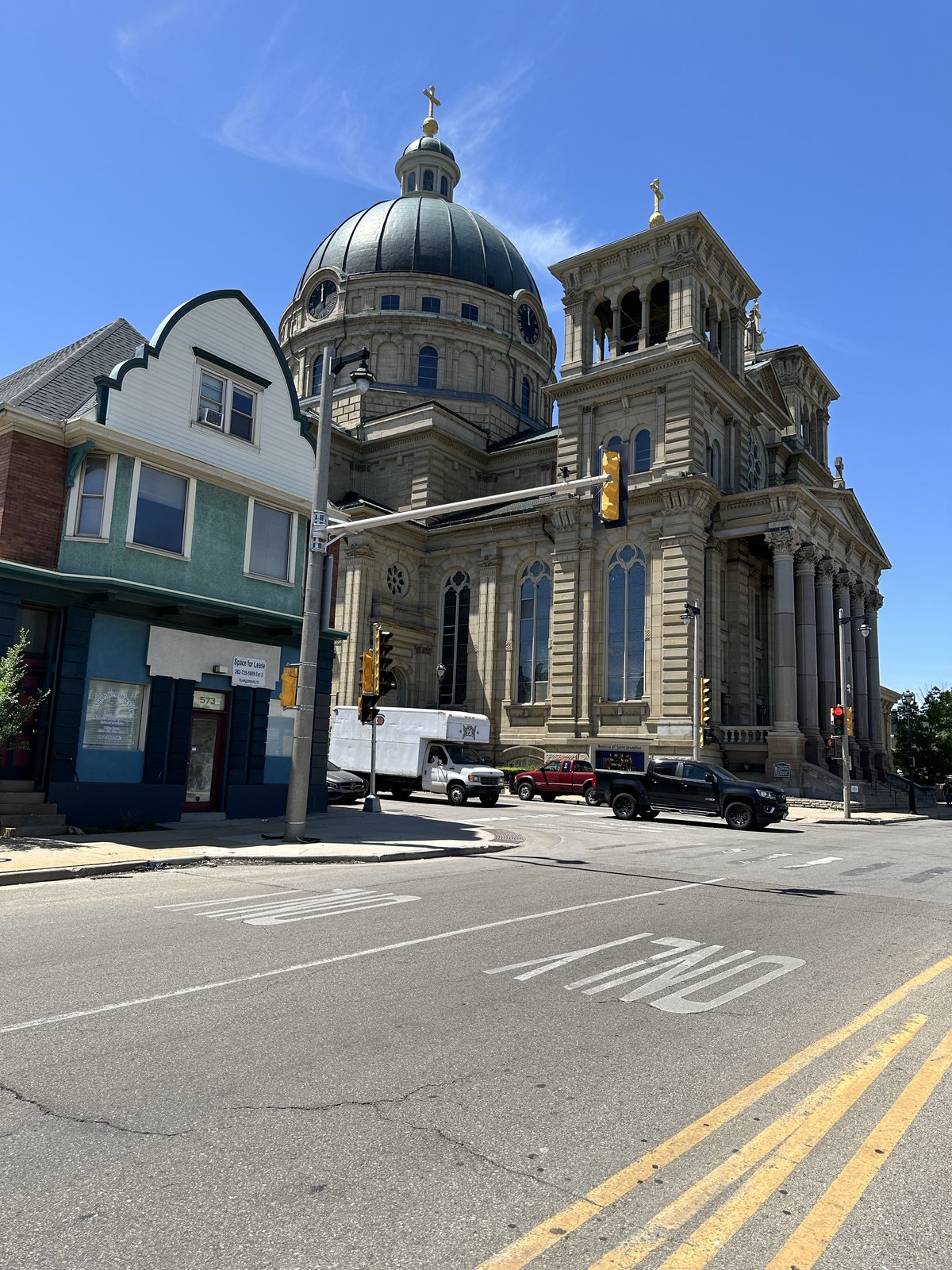
The Basilica of St. Josaphat in Milwaukee stands as a symbol of faith, resilience, and architectural ingenuity. Established in the late 19th century to serve Milwaukee’s burgeoning Polish immigrant community, the basilica’s grand design—modeled after St. Peter’s Basilica in Rome—reflects both the spiritual aspirations and resourcefulness of its parishioners. Salvaged materials from the demolished U.S. Custom House and Post Office in Chicago were ingeniously repurposed, making St. Josaphat not only a monument to faith but also to sustainable and community-driven building practices (Architecture of Faith Milwaukee; Milwaukee Magazine). Today, the basilica is open daily to visitors, offering free admission and a rich array of experiences, including tours, cultural events, and opportunities for spiritual reflection (The Basilica Foundation; SAH Archipedia).
This guide provides everything you need to know to plan a meaningful visit, from detailed historical context and architectural highlights to practical information on hours, tours, accessibility, and nearby attractions.

Foundations and Early Growth
The story of the Basilica begins with Milwaukee’s Polish immigrants, who, seeking religious and social refuge after the Civil War, quickly established one of the largest Polish communities in the U.S. By 1900, the Polish population in Milwaukee reached about 60,000 (The Catholic Travel Guide). St. Josaphat’s Parish was founded in 1888 to serve this community, and after an initial church was destroyed by fire, the need for a more ambitious, permanent structure became clear (Architecture of Faith Milwaukee).
Architectural Vision and Construction
Parish pastor Father Wilhelm Grutza commissioned architect Erhard Brielmaier to design a church reminiscent of St. Peter’s Basilica. While the original plan called for a brick church, Father Grutza’s acquisition of limestone and other elements from the demolished Chicago Custom House transformed the project into a feat of adaptive reuse (Milwaukee Magazine; Wikipedia). Over 200,000 tons of stone and architectural details were transported via 500 railroad flatcars, thanks to the parish’s collective commitment and sacrifice.
Construction began in 1896, often with parishioners themselves providing labor. The basilica was completed and dedicated in 1901, its monumental dome instantly becoming a Milwaukee landmark (Wikipedia; SAH Archipedia).
Notable Features
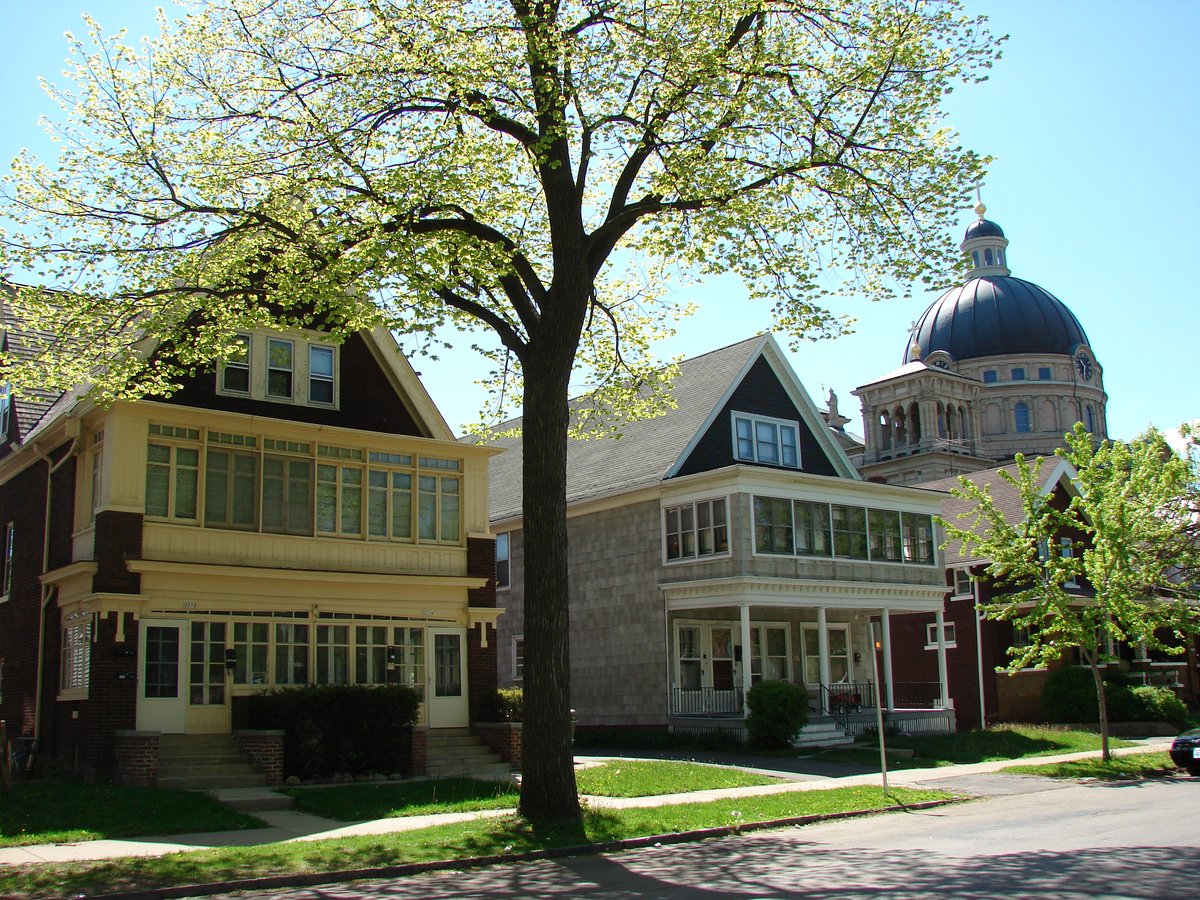
- Dome: At 220 feet, clad in copper, one of the largest in the U.S.
- Façade: Classical Beaux-Arts with Corinthian columns and twin bell towers.
- Windows: Tall, traceried, and fitted with art glass from Austria.
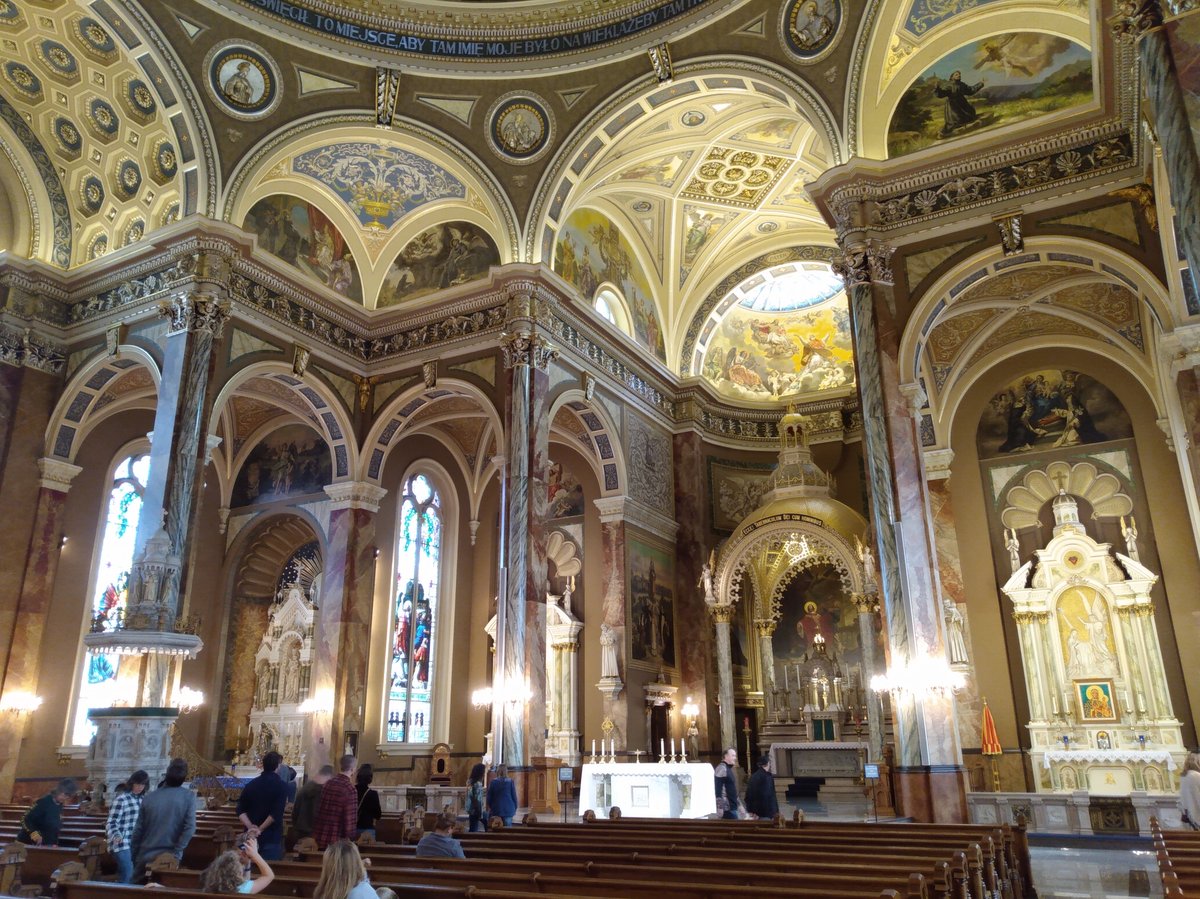
- Interior: Gilded plaster, marble altars, and murals by Conrad Schmitt Studios and Gonippo Raggi.
Interior Artistry and Decoration
The basilica’s interior artistry unfolded over several decades. Initially plain, it was transformed in the 1920s and 1930s with murals, gold-leaf ornamentation, and stained glass. Notably, Conrad Schmitt Studios painted major biblical scenes, while Italian artist Gonippo Raggi depicted episodes from the lives of saints and Polish history (Wikipedia; SAH Archipedia). The basilica also houses replicas of significant Polish historical paintings, reinforcing its role as a cultural anchor for the Polish-American community (Liturgical Arts Journal).
Basilica Status and National Recognition
In 1929, Pope Pius XI elevated St. Josaphat’s to basilica status, making it only the third in the United States at the time (Wikipedia; The Basilica Foundation). The basilica is also a National Register of Historic Places site and Milwaukee Landmark, further cementing its importance.
Restoration and Preservation
The basilica has weathered fires, storm damage, and the ongoing challenges of preservation. Major restorations in the late 20th century—including a new copper roof and mural restoration—were made possible by the St. Josaphat Basilica Foundation, which continues to support maintenance and educational outreach today (The Basilica Foundation; Liturgical Arts Journal).
Visiting Hours, Tickets, and Access
General Visiting Hours:
- Monday–Saturday: 9:00 AM – 4:00 PM
- Sunday: 1:00 PM – 4:00 PM
Note: Hours may vary on holidays or for special events. It’s advisable to check the official website or call ahead.
Admission:
There is no admission fee. Donations are appreciated to support ongoing preservation.
Entry:
Visitors enter via the Pope John Paul II Pavilion, accessible from the 7th Street and Lincoln Avenue parking lot. If doors are locked, use the buzzer for entry. The basilica may occasionally close for funerals or special Masses—call +1 (414) 645-5623 (Mon–Fri, 9 AM–4 PM) to confirm access.
Tours and Visitor Experience
Self-Guided Tours:
Brochures available in English and Spanish at the Visitor Center. Free, no reservation needed.
Audio Tours:
Available in English, Polish, and Spanish for a suggested $5 donation. Pick up headsets at the Visitor Center Gift Shop; start at least 45 minutes before closing.
Docent-Led Tours:
Sundays after 10 a.m. Mass or by weekday appointment for groups of 8 or more. Arrange via online form, email ([email protected]), or phone.
Historical Exhibit:
Lower level of the Visitor Center features exhibits on the dome murals, restoration history, and a renowned collection of religious relics.
Accessibility, Parking, and Travel Tips
- Wheelchair accessible: Ramps and accessible restrooms available.
- Parking: Free lot at S. 7th Street and W. Lincoln Avenue, adjacent to the Visitor Center.
- Public Transport: Served by Milwaukee County Transit System bus routes.
- Gift Shop: Religious items, keepsakes, and tour brochures available during visitor hours.
Special Events and Community Life
The basilica hosts regular Masses, sacraments, and special liturgical celebrations, as well as concerts and cultural festivals—especially those highlighting Polish-American traditions. Check the event calendar on the official website before your visit.
Nearby Attractions
- Milwaukee Public Museum
- Historic Third Ward
- Lakefront Brewery
- Old World Third Street district
Combine your basilica visit with these sites for a full Milwaukee experience.
Frequently Asked Questions (FAQ)
What are the Basilica’s visiting hours?
Monday–Saturday: 9:00 AM–4:00 PM; Sunday: 1:00 PM–4:00 PM. Confirm during holidays.
Is there an admission fee?
No—entry is free; donations are encouraged.
Are guided tours available?
Yes, docent-led and audio tours are offered. Groups should book in advance.
Is the basilica wheelchair accessible?
Yes, fully accessible with ramps and restrooms.
Where do I park?
Free parking at S. 7th Street and W. Lincoln Avenue.
Can I take photos?
Yes, but please respect services and maintain a quiet atmosphere.
Are tours available in other languages?
Audio tours are offered in English, Polish, and Spanish.
Listen to the full story in the app
The whole Basilica Of St. Josaphat,
told well.
Audio guides for 1,100+ cities across 96 countries. History, stories, and local insight — offline ready.
Verified, and shown.
Researched and written by the Audiala editorial team from historical records, architectural archives, and local expertise.
Milwaukee Wisconsin Basilica Saint Josaphat
St. Josaphat’s Catholic Basilica
The History of Milwaukee’s Grand Basilica on the South Side
Basilica of St. Josaphat. Wikipedia
Basilica of St. Josaphat
(2023). Grandeur and Devotion: St. Josaphat
Researched from Wikidata, Wikipedia & official sources · fact-checked · How we make our guides →