Plan and listen to Venetian Causeway with Audiala.
Audio guide in your pocket, itinerary in your browser. Built for the way you actually visit.
Introduction
The Venetian Causeway is a celebrated Miami landmark, seamlessly blending historic charm, Mediterranean Revival architecture, and modern-day functionality. Connecting downtown Miami to Miami Beach via a scenic chain of man-made islands, the causeway is both a vital transportation link and a destination in its own right. Whether you are a history enthusiast, cyclist, photographer, or traveler seeking Miami’s waterfront allure, this definitive guide provides comprehensive information on visiting hours, tolls, accessibility, nearby attractions, infrastructure upgrades, and the causeway’s enduring legacy.
All factual information in this guide is supported by reputable sources, including Miami-Dade County Public Works, Miami Today News, The Standard Hotels, and others.

Early Development and the Collins Bridge (1913)
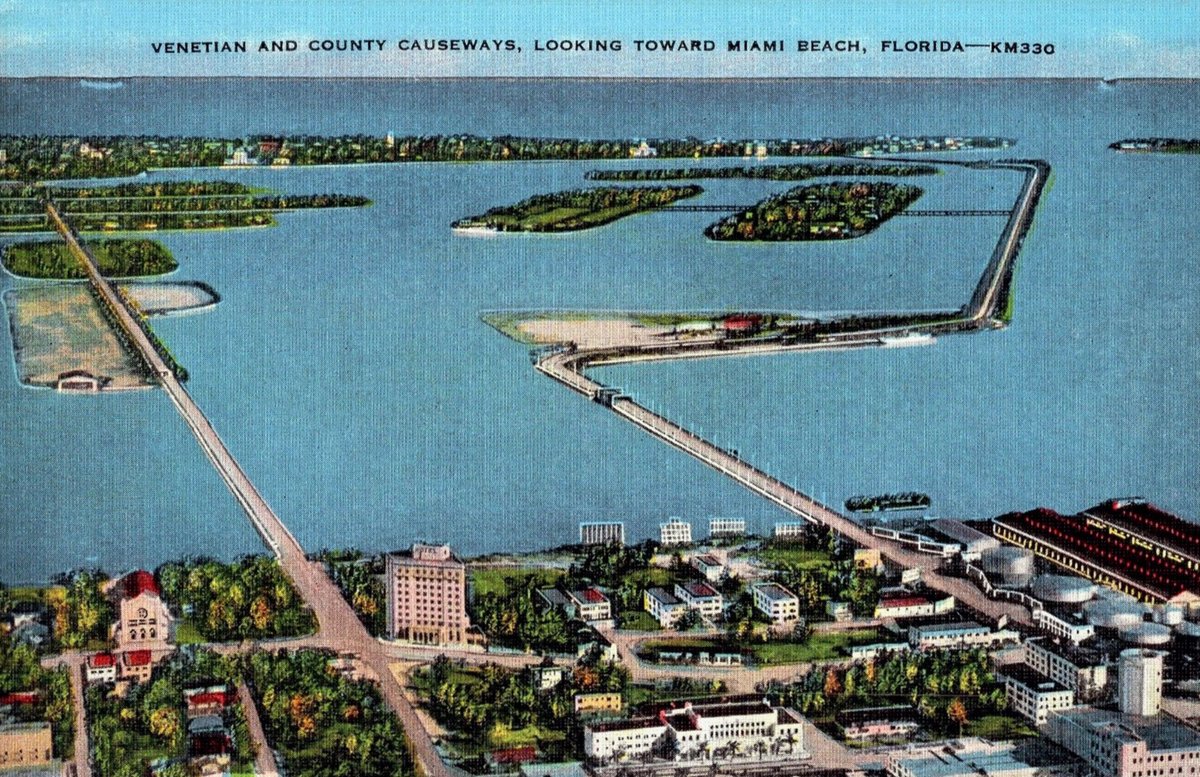
The Venetian Causeway’s origins trace back to the 1913 completion of the Collins Bridge, a wooden span built by John S. Collins and Carl G. Fisher. At the time, it was the world’s longest wooden bridge, providing the first direct link between mainland Miami and the then-remote Miami Beach. The bridge catalyzed explosive population and real estate growth, laying the groundwork for Miami Beach’s transformation into a premier resort destination (The Standard Hotels).
Creation of the Venetian Causeway (1927)
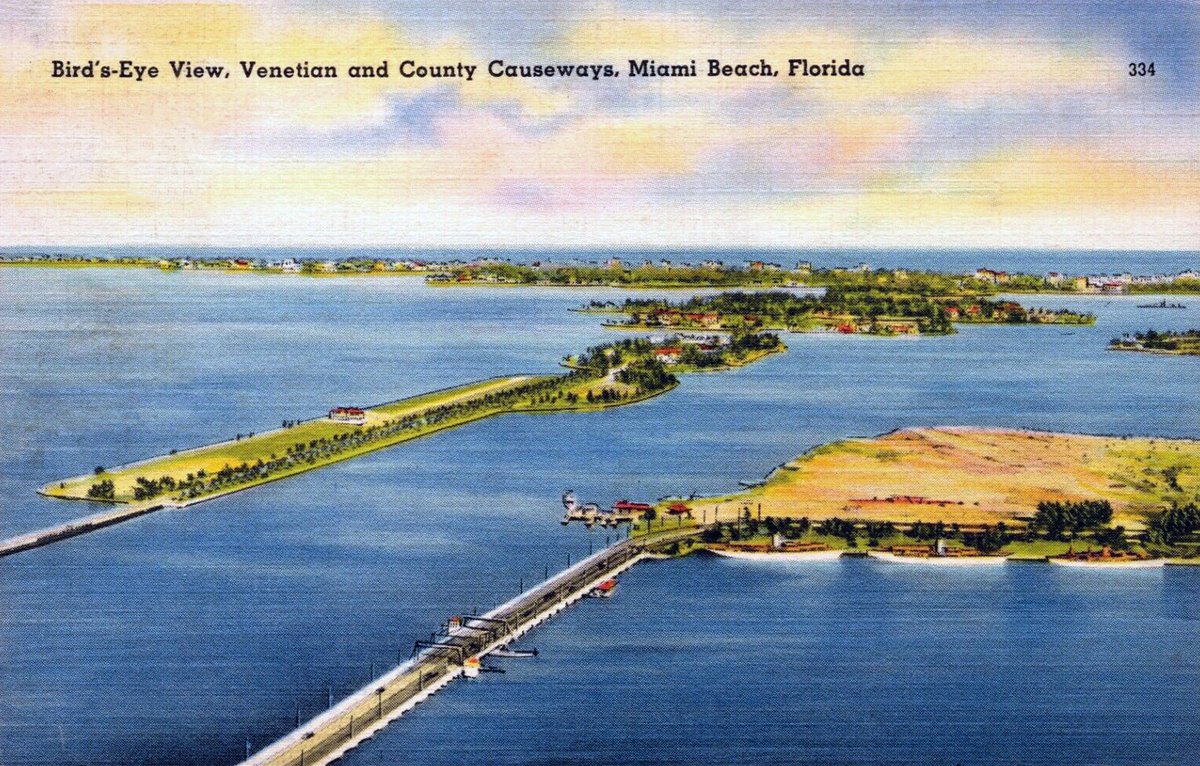
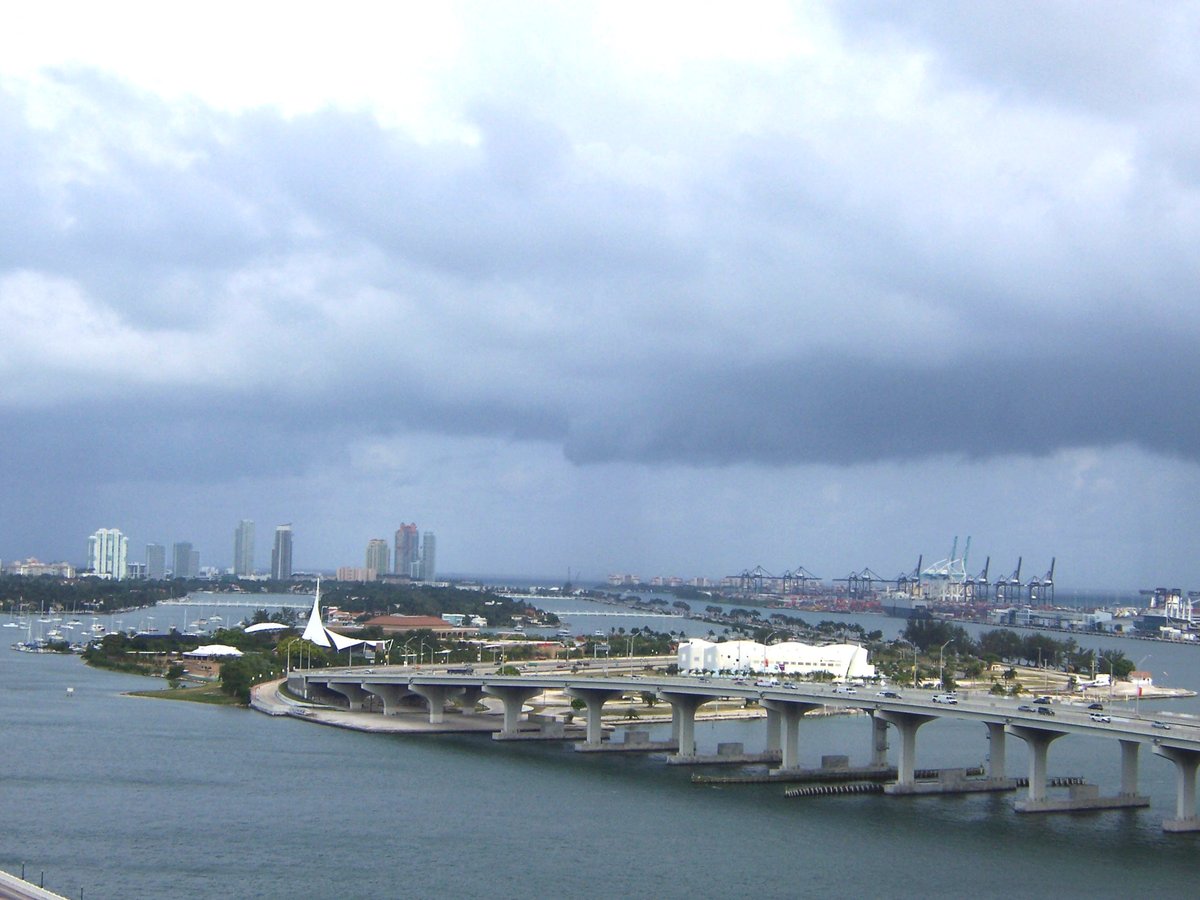
By the 1920s, the wooden Collins Bridge was outdated. In 1927, the Venetian Causeway replaced it, featuring twelve bridges—including two bascule (drawbridge) spans—and connecting a series of man-made islands across Biscayne Bay. Its Mediterranean Revival design, with decorative columns and balustrades, established a scenic and prestigious gateway to Miami Beach (Miami-Dade County Public Works).
Expansion and Urban Impact
The causeway’s construction spurred the development of the Venetian Islands—Biscayne, San Marco, San Marino, Di Lido, Rivo Alto, and Belle Isle—now home to exclusive residences and lush landscaping. The new link made Miami Beach accessible, boosting tourism and cementing the area’s reputation as a luxury destination (FAQ Miami).
Historic Recognition and Preservation
The Venetian Causeway was listed on the National Register of Historic Places in 1989 and is a designated local landmark. Major rehabilitation projects in recent decades have preserved its historic character while ensuring structural safety (Miami-Dade County Public Works).
Modernization and Ongoing Upgrades
In response to aging structures, hurricanes, and rising sea levels, the causeway is undergoing significant upgrades. A $150 million bridge replacement project (2025–2029) will elevate and modernize eleven of the twelve bridges, widen sidewalks, and improve bicycle lanes while carefully restoring historic architectural features (Miami Today News; FDOT Miami-Dade).
Visitor Information
Visiting Hours
The Venetian Causeway is open 24 hours a day, seven days a week, to vehicles, pedestrians, and cyclists. While the causeway itself is always accessible, some parks along the route—such as Belle Isle Park—may have specific opening hours (typically dawn to dusk).
Tickets and Tolls
- Pedestrians and Cyclists: Free access; no tickets or tolls required.
- Vehicles: As of 2025, the toll is $2.25 each way, payable via SunPass or toll-by-plate. Tolls are collected at the Biscayne Island plaza (Miami-Dade County Public Works).
Accessibility and Transportation
The causeway is designed for shared use:
- Sidewalks and Bike Lanes: Wide, well-maintained, and accessible for wheelchairs and strollers.
- Public Transit: While no buses run directly along the causeway, nearby Metrobus routes and the free Metromover connect to its entrances.
- Bike Rentals: Citi Bike Miami stations are located at both ends of the causeway and throughout Miami Beach and downtown (Budget Travel).
- Parking: Limited on the islands; metered parking is available near Belle Isle and in Miami Beach.
Nearby Attractions
- Venetian Islands: Admire luxury homes and lush streetscapes on each island.
- Belle Isle Park: A peaceful green space with walking paths and bay views.
- The Standard Spa: A boutique hotel and wellness center on Belle Isle.
- Miami Beach: Access Lincoln Road, Ocean Drive’s Art Deco hotels, and South Beach.
- Downtown Miami: Close to the Adrienne Arsht Center, Bayfront Park, and Pérez Art Museum Miami (The Crazy Tourist).
Guided Tours and Special Events
While there are no official guided tours exclusively for the causeway, local operators often include it in broader Miami sightseeing, cycling, and eco-tours. Special events—like the Miami International Boat Show and community charity runs—occasionally utilize the causeway. Check local calendars for closures or event details (The Miami Guide).
Architectural Features and Engineering
The Venetian Causeway’s twelve bridges showcase Mediterranean Revival and Art Deco styles, incorporating decorative railings, lamp posts, and pylons reminiscent of Venice, Italy. The bascule bridges allow marine traffic to pass, and the causeway’s design has influenced Miami’s infrastructure for generations.
Major Infrastructure Projects and Future Prospects
Bridge Replacement and Upgrades (2025–2029)
A $150 million project led by Miami-Dade County and FDOT will replace eleven bridges, raise elevations to address sea-level rise, widen sidewalks and bike lanes, and replicate historic architectural details. Construction will be phased to minimize disruptions, with the causeway remaining open to the public (Miami Today News; FDOT Miami-Dade; AP News).
Water and Sewer Main Replacement (2024–2025)
The City of Miami Beach is concurrently upgrading water and sewer mains along the causeway, improving reliability for residents and businesses (Miami Beach Government).
Community Engagement and Preservation
All upgrades are reviewed by historic preservation boards and agencies, with public meetings and interpretive markers planned to educate visitors about the causeway’s significance (FDOT Miami-Dade).
Practical Visitor Tips
- Best Times to Visit: November–April for cooler, drier weather; early mornings and evenings for ideal light and temperatures (Intrepid Scout).
- Stay Hydrated: Miami’s sun can be intense year-round.
- Follow Etiquette: The Venetian Islands are primarily residential—respect private property and be mindful of noise.
- Photography: Capture sunrise or sunset for the most striking views.
- Plan for Events: Occasionally, the causeway closes for races or large events—check local listings before your visit.
- Safety: The area is well-patrolled, but always remain aware of your surroundings, especially at night.
Frequently Asked Questions (FAQ)
Q: Is the Venetian Causeway open 24/7?
A: Yes, it is open to vehicles, pedestrians, and cyclists at all hours.
Q: Are there any tickets or fees for pedestrians and cyclists?
A: No, only vehicles pay a toll ($2.25 each way as of 2025).
Q: Is the causeway wheelchair accessible?
A: Yes, with smooth sidewalks and curb cuts throughout.
Q: Can I rent a bike nearby?
A: Yes, Citi Bike Miami stations are available at both ends of the causeway.
Q: Are there nearby attractions worth visiting?
A: Yes—Lincoln Road, South Beach, the Art Deco District, Belle Isle Park, The Standard Spa, and downtown Miami’s cultural sites.
Q: Will construction impact my visit?
A: The causeway will remain open, but expect possible lane closures or detours. Regularly check official websites for updates (Miami Beach Government).
Summary Table: Key Facts
| Feature | Details |
|---|---|
| Length | 2.8 miles (4.5 km) |
| Number of Bridges | 12 (including drawbridges) |
| Toll | $2.25 each way (as of 2025) |
| Best for | Walking, cycling, scenic drives |
| Notable Islands | Belle Isle, Rivo Alto, Di Lido, San Marino, San Marco, Biscayne |
| Nearby Attractions | Lincoln Road, South Beach, Bayfront Park, Art Deco District |
| Accessibility | Wheelchair accessible, bike lanes, sidewalks |
| Public Transport | Metrobus nearby, Citi Bike stations at both ends |
Listen to the full story in the app
The whole Venetian Causeway,
told well.
Audio guides for 1,100+ cities across 96 countries. History, stories, and local insight — offline ready.
Verified, and shown.
Researched and written by the Audiala editorial team from historical records, architectural archives, and local expertise.
Researched from Wikidata, Wikipedia & official sources · fact-checked · How we make our guides →