
Origins and Early Development
The Orpheum Theatre at 842 S. Broadway was inaugurated on February 15, 1926, as the final Los Angeles venue for the legendary Orpheum vaudeville circuit. Its creation marked a turning point in the city's entertainment scene, replacing earlier, less grandiose theaters to match Los Angeles’ rapid growth and rising cultural ambition (Events in California; Los Angeles Theatres Blogspot).
Marcus Helman, then head of the Orpheum circuit, stated, “A theater has to keep pace with the progress of the city where it is located. Our new theater here was built because the old one was not in keeping with what such an institution should be in a city that has the size and importance of Los Angeles” (Los Angeles Theatres Blogspot).
Architectural Significance
Renowned architect G. Albert Lansburgh, whose portfolio includes the Warner Hollywood, Wiltern, and Shrine Auditorium, designed the Orpheum Theatre’s iconic Beaux-Arts façade adorned with gray terra cotta ornamentation. The vertical lines, pilasters, winged helmets, and griffins evoke mythological grandeur, while the building’s French Baroque interiors offer marble walls, gilded plasterwork, stained-glass rosettes, and magnificent chandeliers (LA Conservancy; Wikipedia).
Artistic details include motifs like the crowned salamander—symbolic of King Francis I of France—while sculptural works by Domingo and Joseph Mora enhance the theater’s European resonance (Historic Theatre Photos).
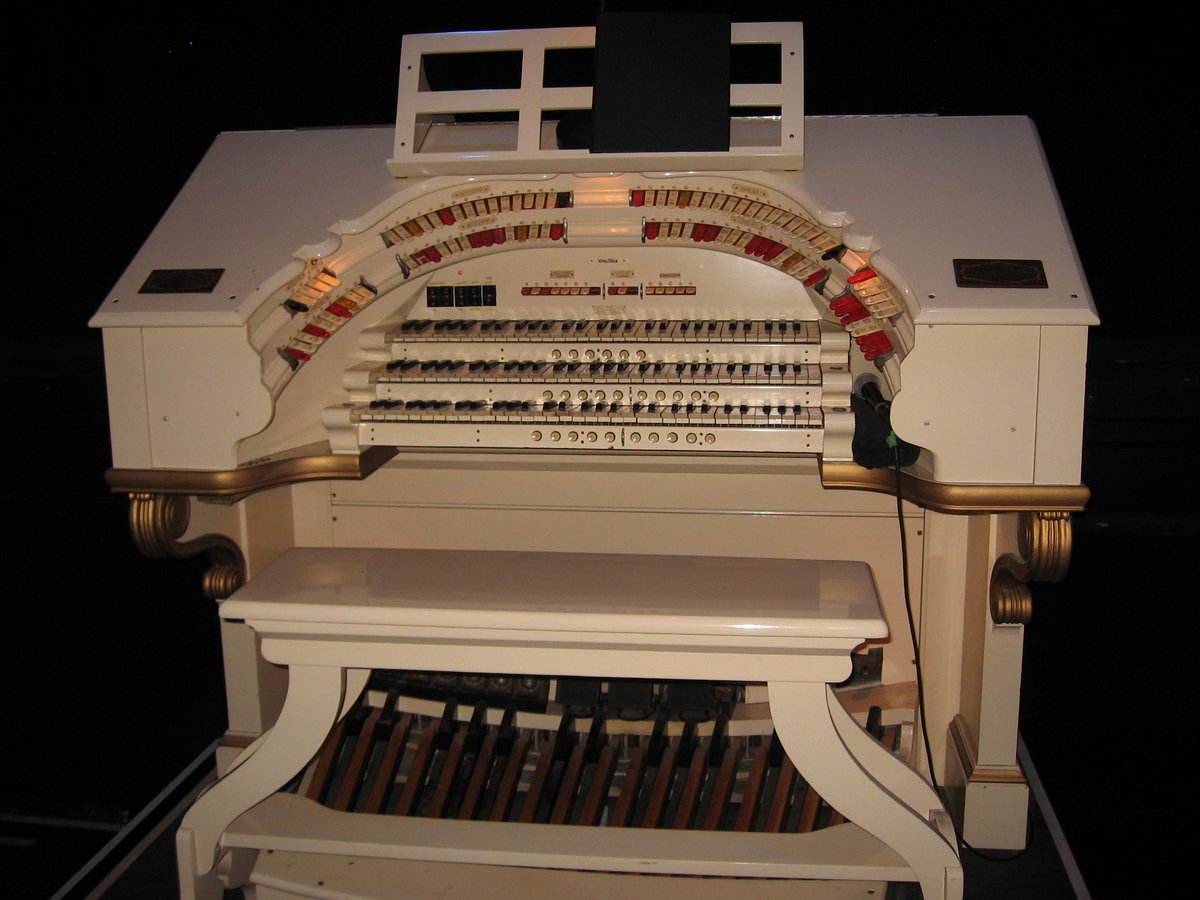
A historic highlight is the 1928 Mighty Wurlitzer pipe organ, one of only three still operating in Southern California (Events in California).
Vaudeville Era and Golden Age
As a flagship for the Orpheum vaudeville circuit, the theatre’s stage was graced by luminaries including the Marx Brothers, Sally Rand, Lena Horne, Duke Ellington, Ella Fitzgerald, and Judy Garland (then Frances Gumm) (TravelAsker). In the 1930s and 1940s, the venue transitioned into a movie palace, maintaining its allure with plush amenities and first-run film screenings.
Mid-Century Transformations
During the 1960s, the Orpheum embraced the changing entertainment landscape, welcoming rock and soul music legends such as Little Richard, Aretha Franklin, and Stevie Wonder (Events in California). Acquired by the Needleman family in 1964, the venue diversified its programming to include concerts, film shoots, and television events (Los Angeles Theatres Blogspot).
Restoration and Preservation
By the late 20th century, the Orpheum required significant restoration. A $3 million renovation began in 1989, with further investments ensuring the meticulous preservation of the theater’s historic features, including its organ, chandeliers, and ornate plasterwork (Events in California; LA Conservancy). Today, a conservation easement protects the Orpheum’s exterior, lobby, auditorium, and signage (Wikipedia).
Notable Events and Cultural Impact
Over nearly a century, the Orpheum has hosted a wide range of performers and productions, including concerts, comedy, film screenings, and television events such as the finales of “RuPaul’s Drag Race” and “American Idol” (Los Angeles Theatres Blogspot). Its role as a filming location cements its status as a pop culture icon and symbol of Los Angeles’ creative identity (Tourist Platform).
Visitor Information
Visiting Hours
The Orpheum Theatre opens its doors 45 minutes to one hour before scheduled events. Guided tours are available during special events and through the Los Angeles Conservancy’s “Last Remaining Seats” series (L.A. Conservancy). For up-to-date event times and tour options, check the official calendar.
Tickets
Tickets vary by event, typically ranging from $30 to $150. Purchase tickets in advance through the official Orpheum Theatre website or authorized vendors to secure the best seats (Bandsintown).
Accessibility
The theatre is fully wheelchair accessible, offering designated seating and restrooms. Assisted listening devices are available on request; contact the box office 24 hours in advance to arrange accommodations (L.A. Conservancy).
Location and Nearby Attractions
Located at 842 S. Broadway, Los Angeles, CA 90014, the Orpheum Theatre is easily accessible by car, with over 1,000 parking spaces in nearby lots and metered street parking (laorpheum.com). Public transportation options include the 7th St./Metro Center station and DASH Bus routes D and E (Metro; LADOT Transit). The theatre is within walking distance of other historic venues like the Palace Theatre, the United Artists Theatre, and local dining spots such as Grand Central Market (Lonely Planet).
Travel Tips
- Arrive early for parking and to enjoy the lobby’s ornate architecture.
- Consider public transportation to avoid downtown parking challenges.
- Dress smart-casual for the elegant yet relaxed atmosphere.
- Check event details and policies regarding photography and age restrictions before attending.
Architectural Highlights
Exterior and Façade
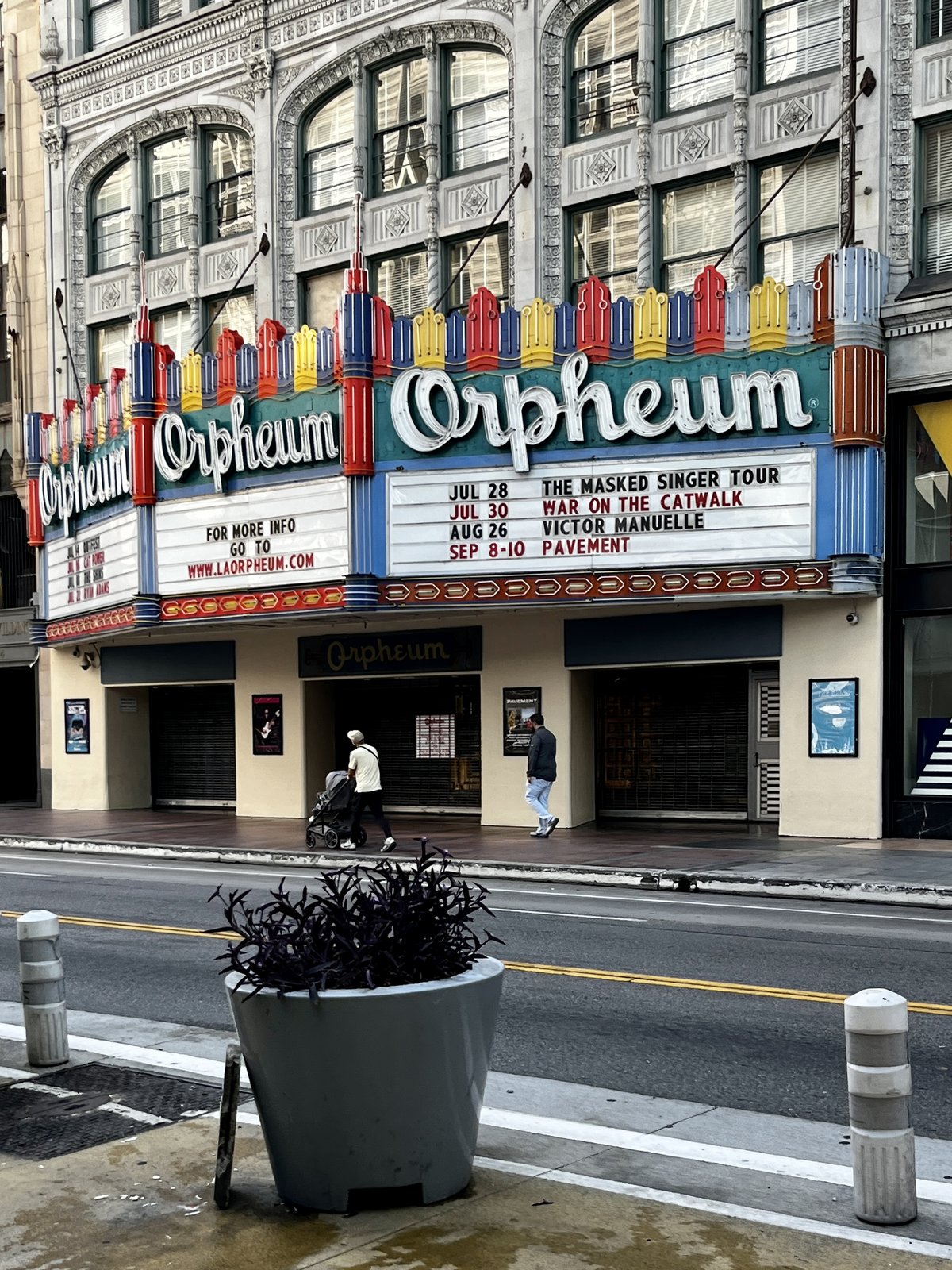
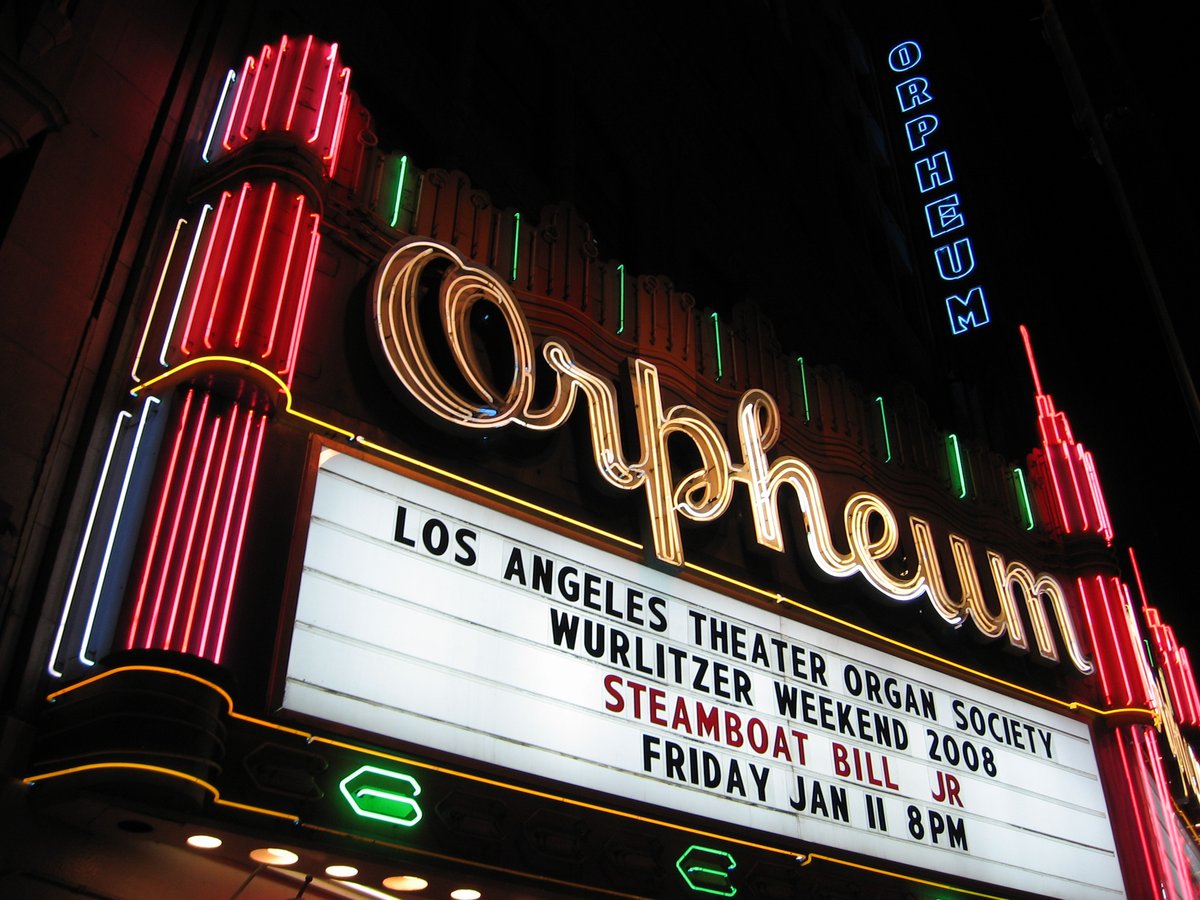
The Beaux-Arts façade features gray terra cotta, vertical pilasters, and griffins, with original neon blade signage and an electric rooftop sign still illuminating Broadway (LA Conservancy).
Grand Foyer
The marble-lined, two-story foyer is adorned with cast plaster detailing, immense chandeliers, and stained-glass rosettes. The crowned salamander motif, referencing King Francis I, is found throughout the space (Historic Theatre Photos).
Auditorium
The nearly 2,000-seat auditorium boasts French Baroque detailing, stepped opera boxes, and a grand proscenium arch. The ceiling is decorated with intricate plasterwork and multi-colored cove lighting (Historic Theatre Photos).
The Mighty Wurlitzer Organ
Installed in 1928, the Mighty Wurlitzer remains a rare, fully functional theater pipe organ, featured during silent film screenings and special events (Wikipedia; LA Conservancy).
Basement Lounge
Contrasting with the grand main spaces, the basement lounge features dark wood paneling, a mock fireplace, and tiled floors, offering a cozy retreat.
Frequently Asked Questions (FAQ)
Q: What are the Orpheum Theatre’s visiting hours?
A: Visiting hours depend on scheduled performances and events. Doors typically open 45 minutes to one hour before showtime. Check the official calendar for specific times.
Q: How can I buy Orpheum Theatre tickets?
A: Tickets are available online through the official website and authorized sellers. Advance purchase is recommended.
Q: Is the Orpheum Theatre wheelchair accessible?
A: Yes, the theatre offers wheelchair accessible seating, restrooms, and assisted listening devices. Contact the box office ahead for arrangements.
Q: Are guided tours available?
A: Guided tours are offered during special events and through the Los Angeles Conservancy. See L.A. Conservancy events for tour schedules.
Q: Can I take photographs inside the theatre?
A: Mobile phone photography is usually allowed unless otherwise specified by the event. Professional cameras and recording devices are generally prohibited.
Q: What are the best seating options?
A: The Orchestra section offers the closest and most immersive views. Mezzanine seats provide comfort and good sightlines, while Balcony seats offer panoramic views but limited legroom (A View From My Seat).
Q: What attractions are nearby?
A: Explore other historic theaters, the Bradbury Building, Grand Central Market, and the Fashion District within walking distance.