Plan and listen to Hollywood And Vine with Audiala.
Audio guide in your pocket, itinerary in your browser. Built for the way you actually visit.
Introduction
Hollywood and Vine—the legendary crossroads of Hollywood Boulevard and Vine Street—stands as an enduring symbol of Los Angeles' entertainment legacy. Once a humble agricultural junction, this intersection rose to global prominence in the 20th century as the heart of film, music, and radio. Today, visitors from around the world flock to Hollywood and Vine to experience its storied past, vibrant present, and array of historic landmarks including the Hollywood Walk of Fame, Capitol Records Building, and Pantages Theatre. This guide offers a comprehensive overview, detailing the area’s fascinating history, practical visitor information, travel tips, and must-see attractions. Whether you are a cinephile, music lover, or traveler seeking the magic of Hollywood, this resource ensures you make the most of your visit.
(Star Track Tours, Massive Action Media, The Hollywood Hotel)


Early Origins and Naming
Hollywood and Vine began as a quiet intersection in a rural Los Angeles community in the early 1900s. Originally called Prospect Avenue and Sunset Boulevard, it transformed with the arrival of the burgeoning film industry. By 1910, Prospect Avenue became Hollywood Boulevard, and in 1911, the intersection was formally named Hollywood and Vine—reflecting its destiny as a hub for the entertainment world. (Star Track Tours)
Emergence of the Entertainment Industry (1910s–1930s)
The abundant sunlight and diverse landscapes of Los Angeles made it an ideal location for filmmaking. Studios like Warner Bros., Paramount, and Universal set up nearby, with Vine Street becoming a critical artery for the industry. By the 1920s, the area buzzed with theaters, production offices, and red-carpet events. The nearby Egyptian Theatre hosted Hollywood’s first movie premiere, cementing the neighborhood’s star-studded reputation. (Massive Action Media)
The Golden Age: Crossroads of Fame (1930s–1940s)
During Hollywood’s golden era, the intersection attracted hopeful newcomers and established stars alike. The Taft Building, built in 1923 on the northeast corner, was home to casting agencies and film executives. The Pantages Theatre, opened in 1930, became a premier venue for movie premieres and live entertainment. The area’s proximity to studios and theaters made it a magnet for crowds seeking celebrity sightings and the thrill of Hollywood. (Massive Action Media)
Music, Radio, and the Capitol Records Building
As film flourished, music and radio also found a home at Hollywood and Vine. The advent of synchronized sound in film created opportunities for musicians and composers. In 1938, NBC’s West Coast Radio City opened at nearby Sunset and Vine, broadcasting live shows with stars like Bing Crosby.
The 1956 completion of the Capitol Records Building just north of Hollywood and Vine gave the area an iconic musical landmark. Shaped like a stack of records, it hosted legends such as Frank Sinatra and The Beatles. The building’s neon spire flashes “Hollywood” in Morse code—a beacon for music lovers. (Massive Action Media, The Hollywood Hotel)
The Hollywood Walk of Fame
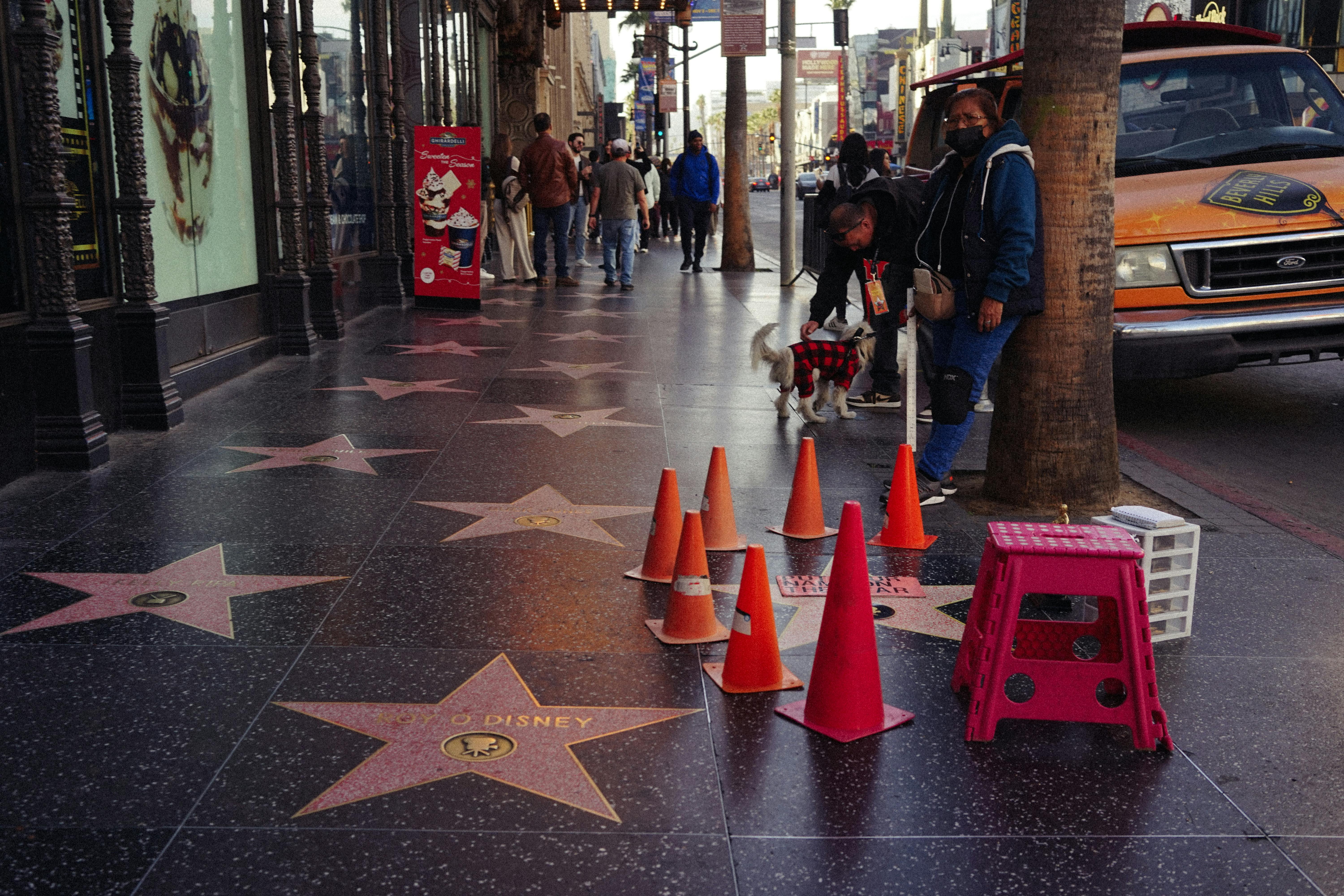
Established in 1960, the Hollywood Walk of Fame stretches along Hollywood Boulevard and Vine Street, honoring over 2,700 entertainment legends with terrazzo-and-brass stars. This free, public attraction is open 24/7 and draws millions of visitors annually, reinforcing Hollywood and Vine’s iconic status. (Massive Action Media)
Decline, Revitalization, and Modern Transformation
After the 1950s, Hollywood and Vine faced urban decline as studios moved and historic venues fell into disrepair. By the 1970s, the area was known for its seedy reputation. However, restoration and revitalization efforts in the late 20th and early 21st centuries revived its fortunes. The Pantages Theatre and Capitol Records Building were restored, while new hotels, restaurants, and entertainment venues brought renewed energy. Today, Hollywood and Vine is again a thriving destination, blending history with modern vibrancy. (Star Track Tours, Massive Action Media)
Practical Visitor Information
Visiting Hours
- Intersection and Walk of Fame: Open 24/7, free to explore
- Pantages Theatre: Box office 10:00 AM–6:00 PM; showtimes vary
- Capitol Records Building: Exterior viewing only, anytime
- TCL Chinese Theatre: 9:00 AM–10:00 PM (tours and screenings)
- Hollywood Museum: 10:00 AM–5:00 PM
Tickets and Tours
- Hollywood and Vine intersection: Free, no ticket required
- Attractions: Tickets required for theater shows, museum entry, and guided tours. Purchase online or at venue box offices.
- Guided Tours: Walking tours, bus tours, and themed experiences available. Book in advance for popular options.
Accessibility and Transportation
- Public Transit: Metro Red Line stops at Hollywood/Vine station (direct access)
- Parking: Available at nearby garages such as Ovation Hollywood (validated with purchase)
- Accessibility: Most sidewalks, attractions, and transit options are wheelchair accessible. Crowds may make navigation more challenging during peak times.
Special Events and Photo Spots
- Events: Film premieres, star unveilings, street festivals, and holiday celebrations happen year-round.
- Photo Tips: Best light is early morning or late afternoon. Capture the Capitol Records Building from Vine Street, stars on the Walk of Fame, and the Hollywood Sign from nearby vantage points.
Nearby Attractions
- Pantages Theatre: Historic Art Deco venue for Broadway shows and tours (Pantages Theatre).
- TCL Chinese Theatre: Celebrity handprints, IMAX movies, daily tours (TCL Chinese Theatre).
- Dolby Theatre: Home of the Oscars, guided tours available (Dolby Theatre).
- Hollywood Museum: Artifacts from film and TV history (Hollywood Museum).
- Madame Tussauds Hollywood: Celebrity wax figures (Madame Tussauds).
- Ovation Hollywood: Shopping, dining, and entertainment (Ovation Hollywood).
- Hollywood Bowl: Iconic outdoor concert venue (Hollywood Bowl).
Dining, Shopping, and Nightlife
- Dining: Try historic spots like Musso & Frank Grill or trendy eateries on Cahuenga Blvd.
- Nightlife: Venues like Fonda Theatre and Avalon Hollywood offer live music and dancing.
- Shopping: Souvenir shops line Hollywood Boulevard; Ovation Hollywood hosts major retailers and boutiques.
Tips for Visitors
- Best Times to Visit: Weekdays or early mornings for fewer crowds
- Transportation: Use Metro Red Line for convenience
- Safety: Remain aware of belongings, especially in crowds
- Accessibility: Most attractions are wheelchair accessible; contact venues for special accommodations
- Photography: Take advantage of golden hour lighting
- Passes: Consider an L.A. Pass if visiting multiple attractions
Frequently Asked Questions (FAQ)
Q: What are the visiting hours for Hollywood and Vine?
A: The intersection and Walk of Fame are open 24/7. Individual attractions have their own operating hours.
Q: Are tickets required for Hollywood and Vine?
A: No tickets for the intersection or Walk of Fame. Tickets are required for theater shows, museum entry, and guided tours.
Q: Is the area wheelchair accessible?
A: Yes, most attractions and sidewalks are accessible, though crowds may pose challenges.
Q: How do I get there by public transportation?
A: The Metro Red Line stops at Hollywood/Vine station, directly at the intersection.
Q: When is the best time to visit?
A: Early mornings or weekdays for fewer crowds and the best photo opportunities.
Q: Are there guided tours?
A: Yes, walking and bus tours operate daily and can be booked in advance.
Listen to the full story in the app
The whole Hollywood And Vine,
told well.
Listen to sourced travel stories with local history and practical context — ready offline.
Verified, and shown.
Researched and written by the Audiala editorial team from historical records, architectural archives, and local expertise.
Built from cited sources · see the method · How we make our guides →