Plan and listen to Federal Correctional Institution, Terminal Island with Audiala.
Audio guide in your pocket, itinerary in your browser. Built for the way you actually visit.
Introduction
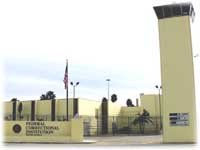
Situated at the gateway to Los Angeles Harbor, between San Pedro and Long Beach, the Federal Correctional Institution, Terminal Island (FCI Terminal Island) stands as a testament to the region’s layered history. Since its establishment in 1938, the facility has mirrored the broader evolution of Terminal Island—from a hub of maritime activity and wartime industry to a focal point of federal correctional oversight. Although FCI Terminal Island is an active prison with restricted access, its unique setting and historical resonance offer valuable context for visitors exploring the surrounding area, including San Pedro and Long Beach.
This comprehensive guide will walk you through the prison’s historical development, visiting procedures, and nearby attractions, ensuring you can make the most of your exploration—whether you are a family member, researcher, or history enthusiast. For additional resources and up-to-date information, official websites and local historical organizations provide further avenues for discovery. (Federal Correctional Institution, Terminal Island - Wikiwand, LA Conservancy, A People's Guide)

Early Development and Wartime Transformation
Terminal Island’s roots trace back to its days as Rattlesnake Island, rebranded in 1891 with the vision of becoming a major rail terminus (A People's Guide). By the early 20th century, it had evolved into a vibrant, multiethnic community, anchored by Japanese American fishermen who propelled Los Angeles’ tuna canning industry (LA Conservancy). Following the outbreak of World War II, the island’s Japanese American community was the first in the nation to face forced removal and incarceration, erasing a thriving neighborhood (LA Times).
FCI Terminal Island was established in 1938. Initially, its role included processing immigrants and housing federal inmates. During WWII, the Navy commandeered the site for military purposes, using it as a receiving station and barracks for court-martialed personnel. With the war’s end, the property was returned to federal prison use, reflecting the shifting needs of the nation (Federal Correctional Institution, Terminal Island - Wikiwand).
Postwar Changes and Correctional Expansion
The postwar era saw FCI Terminal Island operate as a low-to-medium security prison, accommodating both male and female inmates until 1977, when all female inmates were relocated to a separate facility in Dublin, California. Overcrowding became an increasing concern, especially as the prison housed pretrial detainees from Los Angeles—a situation only alleviated by the opening of the Metropolitan Detention Center in 1988 (Metropolitan Detention Center, Los Angeles - Wikipedia).
The 1980s brought both security upgrades and institutional reforms, prompted in part by a major corruption scandal involving staff bribery and contraband. In subsequent decades, the prison’s role expanded to include immigration detention, reflecting national shifts in criminal justice and immigration policy (A People's Guide).
Notable Inmates and Institutional Reforms
FCI Terminal Island has housed a range of high-profile inmates, from organized crime figures like Ralph Capone and Mickey Cohen to contemporary white-collar criminals such as Michael Cohen and Sunny Balwani. In 2024, Sam Bankman-Fried, the founder of FTX, was transferred to the facility, highlighting its continued relevance (CryptoNews - Sam Bankman-Fried Transferred to Terminal Island Prison).
Visiting FCI Terminal Island
Access Policy and Visitor Eligibility
FCI Terminal Island is a secure federal facility and is not open for public tours or general visitation. Only pre-approved visitors, typically family members or close contacts of inmates, may access the prison. Approval is managed by the Federal Bureau of Prisons (BOP), and each visitor must be included on the inmate’s official visitor list. (Federal Bureau of Prisons Official Visiting Page)
Visiting Hours and Requirements
- Visiting Days: Most commonly weekends and federal holidays. Schedules may change based on institutional needs.
- Visiting Hours: Generally 8:00 AM to 3:00 PM. Always verify with the official facility website or by calling ahead.
- Scheduling: Visits must be scheduled in advance, and visitors must clear a background check.
- Identification: A valid government-issued photo ID is mandatory for all adult visitors.
- Dress Code: Visitors should wear modest clothing; items with offensive language or revealing attire are strictly prohibited.
- Personal Items: Only essential items are permitted. Lockers are available for storage of personal belongings.
- Security: All visitors undergo rigorous security screening upon entry.
Accessibility and Travel Tips
- Location: 1299 Seaside Avenue, San Pedro, CA 90731.
- Access: Reachable by car via Terminal Island Freeway (State Route 103) or Vincent Thomas Bridge. Public transit is limited; private vehicle or rideshare is advised.
- Parking: On-site parking is available but can fill up quickly, especially on weekends.
- Accessibility: The facility and nearby public spaces are ADA-compliant; check in advance for specific needs.
- Nearby Services: Plan ahead for food and restroom facilities, as options on the island itself are limited.
Video Visitation and Alternatives
To accommodate distance and health-related restrictions, FCI Terminal Island offers video visitation through its online portal. These sessions must also be scheduled in advance and adhere to all institutional rules regarding conduct and appearance (Penmate - FCI Terminal Island Visitation Guide).
Facility Structure and Rehabilitation Programs
FCI Terminal Island features low-security infrastructure, including a UNICOR metal factory and refurbishment workshop. Educational and vocational programs are offered to inmates, focusing on skills development and rehabilitation to support eventual reintegration. These efforts underscore the evolving mission of federal correctional institutions to balance security with meaningful opportunities for personal growth.
Terminal Island’s Broader Historical and Cultural Context
Social and Cultural Significance
Terminal Island’s story extends beyond its correctional facility. It is a place marked by the intersecting narratives of immigration, displacement, military industry, and incarceration. The destruction of the Japanese American community during WWII and the subsequent industrial boom are central to understanding both the legacy and the ongoing preservation efforts in the area (LA Conservancy, A People's Guide).
Architectural and Environmental Features
The prison sits amid a heavily industrial environment, surrounded by shipping terminals, cranes, and remnants of its maritime heritage. Preservationists are actively working to protect what remains of the historic Japanese fishing village and wartime shipyards. In February 2025, new efforts were launched to safeguard historic structures on Tuna Street, crucial links to the island’s prewar community (LA Conservancy).
Nearby Attractions and Points of Interest
While FCI Terminal Island itself is not open to tourists, the surrounding region offers several notable destinations:
- Los Angeles Maritime Museum: Chronicles the harbor’s nautical history.
- Terminal Island Japanese Memorial: Honors the displaced Japanese American community.
- Ports O’ Call Village: A waterfront area with dining and shopping.
- Cabrillo Beach: Popular for its scenic views and family-friendly activities.
- USS Iowa Battleship Museum: Explore naval history nearby in San Pedro.
These sites provide important context and are excellent alternatives for visitors seeking to engage with the area’s rich history.
Frequently Asked Questions (FAQ)
Q: Can I visit FCI Terminal Island as a tourist?
A: No. The facility is not open for public tours. Visits are strictly limited to approved visitors of inmates.
Q: How do I schedule a visit to FCI Terminal Island?
A: Contact the prison or use the online portal to schedule a visit. Only persons on the inmate’s approved list may visit.
Q: What identification is required?
A: A valid government-issued photo ID (e.g., driver’s license, passport) is required. Minors may need additional documentation.
Q: Are there video visitation options?
A: Yes. Video visits can be scheduled online and are subject to the same conduct and appearance rules as in-person visits.
Q: Is there a fee or ticket required to visit?
A: No tickets or fees are required; only pre-approved visitors may enter.
Q: How can I get to Terminal Island?
A: The prison is accessible by car via the Terminal Island Freeway (SR 103) or Vincent Thomas Bridge. Public transportation is limited.
Q: Are there COVID-19 restrictions in place?
A: Policies may change in response to public health guidance. Check the BOP official visiting page for the latest updates.
Listen to the full story in the app
The whole Federal Correctional Institution, Terminal Island,
told well.
Listen to sourced travel stories with local history and practical context — ready offline.
Verified, and shown.
Researched and written by the Audiala editorial team from historical records, architectural archives, and local expertise.
Built from cited sources · see the method · How we make our guides →