Welcome to Farmdale: A Historic Gem in Los Angeles
Farmdale is a unique neighborhood, straddling the West Adams and El Sereno areas, that offers a window into Los Angeles’ evolving identity. With its historic schoolhouse, diverse architecture, and proximity to major cultural destinations, Farmdale stands as a testament to community resilience and the city’s ongoing transformation.
Early Origins and Rural Beginnings
Farmdale’s story begins in the late 1800s, rooted in the agricultural landscape that once dominated Los Angeles. Located on land that was formerly part of Rancho Rosa Castilla, Farmdale was shaped by Basque farming families and mirrored the city’s shift from Spanish colonial pueblo to American-style rural communities after the Treaty of Guadalupe Hidalgo (1848) (We Like LA). The region’s growth accelerated with the establishment of the Farmdale Schoolhouse in 1894—a milestone in public education and a symbol of the area’s maturation from isolated farmlands to a structured neighborhood.
The Farmdale Schoolhouse: Educational and Community Landmark
Built in 1894 in the Queen Anne Revival style, the Farmdale Schoolhouse is one of three remaining Victorian-era schoolhouses in the Los Angeles Unified School District (The Eastsider LA). Designed by Bradbeer and Ferris, its innovative two-room layout and original bell (a rarity) reflect both architectural and educational significance. Over time, the building adapted to community needs, serving as a middle school, woodshop, and later as a museum.
Preservation efforts in the 1970s, led by Dr. Donald D. Newman and the local community, ensured the schoolhouse’s restoration in time for the U.S. Bicentennial. Today, it stands as a tangible link to Farmdale’s educational roots and is the focus of ongoing campaigns for historic landmark status (CSULA University Times).
Transportation and the Pacific Electric Era
Farmdale was historically connected by the Pacific Electric Railway’s Santa Monica Air Line, which provided vital transit from downtown Los Angeles to the west side. The Farmdale stop played a key role in local development, though the line ceased operation in 1953 as car culture reshaped city transportation priorities (Wikiwand: Farmdale Station).
Modern Transformation: The Expo Line and Urban Renewal
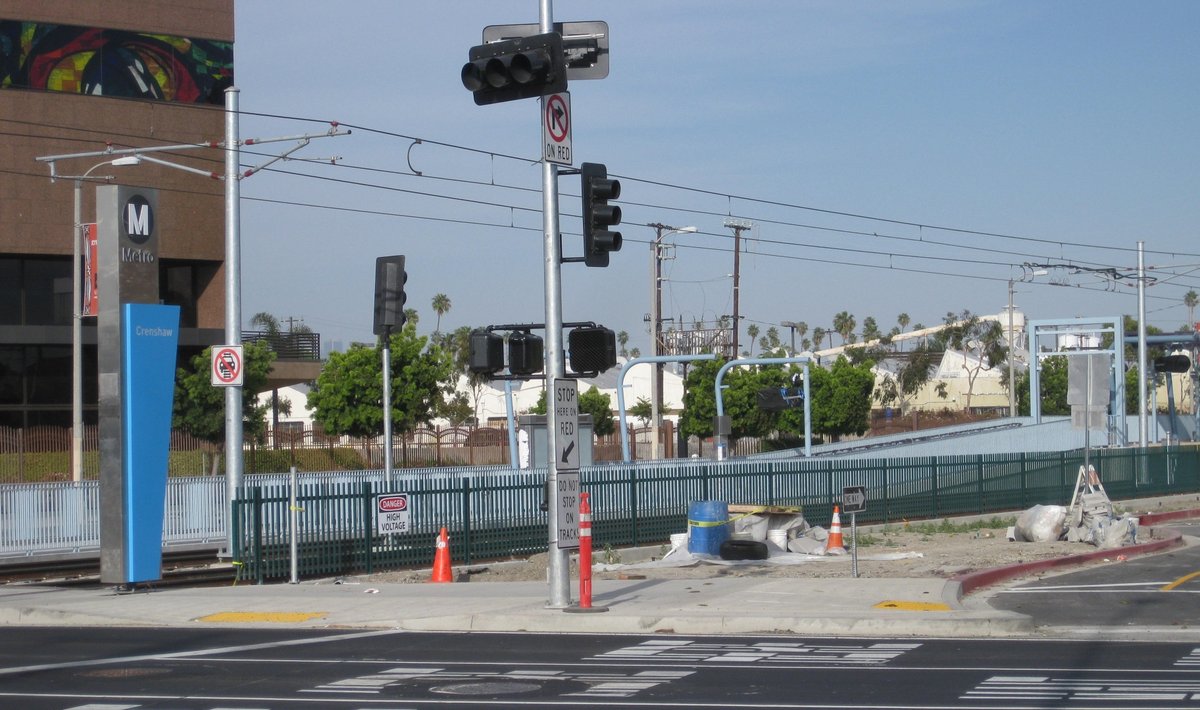
With renewed attention to public transit, the old Pacific Electric right-of-way was repurposed for the Metro E Line (Expo Line), reconnecting Farmdale to the city’s rail network. Farmdale Station, opened in 2012, is Metro’s only infill station and features offset platforms, vibrant mosaic art by Michael Massenburg, and direct access to Dorsey High School (SubwayNut: Farmdale). The station is a symbol of community advocacy and transit-oriented revitalization.
Visitor Information: Farmdale Visiting Hours, Tickets, and Tours
Farmdale Schoolhouse Museum
- Location On the campus of El Sereno Middle School, 2839 North Eastern Avenue
- Visiting Hours Open Saturdays, 10:00 AM – 4:00 PM, or by appointment for groups.
- Admission Free; donations appreciated for preservation.
- Tours Guided tours available weekends and by request. Contact the El Sereno Historical Society for details.
- Accessibility Wheelchair accessible with ramps and restrooms. Contact in advance for specific needs.
Travel Tips
- Transport Take Metro E Line to Farmdale Station for direct access. Parking is limited; public transit or rideshare recommended.
- Best Times to Visit Spring and early summer offer pleasant weather and community events.
Nearby Attractions and Photographic Spots
- West Adams Heritage Explore historic architecture and guided walking tours.
- El Sereno Historic District Visit charming residential streets and local parks.
- Exposition Park Home to the California Science Center, Natural History Museum, and the Rose Garden.
- Leimert Park Village A hub for African American arts, culture, and festivals (Leimert Park Village).
- Baldwin Hills Scenic Overlook Hiking trails and panoramic city views (Baldwin Hills Scenic Overlook).
- Photographic Highlights Victorian schoolhouse details, public murals, and lively community events.
Cultural Significance and Community Identity
Farmdale’s layered narrative reflects broader Los Angeles themes: migration, educational reform, and civic activism. The area’s proximity to sites of historic events, such as the 1968 Chicano student walkouts, and ongoing preservation efforts underscore its role in shaping social change and community identity (The Eastsider LA).
Notable Events and Ongoing Preservation
Key moments in Farmdale’s history include the schoolhouse restoration, the opening of the Expo Line, and community campaigns for historic designation. The museum’s collection—featuring artifacts like a 1904 Batz family photo—offers firsthand connections to the neighborhood’s agricultural and educational legacy.
Farmdale’s Architectural and Urban Context
Farmdale’s built environment includes Queen Anne Revival, Craftsman bungalows, Spanish Colonial, and postwar modern residences, reflecting the city’s diverse growth. Commercial corridors feature adaptive reuse projects, infusing historic masonry buildings with new life as creative offices, art spaces, and entertainment venues (Abramson Architects).
Getting Around: Transit and Accessibility
- Metro E Line (Expo Line) Connects Farmdale to Downtown LA and Santa Monica; trains run approx. 4:30 AM–1:00 AM (LA Metro).
- Farmdale Station Fully accessible with elevators and tactile paving.
- Bike and Walk Pleasant routes via Expo Line bike path and neighborhood streets.
- Parking Limited; public transit or rideshare is best.
Frequently Asked Questions (FAQ)
Q: What are Farmdale’s visiting hours?
A: The Farmdale Schoolhouse Museum is open Saturdays, 10:00 AM – 4:00 PM, and for special tours by appointment.
Q: Is there an admission fee?
A: Admission is free; donations are welcomed.
Q: How do I get there by public transit?
A: Take Metro E Line to Farmdale Station at Exposition Blvd and Farmdale Ave.
Q: Are guided tours available?
A: Yes, on weekends and by appointment through the El Sereno Historical Society.
Q: Is Farmdale accessible?
A: Yes, most sites are wheelchair accessible; check with venues for specific accommodations.