Origins and Vision: Olive Hill & Aline Barnsdall
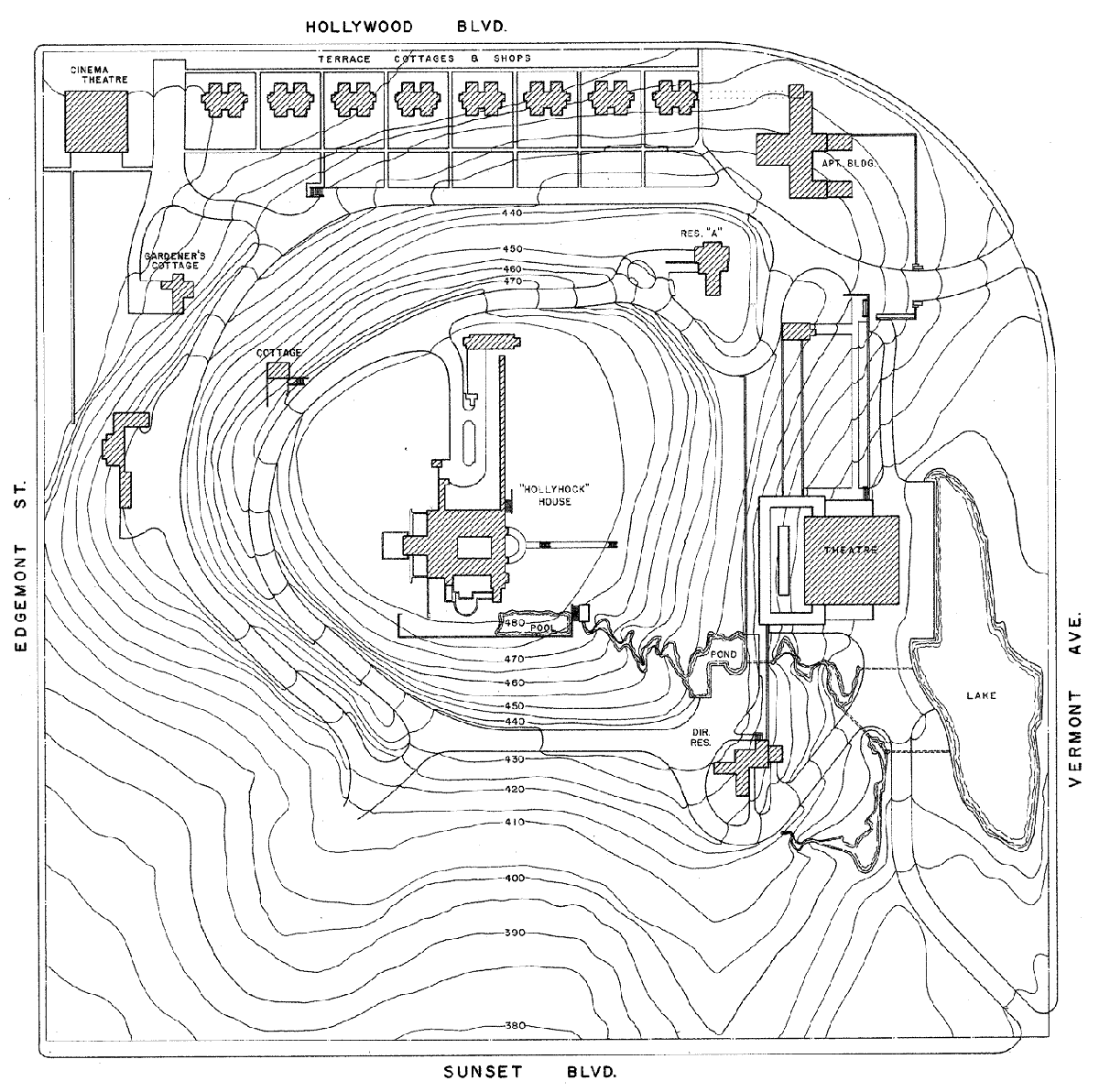
Barnsdall Art Park’s story begins in 1919, when Aline Barnsdall, a progressive arts patron and philanthropist, purchased the 11-acre Olive Hill. Her goal was to create a groundbreaking arts complex—a space for avant-garde theater, visual arts, and community gatherings, inspired by ideals of inclusivity and civic engagement (archeyes.com). Barnsdall’s vision was rooted in the belief that art should be accessible to all, a philosophy that has shaped the park’s legacy.
Hollyhock House: Frank Lloyd Wright’s Masterpiece
Central to Barnsdall’s dream was the commissioning of Frank Lloyd Wright to design the Hollyhock House, the complex’s focal point. Built between 1919 and 1921, the house is an early and influential example of California Modernism. Its design incorporates pre-Columbian and Japanese influences, with the hollyhock flower—Barnsdall’s favorite—featured throughout its decorative motifs (culture.lacity.gov). The project also included artists’ residences and plans for a theater, though only the house and a few auxiliary buildings were completed.
Wright’s approach to organic architecture is evident in the house’s seamless integration with its hillside setting, open courtyards, and indoor-outdoor living spaces. The design process also provided a proving ground for emerging architects such as Rudolph Schindler and Lloyd Wright, both of whom contributed to the project’s completion (barnsdall.org).
From Private Estate to Public Park
Although she never made Hollyhock House her home, Aline Barnsdall’s enduring impact came through her 1927 donation of the house and surrounding land to the City of Los Angeles. She stipulated that Olive Hill be used as a public park in memory of her father, ensuring its preservation and accessibility for future generations (culture.lacity.gov). This transformative act laid the foundation for Barnsdall Art Park’s role as a civic and cultural landmark.
Architectural and Cultural Significance
Hollyhock House is a touchstone of early modern architecture and has influenced generations of designers, including Richard Neutra and John Lautner (barnsdall.org). Its significance has been recognized as:
- Los Angeles Historic-Cultural Monument #33 (1963)
- National Register of Historic Places (1971)
- UNESCO World Heritage Site (2019), the first in Los Angeles (archeyes.com)
The park itself is often called the “Acropolis of Los Angeles” for its commanding views and symbolic role as a center for civic life (Wikipedia).
Restoration and Preservation Initiatives
Ongoing restoration is crucial to maintaining Hollyhock House and its historic landscape. Major renovation efforts in the 2000s addressed seismic stability, restored original finishes, and modernized infrastructure (archeyes.com). Residence A, another Wright design, has recently undergone a multi-million-dollar restoration to preserve its architectural integrity (Project Restore LA).
The park’s olive grove, dating to the 19th century, has also been revitalized through dedicated community initiatives. Preservation efforts extend to maintaining the park’s landscape and improving accessibility for all visitors.
Visitor Guide: Hours, Tickets, and Accessibility
Location
- Address 4800 Hollywood Blvd, Los Angeles, CA
Park Hours
- Grounds Open daily, 6:30 AM – 10:00 PM
- Hollyhock House Open Wednesday–Sunday, 11:00 AM – 4:00 PM (hours may vary for special events; check official site)
Tickets and Admission
- Park Entry Free
- Hollyhock House Tours Ticket required; Adults $10, Seniors/Students $7, children under 12 free (Hollyhock House Visit)
- Guided Tours Advance reservation recommended
Accessibility
- The park grounds and Hollyhock House offer wheelchair access, with ramps and accessible restrooms. Some historic features may have limited accessibility; contact the visitor center for specific accommodations.
Getting There
- Parking Limited free on-site parking; additional street parking nearby.
- Public Transit Metro B Line (Red Line) at Vermont/Sunset; multiple bus lines.
Key Attractions and Community Programming
Hollyhock House
- Explore interior and exterior spaces with self-guided or docent-led tours (Hollyhock House Visit)
- Virtual tours available online
Residence A
- Undergoing restoration; exterior viewable; future plans for public access (Project Restore LA)
Los Angeles Municipal Art Gallery (LAMAG)
- Hosts contemporary art exhibitions; admission usually free (Barnsdall Art Park)
Barnsdall Art Center & Junior Arts Center
- Offers classes and workshops for all ages; check schedules for current offerings (Barnsdall Arts LA)
Barnsdall Gallery Theatre
- Venue for performing arts, film screenings, and community events; see event calendar
Olive Hill Grounds
- Open lawns, restored olive groves, and panoramic views of the city
Seasonal Events
- Friday Night Wine Tastings (June–September)
- Art festivals, workshops, family-friendly activities (We Like LA)
Practical Tips for Visitors
- Plan ahead Check event schedules and reserve tour tickets in advance
- Dress comfortably Wear suitable shoes for walking and outdoor activities
- Bring a picnic Open lawns perfect for relaxing and city views
- Photography Designated areas offer great backdrops of the Hollywood Sign and Griffith Observatory
- Accessibility Inquire ahead if special accommodations are needed
Nearby Landmarks and Amenities
Explore other local sites such as Griffith Observatory, Hollywood Bowl, and the Los Feliz neighborhood. Cafes and picnic areas are nearby for refreshments.
Frequently Asked Questions (FAQ)
What are the park’s hours?
Grounds: 6:30 AM–10:00 PM daily; Hollyhock House: Wed–Sun, 11:00 AM–4:00 PM.
Is admission free?
Park entry is free; Hollyhock House tours require tickets.
Is the park accessible?
Yes, with some limitations for historic buildings; contact the visitor center for details.
Are guided tours available?
Yes, for Hollyhock House; advance booking recommended.
Are pets allowed?
Leashed pets are welcome on park grounds.
What events are offered?
Seasonal events include wine tastings, art workshops, and festivals.