


Place
United States of America Updated Oct 2026
Four giant badminton shuttlecocks lie across the lawn at the Nelson-Atkins Museum of Art, as if a match stopped midair; elsewhere in Kansas City, Missouri, United States, barbecue smoke curls past jazz clubs that keep playing long after midnight. The contrast is the point.
 Photo: ANDREW PETERSON / Pexels
Built from cited sources · see the method · How we make our guides →
Kansas City counts hundreds of fountains, from old drinking troughs to elaborate sculptures splashing across public squares. At the Country Club Plaza, planned in 1922, Spanish- and Moorish-inspired towers, tiled details and courtyard fountains give the shopping district a distinct Seville inflection.
The city’s landmarks make room for very different kinds of attention. Beneath the 217-foot Liberty Memorial Tower, the National WWI Museum and Memorial holds wartime artifacts and personal letters; at Union Station, the 95-foot Grand Hall fills with light beneath chandeliers weighing 3,500 pounds.
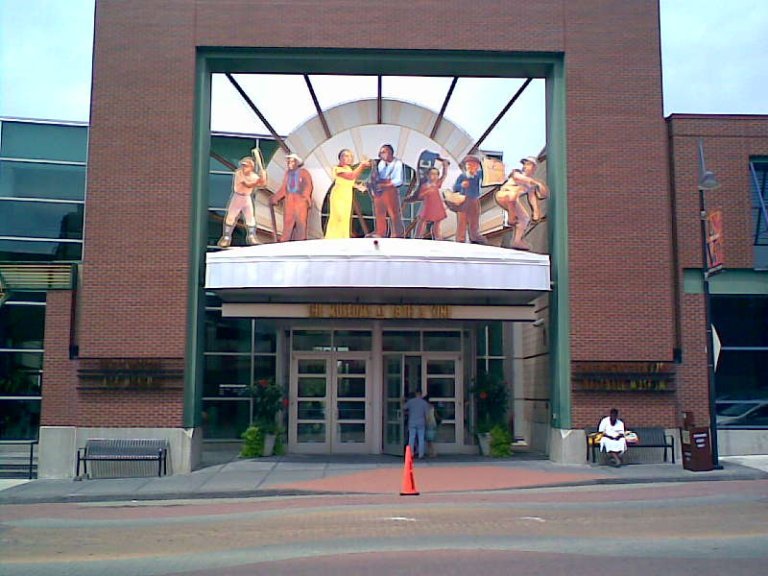
Kansas City’s food and music carry history in the present tense: its barbecue tradition includes burnt ends, while 18th & Vine links jazz clubs with the Negro Leagues Baseball Museum. The city name crosses a state line—Kansas City, Missouri, and Kansas City, Kansas, are separate cities—so the region makes more sense as a network of neighborhoods than as one compact downtown.
Not every monument, just the ones we'd walk you past ourselves.


Where to wander, by quarter — each with its own rhythm.
Before you go
Curated from places in this city. Same price as official sites.


Prices shown are indicative — final pricing and availability are confirmed at checkout. Audiala may receive a commission from bookings made via these links.
From Indigenous river crossroads to a city remade by music, machines, and movement
For generations, Kanza, Osage, and Missouria people had used the river junction as a route and meeting ground. On June 26–28, Lewis and Clark camped at Kaw Point, where the bluffs overlook the Missouri and Kansas rivers.
French fur trader François Chouteau established a permanent trading post on the Missouri River for the American Fur Company. His settlement, later known as Chouteau’s Landing, gave the area its first lasting European-American foothold.
John Calvin McCoy laid out Westport several miles inland, giving traders a place to gather before heading west. He later established Westport Landing on the river, linking the growing settlement to steamboat traffic.
McCoy and 14 investors formed a town company and platted the Town of Kansas on land bought from the Gabriel Prudhomme estate. Westport Landing and nearby Westport made the area a gateway for traders and emigrants bound for western trails.
Jackson County incorporated the Town of Kansas on February 4; Missouri gave it a city charter in 1853. The growing river town was becoming a civic center, though its position beside the slavery-boundary line would soon bring a harsher kind of traffic.
The Kansas-Nebraska Act let settlers decide whether Kansas would permit slavery, turning the Missouri border into a battleground. Pro-slavery Missourians and anti-slavery Free-Staters clashed in the years known as “Bleeding Kansas,” and the violence touched the city’s trade and politics.
After Quantrill’s raid on Lawrence, Union General Thomas Ewing Jr. issued General Order No. 11 on August 25. It forced rural residents from four Missouri counties, leaving farms and homes abandoned in a brutal attempt to deny Confederate guerrillas shelter and supplies.
From October 21 to 23, roughly 30,000 troops fought around Westport and Brush Creek in the largest Civil War battle west of the Mississippi. Union forces broke Sterling Price’s raid; the defeat ended his bid to seize Missouri and cost both sides about 3,000 casualties.
Octave Chanute’s Hannibal Bridge opened on July 3, 1869, the first permanent rail crossing over the Missouri River. The Kansas City Stockyards followed in the West Bottoms in 1871, drawing livestock, packing houses, and railway business into the flood-prone lowlands.
Newspaper publisher William Rockhill Nelson moved to Kansas City and launched the Kansas City Evening Star. He became a force behind civic projects, and his estate later helped establish the art museum that bears his name alongside that of Mary Atkins.
The municipality changed its name from the City of Kansas to Kansas City. The distinction mattered: the expanding Missouri city stood across the state line from Kansas City, Kansas, incorporated in 1872.
Landscape architect George E. Kessler presented a master plan for parks and boulevards, giving the city long, tree-lined routes between neighborhoods. The plan helped shape Kansas City’s civic identity as the “City of Fountains,” though its boulevards also carried the ambitions of a growing metropolis.
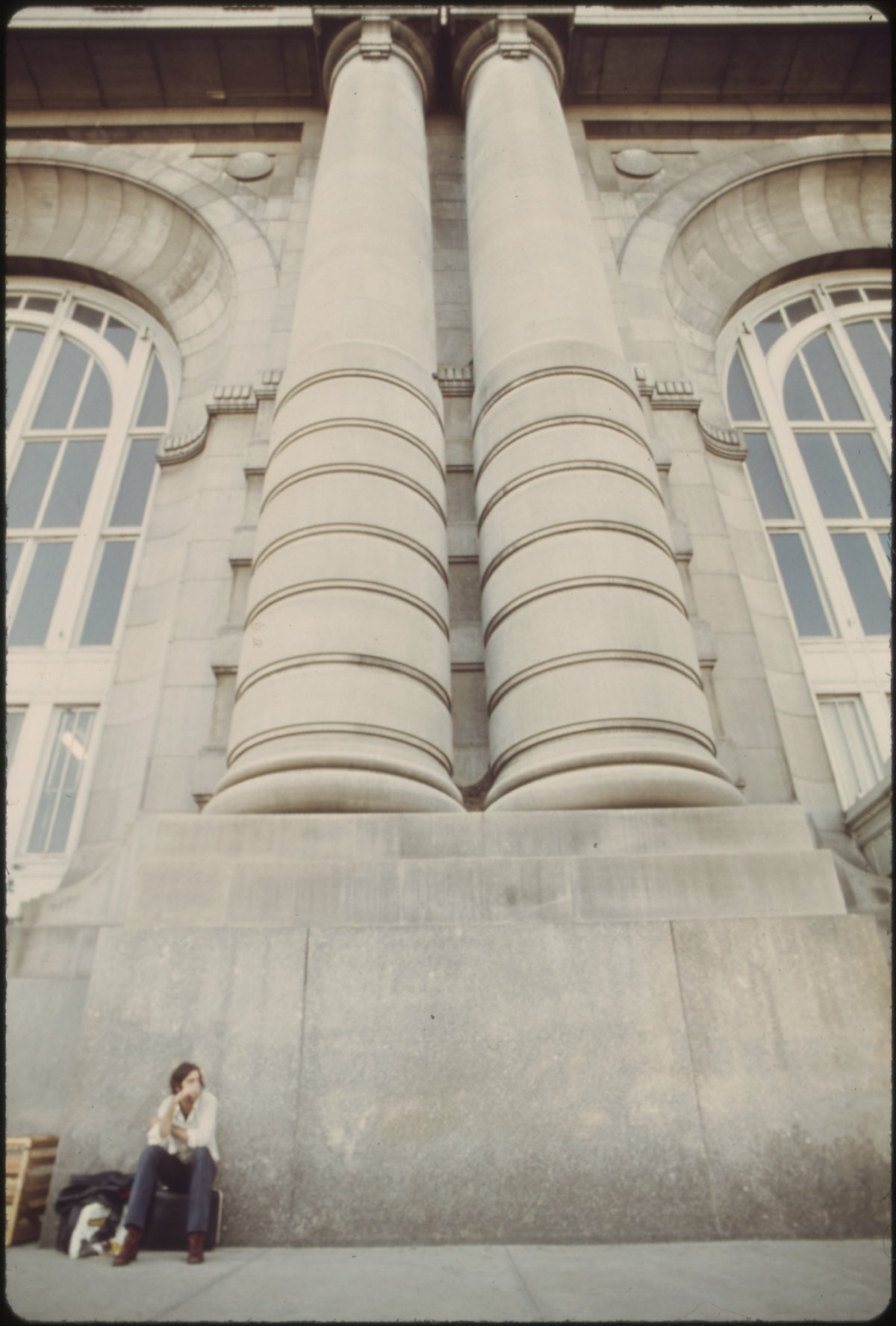
Union Station opened on October 30 as a grand Beaux-Arts gateway for passengers crossing the Midwest. Its vaulted spaces and enormous clock made the scale of rail travel tangible; the station would later outlast the decline of passenger trains and find new uses.
Ernest Hemingway arrived in Kansas City in October to report for the Kansas City Star, staying until April 1918. The paper’s insistence on short sentences and vigorous verbs became part of the spare style he carried into his fiction.
Rube Foster and other team owners formed the Negro National League at the Paseo YMCA on February 13. Black clubs built a professional league of their own, creating a lasting institution in a country that barred Black players from Major League Baseball.
J. C. Nichols opened Country Club Plaza as a shopping district planned around the automobile, with Spanish and Moorish Revival buildings, tiled details, and courtyards. Its design offered a new model for suburban retail—and made driving part of the shopping experience from the start.
Harry S. Truman won election as eastern district judge of Jackson County, beginning a political career rooted in the Kansas City area. Backed by Tom Pendergast’s organization, he built a record in local government before reaching the U.S. Senate and, later, the White House.
Bandleader and pianist Bennie Moten made his first recordings in September, carrying the city’s blues-inflected sound beyond local clubs. The band’s riffing rhythms helped define Kansas City swing, a style made for long solos and rooms that stayed loud after midnight.
President Calvin Coolidge dedicated the Liberty Memorial on November 11 before a crowd of about 150,000. Its tower and museum were built to honor the dead of the First World War; the memorial later became the National World War I Museum and Memorial.
The Nelson-Atkins Museum of Art opened to the public on December 11, built on the former site of Nelson’s Oak Hall estate. The museum turned a newspaper publisher’s bequest into a public collection, with galleries that have grown far beyond the original building.
Tom Pendergast pleaded guilty to federal income-tax evasion in 1939 and went to prison, ending his grip on local politics. The case followed years of graft and election fraud; reformers swept the 1940 city elections and dismantled the machine’s control.
On July 13, the Kansas and Missouri rivers overflowed into the West Bottoms and industrial districts, flooding stockyards, factories, and rail facilities. Damage exceeded $700 million, and the disaster helped push jobs and development toward higher ground.
Arrowhead Stadium opened in 1972, followed by Royals Stadium in 1973, creating a shared sports complex on the city’s eastern edge. The pairing became a model for dual-stadium design; Royals Stadium was later renamed Kauffman Stadium.
After about 16 inches of rain, Brush Creek surged through Country Club Plaza on September 12. The flood killed 25 people and tore through shops, cars, and roads, exposing the danger built into a city shaped by creeks and paved ground.
Two suspended walkways fell into the Hyatt Regency lobby during a crowded tea dance on July 17. The collapse killed 114 people and injured 216; the engineering failures that caused it led to major changes in professional review and responsibility.
The American Jazz Museum and Negro Leagues Baseball Museum opened in the historic 18th and Vine district. Their arrival gave visitors a place to encounter the music and Black sporting history that segregation had helped create—and too often pushed from the national story.
The Sprint Center, now T-Mobile Center, opened downtown as the Nelson-Atkins added the glass-and-steel Bloch Building. Together, the arena and museum expansion marked a new phase of investment in the city center.
Designed by Moshe Safdie, the Kauffman Center for the Performing Arts opened on September 16. Its curved glass and steel frame two halls for the Kansas City Symphony, Kansas City Ballet, and Lyric Opera of Kansas City.
The KC Streetcar began service on May 6, linking the River Market, downtown, and Union Station on a two-mile line. Its return put rail travel back on city streets and helped draw new development along the route.
Kansas City International Airport’s new single terminal opened on February 28, replacing the three-ring layout that had served passengers since 1972. The change brought arrivals and departures under one roof, a different kind of gateway for a city long defined by movement.
Writer · 1899–1961
Worked at The Kansas City Star, 1917–1918
Hemingway arrived in Kansas City in October 1917 as a cub reporter, where the Star’s short-sentence style helped shape his prose. He might recognize the city’s affection for direct talk, though today’s skyline would be a different assignment.
Publisher and art patron · c. 1841–1915
Moved here in 1880; his bequest established the Nelson-Atkins Museum of Art
Nelson came to Kansas City in 1880 and built The Kansas City Evening Star into a force in local life. His bequest later helped create the museum that now stands on the grounds of his former estate; he might find the sculpture park a fittingly public use for a private home site.
U.S. President · 1884–1972
Worked in Kansas City and began his political career in Jackson County
As a young man, Truman wrapped newspapers in The Kansas City Star’s mailroom; later, Jackson County politics launched the path that led to the White House. He might have recognized the city’s appetite for big civic projects in the museums and public landmarks that shape it today.
Saxophonist and composer · 1920–1955
Developed his music in Kansas City
Parker absorbed Kansas City’s late-night jazz culture before helping create bebop, a sound that pushed far beyond swing’s familiar rhythms. The American Jazz Museum preserves a saxophone associated with him; he might hear the city’s current live sets as music still in motion.
Where locals actually book dinner — not the tourist menus.
Small things that change how the city treats you.
The city, as it actually looks.


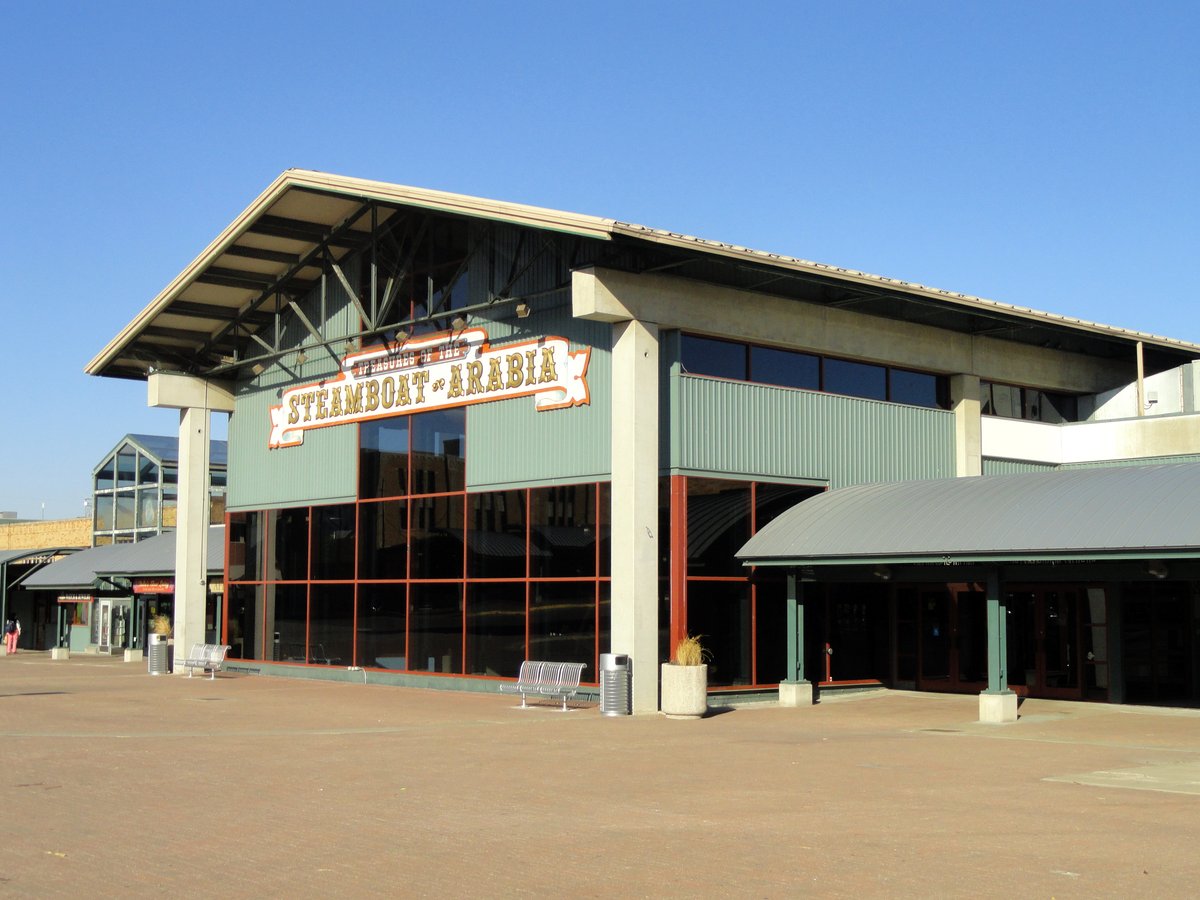
Yes, especially if you like jazz, barbecue, art museums, and architecture with a story behind it. The 18th & Vine museums, the Nelson-Atkins sculpture lawn, and the Arabia Steamboat Museum show very different sides of the city.
Plan on three days for the major museums, downtown sights, and a couple of neighborhoods. Add a fourth day if you want time for parks, more live music, or a nearby excursion.
The KC Streetcar is useful for Union Station and central downtown stops; check its current map before planning your route. For 18th & Vine and other farther-apart sights, plan a bus, rideshare, or car trip as well.
Use ordinary city precautions: keep valuables out of sight, stick to well-lit routes after dark, and plan your ride back from late-night venues. Attractions sit across separate districts, so check your route before setting out rather than assuming every stop is close together.
Costs depend on lodging, meals, and how often you travel between districts; a single daily budget would be misleading. For a lower-cost day, focus on outdoor sights such as the Nelson-Atkins sculpture lawn, public fountains, and skyline viewpoints.
Spring, especially April and May, and early fall, around September and October, are good times to plan outdoor walks. Fall also suits a trip to Burr Oak Woods, which is known for foliage hikes.
59 places to discover






Showing 1–48 of 59 places
Saved and recently read places — kept on this device only.
Photos may have been resized or cropped.