Introduction
The first thing that hits you in Jacksonville is the smell of salt and shrimp coming off the St. Johns River at dusk, mixed with distant grill smoke from somewhere on the Northside. Most visitors expect either Miami glitz or sleepy Southern town and find neither. Instead they get 22 miles of Atlantic beaches that feel like separate towns, garlic crabs served in newspaper on plastic tables, and a skyline that still surprises even locals when the light catches it right.
This is the largest city by land area in the contiguous United States, a fact that means almost nothing until you drive from the Timucuan marshes to the Mayport shrimp docks and realize you haven't left town. The 1968 consolidation of Duval County turned Jacksonville into something odd and wonderful: a city that contains actual wilderness, working fishing villages, and riverfront lofts all inside the same municipal borders.
The food tells the real story. Mayport shrimp pulled from these waters that morning. Garlic crabs simmered in a butter sauce so potent it travels three blocks on the breeze. Camel riders stuffed with spiced meat and served from delis that have barely changed since the 1970s. Datil peppers, brought by Minorcan settlers centuries ago, still punch through sauces and soups with a heat that belongs only here.
What changes how you see the place is the light on the river at twilight. Stand on the Riverwalk as the bridges light up and the current carries mullet jumping silver against the dark water. Suddenly the scale of the city makes sense. Jacksonville doesn't try to be charming. It simply is, in a way that sneaks up on you.
Places to Visit
The Most Interesting Places in Jacksonville
Jacksonville Zoo and Gardens
Welcome to the Jacksonville Zoo and Gardens, a premier attraction in Jacksonville, Florida, that seamlessly blends wildlife conservation with botanical beauty.
Vystar Veterans Memorial Arena
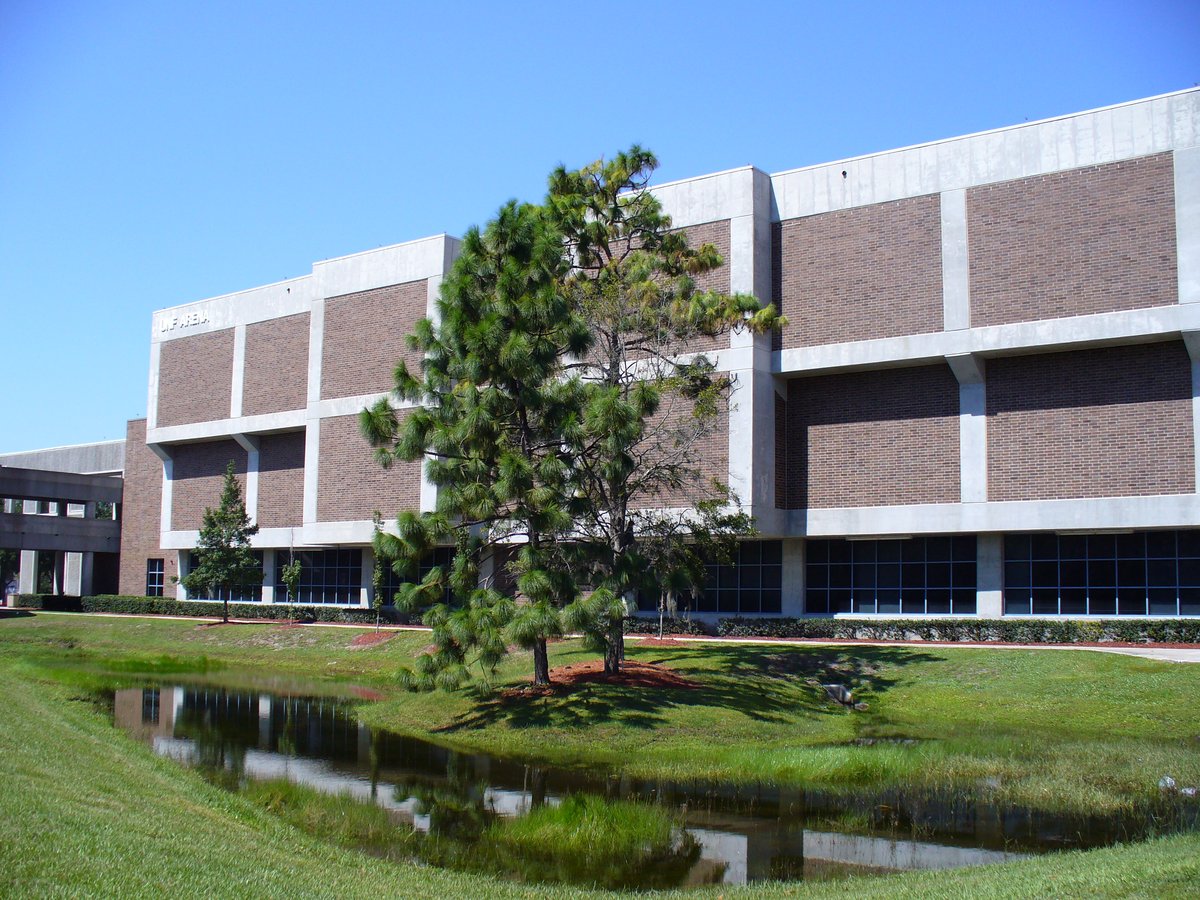
VyStar Veterans Memorial Arena stands as a cornerstone of Jacksonville, Florida's vibrant sports and entertainment landscape.
J. P. Small Memorial Stadium
Nestled in the historic Durkeeville neighborhood of Jacksonville, Florida, J.
Memorial Park
Memorial Park in Jacksonville, Florida, stands as a testament to the city's rich historical and cultural heritage.
Friendship Fountain
Friendship Fountain, a beloved landmark in Jacksonville, Florida, is a testament to the city's spirit and history.
Vystar Ballpark
VyStar Ballpark stands as a vibrant emblem of Jacksonville, Florida’s rich baseball tradition, urban revitalization, and community spirit.
Daily'S Place
Situated in the vibrant heart of downtown Jacksonville, Florida, Daily’s Place has rapidly emerged as a premier destination for live entertainment, cultural…
Bank of America Tower
The Bank of America Tower in Jacksonville, Florida, stands as a commanding symbol of the city’s architectural ambition and economic vitality.
Cummer Museum of Art and Gardens
The Cummer Museum of Art, located in Jacksonville, Florida, is a distinguished institution that offers a rich blend of art, history, and natural beauty.
Dames Point Bridge
The Dames Point Bridge, officially known as the Napoleon Bonaparte Broward Bridge, stands as a monumental symbol of Jacksonville, Florida’s growth,…
Florida Theatre
Nestled in the vibrant heart of downtown Jacksonville, Florida, the Florida Theatre stands as a majestic emblem of architectural splendor, rich history, and…
Riverplace Tower
Riverplace Tower, an iconic skyscraper located on Jacksonville's vibrant Southbank waterfront, stands as a pivotal landmark that intertwines architectural…
What Makes This City Special
22 Miles of Beaches
Four distinct beach towns line the coast east of downtown. Jacksonville Beach draws the crowds, but locals slip away to Boneyard Beach on Big Talbot Island where bleached driftwood trunks lie scattered like bones under the live oaks.
Riverfront Culture
The St. Johns River slices through the city. Walk the Riverwalk at dusk when the light turns the water copper and the Cummer Museum’s riverside gardens stay open late enough for you to watch the skyline flicker on.
Unexpected Music Scene
The Florida Theatre opened in 1927 and still hosts acts in its original opulent interior. Smaller rooms like the Blue Jay Listening Room and Jack Rabbits keep the city’s live music credible and close.
Timucuan Preserve
Just north of the city lies 46,000 acres of salt marsh, maritime hammock and oyster beds. Kingsley Plantation’s tabby cabins and 300-year-old live oaks feel farther from downtown than the 25-minute drive suggests.
Historical Timeline
Rivers, Fires, and Reinventions
How one muddy crossing became the largest city in the South
Timucua Potters Rise
Along the shifting salt marshes of the St. Johns, Timucua communities fired some of the oldest pottery found in North America. The clay still carries fingerprints pressed 2,500 years ago. Their shell mounds and trade networks stretched hundreds of miles. Jacksonville sits on ground that has remembered human hands longer than most American cities.
Fort Caroline Founded
René de Laudonnière’s French Huguenots hacked a timber fort into the river bluff in June. For one brief season the smell of baking bread and gunpowder drifted across the marsh. The French lasted barely a year. Their defeat still echoes in local names and in the bitterness between empires.
Spanish Capture Fort Caroline
Pedro Menéndez de Avilés struck at dawn on 20 September. Most of the French were slaughtered where they stood or hunted down in the forests. The Spanish renamed the blood-soaked post San Matteo and claimed the river for Madrid. Conquest here always smelled of salt and smoke.
Britain Takes East Florida
Spain handed Florida to Britain after losing the Seven Years’ War. British surveyors immediately began carving King’s Road through the pines. The old Spanish cow ford across the St. Johns became the strategic hinge of a new colony. Empires kept redrawing the same muddy line.
Isaiah Hart Founds Jacksonville
Isaiah Hart laid out a grid of eight blocks on the north bank of the St. Johns and named the place after Andrew Jackson. The air carried the scent of fresh-cut pine and river mud. Hart, a former plantation owner, bet everything on this swampy crossing. The city has been proving him right and wrong ever since.
Town Becomes County Seat
Jacksonville received its formal charter and the seat of Duval County. Wooden stores and warehouses rose along the riverfront. The population barely reached a few hundred souls. Yet the town already smelled of ambition, turpentine, and incoming cotton bales.
Union Troops Occupy the City
Federal forces seized Jacksonville early in the Civil War, burning much of the waterfront. Union soldiers marched past smoldering ruins while Confederate sympathizers watched from the tree line. The city changed hands four times during the war. Each occupation left deeper scars on the same streets.
James Weldon Johnson Born
James Weldon Johnson entered the world in a modest Jacksonville home. Thirty years later he would co-write “Lift Every Voice and Sing” in the same city. The anthem rose from these streets and eventually became known as the Black National Anthem. Few places can claim to have birthed both a city and its conscience in the same soil.
Yellow Fever Epidemic Strikes
Yellow fever tore through the wooden neighborhoods in 1887 and again the following year. Bodies were burned on the edge of town while panicked residents fled by boat. The epidemics revealed how fragile the young city still was. Survivors carried the memory of bonfires on the riverbank for the rest of their lives.
Great Fire Destroys Downtown
On 3 May 1901 sparks from a mattress factory ignited a blaze that consumed 2,368 buildings across 146 blocks. Ten thousand people lost their homes in a single afternoon. The sky turned orange for miles. From the ashes rose a new city designed by Henry John Klutho in Prairie Style concrete and brick.
Kalem Studios Open
Silent film cameras began turning in Jacksonville, earning the city the nickname “The Winter Film Capital of the World.” Actors in cowboy hats sweated under Florida sun while directors shouted through megaphones. The boom lasted barely a decade before Hollywood stole the spotlight. Yet the smell of celluloid and orange blossoms once defined these winters.
Jacksonville Zoo Founded
The zoo began as a modest collection of animals in 1914. Over a century later it still sits beside the St. Johns where alligators and imported lions first shared the same humid air. In March 2026 its new Weaver Manatee River and VyStar Skyscape entrance opened to the public. The manatees now glide beneath glass while visitors walk above them.
Florida Theatre Opens
The Florida Theatre rose on Forsyth Street with 2,000 seats and an atmospheric ceiling painted like a Mediterranean night sky. Its opening night smelled of fresh plaster and popcorn. Vaudeville acts shared the stage with silent films. The theater survived fires, recessions, and urban renewal. It still does.
Naval Air Station Commissioned
The Navy transformed Jacksonville into a major wartime hub almost overnight. Tens of thousands of young men trained here while B-24 bombers practiced over the Intracoastal Waterway. The smell of aviation fuel and saltwater became the scent of the city for decades. Jacksonville still carries that military rhythm in its bones.
City-County Consolidation
Voters approved the merger of Jacksonville with Duval County, creating the largest city by land area in the contiguous United States. Overnight the municipal map stretched across 747 square miles. Old rivalries between neighborhoods suddenly existed inside one giant bureaucracy. The consolidation remains both brilliant and messy.
Jaguars NFL Franchise Awarded
The NFL granted Jacksonville an expansion team in 1993. Suddenly a city long dismissed as a Navy town had its own professional football identity. The first games at the Gator Bowl carried an almost religious intensity. For many locals the Jaguars became the clearest symbol that Jacksonville had finally arrived.
Riverfront and Zoo Reborn
In March the Dune House opened beside renewed riverfront parks while the Jacksonville Zoo unveiled its dramatic new entrance and manatee habitat. After years of planning, the St. Johns once again became a destination rather than a barrier. The light off the water hits the new pavilions at golden hour and for a moment the city feels possible again.
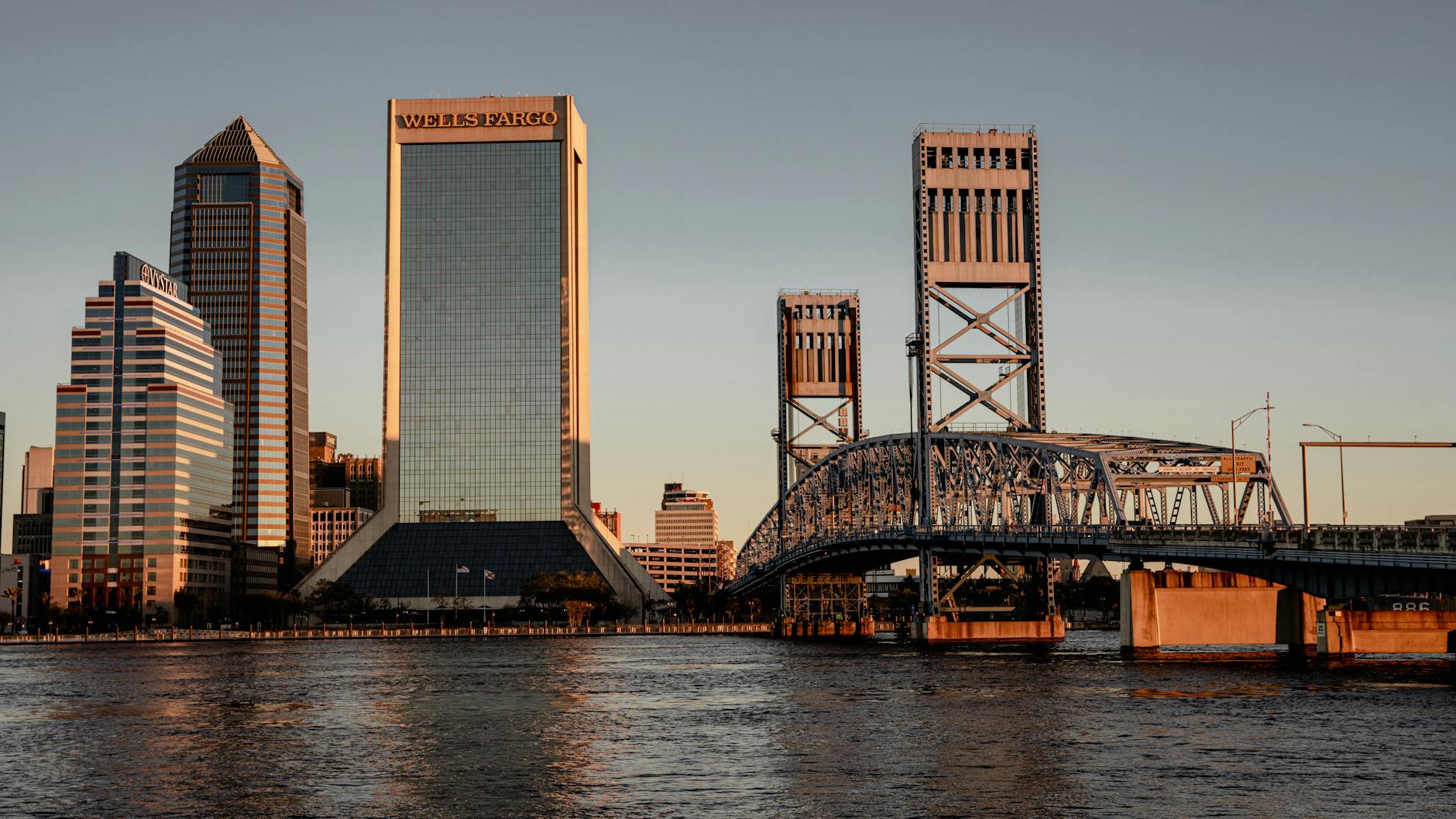
Photo Gallery
Explore Jacksonville in Pictures
A distinctive anchor-shaped fountain serves as a focal point in this Jacksonville, United States of America park setting.
jasonduhon · cc by-sa 3.0
A historic Queen Anne style home located at 2130 Riverside Avenue in Jacksonville, Florida, showcasing the architectural details of the early 20th century.
Bonderud · cc by-sa 4.0
A peaceful waterfront park scene featuring a unique sculpture and fountain in Jacksonville, United States of America.
jasonduhon · cc by-sa 3.0
An expansive black and white aerial photograph capturing the urban layout and winding St. Johns River in Jacksonville, United States of America.
formulanone · cc by-sa 2.0
A seagull rests on the railing overlooking the iconic Friendship Fountain in Jacksonville, Florida.
KlipschFan · cc by-sa 2.0
A serene view of the St. Johns River from a wooden pier in Jacksonville, United States of America, featuring a distant bridge and overcast skies.
jasonduhon · cc by-sa 3.0
A unique anchor-themed fountain serves as a centerpiece in a scenic Jacksonville park overlooking the river.
jasonduhon · cc by-sa 3.0
A historical illustration depicting the grand architecture of the Florida Sub-Tropical Exposition held in Jacksonville, United States of America.
A bronze statue of a runner stands prominently on a brick-paved walkway along the waterfront in Jacksonville, United States of America.
Palácio do Planalto from Brasilia, Brasil · cc by 2.0
The sun rises over the horizon in Jacksonville, United States of America, casting a warm golden glow across the ocean waves and sandy beach.
Shadowmeld Photography · cc by-sa 4.0
A digital fuel pump display at a gas station in Jacksonville, United States of America, showing the total sale amount and gallons pumped.
Anthony Inswasty · cc by-sa 4.0
A peaceful autumn scene featuring a decorative fountain in a pond, surrounded by colorful fall foliage in Jacksonville, United States of America.
qwesy qwesy · cc by 3.0
Practical Information
Getting There
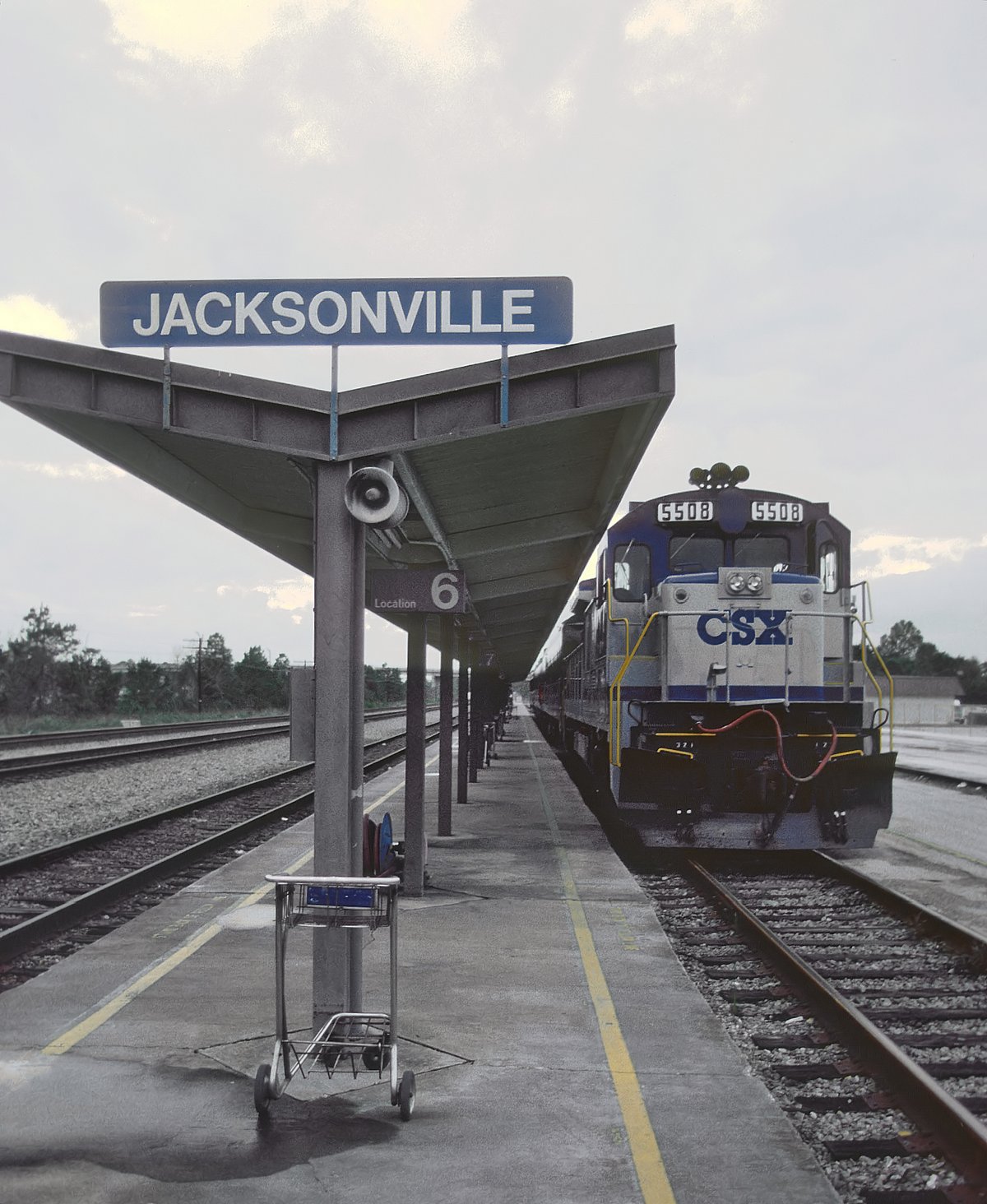
Jacksonville International Airport (JAX) sits 15 miles north of downtown. JTA’s CT3 bus runs from the terminal lower level to the Jacksonville Regional Transportation Center for $2 exact change and takes about an hour. Private sedans start around $40, shared shuttles from $20.
Getting Around
The JTA Skyway is a free 2.5-mile automated monorail with eight downtown stations running 6am–9pm weekdays. Buses cost $2.50 as of the 2026 fare-reduction pilot. The city maintains 482 miles of bike lanes and 77 miles of trails; download the MYJTA app for real-time arrivals and cashless bus payment.
Climate & Best Time
Summers hit 92°F with daily thunderstorms and hurricane risk from June to November. Winters average 64°F highs and 42°F lows. March–May and September–November bring pleasant temperatures, lower humidity and thinner crowds.
Safety
Downtown, Riverside and the beaches are generally walkable during daylight. Skyway stations have CCTV. After dark, standard large-city awareness applies. Check the Jacksonville Sheriff’s Office interactive crime map before wandering into unfamiliar residential pockets.
Where to Eat
Don't Leave Without Trying
Mixed Fillings Pie Shop
local favoriteOrder: The 'River City' pie is a must-try—spicy chorizo, bell peppers, and sharp cheddar in flaky crust.
This is the spot for artisanal savory pies made with locally sourced ingredients. The pies are so beloved they've been featured in national food publications.
Sweet Pete's Candy
local favoriteOrder: The in-house-made Salt Water Taffy and homemade chocolates—especially the 'Pete's Pecan Pralines'.
A Jacksonville institution with a retro vibe, this candy shop is part candy store, part funhouse with interactive candy-making demonstrations.
Setlan Coffee Co.
cafeOrder: The 'Jacksonville Latte'—espresso with local honey and a dash of sea salt, served with a buttery biscuit.
A charming downtown spot with a focus on ethically sourced coffee beans and a cozy, artsy atmosphere perfect for work or meeting friends.
Manifest Distilling
local favoriteOrder: Their signature 'Jax Rum'—aged in oak barrels and served in a classic tiki cup with a citrus garnish.
This downtown watering hole is a hidden gem for craft spirits lovers, with small-batch rum, gin, and vodka distilled on-site.
Maddy D's
local favoriteOrder: The 'Biscuit & Gravy Plate'—fluffy biscuits smothered in sausage gravy, served with fried egg and hash browns.
A cozy, no-frills spot for hearty Southern breakfasts and classic comfort food. The portions are generous, and the vibe is pure Jacksonville charm.
Birdie Coffee Company
cafeOrder: The 'Birdie Bomb'—a cold brew infused with vanilla and lavender, served over a scoop of house-made vanilla bean ice cream.
A trendy downtown coffee shop with a focus on locally roasted beans and creative coffee concoctions. The minimalist aesthetic is perfect for a quick caffeine fix.
Purple Bagel
quick biteOrder: The 'Jacksonville Bagel'—loaded with scrambled eggs, crispy bacon, and cream cheese spiked with jalapeño.
A beloved local bakery with a cult following for its hand-rolled bagels, fresh out of the oven every morning.
Fresh Market Bakery
quick biteOrder: The 'Almond Croissant'—flaky, buttery layers with a sweet almond filling that's not too heavy.
A hidden gem for fresh, homemade pastries and breads. The croissants are a standout, made with European-style butter for an extra-rich flavor.
Dining Tips
- check Orsay requires reservations even on weeknights.
- check Cowford Chophouse is fine dining; book ahead for weekends.
- check Beach casual spots like TacoLu and Dockside Seafood are walk-in friendly.
- check Early bird dining is common among older locals.
- check Standard tipping norms apply (18–22% for sit-down, 10–15% for casual).
Restaurant data powered by Google
Tips for Visitors
Visit in shoulder season
March–May and September–November deliver 73–85 °F days with far less humidity and afternoon storms than June–August. Book beach houses early for March or October; rates drop 25–40 % outside peak summer.
Skyway is free
The 2.5-mile elevated monorail costs nothing and runs every 4 minutes at peak times between 6 am and 9 pm weekdays. Use it to hop between downtown stations and avoid $2.50 bus fares or parking hassles.
Carry exact bus fare
Drivers cannot make change. Download the MYJTA app for cashless payments or bring $2.50 in coins or small bills. The March 2026 fare pilot cut single rides from the old rate.
Follow the shrimp trail
Mayport shrimp appears in po’boys, grits, and boils all along the northeastern edge. Grab a card at any participating spot; stamp it at five locations and the city’s tourism app sometimes offers small rewards.
Sunrise at Boneyard Beach
Drive to Big Talbot Island before 7 am for the skeletal trees and black rock shoreline. Low tide reveals the best compositions; bring bug spray and sturdy shoes.
Skip the city tourist pass
No official multi-attraction pass exists. Buy individual tickets at the Cummer Museum, MOSH, and Zoo. The Skyway and current NAVI pilot rides remain free.
Explore the city with a personal guide in your pocket
Your Personal Curator, in Your Pocket.
Audio guides for 1,100+ cities across 96 countries. History, stories, and local insight — offline ready.
Audiala App
Available on iOS & Android
Join 50k+ Curators
Frequently Asked
Is Jacksonville worth visiting? add
Yes, if you like uncrowded beaches, river sunsets, and local seafood without theme-park prices. The city stretches across 22 miles of Atlantic shoreline and the St. Johns River; you can watch dolphins from the Riverwalk in the morning and eat garlic crabs on the Northside the same evening.
How many days do you need in Jacksonville? add
Three full days works for beaches, downtown riverfront, and one museum. Five days lets you add Talbot Islands, Kingsley Plantation, and a day trip to St. Augustine or Fernandina Beach. Anything less than three feels rushed.
How do you get from Jacksonville airport to downtown? add
JTA bus route CT3 leaves the lower level every 30 minutes, costs $2 exact change, and takes about 64 minutes to the Jacksonville Regional Transportation Center. Shared shuttles start around $20 per person; private sedans from $40.
Is downtown Jacksonville safe for tourists? add
The Skyway corridor, Riverwalk, and Riverside/Avondale feel comfortable during daylight. Use normal city awareness after dark. All Skyway stations have CCTV. Check the Jacksonville Sheriff’s Office crime map before wandering into unfamiliar neighborhoods at night.
When is the best time to visit Jacksonville? add
March–May or September–November. You avoid 90 °F heat, daily thunderstorms, and peak hurricane risk while catching pleasant 73–85 °F days. October often delivers the clearest light for beach and river photos.
Is public transport good in Jacksonville? add
The Skyway is free, climate-controlled, and convenient for downtown. Buses cost $2.50 under the current pilot but run less frequently outside core routes. Most visitors combine JTA with rideshares for beach neighborhoods.
Sources
- verified Visit Jacksonville Official Site — Top attractions, neighborhoods, beaches, shrimp trail, transportation overviews, and March 2026 updates.
- verified Jacksonville Transportation Authority (JTA) — Skyway hours and map, bus fares under the 2026 pilot program, MYJTA app details, and Regional Transportation Center information.
- verified Florida Climate Center & NWS Jacksonville — 1991–2020 temperature normals, rainfall patterns, and best months guidance for Jacksonville.
- verified The Jaxson — Local food research on Mayport shrimp, garlic crabs, camel riders, datil peppers, and Minorcan chowder.
Last reviewed: