Father Damien: Historical Background
Early Life and Calling
Father Damien was born Jozef De Veuster in Tremeloo, Belgium, in 1840. Raised in a devout Catholic family, he joined the Congregation of the Sacred Hearts of Jesus and Mary, taking the name Damien. When his brother, also a missionary, fell ill, Damien volunteered to take his place in Hawaii. He arrived in Honolulu in 1864 and was ordained at the Cathedral of Our Lady of Peace (dmcchawaii.org; en.wikipedia.org).
Leprosy in Hawaii
During the 19th century, leprosy (Hansen’s disease) spread rapidly among Native Hawaiians, who lacked immunity to introduced diseases. To contain the outbreak, the Hawaiian government exiled those diagnosed to the isolated Kalaupapa Peninsula on Molokaʻi, often in harsh and neglected conditions (waimea.com; en.wikipedia.org).
Service at Kalaupapa
In 1873, Father Damien volunteered to serve at Kalaupapa. His holistic approach encompassed spiritual guidance, construction of homes and churches, nursing, and advocacy. He lived among the patients, providing basic needs and dignity. After more than a decade, he contracted leprosy himself, continuing his work until his death in 1889 at age 49 (dmcchawaii.org; thefamouspeople.com).
Legacy and Canonization
Father Damien became an international symbol of Christian charity and social justice. He was canonized by Pope Benedict XVI in 2009 and is now the patron saint of Hawaii. His feast day, April 15, is observed statewide, and a relic is enshrined at the Cathedral Basilica of Our Lady of Peace (honolulucathedral.org; en.wikipedia.org; tripomatic.com).
The Statue: Symbolism and Artistic Creation
Commissioned in the late 1960s, the Father Damien Statue was sculpted by Marisol Escobar, a Venezuelan-American artist known for her innovative and expressive style (U.S. Capitol Art). Her design reflects Father Damien’s humility and resilience, depicting him in his later years with visible scars, a sling, and a broad-brimmed hat. The statue’s block-like base and realistic features evoke both architectural solidity and deep humanity (hawaiicatholicherald.com).
A second casting of the statue resides in the National Statuary Hall Collection at the U.S. Capitol in Washington, D.C., representing Hawaii alongside King Kamehameha I (U.S. Capitol Art).
Visitor Information: Hours, Tickets, and Accessibility
Visiting Hours
The Father Damien Statue is situated outdoors at 415 South Beretania Street, Honolulu, HI 96813, on the grounds of the Hawaiʻi State Capitol (e-Hawaii). The statue is accessible 24 hours a day, seven days a week. For optimal lighting and safety, visiting during daylight hours is recommended.
Admission and Tickets
There is no admission fee or tickets required to visit the Father Damien Statue. The site is open to the public at all times.
Accessibility
The statue and Capitol grounds are wheelchair accessible, with paved walkways and ramps. Paid parking and public transit (TheBus) are available nearby. Service animals are allowed, and the site is stroller-friendly.
Nearby Attractions
The statue’s central location makes it a convenient point to explore:
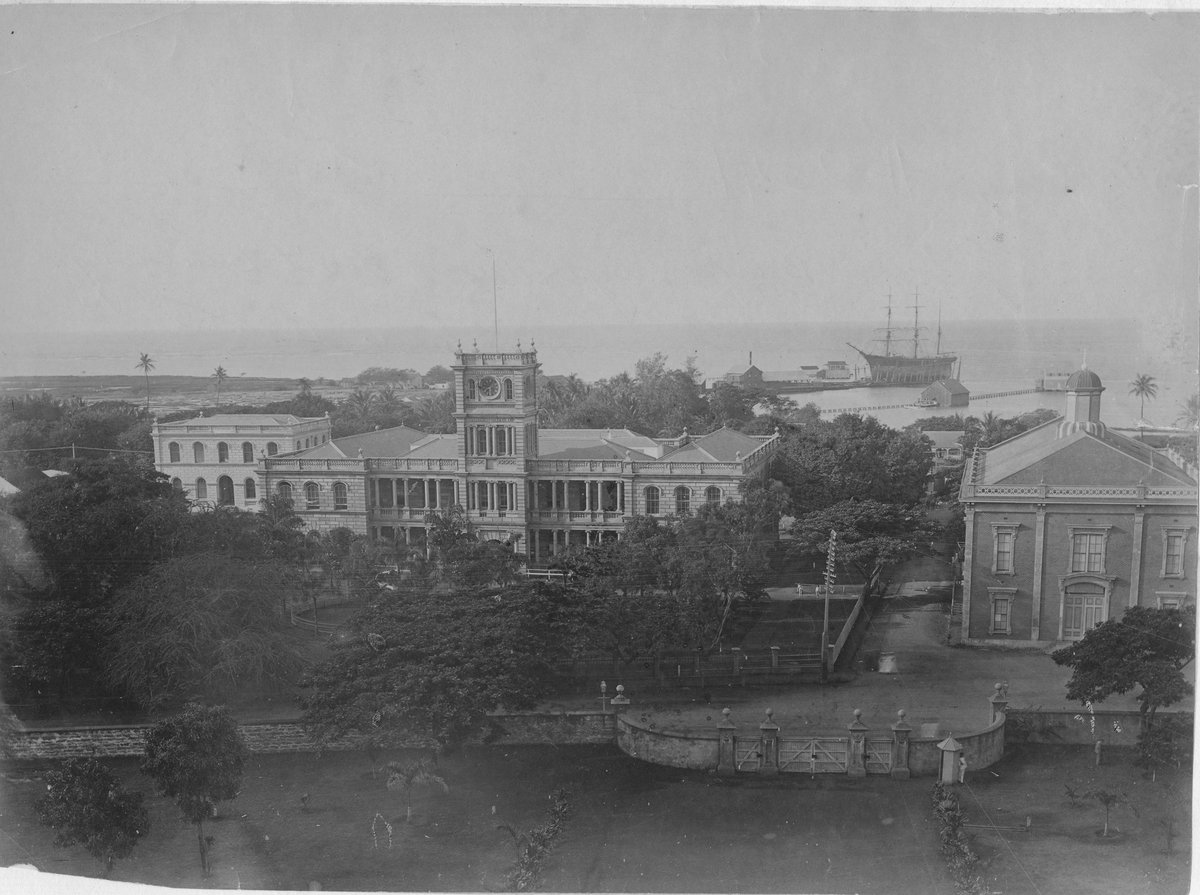
- Iolani Palace – the only royal palace in the United States
- King Kamehameha I Statue
- Hawaii State Art Museum
- Cathedral Basilica of Our Lady of Peace
These sites are within walking distance and offer a comprehensive look at Hawaii’s history and culture (Hawaii Getaway Guide).
Events and Commemorations
The Father Damien Statue is central to annual observances, especially on Father Damien Day (April 15) and his feast day (May 10). Ceremonies include lei-draping, prayers, and music, celebrating his legacy. The statue is also a focal point for community healing events and educational programs (en.wikipedia.org).
Visitor Tips and Etiquette
- Best Times Early morning or late afternoon for ideal lighting and fewer crowds.
- Cultural Respect Approach the statue with reverence; leis may be left as offerings.
- Photography Permitted and encouraged, especially with the Capitol’s modernist architecture as a backdrop.
- Comfort Bring sun protection and water, as the site is exposed to the elements.
- Combine Visits Plan a walking itinerary to nearby historical and cultural attractions.
Frequently Asked Questions (FAQ)
Q: What are the Father Damien Statue visiting hours?
A: The statue is outdoors and accessible 24/7.
Q: Is there an admission fee or ticket required?
A: No, the site is free and open to everyone.
Q: Are guided tours available?
A: Guided tours are available through the State Capitol and local operators; self-guided resources are also offered.
Q: Is the site wheelchair accessible?
A: Yes, the grounds are fully accessible.
Q: Where can I park?
A: Paid parking is available nearby; public transit via TheBus is recommended during busy hours.
Q: Can I leave a lei at the statue?
A: Yes, it is a customary way to honor Father Damien.
Discover More
The Father Damien Statue stands as both a historic monument and a living symbol of compassion and aloha in Hawaii. With free, all-day access and proximity to other Honolulu historical sites, it is an essential stop for anyone seeking to understand Hawaii’s unique blend of history, spirituality, and social justice. To enrich your visit, consider guided tours and educational resources at nearby museums. Annual commemorations and the serene Capitol grounds make every visit memorable.
Plan your visit today to connect with Hawaii’s rich heritage. For guided audio tours and insider tips, download the Audiala app, and follow us on social media for the latest news on Honolulu’s cultural landmarks.