Founding and Early Years (1950s–1960s)
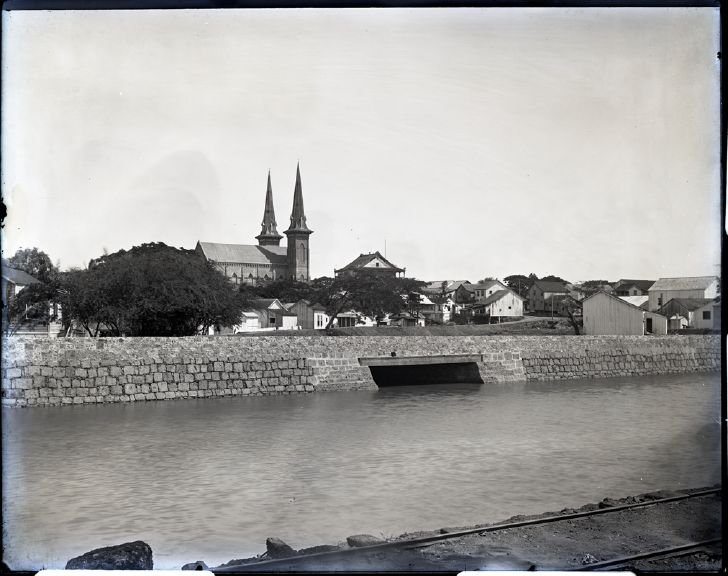
Kahala Mall’s roots extend back to the postwar boom of Honolulu’s residential districts. Established as Waialae Shopping Center in 1954 and designed by architect Victor Gruen, it quickly became a vital retail hub for Kahala and Kaimuki (Images of Old Hawaiʻi). The center initially featured three main buildings, anchored by Liberty House (a major local department store) and Piggly Wiggly (later Star Market). Expansion in 1957 brought Hawaii’s first F.W. Woolworth store, marking a milestone in the local retail landscape (Images of Old Hawaiʻi).
Waialae Bowl, the area’s only bowling alley at the time, contributed to the center’s early reputation as a community gathering spot. The mix of local and national retailers established a unique commercial and social identity.
Enclosure and Modernization (1970s)
Responding to new competition from Ala Moana Center, the mall underwent major renovations between 1969 and 1970. It was enclosed and air-conditioned, becoming Hawaii’s first fully climate-controlled shopping mall (Images of Old Hawaiʻi; Mallmanac). This shift created a comfortable, year-round shopping environment and the name was changed to Kahala Mall, reflecting its new upscale identity. The mall doubled in size, offering 320,000 square feet of leasable space and over 1,500 parking stalls.
Growth, Anchor Tenants, and Noteworthy Events (1980s–2000s)
Kahala Mall continued to adapt through the decades, balancing national chains with local businesses (Mallmanac). Department store consolidation saw Liberty House become Macy’s, and Piggly Wiggly/Star Market transformed into Whole Foods Market. Long’s Drugs, a local institution, remains under the CVS umbrella. Entertainment evolved as Waialae Bowl closed, but Consolidated Theatres Kahala 8 remains a popular anchor (Malls Fandom).
A major challenge struck in 2006 when a flood damaged much of the mall, but rapid restoration efforts allowed Kahala Mall and its tenants to bounce back quickly (Images of Old Hawaiʻi).
Community Impact and Ownership
Kahala Mall is managed by MMI Realty and sits on land owned by Kamehameha Schools, whose mission supports educational initiatives throughout Hawaii (Malls Fandom). This structure ensures that revenue from the mall benefits the greater community. Its prime location near major highways and bus routes enhances accessibility for both residents and tourists (Mallmanac).
Cultural Significance
Kahala Mall is a vital community hub, hosting wellness programs, live performances, and cultural celebrations. The mall’s clientele is diverse, from local seniors and students to famous residents like Jack Lord, commemorated with a bust near California Pizza Kitchen (Malls Fandom). Its adaptability and community focus have kept it at the heart of East Oahu life for over seventy years.
Practical Visitor Information
Visiting Hours & Admission
- Monday–Saturday 10:00 AM – 9:00 PM
- Sunday 10:00 AM – 7:00 PM
Note: Hours may change during holidays or for special events. Always check the official website for the most current information.
- Admission Free entry. Ticketing applies only to specific venues within the mall, such as movie theaters and special events.
Parking & Accessibility
- Parking Over 1,500 parking spaces, including accessible stalls.
- Accessibility Ramps, elevators, and accessible restrooms are available throughout the mall.
Transportation Options
- By Car Easily accessible from the H1 Freeway and Kalanianaole Highway.
- Public Transit TheBus #14 (Diamond Head-Pacific Ocean route) and other nearby lines.
- Trolley & Shuttle Landmark trolley stop and shuttle service from the nearby Kahala Hotel & Resort (Kahala Mall Center).
Events & Tours
- The mall regularly hosts community and cultural events, including live music, wellness fairs, and holiday celebrations (Honolulu Magazine; Eventbrite).
- No regular guided mall tours, but nearby historical and architectural tours are available through local tourism providers.
Nearby Attractions
- Kahala Beach Tranquil white sand beach nearby.
- Diamond Head State Monument Iconic volcanic crater and hiking destination.
- Waikiki Beach World-renowned beach a short drive away.
- Honolulu Zoo Family-friendly and close to Waikiki.
Frequently Asked Questions (FAQ)
Q: What are the current visiting hours?
A: Monday–Saturday 10:00 AM–9:00 PM, Sunday 10:00 AM–7:00 PM. Check the official website for updates.
Q: Is parking available?
A: Yes, with over 1,500 spaces, including accessible parking.
Q: Are pets allowed?
A: Only service animals are permitted inside the mall.
Q: Does the mall host regular events?
A: Yes, including live music, cultural celebrations, and charity events.
Q: How can I reach Kahala Mall by public transport?
A: TheBus #14 and other routes stop nearby; a trolley and shuttle service are also available.
Q: Is the mall accessible for people with disabilities?
A: Yes, with ramps, elevators, and accessible restrooms.
Nearby Historical Sites: Visitor Guides
ʻIolani Palace
- Significance Only royal palace in the U.S., built in 1882, former residence of Hawaiian monarchs.
- Hours Tuesday–Saturday, 9:00 AM–4:00 PM (last entry 3:00 PM).
- Admission Adults $30, Seniors $25, Youth (5–17) $15, under 5 free. Tickets at the official website.
- Tours Guided and audio tours highlight royal history and artifacts.
- Accessibility Wheelchair access, assistive listening, and elevators available.
- Photography Permitted in most areas; no flash or tripods.
- Nearby Hawaii State Capitol, Kawaiahaʻo Church, Bishop Museum.
Diamond Head State Monument
- Significance Iconic volcanic cone with panoramic views; historic WWII military site.
- Hours Daily, 6:00 AM–6:00 PM (last entry 4:30 PM).
- Admission $5 per person (age 13+); under 13 free. Pay at kiosk or online.
- Trail 0.8-mile hike to the summit; moderately challenging.
- Transport On-site parking is limited; TheBus routes 2 and 23 serve the area (Google Maps).
- Accessibility Visitor center and park areas are accessible; summit trail is not wheelchair-friendly.
- Tips Wear sturdy shoes, bring water, and start early to avoid crowds.