Introduction
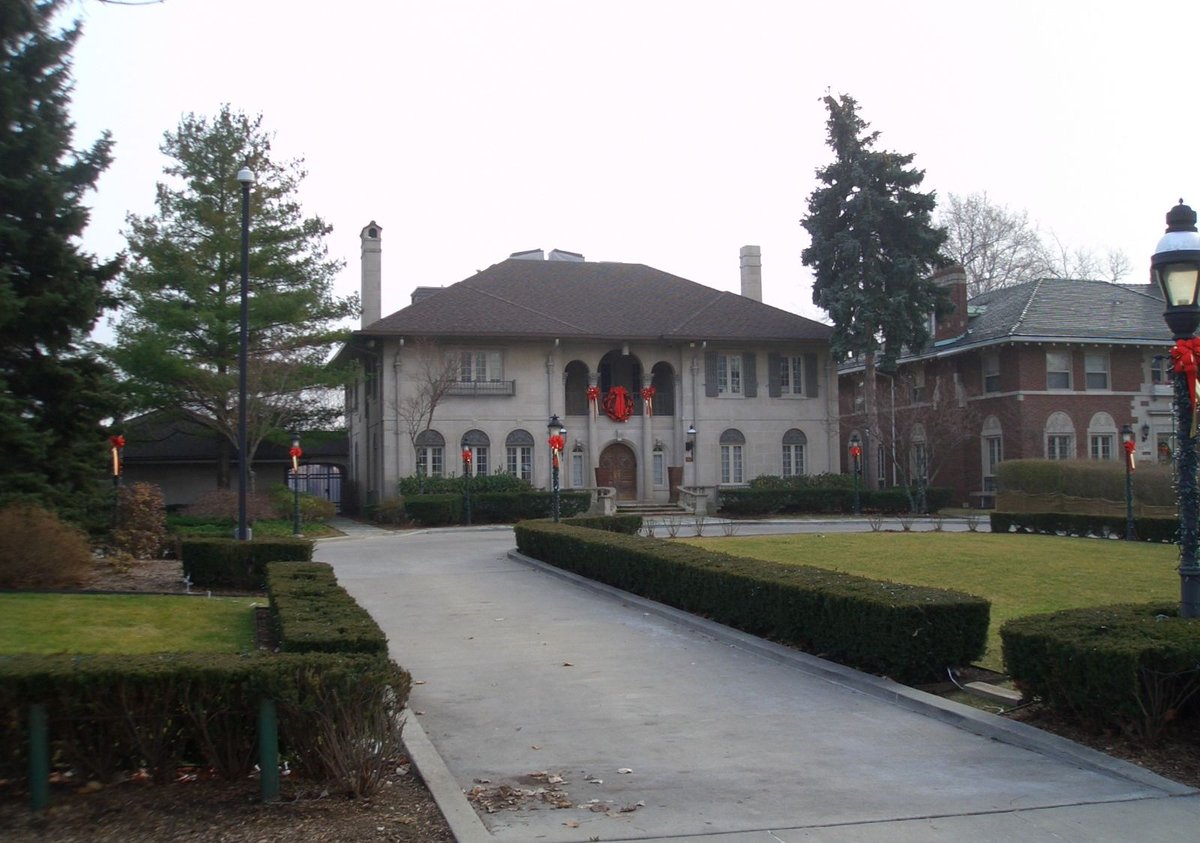
Nestled in Detroit’s Brush Park Historic District, the Hudson-Evans House stands as a remarkable symbol of the city’s Gilded Age. Built in the early 1870s, this mansion not only showcases exquisite French Second Empire and Italianate architecture but also tells the story of Detroit’s evolution from a burgeoning industrial city to a center of culture and commerce. Once home to influential figures such as Philo Wright, the Whitney family, and Joseph L. Hudson, the founder of the famed J.L. Hudson Company, the house remains a key piece of Detroit’s heritage (Domustoria), (Detroit1701.org), (Preservation Detroit).
Although its interior is not open for regular public tours due to its use as office space, the Hudson-Evans House’s exterior, historical context, and occasional special events make it a must-see for architecture aficionados and history enthusiasts alike. This guide provides a comprehensive overview, including historical background, architectural highlights, visiting logistics, preservation efforts, and nearby attractions.
Historical Background
Origins and Early Ownership
The Hudson-Evans House was constructed between 1872 and 1873 for Philo Wright, a prominent ship owner. Its location in Brush Park signified the burgeoning prosperity of post-Civil War Detroit and the area’s emergence as a residential enclave for the city’s elite (Domustoria).
The Whitney Family Connection
In 1882, David Whitney Jr., a leading lumber magnate, gifted the home to his daughter Grace Whitney Evans as a wedding present. Grace was a noted social reformer and the first president of the Detroit YWCA, linking the house to Detroit’s civic and philanthropic history (Detroit1701.org).
The Hudson Era
From 1894 to 1904, Joseph L. Hudson, founder of the J.L. Hudson Company, rented the property. His association with the house connected it to Detroit’s retail and economic boom during the early 20th century (Wikipedia).
Architectural Significance
Architectural Style and Features
The Hudson-Evans House is a refined example of French Second Empire style, with Italianate influences. Key architectural features include:
- Mansard Roof: Multicolored slate covers the signature mansard roof, a hallmark of Second Empire architecture.
- Bay Windows: Tall, two-story bay windows add depth and elegance to the facade.
- Elaborate Ornamentation: Decorative brackets, window hoods, and intricate stonework reflect the era’s craftsmanship.
- Three-Story Structure: Built on a robust stone foundation with red brick exteriors, the house presents an imposing presence within Brush Park (Detroit1701.org).
Interior Details
The interior retains original elements such as hardwood floors, marble fireplaces, ornate plasterwork, and a grand staircase. Although not open for daily tours, these features have been carefully preserved during restoration efforts, reflecting Detroit’s Gilded Age opulence.
Visitor Information
Visiting Hours
- Regular Access: The Hudson-Evans House currently serves as private office space and is not open for daily public tours.
- Special Events: Public access is available during special events, open houses, and guided tours organized by local historical and preservation groups. Dates and times vary and are typically announced in advance (Preservation Detroit), (Detroit History Tours).
Tickets and Admission
- General Admission: There is no admission fee for viewing the exterior.
- Tours: Tickets or registration may be required for special events and guided tours. Prices and availability vary by event and organizer.
Accessibility
- Exterior Viewing: The property’s exterior is accessible to the public at any time.
- Interior Access: Limited to special events; accessibility may be restricted due to the building’s historic nature. Contact organizers ahead regarding accommodations.
Travel and Parking Tips
- Location: 79 Alfred Street, Detroit, MI 48201, in Brush Park.
- Transportation: Easily accessible via Detroit’s QLINE streetcar and multiple bus routes.
- Parking: On-street parking is available, but can be limited. Consider public transit or ride-share services.
- Walking Tours: The neighborhood is ideal for walking tours that include other historic homes.
Nearby Attractions
- David Whitney House: Another Gilded Age mansion, open for special events and tours.
- Detroit Institute of Arts: World-class art museum nearby.
- Comerica Park: Home of the Detroit Tigers, within walking distance.
- Brush Park Historic District: Explore restored mansions and learn about Detroit’s history.
Preservation and Restoration
The Hudson-Evans House is listed on the National Register of Historic Places, ensuring a level of protection and access to preservation funding. Restoration projects, supported by local advocacy and preservation groups, focus on stabilizing the structure, preserving original details, and adapting spaces for modern use. These efforts keep the house as a living piece of Detroit’s past (Preservation Detroit).
Visitor Experience and FAQs
Frequently Asked Questions
Q: Can I tour the interior of the Hudson-Evans House?
A: Interior tours are only available during special events or by arrangement with local preservation groups.
Q: Is there an admission fee?
A: There is no fee to view the exterior. Tours may require paid tickets.
Q: Is the house wheelchair accessible?
A: Accessibility to the interior may be limited. Please contact event organizers for specific accommodations.
Q: Are photographs allowed?
A: Exterior photography is permitted. Interior photography is possible only during special events and with permission.
Q: How do I find out about upcoming tours or events?
A: Monitor Preservation Detroit, Detroit History Tours, and the Detroit Events Calendar for updates.
Discover More
To stay informed about upcoming tours, special events, and Detroit’s historic sites, download the Audiala app, follow Preservation Detroit, and explore local tour calendars. Support Detroit’s heritage by engaging with preservation organizations and sharing your experiences on social media.
By visiting the Hudson-Evans House and its neighboring landmarks, you are helping to keep Detroit’s unique architectural and cultural legacy alive for future generations.
Audiala2024
Listen to the full story in the app
Your Personal Curator, in Your Pocket.
Audio guides for 1,100+ cities across 96 countries. History, stories, and local insight — offline ready.
Audiala App
Available on iOS & Android
Join 50k+ Curators
Sources
- verified
- verified
- verified
- verified
- verified
- verified
Last reviewed: