Dallas
United States of America Updated Apr 2026
A thirty-foot eyeball watches you from downtown. Not a metaphor—an actual sculpture, blue and unblinking, in the shadow of glass towers. This is Dallas, United States of America, a city that willfully upends your expectations. Forget the cowboy hat and oil derrick; its real character hums in blues clubs older than the state's myth and hides in Art Deco fairgrounds built for a world's fair that never ended.
 Photo: Terrance Barksdale / Pexels
- Attractions
- 8
- Trip length
- 3 days
- Best season
- Fall (October-November)
Why Dallas
Built from cited sources · see the method · How we make our guides →
The city’s cultural spine is the Dallas Arts District, a 68-acre stretch of institutions like the Nasher Sculpture Center and the Winspear Opera House. But the soul lives elsewhere. Deep Ellum’s brick walls still echo with Blind Lemon Jefferson’s guitar licks from the 1920s, while Fair Park preserves the 1936 Texas Centennial in the most complete collection of Art Deco exposition architecture on the planet. There, you’ll find the Texas Woofus, a 20-foot-tall bronze chimera of every farm animal, grinning absurdly since 1956.
This is a city that builds monuments to both gravity and whimsy. The spiral chapel at Thanks-Giving Square is a concrete hymn. Three giant, friendly robots made of scrap metal—the Traveling Man sculptures—guard an underpass in Deep Ellum. History isn't just remembered here; it's physically preserved in the theater seat where Lee Harvey Oswald was arrested and the textbook depository window from which a president was shot.
Dallas understands scale. The Dallas Arboretum spreads across 66 acres on the shore of White Rock Lake. Lakeside Park in Highland Park is dotted with bear statues twice your height. The light here is sharp, the spaces are vast, and the contrasts are deliberate. It’s a place where you can trace the weight of American history with one hand and touch a giant bronze teddy bear with the other.
A City That Remembers
Dallas holds a mirror to the 20th century. The Sixth Floor Museum frames a single, world-changing moment in Dealey Plaza, while the Texas Theatre—where Oswald was captured—still screens films just blocks from the largest collection of Art Deco exposition buildings on Earth at Fair Park.Art with an Attitude
The culture here refuses to take itself too seriously. A 30-foot concrete eyeball stares down downtown, giant robot sculptures guard Deep Ellum, and the Texas Woofus, a mythical chimera of Texas livestock, presides over the fairgrounds. It's a city built on whimsy as much as wealth.Soundtrack in Deep Ellum
Forget the oil baron stereotypes. The city's real pulse comes from its historic blues and jazz roots. Deep Ellum’s brick warehouses vibrate with live music, a tradition that dates back a century and still defines the neighborhood's gritty, authentic character after dark.Green Spaces & Giant Bears
Dallas can be lush. The Dallas Arboretum spreads across 66 acres along White Rock Lake, while smaller parks hold surreal surprises. In Lakeside Park, you'll find oversized bronze teddy bears lounging on the grass, a quiet piece of playful sculpture hidden in plain sight.
Neighborhoods
Where to wander, by quarter — each with its own rhythm.
Deep Ellum
The birthplace of Texas blues. You can feel it in the grit of the century-old brick and hear it in the thrum from dive bar doors. This is where Robert Johnson and Blind Lemon Jefferson cut records. Now, it’s a living museum of music and mural art, anchored by the iconic Traveling Man robot sculptures. Come for the history, stay for the punk shows and craft beer.Oak Cliff (Bishop Arts District)
Separated from downtown by the Trinity River, Oak Cliff has its own rhythm. The Bishop Arts District is its bohemian heart—a grid of locally-owned boutiques, coffee roasters, and restaurants where no two buildings match. It feels less like a planned development and more like a village that organically decided to be interesting. The vibe is independent, unhurried, and defiantly un-chain.Downtown
A forest of glass and steel punctuated by surreal art. The 30-foot-tall Giant Eyeball stares blankly from a plaza. The Thanks-Giving Square chapel spirals 90 feet into the sky. This is the administrative and financial core, yes, but it’s also where you’ll find the Sixth Floor Museum, a sobering pilgrimage site housed in the former Texas School Book Depository. The light between the towers is dramatic, especially at dusk.Dallas Arts District
A 19-block cultural campus, the largest of its kind in the nation. This isn't a neighborhood for living, but for experiencing. The angular steel of the Winspear Opera House sits beside the travertine of the Wyly Theatre. The Nasher Sculpture Center’s garden is a serene, open-air gallery. It feels curated, almost pristine—a deliberate concentration of beauty where you move from symphony to sculpture in the space of a city block.Fair Park
Less a neighborhood, more a 277-acre time capsule. Built for the 1936 Texas Centennial Exposition, it’s the world’s largest collection of Art Deco fairground architecture. The buildings are adorned with terracotta and sculptures of pioneers and longhorns. It’s strangely quiet outside of event days, letting you appreciate the faded grandeur and that bizarre bronze Texas Woofus statue in peace. History here is frozen in pastel-colored concrete.
Plan your trip
Before you go
- Getting There
- Dallas/Fort Worth International Airport (DFW) is the primary hub, one of the world's busiest. Dallas Love Field (DAL) handles domestic and regional flights. The city is a highway nexus, where Interstates 30, 35, and 45 converge, linking it to Fort Worth, Houston, and Oklahoma.
- Getting Around
- Dallas Area Rapid Transit (DART) runs a 93-mile light rail system with four color-coded lines and an extensive bus network. The streetcar connects downtown to Bishop Arts. Cycling infrastructure is growing, but for tourists, the DART 2-Hour pass ($3) or Day Pass ($6) in 2026 is the most flexible option.
- Climate & Best Time
- Summers are long, hot, and humid, with July highs averaging 36°C (96°F). Winters are mild with occasional cold snaps. Spring (March-May) and Autumn (October-November) offer the most pleasant weather. The peak tourism months are spring and during the State Fair in autumn.
- Language & Currency
- English is the primary language, but Spanish is widely spoken. The US Dollar is the currency. Credit cards are accepted nearly everywhere, though it's wise to carry some cash for smaller vendors and food trucks, especially in neighborhoods like Deep Ellum or Bishop Arts.
- Safety
- Standard urban awareness applies. Downtown, the Arts District, and Deep Ellum are generally safe for visitors, especially during daytime and evening events. As in any major city, be mindful of your surroundings in less crowded areas after dark and secure valuables in your vehicle.
Who lived here
-
Assassin · 1939–1963
Lee Harvey Oswald
Captured here
His flight from Dealey Plaza ended at the Texas Theatre in Oak Cliff. Police dragged him from the cinema's darkness into a permanent spotlight of infamy. The theatre still screens films, a mundane activity shadowed by that single, chaotic afternoon in 1963.
-
Blues Musician · 1893–1929
Blind Lemon Jefferson
Performed and recorded here
He was the first major star of country blues, and his raw, poetic guitar work echoed through the streets of Deep Ellum in the 1920s. He'd play for tips on street corners, his voice cutting through the neighborhood's noise. Today, his ghost is in the brick of every music venue there.
-
Outlaw · 1910–1934
Bonnie Parker
Born and raised here
She grew up in the Cement City neighborhood, a bright student dreaming of fame. Dallas molded her ambition, which later twisted into infamy with Clyde Barrow. She left the city for a life on the run, but her story always circles back to this Texas soil.
-
Outlaw · 1909–1934
Clyde Barrow
Lived and operated here
The Barrow Gang treated Dallas as a base between bank robberies. It was a place to hide, to plan, and to occasionally visit family, always watching for the law. The city was both his anchor and his trap.
-
Blues Guitarist · 1954–1990
Stevie Ray Vaughan
Grew up and launched career here
He honed his ferocious, soul-baring style in the clubs of Deep Ellum and Austin, a direct descendant of the Texas blues giants. Dallas was his proving ground. He took the sound born in these neighborhoods and blasted it to the world.
Where to Eat
Where locals actually book dinner — not the tourist menus.
Insider tips
Small things that change how the city treats you.
Explore by District
Skip the generic downtown loop. Spend a morning in Oak Cliff's Bishop Arts District for local boutiques, then walk Deep Ellum's streets for music history and murals. They're distinct worlds.Visit in Fall
October and November are your best bets. The summer heat is oppressive, but autumn brings mild temperatures perfect for exploring Fair Park's Art Deco grounds or the Arboretum.Book JFK Museum Early
Tickets for The Sixth Floor Museum at Dealey Plaza sell out days in advance, especially on weekends. Reserve your timed slot online before you arrive.Use DART for Fair Park
Driving to Fair Park can be a hassle. Take the DART Green Line train instead; it drops you right at the gate. It's cheaper and faster.Eat Local in Oak Cliff
Forget the steakhouse chains. Head to the Bishop Arts District for restaurants run by local chefs. You'll find everything from upscale Texas comfort food to authentic Mexican.
Gallery
The city, as it actually looks.


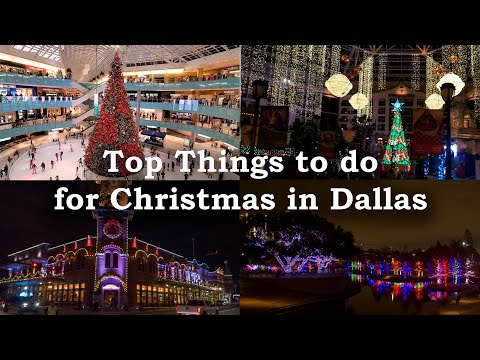
Watch

Frequently asked
Is Dallas worth visiting?
Absolutely, if you look past the stereotypes. It's not all cowboy hats. Dallas offers a sophisticated arts district, a deep musical heritage in Deep Ellum, and a collection of genuinely oddball public art, from a 30-foot eyeball to giant robot sculptures.
How many days do I need in Dallas?
Three days is ideal. Dedicate one to history and downtown (JFK Museum, Giant Eyeball, Thanks-Giving Square), one to arts and culture (Dallas Museum of Art, Nasher Sculpture Center), and one to exploring neighborhoods like Deep Ellum and Oak Cliff.
Is Dallas walkable?
Only in pockets. Downtown has walkable sections, but the real character is spread across distinct districts like Deep Ellum, Uptown, and Oak Cliff. You'll need to drive, use rideshares, or take the DART train to connect them.
What's the best area for live music?
Deep Ellum, full stop. This is where Robert Johnson and Blind Lemon Jefferson recorded. Today, its brick-walled venues host everything from blues and jazz to indie rock. The vibe is gritty, historic, and unpretentious.
Is Dallas expensive to visit?
It can be, but it doesn't have to be. Major museums like the Dallas Museum of Art have free general admission. You can spend a day exploring Fair Park's architecture or the Bishop Arts District's streets for the cost of a coffee. Budget for transport between neighborhoods.
Pick up where you left off
Saved and recently read places — kept on this device only.
Photo credits (12)
- Terrance Barksdale — Pexels License (https://www.pexels.com/license/) — Source: https://www.pexels.com/photo/12162236/
- Terrance Barksdale — Pexels License (https://www.pexels.com/license/) — Source: https://www.pexels.com/photo/12162237/
- Terrance Barksdale — Pexels License (https://www.pexels.com/license/) — Source: https://www.pexels.com/photo/16623105/
- Pixabay — Pexels License (https://www.pexels.com/license/) — Source: https://www.pexels.com/photo/280193/
- Talena Reese — Pexels License (https://www.pexels.com/license/) — Source: https://www.pexels.com/photo/9921191/
- Nuray — Pexels License (https://www.pexels.com/license/) — Source: https://www.pexels.com/photo/23928974/
- Nuray — Pexels License (https://www.pexels.com/license/) — Source: https://www.pexels.com/photo/23930024/
- Danny Meneses — Pexels License (https://www.pexels.com/license/) — Source: https://www.pexels.com/photo/943078/
- Ricky Esquivel — Pexels License (https://www.pexels.com/license/) — Source: https://www.pexels.com/photo/2061222/
- brian neeley — Pexels License (https://www.pexels.com/license/) — Source: https://www.pexels.com/photo/469103/
- Talena Reese — Pexels License (https://www.pexels.com/license/) — Source: https://www.pexels.com/photo/10482416/
- Sadid Morshed — Pexels License (https://www.pexels.com/license/) — Source: https://www.pexels.com/photo/14972110/
Photos may have been resized or cropped.