
Place
United States of America Updated Jul 2026
Lake Erie gives Cleveland, United States of America, a trick of light that feels almost coastal: gulls wheel over the Rock & Roll Hall of Fame, freighters slide past the harbor, and then you turn inland and hit a wall of old-bank grandeur and brick market halls. The surprise is how solid the city feels. Cleveland was built with industrial money and immigrant appetite, and a lot of that fabric is still standing where other Rust Belt cities lost theirs.
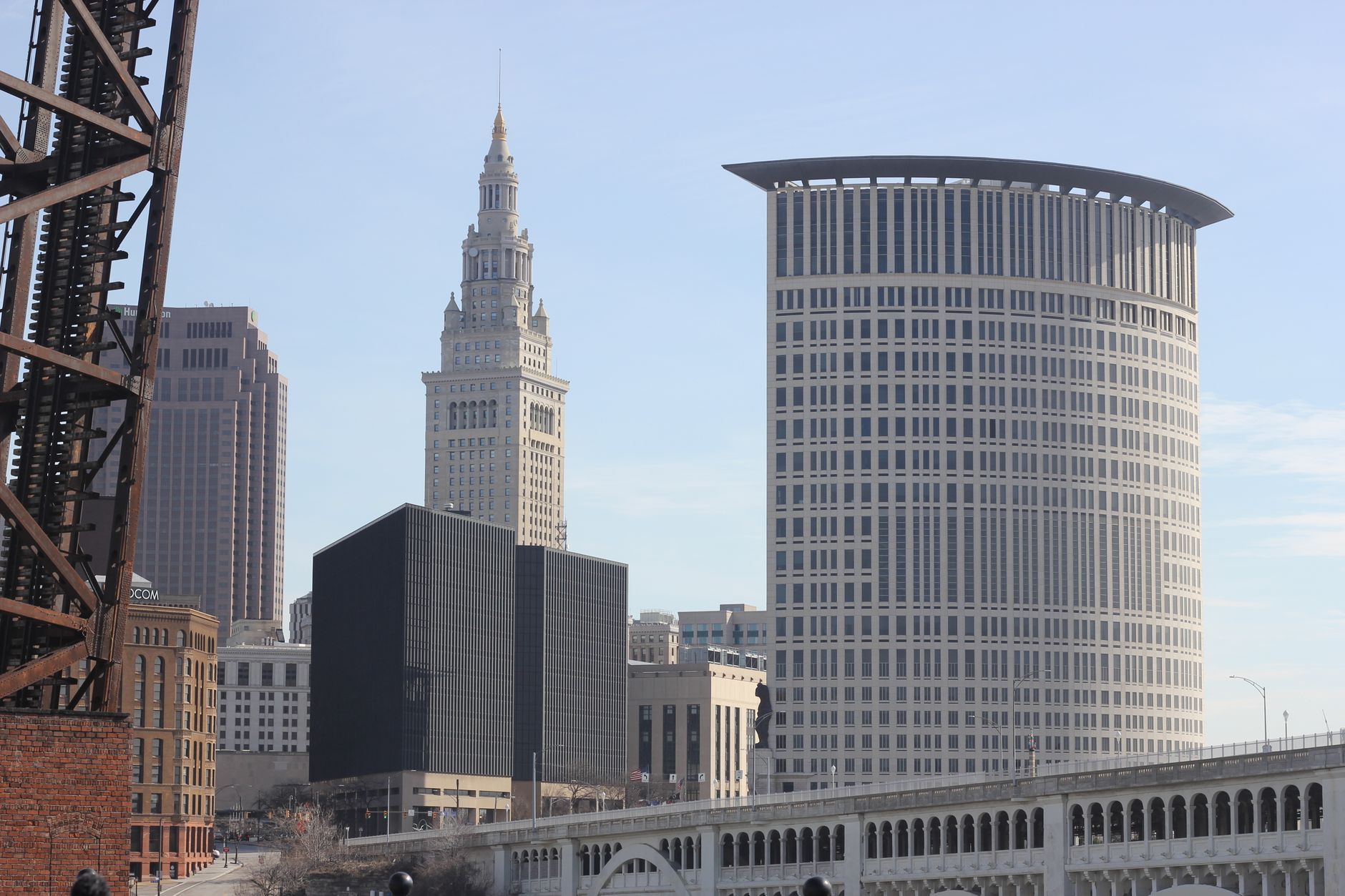 Photo: Rohit balage / Pexels
Built from cited sources · see the method · How we make our guides →
Downtown still carries the swagger of the 1903 Group Plan, when Daniel Burnham's City Beautiful thinking reshaped the civic core into broad malls, Beaux-Arts facades, and a Public Square that has anchored the city since the 1796 plat. Walk a few blocks and the mood shifts fast: the 1890 Arcade throws iron and glass overhead like a small indoor cathedral, while Terminal Tower still looms over the square with the confidence of a city that once expected the century to belong to it.
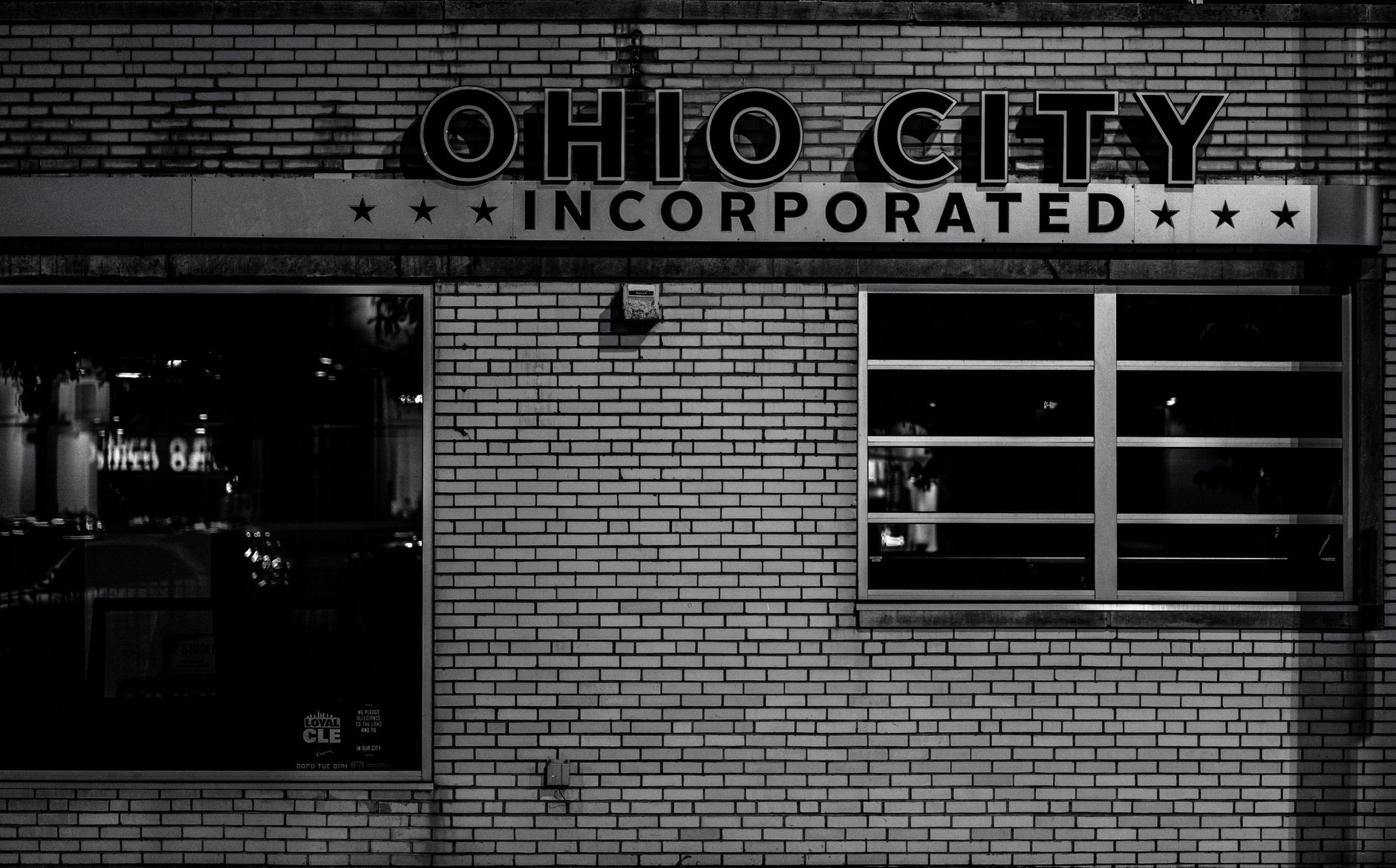
Cleveland makes the most sense when you eat it by neighborhood. Start with market breakfast at West Side Market, open since 1912, then argue about Polish Boys, pierogi, cassata cake, or whether Slyman's corned beef is worth the line; later, trade beer halls in Ohio City for soup dumplings in AsiaTown or pastry in Little Italy. That's the city's real rhythm.
The arts scene lands harder than outsiders expect. Playhouse Square lights Euclid Avenue with five restored theaters from the 1920s, the Cleveland Museum of Art keeps general admission free, and Severance Music Center houses an orchestra locals speak of with the kind of pride usually reserved for sports teams. Cleveland isn't polished into one tidy story, which is exactly why it stays interesting.
Not every monument, just the ones we'd walk you past ourselves.
Where to wander, by quarter — each with its own rhythm.
Before you go
From Indigenous river corridor to industrial giant, burning river, and cultural comeback
Most scholars date sustained settlement along the lower Cuyahoga and Lake Erie shore to this broad era, when Woodland peoples used the river as a trade route and seasonal home. Fish, wild rice, and game drew people here long before surveyors arrived with chains and deeds. The place mattered because water mattered.
The Beaver Wars ripped through the Great Lakes world, and the ground around present-day Cleveland became contested rather than settled. Iroquois expansion and the fur trade pushed older communities west or north, leaving a corridor of hunting territory, diplomacy, and danger. Silence moved in, but it was political silence, not emptiness.
On July 22, 1796, Moses Cleaveland reached the mouth of the Cuyahoga River with the Connecticut Land Company survey party and laid out a town around Public Square. He picked a high, defensible bluff above the river bends, where the air smelled of wet timber and lake water. Cleveland began as a real-estate plan with unusually good geography.
The new settlement was drawn on a New England grid, with a central commons of roughly 10 acres that still anchors downtown. That choice shaped everything after it: street angles, civic life, parade routes, protest routes, and the stubborn fact that Cleveland still thinks in relation to this square. A survey line became a city habit.
George Peake, recognized as the first Black settler in the Cleveland area, arrived at a frontier town that was still more mud than market. His presence matters because it places Black Cleveland near the beginning, not as a late chapter added after growth. The city was mixed earlier than its myths admit.
Incorporation gave the settlement formal local government after years of improvised frontier authority. By then the place had survived its fragile first winters and the anxiety of the War of 1812, when British power on Lake Erie felt uncomfortably close. Paperwork can be dramatic too.
The Ohio and Erie Canal reached Cleveland in 1832 and tied Lake Erie to the Ohio River system, then by extension to the Mississippi world. Grain, whiskey, timber, and passengers poured through the city, and the riverfront filled with warehouses, mud, shouting teamsters, and money. This was the hinge.
Cleveland was incorporated as a city in 1836, the same decade when its spelling shed the extra "a" from Cleaveland. The popular story blames a newspaper masthead that needed fewer letters; whether apocryphal or not, the clipped name suits a faster, harder commercial town. The village had become a port city with elbows.
John D. Rockefeller moved to Cleveland as a teenager and entered a city already obsessed with transport, pricing, and scale. Here he learned bookkeeping, commissions, rail rates, and the cold arithmetic that would later make Standard Oil. Cleveland taught him that industry runs on margins, not romance.
When the Civil War began, Cleveland sent thousands of soldiers and turned its factories, foundries, and docks toward Union supply. The city itself saw no battle, yet war entered through hospital trains, contracts, telegrams, and names read aloud in church. Industry and patriotism fused here, for profit as well as principle.
Rockefeller incorporated Standard Oil in Cleveland in 1870, and the city became one of the petroleum capitals of the age. Refining was not poetic work: it smelled of sulfur, hot metal, and risk. But it built fortunes, neighborhoods, philanthropy, and the corporate logic that would define modern America.
Tom L. Johnson died in 1911, but by then he had already remade Cleveland politics with cheaper streetcar fares, tax fights, and a loud belief that a city should serve its residents before its monopolists. Public Square still carries his statue for a reason. He made reform feel muscular, not polite.
The Cleveland Museum of Art opened in 1916 in a white Georgian building at Wade Park, paid for by industrial wealth and aimed at public use. Inside, the galleries offered cool stone floors, long sightlines, and the civilizing confidence of a city trying to prove that blast furnaces and beauty could coexist. On good days, they still do.
Adella Prentiss Hughes founded the Cleveland Orchestra in 1918, refusing the idea that serious music belonged only to older eastern cities. The ensemble grew with startling speed, and Severance Hall would later give it one of the great acoustic rooms in America, all warm wood and clean resonance. Cleveland's ears were better than outsiders guessed.
Terminal Tower opened in 1927 at 708 feet, a vertical announcement that Cleveland had arrived. For decades it stood as the tallest building outside New York, visible from miles away above smoke, lake haze, and rail yards. Cities love a brag, and this one had measurements to back it up.
The Great Lakes Exposition opened in 1936 to mark Cleveland's centennial, drawing millions to a temporary fairground of pavilions, lights, and civic self-belief. Depression-era visitors came for spectacle, but the deeper message was that the city still saw itself as a continental crossroads. It needed that story then.
Disc jockey Alan Freed used Cleveland radio to push rhythm and blues across racial lines and helped popularize the phrase "rock and roll." The music came from Black artists; the amplifier, in this case, came from a city with sharp antennae for what younger America already wanted. Cleveland heard the future while older gatekeepers were still frowning.
Carl B. Stokes was elected mayor in 1967, becoming the first Black mayor of a major U.S. city. His victory came after the Hough uprising and in the middle of deep racial fracture, so the symbolism was not decorative. Cleveland put national history on municipal stationery.
On June 22, 1969, oil-soaked debris on the Cuyahoga River caught fire beneath a railroad trestle. The blaze itself was brief, but the image was devastating: a working river so polluted it could ignite. Cleveland became a punchline, then a warning, then part of the argument for the Clean Water Act.
Cleveland defaulted on its loans in 1978, the first major American city to do so since the Depression. The crisis exposed how badly deindustrialization, shrinking tax revenue, and political trench warfare had damaged the place. Municipal finance rarely smells dramatic, but this one reeked of panic.
The Rock and Roll Hall of Fame opened on the lakefront in 1995 in I. M. Pei's angular glass-and-steel building. The museum gave Cleveland a new public story, one built less on smokestacks than on sound, radio, rebellion, and the stubborn local claim that rock's public life ran through this city. Fair enough.
The Republican National Convention arrived in 2016 and turned downtown into a tight grid of barricades, credentials, helicopters, and national projection. For a week, every camera angle had to reckon with Cleveland's streets, plazas, and political theater. Cities spend years chasing visibility; this one got it all at once.
Justin Bibb became mayor in 2022, representing a generational shift after long debates over population loss, policing, housing, and lakefront access. The questions facing him were old Cleveland questions in newer clothes: who benefits from revival, who gets left by the curb, and whether a city built by industry can build fairness just as deliberately. That argument is still live.
Surveyor and city founder · 1754–1806
Founded the settlement in 1796
On July 22, 1796, Moses Cleaveland arrived at the mouth of the Cuyahoga River and marked out Public Square with a surveyor's confidence and a New England sense of order. He never stayed long enough to watch the place become an industrial giant, which may be just as well; the muddy frontier camp he laid out became something far stranger.
Industrialist · 1839–1937
Lived here; founded Standard Oil here in 1870
Rockefeller built Standard Oil in Cleveland when the city was turning canal traffic and lake shipping into hard industrial power. Walk the city now and you can still feel the scale of that ambition in the old commercial core, though the smoke he knew has given way to restaurants, apartments, and a cleaner river than he ever saw.
Radio disc jockey · 1921–1965
Broadcast from Cleveland in the early 1950s
Alan Freed went on air in Cleveland and helped push the phrase 'rock and roll' into the national bloodstream. The city still leans on that inheritance, but not lazily; the Rock Hall on the lakefront feels less like a victory lap than a reminder that the music business once sounded raw, local, and a little dangerous.
Mayor and lawyer · 1927–1996
Served as Cleveland mayor from 1968 to 1971
Carl Stokes became the first Black mayor of a major U.S. city when Cleveland elected him in 1967, right as the city was wrestling with segregation, industry, and trust. He would probably recognize today's arguments about equity and reinvestment immediately, though he might be startled to see the Cuyahoga River sold as scenery instead of shame.
Poet · 1901–1967
Worked in Cleveland in 1929
Langston Hughes spent time working in Cleveland during a lean stretch, which suits the city's temperament more than a polished origin myth would. He knew how working cities sounded after hours, and Cleveland still has that rhythm: train brakes, kitchen doors, lake wind, then a line of music slipping out onto the street.
Where locals actually book dinner — not the tourist menus.
Small things that change how the city treats you.
The city, as it actually looks.



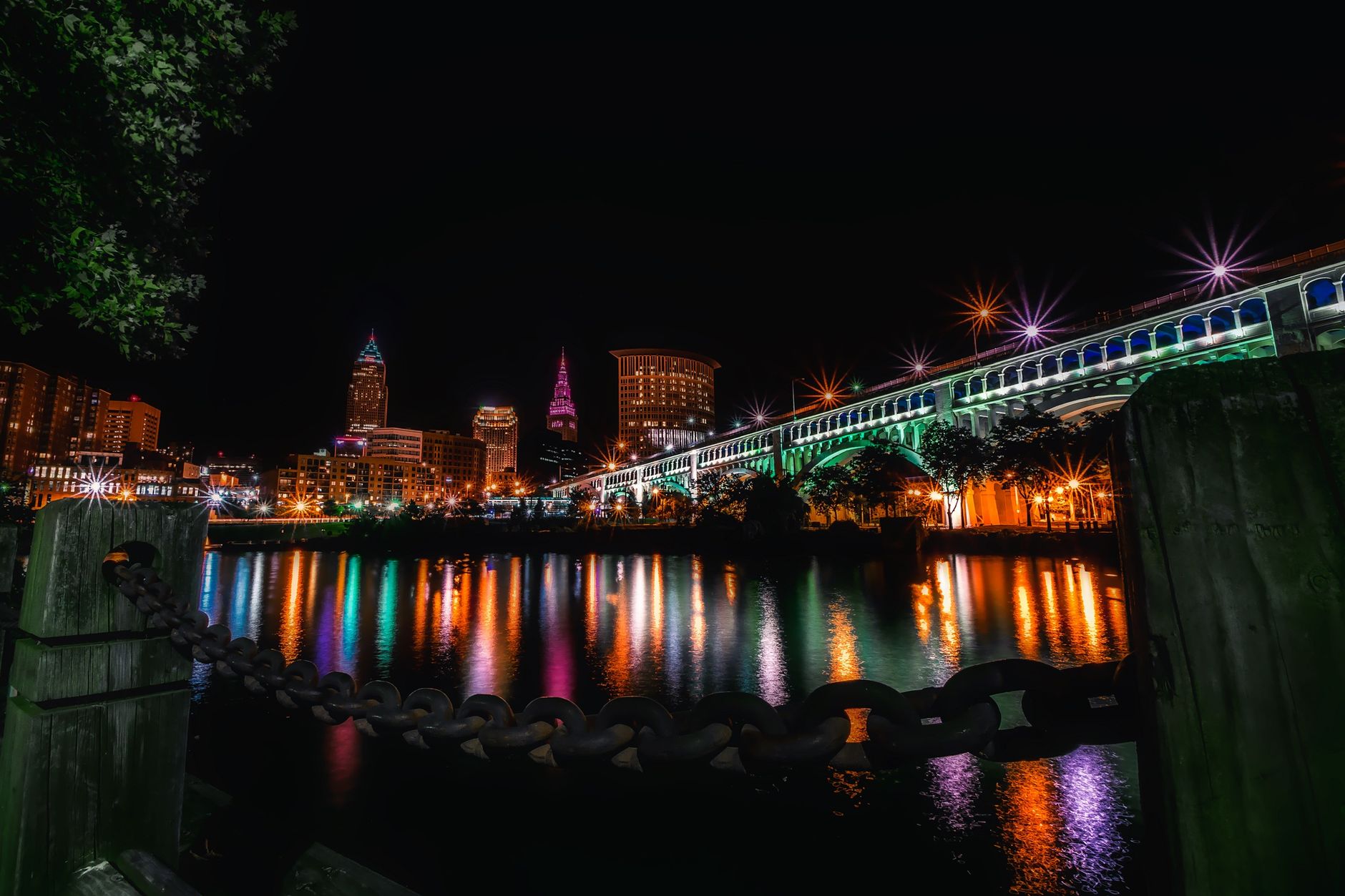
Yes, especially if you like cities with texture instead of polish. Cleveland packs a serious lakefront, a first-rate music museum, one of the country's great old public markets, and a theater district that glows after dark. The surprise is how much of it still feels local.
Three to four days works well for most travelers. That gives you time for downtown, the Rock & Roll Hall of Fame, West Side Market and Ohio City, one museum-heavy day in University Circle, and at least one slow meal that turns into two stops.
The cheapest way is the RTA Red Line from Cleveland Hopkins Airport to Tower City. The ride takes about 25 to 30 minutes and costs $2.50 one way, while rideshares and taxis cost more but run around the clock from the arrivals area.
Usually yes, if you use normal city judgment. Visitors tend to stay comfortably in downtown, Ohio City, University Circle, and along the main lakefront, but quieter transition blocks can feel empty at night. Keep to busy, well-lit routes and don't drift too far on foot after late shows.
No, at least not by big-city U.S. standards. Public transit is cheap at $2.50 a ride or $5 for a day pass, downtown trolleys are free, and you can build a good food day around market counters, delis, tacos, and bakeries without blowing the budget. Big-ticket attractions like the Rock Hall are where costs climb.
Not if you're focusing on downtown, Ohio City, Playhouse Square, and University Circle. The airport train, HealthLine, local rail, and free downtown trolleys cover a lot, and downtown is more walkable than outsiders expect. A car helps only if you're stacking suburban stops or heading deep into the parks.
Start with a Polish Boy, a corned beef sandwich from Slyman's or Danny's Deli, pierogi, and Cleveland-style cassata cake. West Side Market gives you the city's appetite in one building, but the real pattern is neighborhood eating: Ohio City, AsiaTown, Little Italy, Tremont.
Saved and recently read places — kept on this device only.
Photos may have been resized or cropped.