
Founding and Early Growth
St. Stanislaus Kostka Church was founded in 1867 by Polish immigrants seeking a spiritual and cultural home in Chicago. Thirty founding families purchased land at Noble and Potomac Streets, establishing the city’s first Polish parish. The original wooden church, completed in 1869, became a center for worship and education, with a bell tower that served as a local landmark during the Great Chicago Fire of 1871. The parish’s growth accelerated under the leadership of the Congregation of the Resurrection and, notably, Fr. Vincent Barzyński, who expanded the parish to over 8,000 families by the late 19th century. (St. Stanislaus Kostka Parish History)
Community Impact and Expansion
St. Stanislaus Kostka’s influence extended beyond its own congregation. As the Polish population grew, the parish became a launching point for the creation of more than 20 other Polish parishes citywide, helping shape Chicago’s ethnic and religious identity. Its schools and social services supported generations of immigrants in assimilating and preserving their heritage. (Chicago History Museum)
Challenges and Resilience
The church weathered significant challenges, including demographic shifts, urban renewal, and the construction of the Kennedy Expressway, which threatened its existence. Thanks to vigorous advocacy, the expressway was rerouted, preserving the church as a community anchor. In recent decades, the parish has embraced multicultural ministry, reflecting Chicago’s evolving demographics and serving a diverse congregation with Masses in Polish, English, and Spanish. (St. Stanislaus Kostka Parish History; Chicago Catholic)
Sanctuary of the Divine Mercy
Designated as the Sanctuary of the Divine Mercy in 2007, the church features a Perpetual Adoration Chapel and the monumental monstrance “Our Lady of the Sign – Ark of Mercy,” making it a spiritual destination for pilgrims. (St. Stanislaus Kostka Parish)
Architectural Highlights
Exterior Design
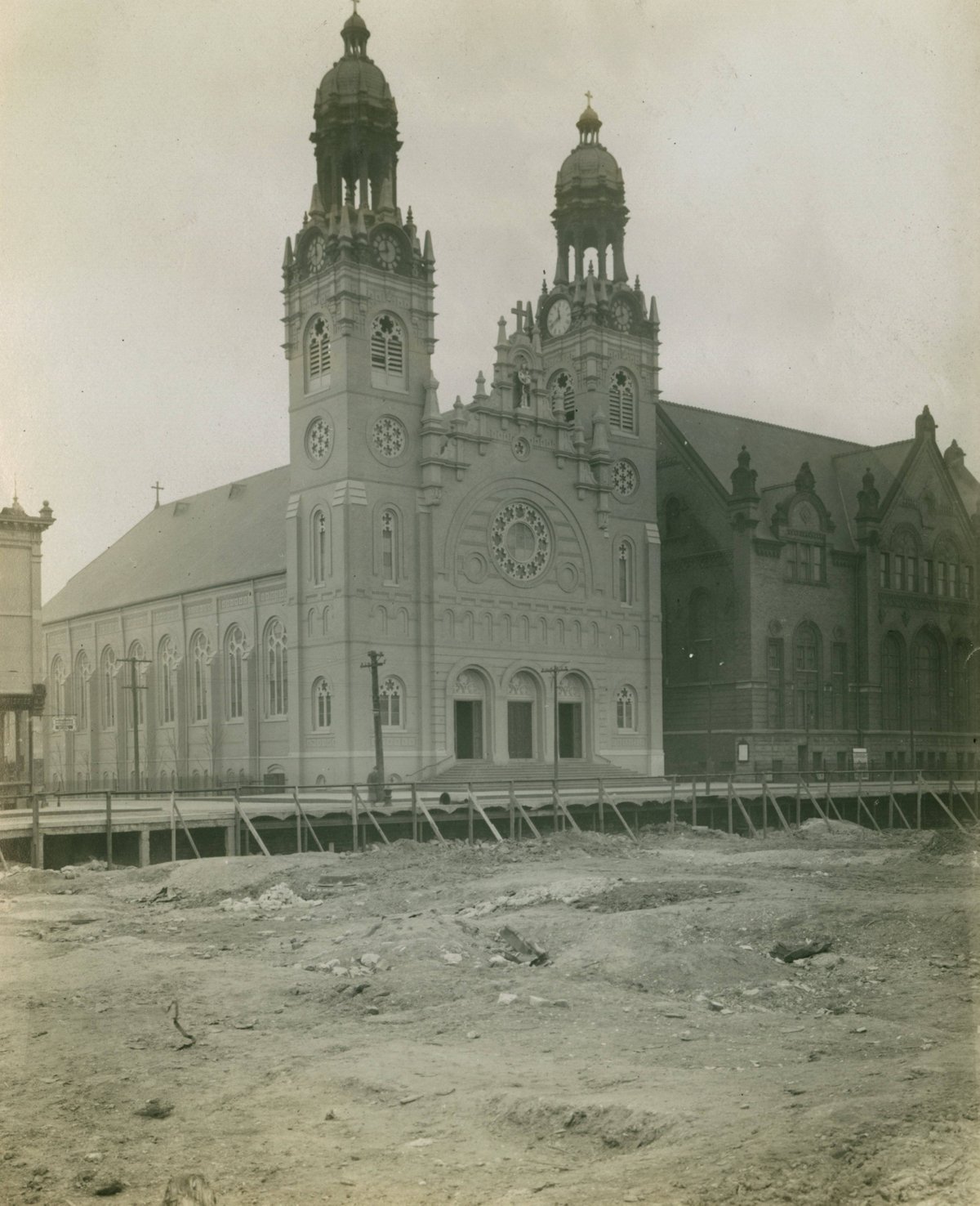
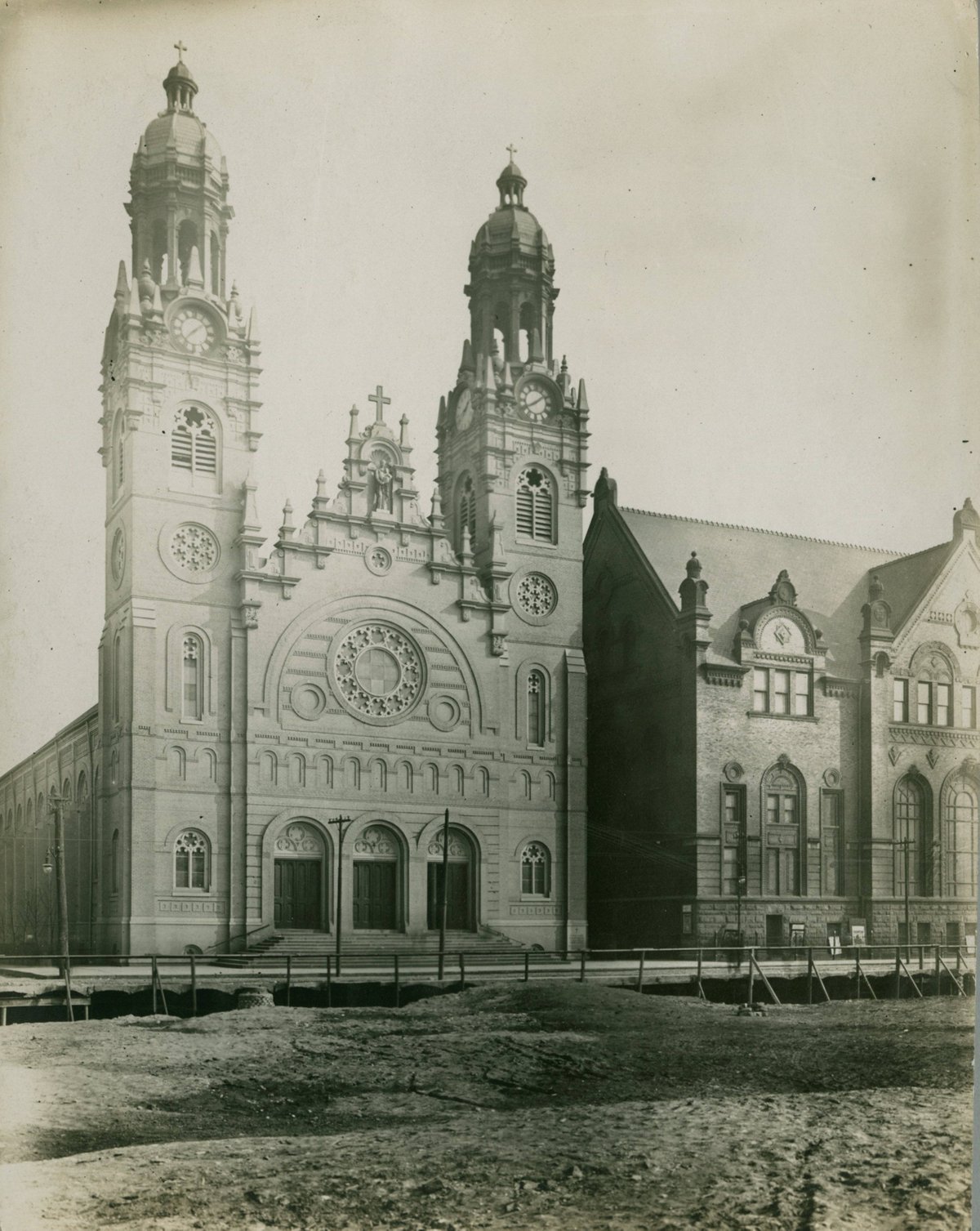
The current church, completed in 1881 and designed by Patrick Charles Keely, exemplifies the Polish Cathedral style, blending Renaissance Revival symmetry with Polish Baroque ornamentation. Constructed from yellow brick with limestone accents, the building’s imposing façade and original twin towers make it a neighborhood landmark. While the southern tower was lost to lightning in 1964, the northern tower still stands as a defining feature. (Wikipedia; Digital Chicago History)
Interior Features
The church’s interior is renowned for its vaulted ceilings, grand nave, and intricate woodwork. Highlights include:
- Stained Glass Windows Imported from Munich’s F.X. Zettler studios, these windows fill the sanctuary with vibrant color and reference Central European religious art traditions.
- Murals Works by Polish artist Tadeusz Żukotyński, such as the Triumph of Christ and depictions of the Blessed Virgin Mary, enhance the church’s spiritual ambiance.
- Chandeliers Louis Comfort Tiffany-designed fixtures add elegance and historical value.
- Pipe Organ One of Chicago’s largest, the organ is a centerpiece for liturgical music and concerts. (Wikipedia; lib.niu.edu)
Preservation and Innovation
Despite threats from fire, urban development, and structural challenges, St. Stanislaus Kostka has been meticulously preserved. Notably, the Kennedy Expressway’s route was altered in the 1950s to save the church, illustrating its significance to the community. (Chicago Catholic)
Visiting Hours and Admission
- Address 1327 N. Noble St. (at Evergreen Ave.), Chicago, IL 60642
- Visiting Hours Open 24 hours daily for prayer and visitation, with Perpetual Adoration Chapel accessible at all times except during Mass. Check the official website for updates or holiday changes.
- Admission Free; no tickets required. Donations are welcome to support church maintenance and programs.
Tours and Accessibility
- Guided Tours Available by appointment. Self-guided tours with brochures are provided for walk-in visitors. Book in advance via the parish website or office for group tours.
- Accessibility Wheelchair ramps, accessible restrooms, and designated parking are available to ensure all visitors can enjoy the church’s offerings.
- Parking Free lot and limited street parking. Public transit access via CTA Blue Line (Division stop) and multiple bus routes. (mass-times.us)
Events, Photography, and Visitor Etiquette
- Special Events The church hosts Divine Mercy celebrations, Polish heritage festivals, concerts, and processions throughout the year. Check the parish calendar for up-to-date information.
- Photography Non-flash photography is permitted; please be respectful during services and avoid disturbing worshippers.
- Dress Code Modest attire is encouraged; avoid hats, shorts, and sleeveless tops inside the sanctuary.
- Quiet Reflection Maintain a respectful silence, particularly in the main nave and during prayer times.
Nearby Attractions and Travel Tips
- Neighborhood Wicker Park and Polonia Triangle offer Polish bakeries, restaurants, shops, and cultural centers.
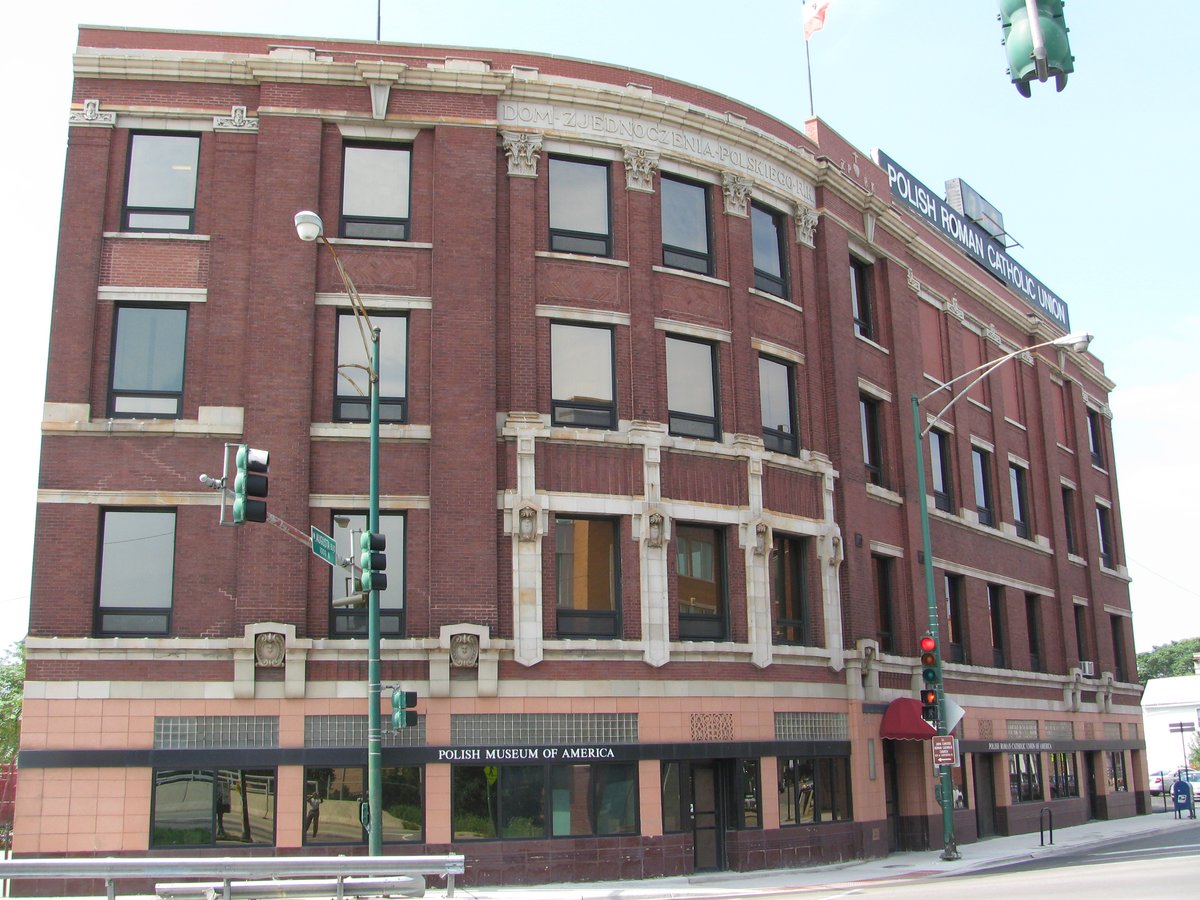
- Other Landmarks Consider visiting Holy Name Cathedral, the Polish Museum of America, and nearby city attractions such as the Art Institute of Chicago and Lincoln Park Zoo.
- Travel Tips Wear comfortable shoes due to the church’s size. Plan extra time to explore the lively surrounding neighborhood. (trip.com)
Frequently Asked Questions (FAQ)
Q: What are St. Stanislaus Kostka Church’s visiting hours?
A: Open 24 hours daily for prayer and visits. Guided tours usually available weekdays by appointment.
Q: Is there an admission fee or ticket required?
A: No, admission is free; donations are appreciated.
Q: Are guided tours available?
A: Yes, by advance booking. Self-guided tours and informational brochures are provided.
Q: Is the church wheelchair accessible?
A: Yes, with ramps, accessible restrooms, and parking.
Q: Can I take photographs?
A: Non-flash photography is allowed; please be respectful during services.
Q: Are special events held at the church?
A: Yes, including religious festivals, concerts, and Polish cultural celebrations.
Visuals and Interactive Media
Virtual tours and high-resolution images are available on the parish website.