Introduction
Located in the heart of Chicago’s Bucktown neighborhood, St. Hedwig’s Church stands as a testament to Polish-American heritage, faith, and the city’s rich architectural legacy. Established in 1888 by Polish immigrants, this parish quickly became both a spiritual sanctuary and a vital community hub, serving as a nucleus for education, social support, and cultural celebration (Polish Museum of America). The current church, completed in 1901 and designed by architect Adolphus Druiding, is a celebrated example of the Polish Cathedral style, recognized for its monumental scale, ornate details, and blend of Renaissance Revival, Baroque, and Romanesque elements. St. Hedwig’s remains a Chicago Landmark, inviting visitors to experience its remarkable history, artistry, and enduring community spirit (Archdiocese of Chicago; Choose Chicago).
This guide provides detailed information for visitors: from hours and ticketing to architectural highlights, historical context, accessibility, and travel tips. Whether you are a pilgrim, history enthusiast, or architecture lover, this comprehensive overview will help you make the most of your visit to St. Hedwig’s Church—one of Chicago’s most significant historical sites.
Early History and Polish Immigration
St. Hedwig’s Church was founded during a major wave of Polish immigration to Chicago in the late 19th century. By 1900, Chicago’s Polish community was among the largest outside Poland, with over 150,000 immigrants and descendants (Polish Museum of America). The parish was named after St. Hedwig of Silesia, a beloved Polish saint known for her charity and piety.
The church quickly became a focal point for Polish immigrants, offering not only religious services but also social support, education, and cultural activities. Polish language masses, festivals, and social events fostered a strong sense of identity and community.
Architectural Highlights
Exterior Features
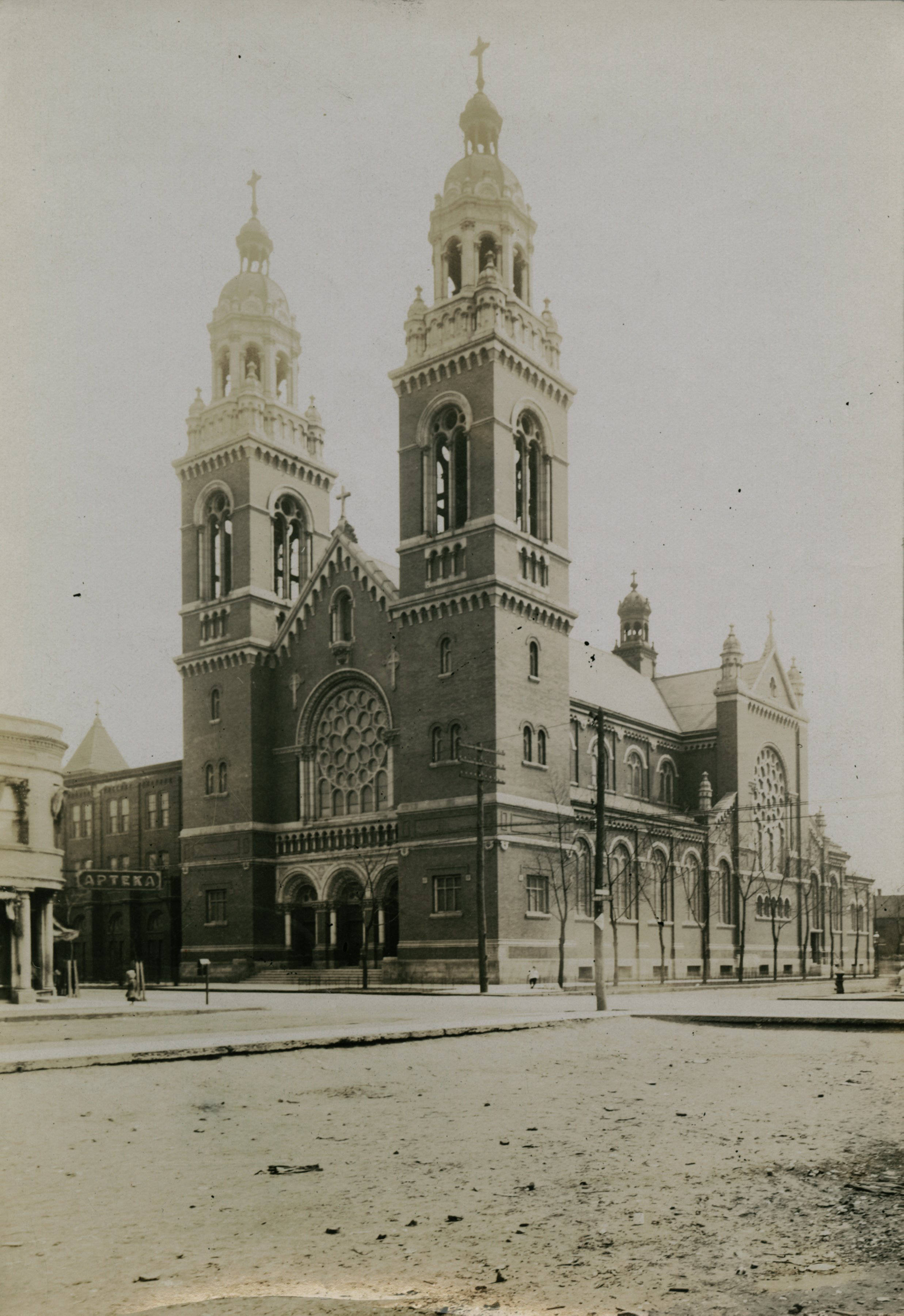
St. Hedwig’s Church, completed in 1901, was designed by Adolphus Druiding in the Polish Cathedral style—a blend of Renaissance Revival, Baroque, and Romanesque influences. The church features:
- Twin bell towers and a central dome, visible from the Kennedy Expressway
- A symmetrical façade with brick and Bedford limestone, exterior columns, and an imposing pediment
- Ornamental murals and intricate stonework reflecting Polish-American craftsmanship
Interior Design
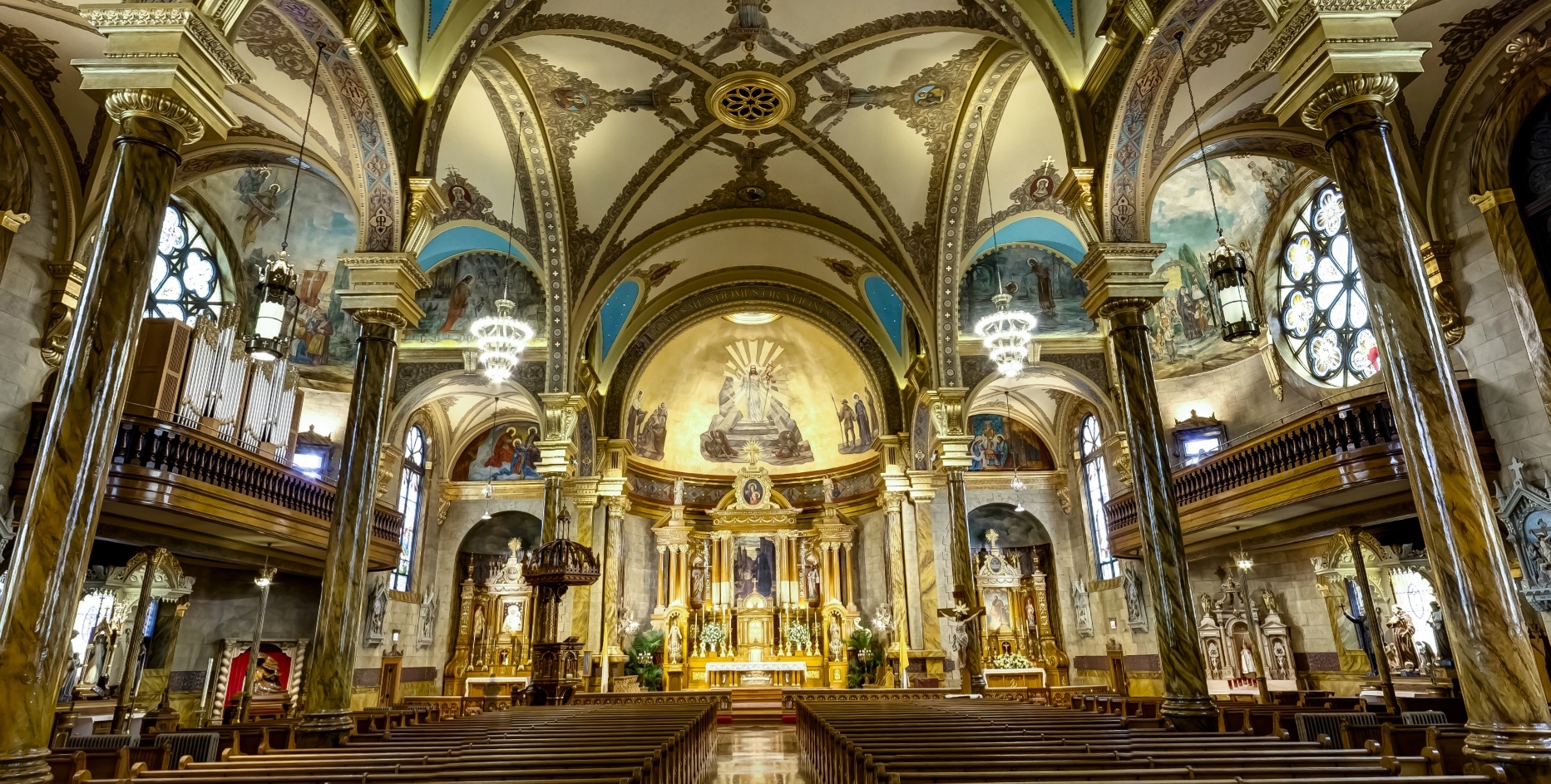
The interior is equally impressive, accommodating up to 1,500 people. Notable features include:
- Detailed wood paneling and murals by Thaddeus von Zukotynski, depicting scenes from St. Hedwig’s life and other religious themes
- Stained glass windows imported from Bavaria, portraying biblical stories and Polish saints
- A richly adorned altar area with a pedimented reredos, gold leaf, and marble
The church’s artistic program celebrates both faith and Polish-American heritage (coffeewithdamian.com).
Community and Cultural Impact
Since its founding, St. Hedwig’s has nurtured Polish language, traditions, and religious practices. The parish historically operated a parochial school, provided charitable assistance, and hosted cultural events such as Wigilia (Christmas Eve supper) and Dożynki (harvest festival). During times of hardship, like the Great Depression and World War II, St. Hedwig’s played a crucial role in community cohesion and social advocacy.
Today, the parish continues to offer Masses in both English and Polish, reflecting its dual heritage and welcoming a diverse congregation (carloacutisparish.org).
Historical Preservation
St. Hedwig’s has faced challenges typical of urban parishes, including demographic shifts and declining attendance. Preservation efforts have focused on maintaining the church’s architectural integrity and cultural significance. In 2003, it was designated a Chicago Landmark, acknowledging its historical and artistic value (City of Chicago Landmarks).
Events and Modern Developments
Annual festivals, concerts, and cultural events attract visitors from across the city and beyond. The church serves as a destination for tourists interested in Chicago’s immigrant history and architecture. The presence of relics of Blessed Carlo Acutis, a modern Catholic figure, adds to its significance as a site of pilgrimage.
St. Hedwig’s collaborates with local organizations and continues to adapt, ensuring its legacy endures for future generations (Choose Chicago).
Visitor Information
Visiting Hours
- General Hours: Open daily from 8:00 AM to 6:00 PM.
- Sundays and special events: Hours may extend; check the official parish website for current details.
Admission and Tickets
- Admission: Free. No tickets are required. Donations are welcomed to support maintenance and preservation.
Guided Tours
- Availability: Guided tours can be arranged in advance, often during major festivals or by contacting the parish office.
- Languages: Tours may be available in English and Polish.
Accessibility
- Wheelchair Access: The church is fully accessible, with ramps and accessible restrooms.
- Special Needs: Visitors requiring assistance should contact the parish office in advance.
Directions and Parking
- Address: 2226 North Hoyne Avenue, Chicago, IL 60647
- Public Transit: Accessible via CTA Blue Line (Western station) and several bus routes.
- Parking: Limited street parking; use public transit or ride-shares when possible.
Best Times to Visit
- Quiet Visits: Early weekday mornings or late afternoons for peaceful reflection.
- Festivals and Events: Check the parish calendar for cultural celebrations, but expect larger crowds.
Nearby Attractions
Enhance your visit by exploring other Chicago historical sites nearby:
- Polish Museum of America
- Holy Trinity Church
- St. Mary of the Angels
- Bucktown’s cafes, boutiques, and the 606 Trail
- Humboldt Park and Wicker Park neighborhoods
Visitor Tips
- Dress Code: Dress modestly, covering shoulders and knees, especially during services.
- Photography: Permitted outside of Mass; always be respectful and observe posted guidelines.
- Etiquette: Maintain silence and reverence inside the sanctuary.
- Language: Masses are typically in English and Polish; check the schedule for details.
- Facilities: The church offers accessible restrooms, a parish hall, and visitor assistance.
Frequently Asked Questions (FAQ)
Q: What are St. Hedwig’s visiting hours?
A: Open daily from 8:00 AM to 6:00 PM; check the official parish website for any holiday or event changes.
Q: Is there an admission fee or are tickets required?
A: No. Admission is free; donations are appreciated.
Q: Are guided tours available?
A: Yes, by advance arrangement and often during festivals.
Q: Is St. Hedwig’s wheelchair accessible?
A: Yes, with ramps and accessible restrooms.
Q: Where is St. Hedwig’s Church located?
A: 2226 North Hoyne Avenue, Bucktown, Chicago.
Q: What are the best times to visit?
A: Early mornings or late afternoons for quiet visits; festivals for cultural experiences.
Plan Your Visit
To make the most of your experience:
- Check the parish website for updated hours and event schedules.
- Download the Audiala app for guided audio tours and notifications about Chicago historical sites.
- Explore Bucktown’s cultural attractions and enjoy the neighborhood’s vibrant atmosphere.
Images and interactive maps are available on the parish website and Choose Chicago.
Sources:
Listen to the full story in the app
Your Personal Curator, in Your Pocket.
Audio guides for 1,100+ cities across 96 countries. History, stories, and local insight — offline ready.
Audiala App
Available on iOS & Android
Join 50k+ Curators
Sources
- verified
-
verified
St
Hedwig Chicago Parish Directory, 2025, Archdiocese of Chicago
-
verified
Visiting St
Hedwig’s Church, 2025, Choose Chicago
- verified
- verified
- verified
Last reviewed: