
What the Reliance Building Is
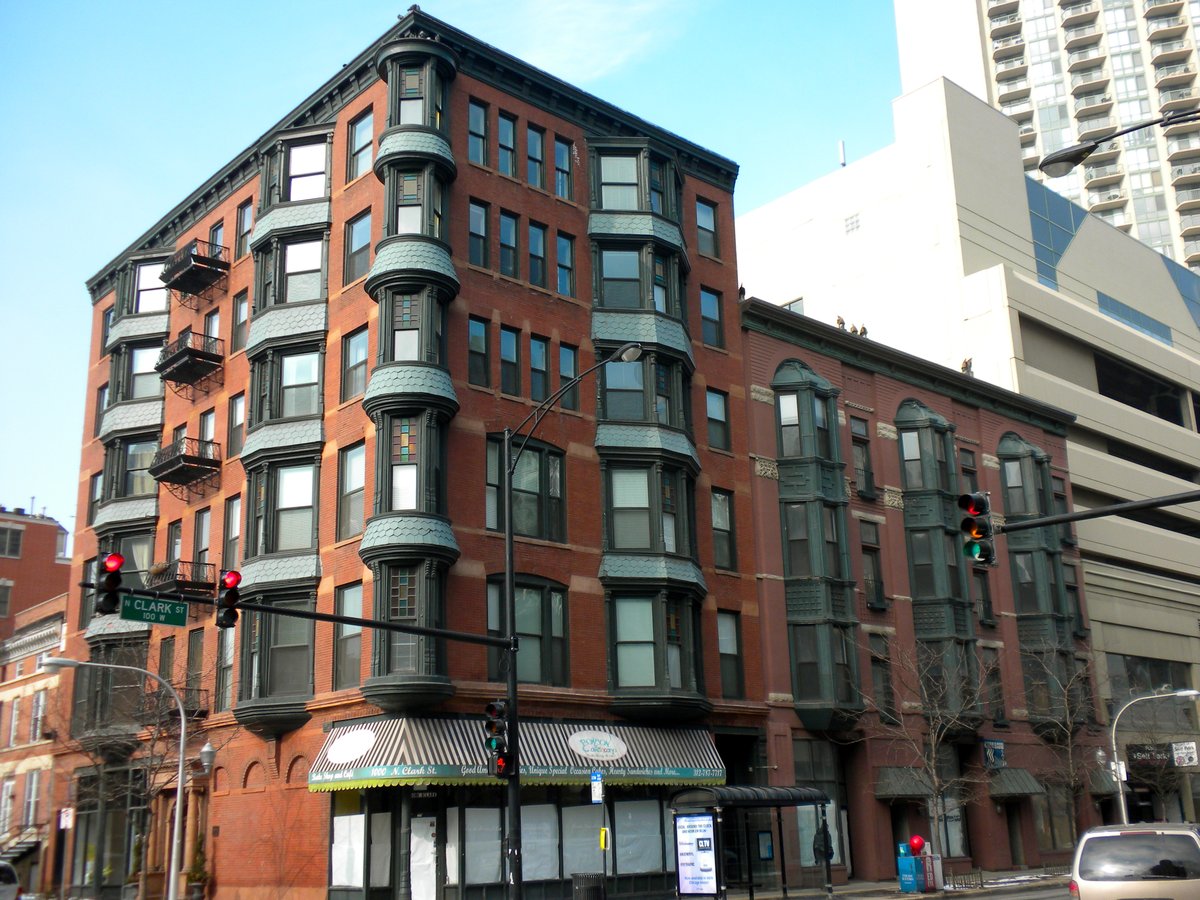
The Reliance Building is a landmark in Chicago’s Loop district and a testament to the city’s pioneering role in skyscraper development and modern architecture. Completed in 1895, it is renowned for its innovative steel-frame construction, striking white glazed terra cotta façade, and expansive plate-glass windows, which transformed urban office design.
Today, the building serves as Staypineapple, An Iconic Hotel, The Loop. Visitors can experience its public areas, including the lobby and ground floor. For more insights, consult the Chicago Architecture Center, GPSmyCity, and the official hotel website. (WikiArquitectura, Architecture Adrenaline)
History
Origins and Development
The Reliance Building, at 32 North State Street, was conceived during a period of rapid urban growth in post-fire Chicago. John Wellborn Root of Burnham & Root designed the initial four-story structure. After Root’s death, Charles B. Atwood took over and completed the upper stories in 1895. The building’s steel skeleton was erected in just 15 days, marking a new era of efficiency and ambition in architecture. (WikiArquitectura, Architecture Adrenaline)
Architectural Significance
The Reliance Building is celebrated as one of the world’s first skyscrapers to employ a steel frame, allowing greater height and extensive use of glass. Its façade is over 85% glass, bringing natural light deep into the building—a benefit for its first tenants, doctors and dentists. White glazed terra cotta, manufactured by the Northwest Terra Cotta Company, provided an elegant finish and practical fireproofing. The rain-washed surface was intended to maintain a perpetual appearance of cleanliness and modernity. (Architecture Adrenaline)
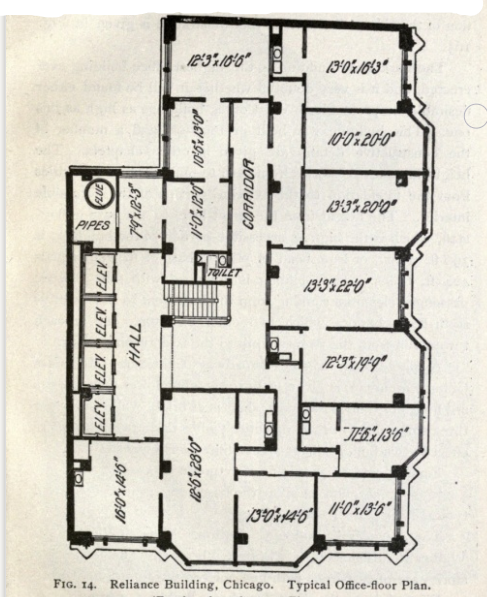
The building is a key example of the Chicago School, which prioritized structural expression and minimal ornamentation. Its vertical bays, repeated floor plans, and curtain wall-like glass foreshadowed 20th-century modernism. The lower floors retained stone elements reminiscent of Richardsonian Romanesque, while the upper stories adopted a lighter aesthetic. (WikiArquitectura)
Structural engineer E.C. Shankland designed the steel frame to withstand wind loads. The elevators and stairways featured high-quality German Gothic-style ironwork, contributing to the building’s reputation as a model of form and function. (Architecture Adrenaline)
The Reliance Building helped define the modern urban skyline and set standards for natural light, open interiors, and fireproof construction. Its influence on skyscraper design is recognized globally. It is designated a Chicago Landmark and a National Historic Landmark, and is listed on the National Register of Historic Places. (WikiArquitectura, Chicago Landmarks)
Restoration and Modern Use
By the late 20th century, the building had fallen into disrepair. A major restoration in the 1990s, led by Gunny Harboe, revived its original details and adapted it for use as a boutique hotel. The restoration preserved the building’s integrity and became a model for adaptive reuse, showing how historic architecture can be integrated with contemporary city life. (WikiArquitectura, Architecture Adrenaline, Chicago Landmarks)
What to See
Exterior
The Reliance Building’s steel-frame construction, white glazed terra cotta, and expansive “Chicago windows” define its light, vertical character. The glazed terra cotta resists the city’s harsh weather and reflects light, giving the structure a luminous quality. Its overall effect was radically new for its time. (Chicago Architecture Center)
Lobby and Interior Details
The restored lobby features mosaic tile floors, decorative plasterwork, and period lighting. Interpretive plaques and historical photographs provide context for visitors exploring on their own. Original elevator doors and intricate woodwork have been preserved on the upper floors, though access beyond public areas is reserved for hotel guests. (EAA Architecture)
The lobby’s restored details and the light-filled exterior make the building a favorite with photographers and architecture enthusiasts. Restrooms are available in the hotel lobby and may be accessible to visitors upon request.
Practical Visiting Information
Hours, Admission, and Access
The Reliance Building operates as Staypineapple, An Iconic Hotel, The Loop. The public can access the lobby and ground-floor spaces during typical hotel hours, approximately 7:00 a.m. to 10:00 p.m.; hours may vary. There is no admission fee for public areas, and no tickets are required. Access to guest rooms is limited to hotel guests.
The building is fully ADA compliant, with elevators, ramps, and step-free entry. Step-free access and elevators are available on all public floors.
Location and Getting There
- Address 1 W. Washington Street / 32 N. State Street, Chicago, IL 60602
- Transit The building is easily reached via CTA Red and Blue Lines, with Washington and Monroe stops, several bus routes, and nearby public parking garages. The Loop’s broad sidewalks and proximity to major attractions make it ideal for walking. (Skyscraper Center, Choose Chicago)
Tours and Special Events
The Reliance Building does not offer its own tours, but it is frequently included in walking tours by the Chicago Architecture Center and other organizations. Tours provide commentary on the building’s design, engineering innovations, and role in Chicago’s architectural development. Advance tickets may be required; check provider schedules for details. Occasionally, Chicago Architecture Center tours feature the building as part of broader downtown itineraries and may require tickets and advance booking. (Chicago Architecture Center)
Tips
- Allow 20–30 minutes to explore the lobby and exterior; allow longer if joining a tour or dining.
- Weekday mornings offer a quieter experience and the best exterior lighting. Early morning and late afternoon offer good conditions for capturing the terra cotta’s subtle details.
- The intersection of State and Washington Streets is ideal for façade photos. Photography is allowed in the lobby and other public spaces; tripods are generally prohibited.
- Smart casual dress is appropriate.
- The on-site restaurant is open to the public. Numerous additional dining options are available nearby.
- The Loop is safe by day; stay alert as in any major city. (Timeless Travel Steps)
- Consider joining a guided architecture tour for expert insights, taking time to explore the lobby, and downloading the Audiala app for guided audio tours and up-to-date visitor information.
Nearby Places
Millennium Park, the Chicago Cultural Center, the Art Institute of Chicago, and the Chicago Riverwalk are all within a short walk. Millennium Park, the Art Institute of Chicago, and the Chicago Cultural Center are also within a 10-minute walk.
Frequently Asked Questions (FAQ)
Q: What are the Reliance Building’s visiting hours?
A: The lobby is open during hotel hours, typically 7:00 a.m. to 10:00 p.m., but hours may vary.
Q: Is there an admission fee or are tickets required?
A: No tickets or fees are required for the public areas. Guided tours through external providers may require tickets.
Q: Are guided tours available?
A: Yes. The building is included in tours by organizations such as the Chicago Architecture Center.
Q: Is the building accessible for people with disabilities?
A: Yes. There is step-free entry and elevators to all public areas.
Q: Can I take photographs inside?
A: Photography is allowed in public spaces, but tripods are generally not permitted.