Introduction
The Marshall Field and Company Building is a pillar of Chicago’s architectural, cultural, and retail heritage. Located at 111 North State Street in the heart of the Loop, this iconic structure—now operating as Macy’s State Street—blends Beaux-Arts and Classical Revival styles with the innovative steel-frame construction of the Chicago School. Dating back to its phased construction between 1892 and 1914, the building has set benchmarks in retail innovation and civic engagement, and remains a magnet for architecture aficionados, history buffs, shoppers, and tourists alike.
This comprehensive guide covers everything you need to know for your visit: up-to-date hours, ticketing and accessibility details, historical highlights, insider tips, and must-see features. Whether you are captivated by the world’s largest Tiffany glass mosaic ceiling, the legendary Great Clocks, or the celebrated Walnut Room, this guide will help you make the most of your time at one of Chicago’s most treasured landmarks.
For authoritative information and deeper exploration, refer to Macy’s official website, the Chicago Architecture Foundation, and detailed historical records at HMDB. Additional perspectives can be found at Evendo and The Vintage Traveler.
Origins and Early Development (1834–1892)
Marshall Field, born in Massachusetts in 1834, moved to Chicago in 1856 and quickly became a pioneering figure in American retail. Under his leadership, Marshall Field & Company introduced revolutionary practices such as unconditional refunds and the now-famous motto, “the customer is always right.” These customer-centric values transformed shopping into an inclusive, social experience and set the standard for department stores nationwide.
Vision, Construction, and Expansion (1892–1914)
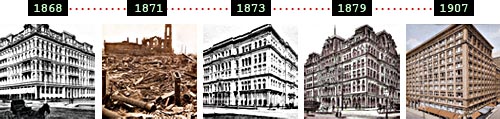
The Marshall Field and Company Building was constructed in phases between 1892 and 1914, with prominent architects Daniel H. Burnham and Charles Atwood at the helm. The building occupies an entire city block and is recognized for its innovative steel-frame construction, which allowed for vast, open retail spaces and grand architectural flourishes (Wikipedia; e-a-a.com).
Architectural Mastery and Key Features
Beaux-Arts and Commercial Style Synthesis
The exterior of the building features granite and terra cotta, symmetrical façades, and impressive columns, characteristic of Beaux-Arts design. The steel-frame structure, a hallmark of the Chicago School, enabled expansive windows and uninterrupted interior spaces, which were essential for retail display and customer flow (e-a-a.com).
Structural Innovations
At its completion, the building was among the world’s largest department stores, ultimately reaching over 2 million square feet of retail and office space (playeatlas.com). Architectural innovations included open atria, grand staircases, and escalators, all designed to enhance the shopping experience.
Iconic Elements
The Great Clocks
The two monumental bronze clocks at the corners of State & Washington and State & Randolph streets have been Chicago landmarks since their installation in 1897 and 1902. These ornate timepieces are cherished meeting spots and photo opportunities (architecture.org).
Tiffany Glass Mosaic Ceiling
Stretching across 6,000 square feet and composed of over 1.6 million pieces of iridescent glass, the fifth-floor Tiffany mosaic ceiling is the largest of its kind in the world. Designed by Louis Comfort Tiffany and completed in 1907, it remains a breathtaking centerpiece (architecture.org; evendo.com).
The Walnut Room
Established in 1907, the Walnut Room was the nation’s first department store restaurant. With elegant wood paneling and soaring ceilings, it is famed for its holiday traditions, especially the display of the Great Tree (playeatlas.com).
Cultural and Civic Significance
Retail Innovations
Marshall Field and Company pioneered customer service innovations, including bridal registries, in-store restaurants, and a focus on making shopping a pleasurable social activity (architecture.org). The store was designed as a welcoming space for women and families at a time when such experiences were rare.
Social and Urban Impact
As a commercial and civic anchor, the building spurred development in the Loop and provided thousands of jobs. Its enduring presence and landmark status have made it a destination for Chicagoans and visitors interested in architecture, history, and retail (e-a-a.com; Wikipedia).
Visitor Information
Location and Getting There
- Address: 111 N State St, Chicago, IL 60602
- Public Transit: Accessible via CTA Red, Blue, Brown, and Green Lines (State/Lake station), and multiple bus routes. Millennium Station (Metra) is a short walk away (Evendo).
- Parking: Several garages are nearby, but public transit is recommended due to limited and costly parking.
Visiting Hours and Tickets
- Hours: Typically, open Monday–Saturday, 10:00 AM–8:00 PM; Sunday, 11:00 AM–7:00 PM. Hours may vary seasonally or for holidays; always confirm at the official Macy’s website.
- Tickets: General admission is free; special events or guided tours may require advance booking or purchase (Evendo).
Accessibility and Family Friendliness
- Wheelchair accessible: Elevators and accessible restrooms throughout.
- Family amenities: Family and accessible restrooms on multiple levels; strollers are welcome, though the building can be crowded during peak times.
- Service animals: Welcome.
- Lost and Found: Located at Customer Service on the lower level.
Shopping, Dining, and Services
- Retail: Spanning multiple floors, offering everything from designer fashion to Chicago-themed gifts and Marshall Field’s memorabilia, like Frango Mints (The Vintage Traveler).
- Dining: The Walnut Room (7th floor) is renowned for its elegant setting and classic dishes; reservations are highly recommended during the holiday season.
- Personal shopping: Complimentary by appointment.
- Visitor Center: Located on the lower level for information, maps, and tax-free shopping services for international guests.
Tips for a Memorable Visit
- Best times: Weekday mornings or early afternoons; avoid holiday weekends for lighter crowds (The Savvy Globetrotter).
- Holiday events: Don’t miss the Walnut Room’s Christmas Tree and the famous holiday window displays.
- Store navigation: Use store directories at entrances or the Macy’s app for easy wayfinding.
Seasonal Events and Guided Tours
- Holiday displays: Elaborate window scenes and the Walnut Room’s Great Tree are must-sees from late November through early January.
- Open House Chicago: Offers special access and tours each October (The Savvy Globetrotter).
- Guided tours: Occasional tours focusing on history and architecture; check the Macy’s events page or the Chicago Architecture Foundation.
Nearby Attractions and Amenities
- Millennium Park: Iconic for Cloud Gate ("The Bean"), a five-minute walk away.
- Art Institute of Chicago: World-class art museum within walking distance.
- Chicago Theatre: Historic venue for concerts and performances.
- Chicago Cultural Center: Featuring the world’s largest Tiffany glass dome (Time Out Chicago).
Photography, Etiquette, and Safety
- Photography: Non-commercial photography is permitted; professional equipment may require permission.
- Etiquette: Respect both the historical setting and current shoppers/staff.
- Safety: The building is patrolled by security; emergency exits are clearly marked.
Frequently Asked Questions (FAQ)
Q: What are the building’s visiting hours?
A: Typically, Monday–Saturday 10:00 AM–8:00 PM; Sunday 11:00 AM–7:00 PM. Confirm at the official website.
Q: Is there an admission fee or ticket required?
A: No; entry is free. Certain events or tours may require advance tickets.
Q: Are guided tours available?
A: Yes, occasionally. Check the Macy’s events page or Chicago Architecture Foundation for details.
Q: Is the building accessible for visitors with disabilities?
A: Yes; all public areas are wheelchair accessible.
Q: Can I take photos inside?
A: Non-flash, non-commercial photography is generally allowed.
Q: What are the best times to visit to avoid crowds?
A: Weekday mornings or early afternoons, outside of holiday season.
Listen to the full story in the app
Your Personal Curator, in Your Pocket.
Audio guides for 1,100+ cities across 96 countries. History, stories, and local insight — offline ready.
Audiala App
Available on iOS & Android
Join 50k+ Curators
Sources
- verified
- verified
- verified
- verified
- verified
- verified
- verified
-
verified
Marshall Field Co
Chicago (The Vintage Traveler) (The Vintage Traveler, 2017)
- verified
- verified
- verified
- verified
Last reviewed:


