Introduction
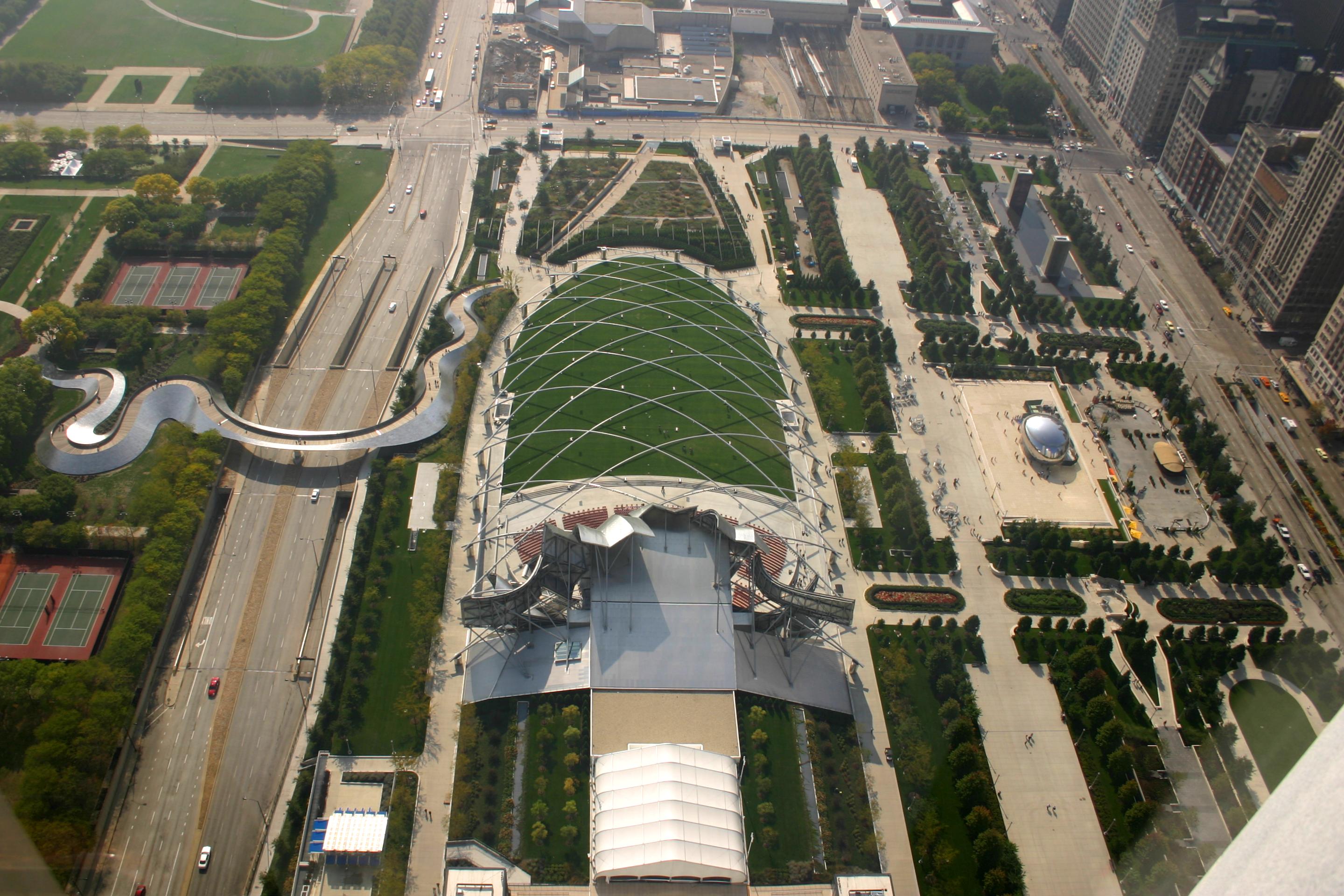
Nestled in the heart of Millennium Park, Chicago, Lurie Garden is a 2.5-acre urban oasis that stands as a testament to the city's commitment to integrating nature within its urban environment. Designed by the landscape architectural firm Gustafson Guthrie Nichol (GGN), Dutch plantsman Piet Oudolf, and lighting designer Robert Israel, Lurie Garden opened to the public on July 16, 2004, and has since become a favorite destination for both locals and tourists. The garden's design pays homage to Chicago's transformation from flat marshland to a bustling metropolis, a journey encapsulated in the city's motto 'Urbs in Horto' (City in a Garden) (Wikipedia, Millennium Park Foundation).
This comprehensive guide aims to provide you with all the essential information you need for visiting Lurie Garden, including its history, design philosophy, ecological significance, cultural impact, and practical visitor information like opening hours, ticket details, and travel tips. Whether you're a nature enthusiast, a history buff, or simply looking for a peaceful retreat within the city, Lurie Garden offers a unique blend of natural beauty, cultural heritage, and sustainable practices that make it a must-visit destination in Chicago (Lurie Garden, Chicago Magazine).
Origins and Development
Lurie Garden, located at the southern end of Millennium Park, opened to the public on July 16, 2004. Designed by the landscape architectural firm Gustafson Guthrie Nichol (GGN), Dutch plantsman Piet Oudolf, and lighting designer Robert Israel, the garden was part of a larger initiative to transform Millennium Park into a vibrant public space. The Ann and Robert H. Lurie Foundation supported its creation with a $10 million endowment for maintenance and upkeep (Wikipedia).
Design Philosophy
The design of Lurie Garden reflects Chicago's transformation from flat marshland to a bustling metropolis. The garden's layout pays homage to the city's evolution, embracing the motto 'Urbs in Horto' (City in a Garden), established in the 1830s. The garden is divided into two regions: the 'dark plate', representing the wild landscape with shade-tolerant plants, and the 'light plate', featuring sun-loving perennials and grasses. A narrow waterway, 'the seam', and a broad boardwalk symbolize the wooden sidewalks that once lined Chicago's streets (Chicago Magazine).
Ecological Significance
Lurie Garden combines naturalistic plantings and ecologically sensitive maintenance practices, creating a healthy habitat for a wide variety of plants, animals, and insects. Approximately 60% of the plant life consists of native Illinois species, supporting local biodiversity and reducing the need for chemical fertilizers and pesticides (Wikipedia). The garden's sustainable practices ensure it remains vibrant throughout the year (Lurie Garden).
Cultural and Educational Impact
Lurie Garden serves as a center for education and community engagement, offering guided walks, lectures, interactive demonstrations, family festivals, and picnics. The garden's design incorporates elements of Chicago's cultural heritage, such as the 15-foot-high 'shoulder' hedge, symbolizing poet Carl Sandburg's description of Chicago as the 'City of Big Shoulders' (Landscape Notes).
Economic and Social Significance
As part of Millennium Park, Lurie Garden has become a major tourist attraction, stimulating economic growth in the surrounding area and benefiting local businesses (Lonely Planet). It provides a valuable green space for city dwellers, promoting relaxation, recreation, and social interaction (Lurie Garden).
Visiting Information
Opening Hours
- Lurie Garden is open daily from 6 AM to 11 PM.
Tickets
- Admission is free.
Accessibility
- The garden is wheelchair accessible, with smooth paths and ramps.
Travel Tips
- Located in Millennium Park, Lurie Garden is easily accessible by public transportation. Nearby attractions include the Cloud Gate sculpture, Crown Fountain, and Jay Pritzker Pavilion.
Guided Tours and Special Events
Lurie Garden offers guided tours that provide in-depth insights into its design and ecological practices. Special events, such as seasonal festivals and educational programs, are held throughout the year. Check the official Lurie Garden website for the latest information.
Seasonal Highlights
Lurie Garden offers a four-season experience. In early spring, bulbs and perennials begin to bloom. Summer and fall bring butterflies and birds, while winter features seed heads and ornamental grasses capturing snow and ice (Lurie Garden).
Nearby Attractions
- Cloud Gate Sculpture: Also known as 'The Bean,' this iconic sculpture is a must-see.
- Crown Fountain: An interactive video sculpture with water features, perfect for cooling off in the summer.
- Jay Pritzker Pavilion: An outdoor concert venue hosting free performances and events.
Photographic Spots
For photography enthusiasts, Lurie Garden offers numerous picturesque spots. The contrast between the 'dark plate' and 'light plate,' along with the backdrop of Chicago's skyline, provides stunning photo opportunities.
Challenges and Future Prospects
The Lurie Garden team continuously adapts their maintenance practices to ensure the garden's health and beauty. They address evolving plant relationships, climate change impacts, and innovative ways to reduce the garden's environmental footprint (Lurie Garden Blog). Lurie Garden aims to inspire other urban spaces to adopt sustainable practices (Chicago Magazine).
Listen to the full story in the app
Your Personal Curator, in Your Pocket.
Audio guides for 1,100+ cities across 96 countries. History, stories, and local insight — offline ready.
Audiala App
Available on iOS & Android
Join 50k+ Curators
Sources
-
verified
Wikipedia
(2024). Lurie Garden
-
verified
Millennium Park Foundation
(2024). Lurie Garden
-
verified
Lurie Garden
(2024). About Lurie Garden
-
verified
Chicago Magazine
(2024). How Piet Oudolf Used Lurie Garden to Open Visitors' Eyes to Native Plants
-
verified
Landscape Notes
(2024). The Lurie Garden in Millennium Park, Chicago
-
verified
Lonely Planet
(2024). Lurie Garden
- verified
Last reviewed: