
Early Foundations and Growth (1830s–1910s)
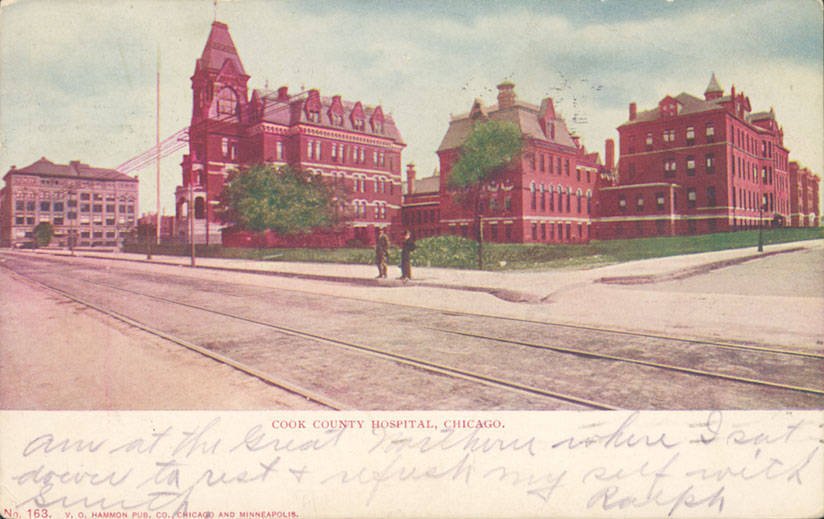
The hospital’s origins date to 1835, when Cook County began offering public health services through a small almshouse to treat the city’s most vulnerable residents (Cook County Health). As Chicago expanded, so did the demand for medical care, prompting the establishment of a formal hospital in a rented space known as Tippecanoe Hall. In 1876, the institution moved to a new, more permanent home to accommodate the city’s diverse and growing population.
Architectural and Medical Milestones (1910s–1940s)
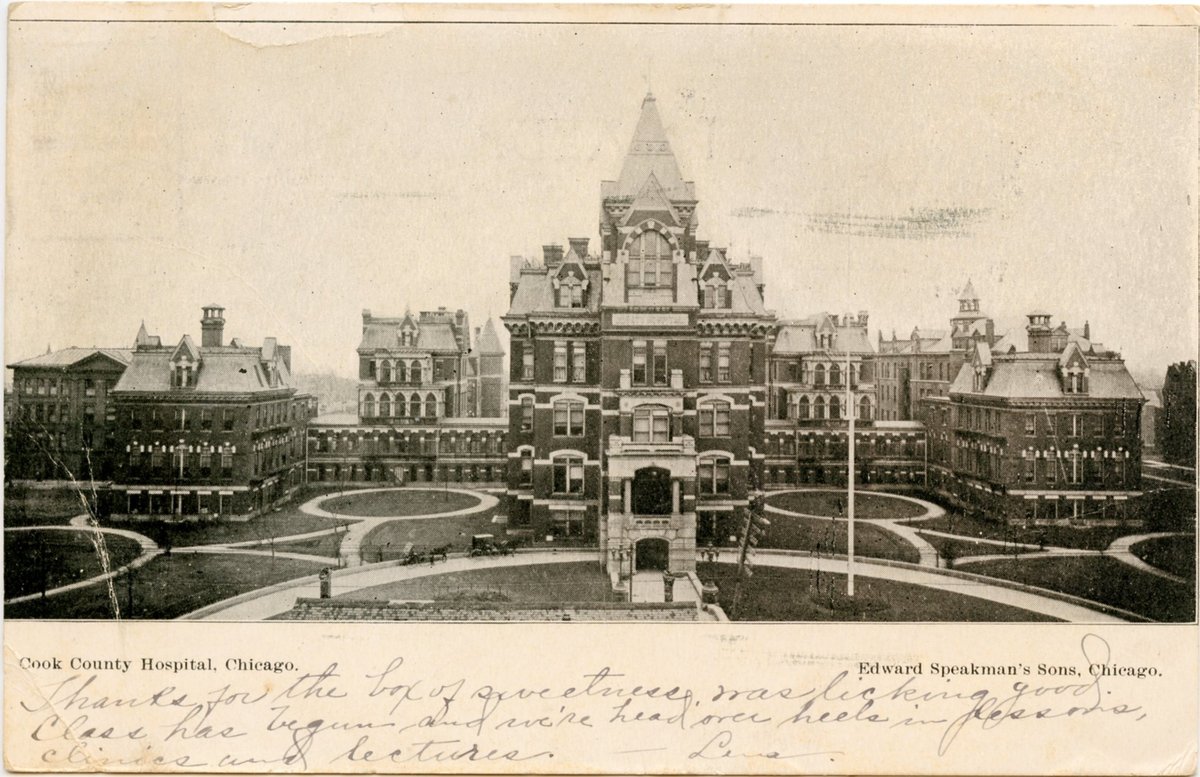
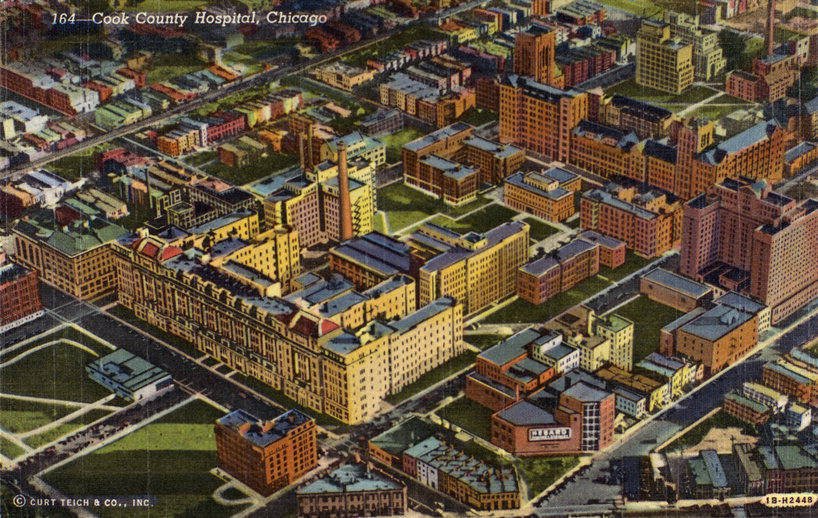
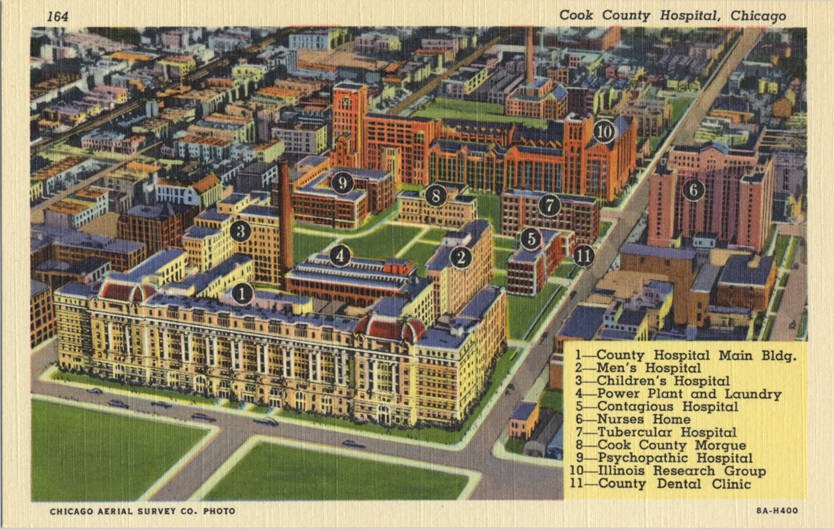
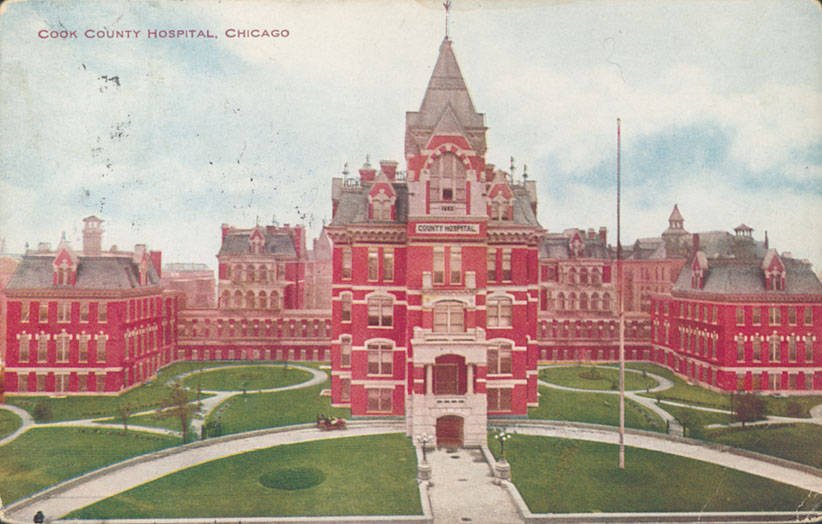
In 1910, the Cook County Board initiated the construction of a new hospital, resulting in the completion of the iconic eight-story Beaux-Arts building at 1835 W. Harrison Street in 1914 and its opening in 1916 (City of Chicago). Designed by architect Paul Gerhardt, the hospital became a symbol of civic pride, with ornate terra cotta detailing and monumental scale. During this period, reforms reduced political interference and attracted leading physicians and surgeons, solidifying the hospital’s reputation as a center for medical teaching and service (Encyclopedia of Chicago).
Pioneering Medical Innovations
John H. Stroger Jr. Hospital’s legacy includes several national firsts:
- First Medical Internship Program in the U.S. (1866) Shaped the future of American medical education (Wikipedia).
- First U.S. Blood Bank Revolutionized trauma care and transfusion medicine (City of Chicago).
- Discovery of Sickle Cell Anemia Cause Advanced understanding of genetic blood disorders.
- Innovative Surgical Techniques Introduced pioneering methods in orthopedic and trauma surgery.
- Comprehensive Trauma Unit One of the nation’s earliest, serving as a national model (Cook County Health).
Social Impact and Service to the Community
The hospital has always functioned as a vital safety net, committed to providing care regardless of a patient’s financial means, insurance status, or background (Cook County Health). It played a critical role during health emergencies, such as the 1918 influenza pandemic, and has trained generations of medical professionals who have gone on to impact healthcare worldwide.
Modernization and the New Facility (2002–Present)
By the late 20th century, the original Beaux-Arts structure had deteriorated. In response, a new state-of-the-art hospital was constructed nearby and opened in 2002. The hospital was renamed to honor John H. Stroger Jr., the first African-American president of the Cook County Board of Commissioners, acknowledging his advocacy for public health (Wikipedia). The original building, after a period of uncertainty, was saved from demolition and repurposed.
Preservation and Adaptive Reuse of the Historic Building
Thanks to the efforts of preservation groups, the historic hospital building underwent a $135 million restoration and reopened as a mixed-use complex featuring a hotel, retail, and office space (The Architect’s Newspaper). The rehabilitation preserved its architectural grandeur and public spaces, making it a key feature in the Harrison Square redevelopment within the Illinois Medical District.
Visiting Information
Visiting Hours
- Main Hospital Open for visitors generally from 9:00 AM to 8:00 PM, but hours may vary by patient status and department. Always confirm with the patient’s care team in advance.
- Historic Building/Common Areas Publicly accessible areas (such as the hotel lobby or retail spaces) follow standard business hours, typically 7:00 AM to 10:00 PM.
Tickets and Tours
- Hospital Access No tickets required for patient visits.
- Historic Building Tours Public tours are occasionally offered, especially during citywide events or by arrangement through local tourism and architectural organizations. Check the Illinois Medical District or local tourism websites for updates.
Accessibility
- The hospital campus and historic building are fully accessible with ramps, elevators, and ADA-compliant restrooms.
Getting There
- Address 1901 W. Harrison St., Chicago, IL 60612
- Transit Easily accessible via CTA Blue Line (Illinois Medical District station) and multiple bus routes.
- Parking Available on-site and in nearby garages.
Nearby Attractions
- Illinois Medical District museums
- National Museum of Mexican Art
- Pilsen neighborhood
- University of Illinois at Chicago campus
- Hull House Museum
- Cultural and historical sites in the Chicago Loop
Cultural and Popular Significance
The hospital has appeared in popular culture—most notably as “County General” in the TV series ER—and has hosted international figures like Princess Diana, who visited its pioneering AIDS ward in 1996 (Roadtrippers Magazine). Its enduring presence in the city’s consciousness exemplifies Chicago’s commitment to public service and innovation.
Frequently Asked Questions (FAQ)
Q: What are the visiting hours?
A: Generally, 9:00 AM to 8:00 PM, but confirm with the department or patient’s care team.
Q: Do I need a ticket to visit?
A: No ticket is required for patient visits or to enter the public areas of the historic building. Some special tours may require advance registration.
Q: Is the hospital accessible?
A: Yes, all public areas are wheelchair accessible.
Q: How do I reach the hospital using public transportation?
A: Take the CTA Blue Line to Illinois Medical District station or use several CTA bus routes.
Q: Are interior tours available?
A: Regular interior tours are rare due to patient privacy, but special events may include access to restored public spaces.