Plan and listen to Holy Trinity Cathedral with Audiala.
Audio guide in your pocket, itinerary in your browser. Built for the way you actually visit.
Introduction: History and Significance
Nestled in Chicago’s bustling Ukrainian Village, Holy Trinity Orthodox Cathedral stands as a testament to faith, immigrant heritage, and architectural innovation. Founded in 1892 by Carpatho-Russian and Galician Orthodox Christian immigrants, the cathedral originally began as St. Vladimir’s, quickly becoming a spiritual and cultural anchor for Eastern European newcomers in the city (Holy Trinity Cathedral History).
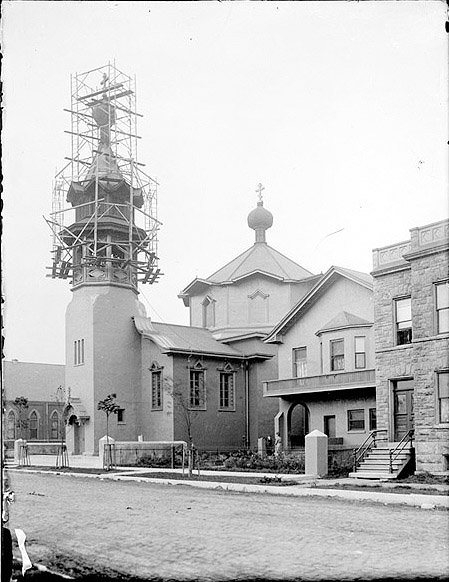
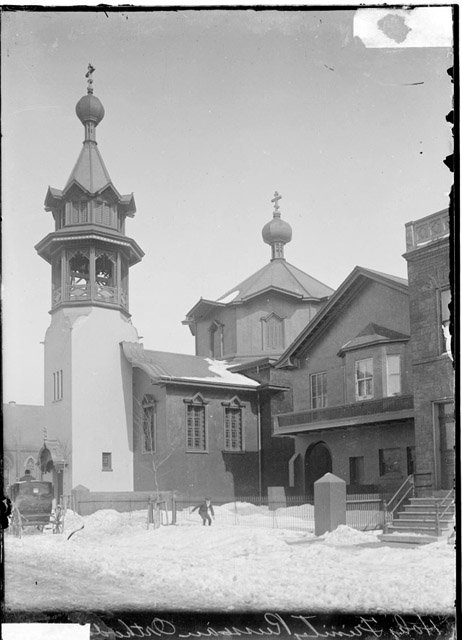
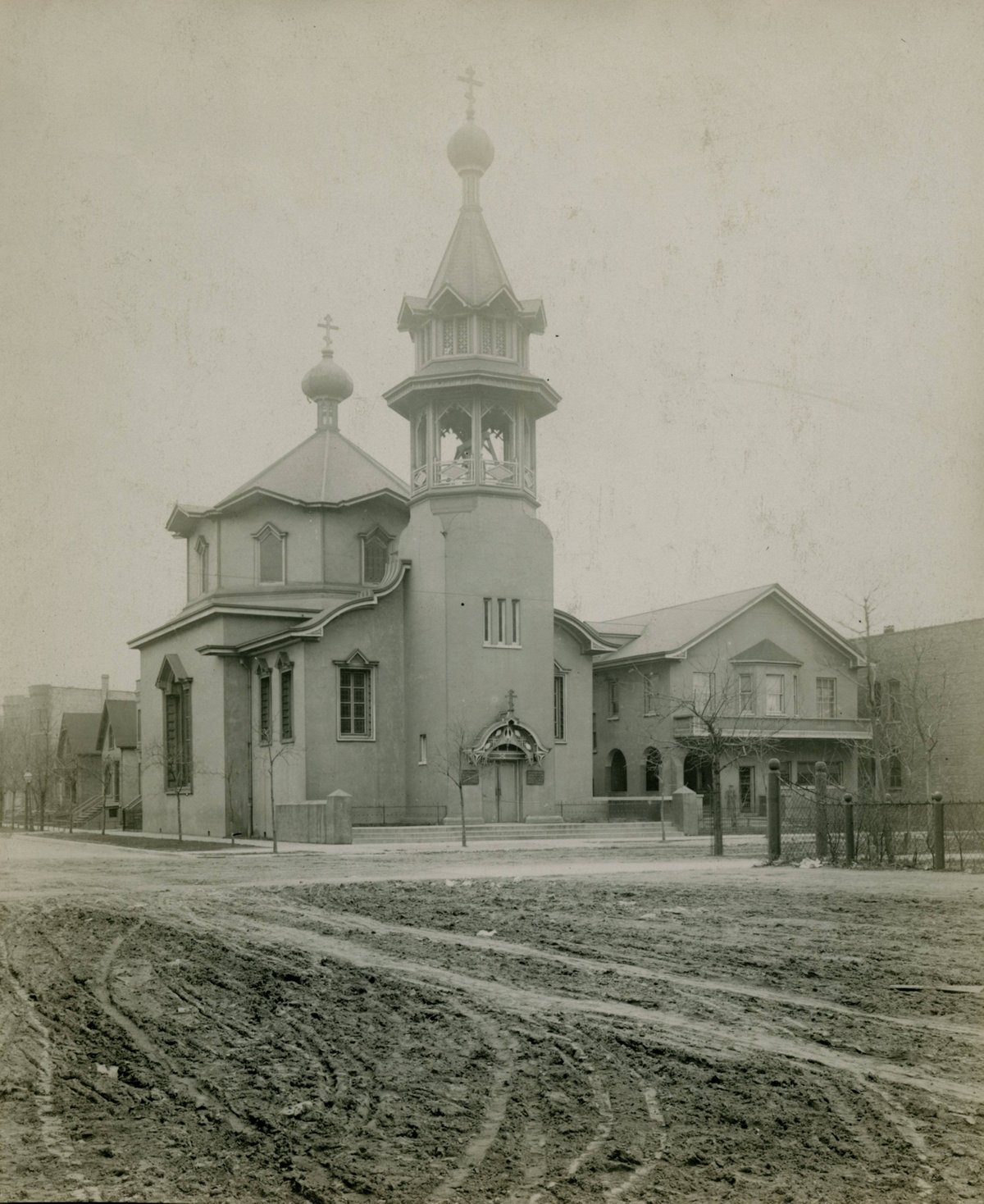
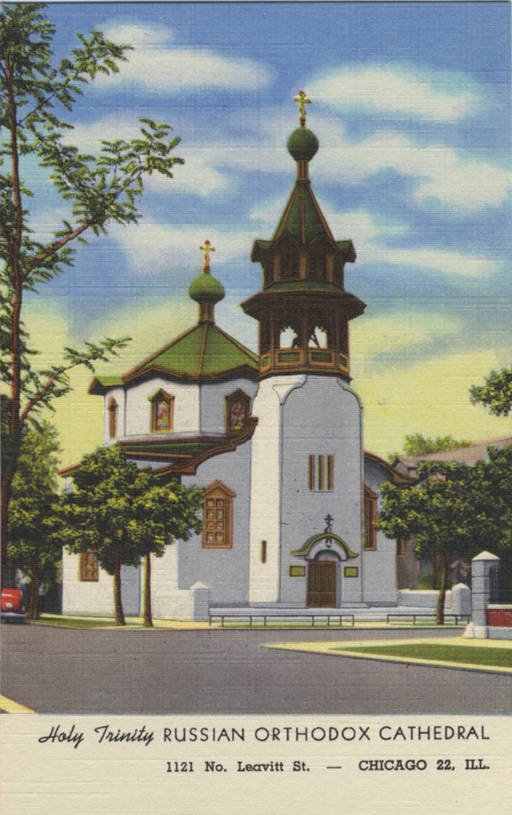
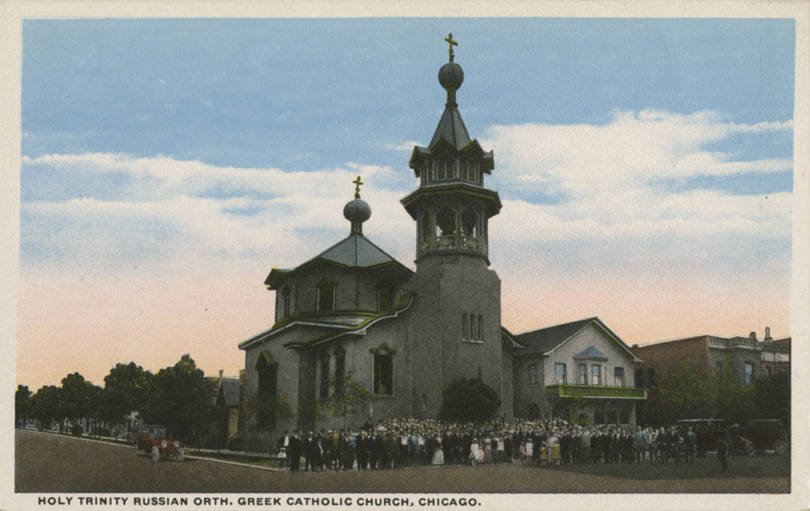
The cathedral is one of the few ecclesiastical projects designed by Louis Henry Sullivan, a giant of American architecture often called the “father of skyscrapers.” Its iconic onion dome, intricate brickwork, and unique blend of Russian Orthodox motifs with American design principles make it a standout on Chicago’s architectural landscape (Digital Chicago History; Wikipedia: Holy Trinity Orthodox Cathedral).
Consecrated in 1903 by Bishop Tikhon—later canonized as Patriarch of Moscow—and guided by the martyred priest St. John Kochurov, Holy Trinity has long served as the mother church of the Orthodox Church in America’s Diocese of the Midwest. It remains a vibrant site for worship, cultural preservation, and community outreach, recognized as both a Chicago Landmark and a National Register of Historic Places site (OCA Parish Directory; Chicago Architecture Center).
Visitors are welcome to experience the cathedral’s beauty free of charge, with opportunities for guided tours, participation in services, and engagement with ongoing cultural events. For current hours and event schedules, refer to the Holy Trinity Cathedral website.


Early Foundations and Immigrant Roots
Holy Trinity Cathedral began in 1892 as a parish for Orthodox Christian immigrants seeking to preserve their faith in a new land. Services first took place in modest rented spaces before the community acquired property for a permanent home (Holy Trinity Cathedral History). The parish quickly became a central gathering place, helping to establish other Orthodox churches throughout the Midwest and shaping Chicago’s religious landscape (OCA Parish Directory).
Architectural Vision: Louis Sullivan’s Influence
By 1902, the congregation had outgrown its temporary quarters and commissioned Louis Sullivan to design a new church. Inspired by Russian Orthodox churches yet incorporating American architectural ideas, Sullivan’s design features a striking onion dome, ornate brickwork, and harmonious ornamentation. The cornerstone was laid in March 1902; the church was consecrated in March 1903 (Wikipedia: Holy Trinity Orthodox Cathedral; Holy Trinity Cathedral History; Travel Pug).
Spiritual Leadership and Notable Figures
Bishop Tikhon (later Patriarch of Moscow) and Father John Kochurov were instrumental in the cathedral’s early years. Both were later canonized for their service and sacrifice—Tikhon for his leadership, and Kochurov for his martyrdom during the Bolshevik Revolution in 1917 (Wikipedia: Holy Trinity Orthodox Cathedral; OCA Parish Directory).
Growth and Community Impact
Designated as the cathedral for the Diocese of the Midwest in 1922, Holy Trinity played a key role in the expansion of Orthodoxy in the region. It became a beacon for immigrants and converts alike, adapting to changes within both the Church and the city, and supporting the creation of new parishes (Holy Trinity Cathedral History).
Visiting Holy Trinity Cathedral: Hours, Tickets, and Accessibility
Hours & Admission
- Monday to Saturday: 9:00 AM to 5:00 PM
- Sunday: Limited hours after services
- Admission: Free; donations appreciated
Accessibility
The cathedral provides wheelchair access and assistance upon request. To ensure the best experience, visitors with mobility concerns are encouraged to contact the cathedral in advance.
Guided Tours
Guided tours are available by appointment and offer in-depth insights into the building’s history, architecture, and spiritual significance. Group and private tours can be arranged through the cathedral office.
Special Events
Regular liturgical services, cultural festivals, and educational programs are held throughout the year. Check the events calendar on the official Holy Trinity Cathedral website for details.
Travel Tips and Nearby Attractions
- Best Time to Visit: Spring and fall, when the neighborhood is lively and weather is pleasant.
- Transportation: Street parking is limited; public transit (CTA buses and trains) is recommended. The cathedral is located at 1121 North Leavitt Street.
- Nearby Sites: Ukrainian National Museum, Polish Triangle, local cafes, bakeries, and boutiques in Ukrainian Village.
Recognition and Preservation
Holy Trinity Cathedral is a Chicago Landmark (since 1979) and listed on the National Register of Historic Places (since 1976) (Holy Trinity Cathedral History; Wikipedia: Holy Trinity Orthodox Cathedral). Its preservation is supported by ongoing restoration projects and recognition in numerous architectural studies and guides.
Milestones and Modern Developments
Key milestones in the cathedral’s history include:
- 1903: Consecration by Bishop Tikhon
- 1922: Elevated to cathedral status for the Midwest Diocese
- 1976: Added to National Register of Historic Places
- 1979: Designated a Chicago Landmark
- 1992: Centennial celebration (OCA Parish Directory)
The cathedral remains active as the seat of the Diocese of the Midwest, serving a diverse congregation.
Holy Trinity in Chicago’s Heritage
Set in the heart of Ukrainian Village, Holy Trinity Cathedral is both a religious and cultural landmark, symbolizing the city’s rich immigrant past and ongoing diversity. Its onion dome and Russian-inspired features distinguish it among Chicago’s religious buildings, and its outreach programs reflect a commitment to service and education (Travel Pug; Holy Trinity Cathedral).
Timeline of Key Events
| Year | Event |
|---|---|
| 1892 | Parish founded as St. Vladimir’s (Holy Trinity Cathedral History) |
| 1902 | Cornerstone laid; Sullivan’s design commissioned |
| 1903 | Consecration by Bishop Tikhon |
| 1922 | Cathedral status granted for Diocese of the Midwest |
| 1976 | Listed on National Register of Historic Places |
| 1979 | Designated a Chicago Landmark |
| 1992 | Centennial celebration |
Frequently Asked Questions (FAQ)
Q: What are the cathedral’s visiting hours?
A: Monday–Saturday, 9:00 AM to 5:00 PM; Sundays after services. Check the official site for updates.
Q: Is there an admission fee?
A: No. Admission is free; donations are appreciated.
Q: Are guided tours available?
A: Yes. Schedule in advance through the cathedral office or website.
Q: Is the cathedral accessible?
A: Yes, with ramps and assistance available upon request.
Q: What else can I see nearby?
A: Ukrainian National Museum, Polish Triangle, local Ukrainian cafes and bakeries.
Architectural and Interior Highlights
Louis Sullivan’s design features a compact plan, striking onion dome, and detailed ornamentation. Noteworthy elements include:
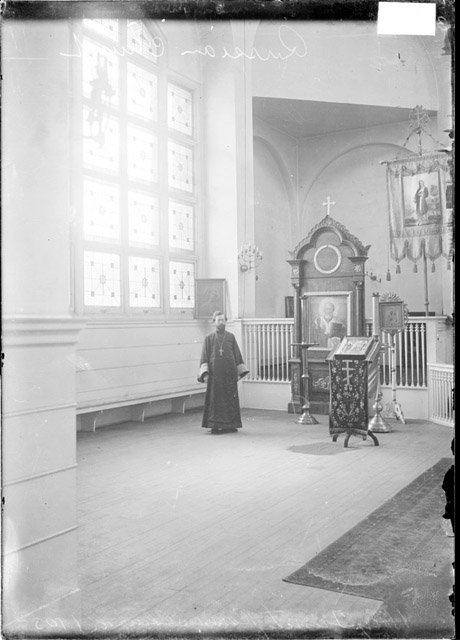
- Stained Glass Windows: Designed by Louis Millet, blending Orthodox iconography with Prairie School elements (Digital Chicago History).
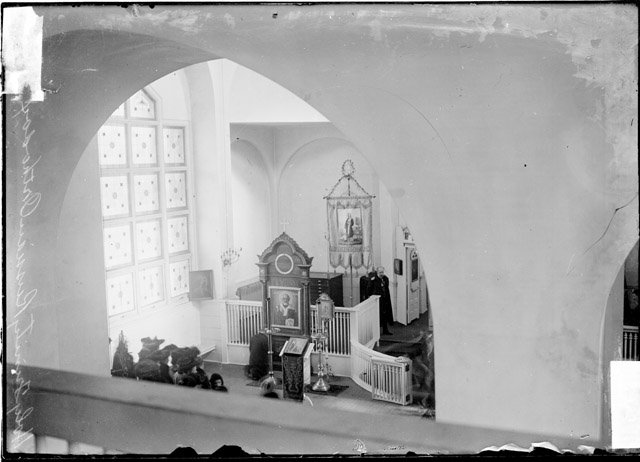
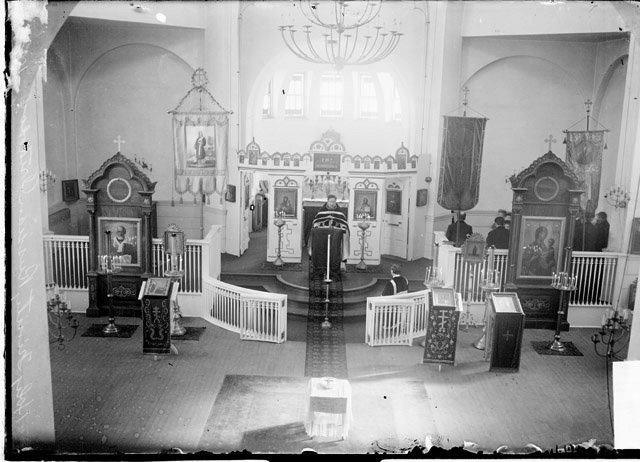
- Iconostasis: A grand screen commissioned in 1912, showcasing Russian artistry (OrthodoxWiki).
- Tiffany-Style Chandelier: A centerpiece designed by Sullivan and Millet.
- Exterior Brickwork: Sullivan’s signature ornamentation, with arches and decorative patterns.
Religious and Cultural Importance
Holy Trinity Cathedral is the seat of the Orthodox Church in America’s Diocese of the Midwest, upholding the liturgical traditions of Eastern Orthodoxy. Services are often bilingual, and the cathedral plays a central role in community events, educational programs, and charitable outreach (Chicago Architecture Center).
It is a key participant in neighborhood festivals and collaborates with other religious and cultural institutions to promote Eastern European heritage in Chicago.
Visitor Etiquette
Visitors are asked to dress modestly and maintain respectful behavior, especially during services. Photography is generally allowed, but flash and photos during services may be restricted.
Planning Your Visit
- Official Website: Holy Trinity Cathedral
- Tour Booking: Holy Trinity Cathedral Tours
- Event Schedule: Check the website for up-to-date information.
For enhanced experiences, download the Audiala app for guided audio tours.
Summary and Travel Tips
Holy Trinity Orthodox Cathedral is a Chicago treasure, blending faith, immigrant history, and architectural mastery. Visitors are welcomed with free admission, guided tours, and a rich calendar of liturgical and cultural events. Accessibility, proximity to Ukrainian Village attractions, and a commitment to hospitality make it an essential stop for those exploring Chicago’s historical sites (Choose Chicago; Chicago Architecture Center).
Stay updated via the official website, and consider using the Audiala app for enhanced tours and stories.
Listen to the full story in the app
The whole Holy Trinity Cathedral,
told well.
Audio guides for 1,100+ cities across 96 countries. History, stories, and local insight — offline ready.
Verified, and shown.
Researched and written by the Audiala editorial team from historical records, architectural archives, and local expertise.
Researched from Wikidata, Wikipedia & official sources · fact-checked · How we make our guides →