Introduction: The Haymarket Affair Site—History and Significance
The Haymarket Affair site in Chicago stands as a powerful testament to a pivotal moment in American and international labor history. Located at the intersection of North Desplaines and West Randolph Streets in the West Loop, this historic site commemorates the tragic events of May 4, 1886. On that day, a peaceful labor rally advocating for an eight-hour workday ended in violence, altering the course of workers’ rights movements globally.
The memorial—highlighted by Mary Brogger’s evocative bronze sculpture (installed in 2004) and interpretive plaques—offers visitors a space to reflect on the enduring struggles for workers’ rights, free speech, and social justice. The Haymarket Affair is recognized as the catalyst for International Workers’ Day (May Day), celebrated worldwide. Today, the memorial is an open, outdoor public site, accessible 24/7 with no admission fee, drawing historians, labor activists, tourists, and locals keen to explore Chicago’s rich labor heritage. For those seeking a deeper understanding, guided tours by the Illinois Labor History Society and resources from the Chicago History Museum provide valuable insights. The nearby Haymarket Martyrs’ Monument at Forest Home Cemetery further honors the memory of those who sacrificed their lives in the fight for justice (Chicago Reader, Mexico Historico).
Photo Gallery
Explore Haymarket Affair in Pictures
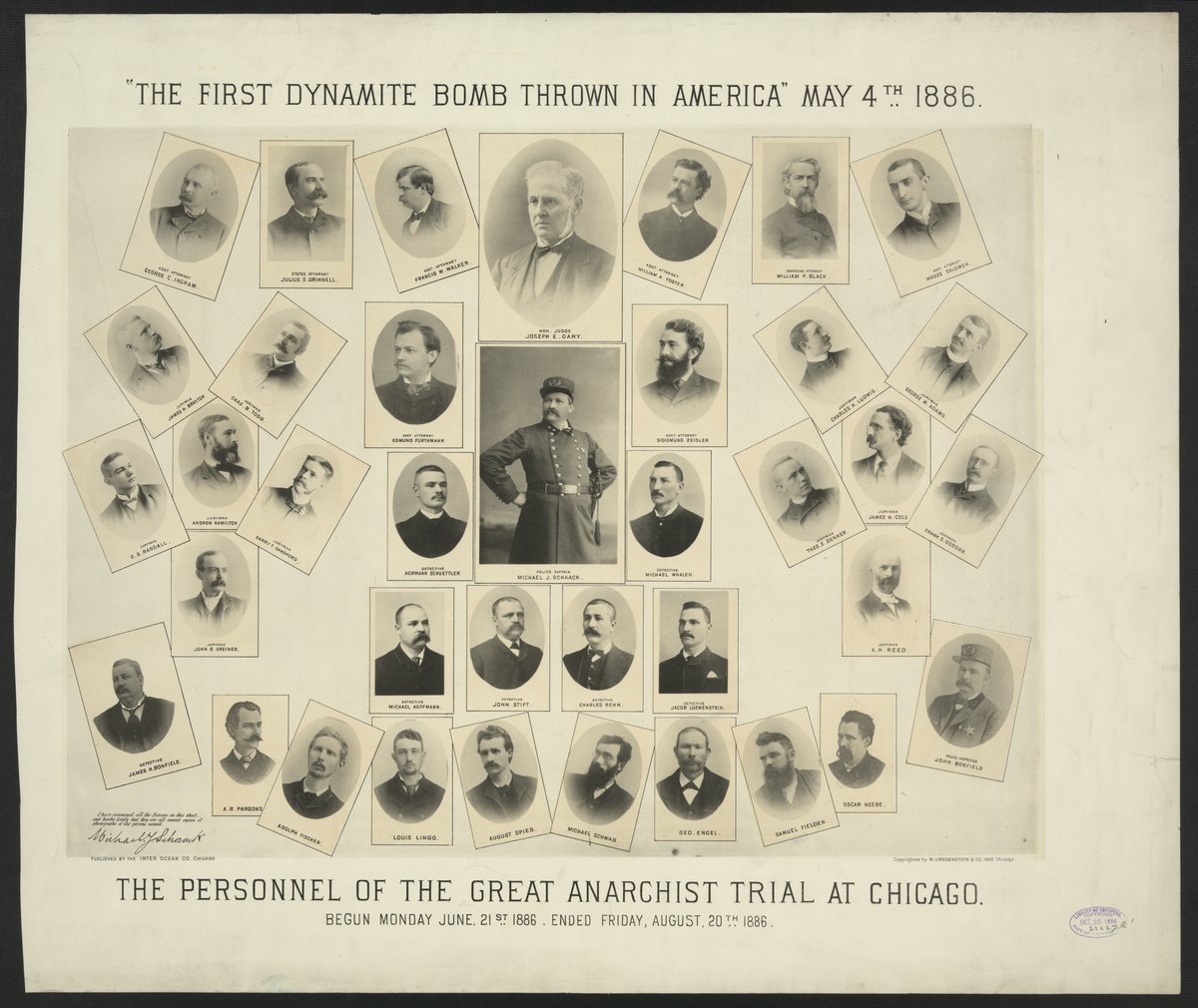
Historic 1886 black and white photograph showing personnel of the great anarchist trial in Chicago associated with the first dynamite bomb thrown in America. The trial began on June 21st and ended on August 20th, 1886.
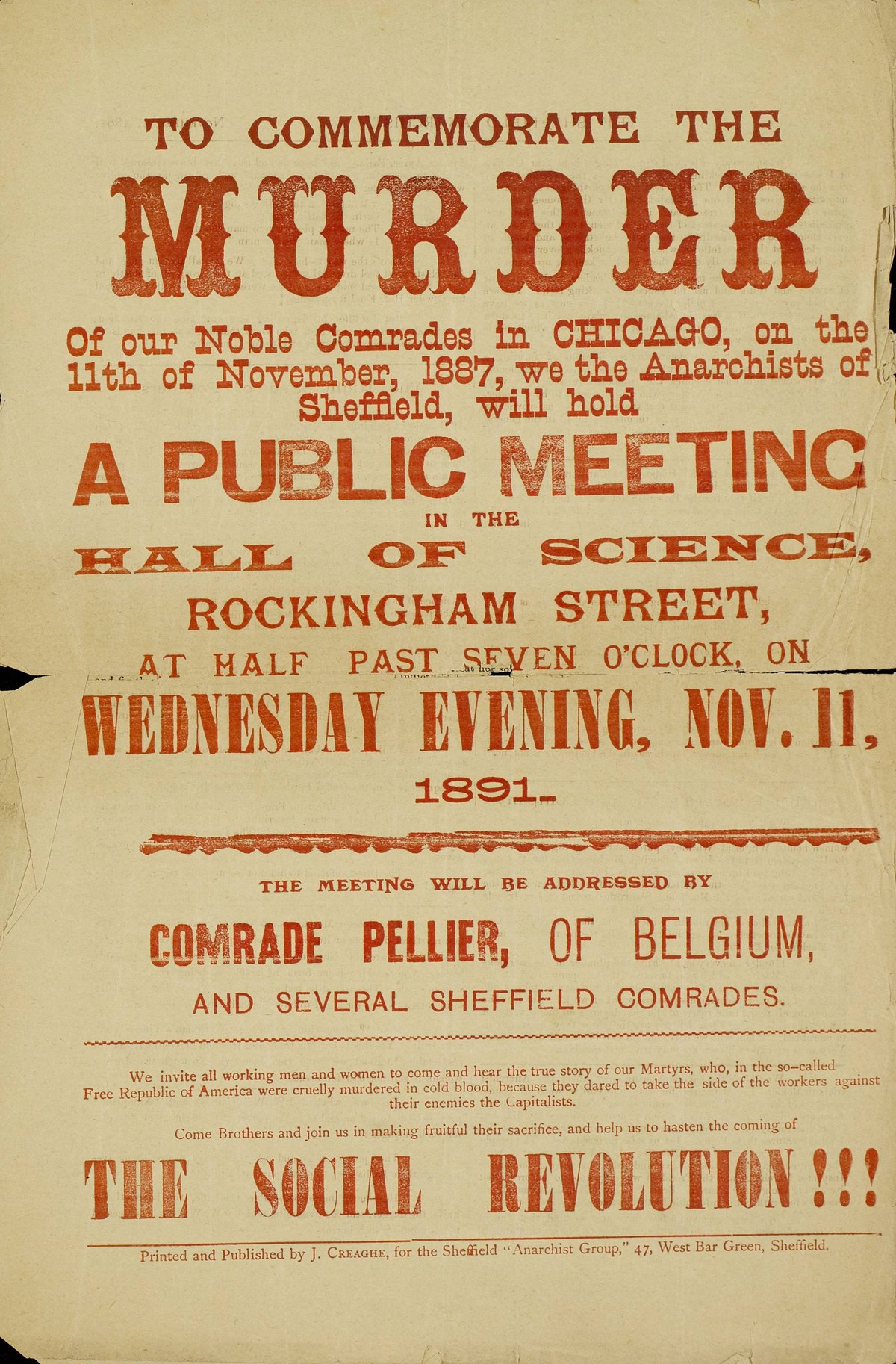
Leaflet for the 1891 Public Meeting by Sheffield anarchists held on November 11 in the Hall of Science to remember the Chicago anarchists murdered on November 11, 1887.
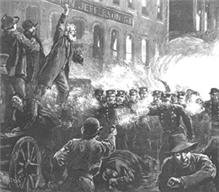
Historic image depicting confrontations between workers and authorities on the streets of Chicago in 1886 during labor protests.
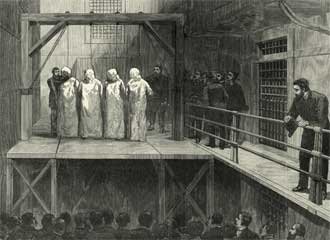
Historic photograph showing the execution by hanging of anarchists August Spies, Albert Parsons, Adolph Fischer, and George Engel in the prison yard of Chicago on November 11, 1887.
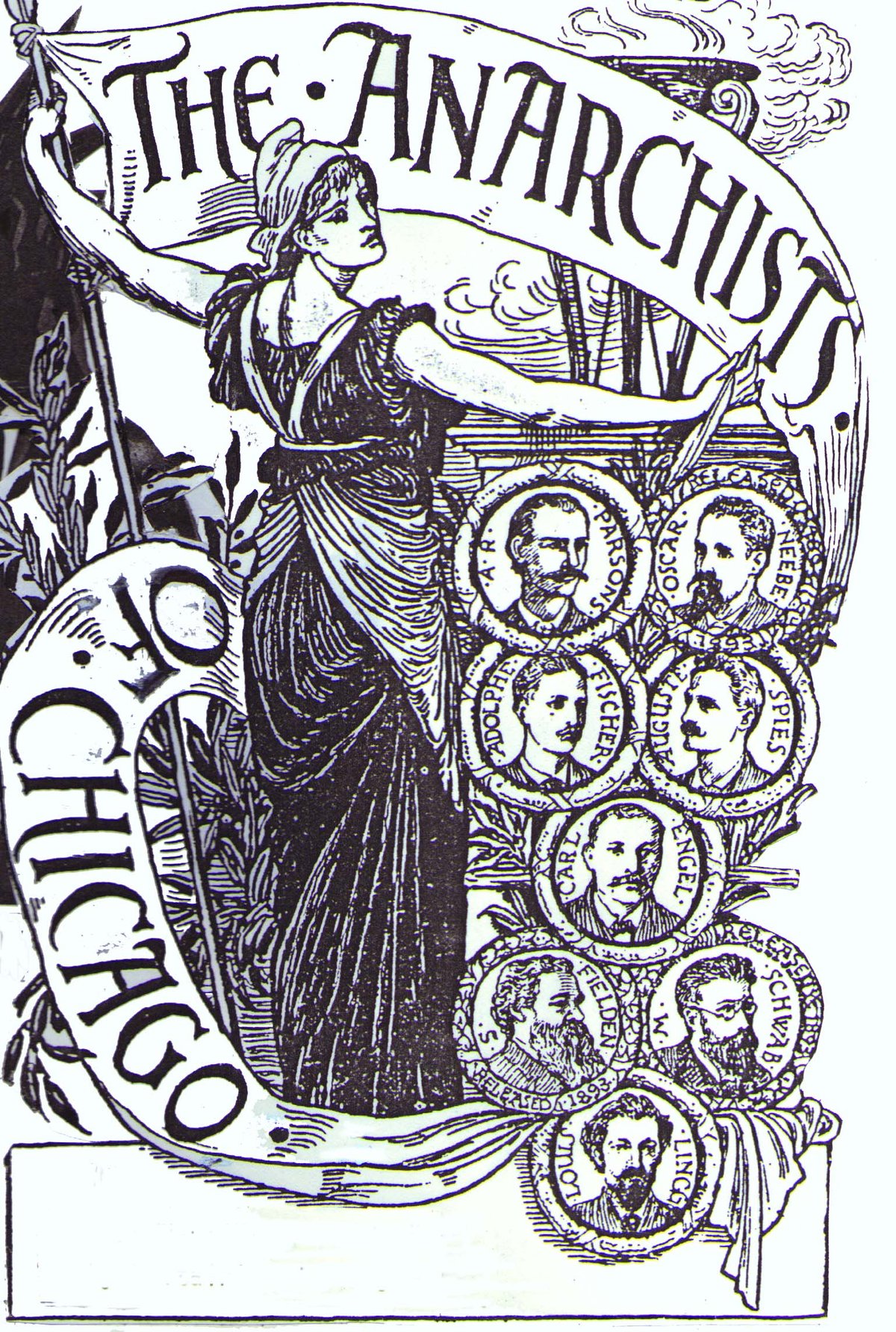
Portraits of the Haymarket Martyrs, a group of Chicago anarchists involved in the Haymarket affair, significant in labor history and anarchist movements.
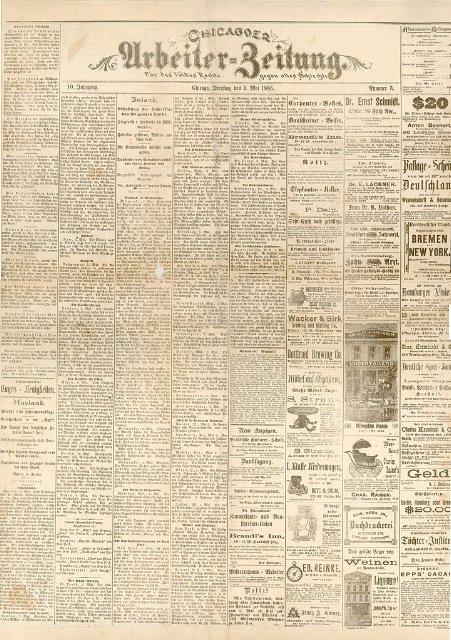
The masthead of the May 4, 1886 issue of Arbeiter Zeitung newspaper, used as evidence in the Haymarket affair criminal conspiracy case
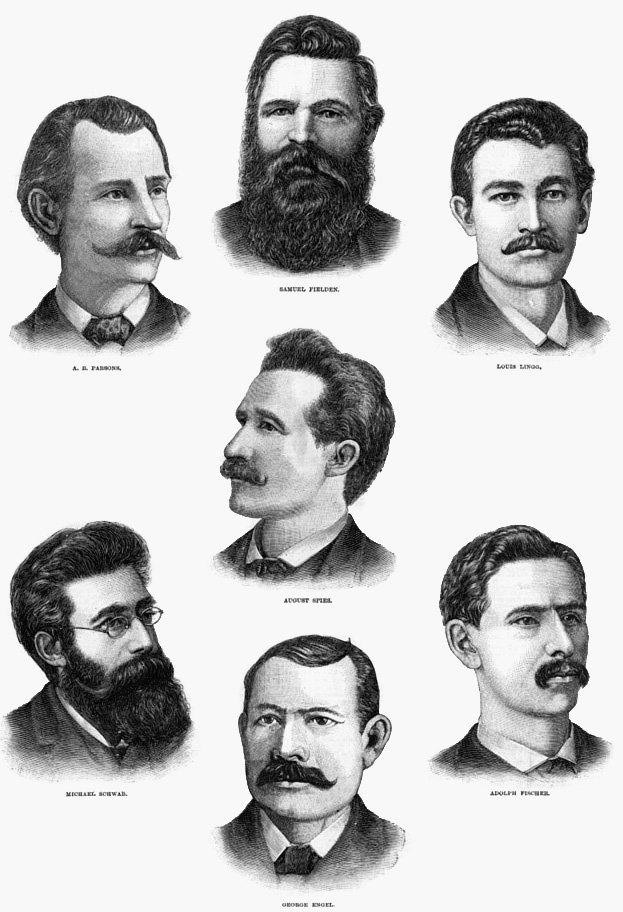
Historical portraits of the Haymarket Martyrs, labor activists known for their role in the Haymarket affair and labor movement
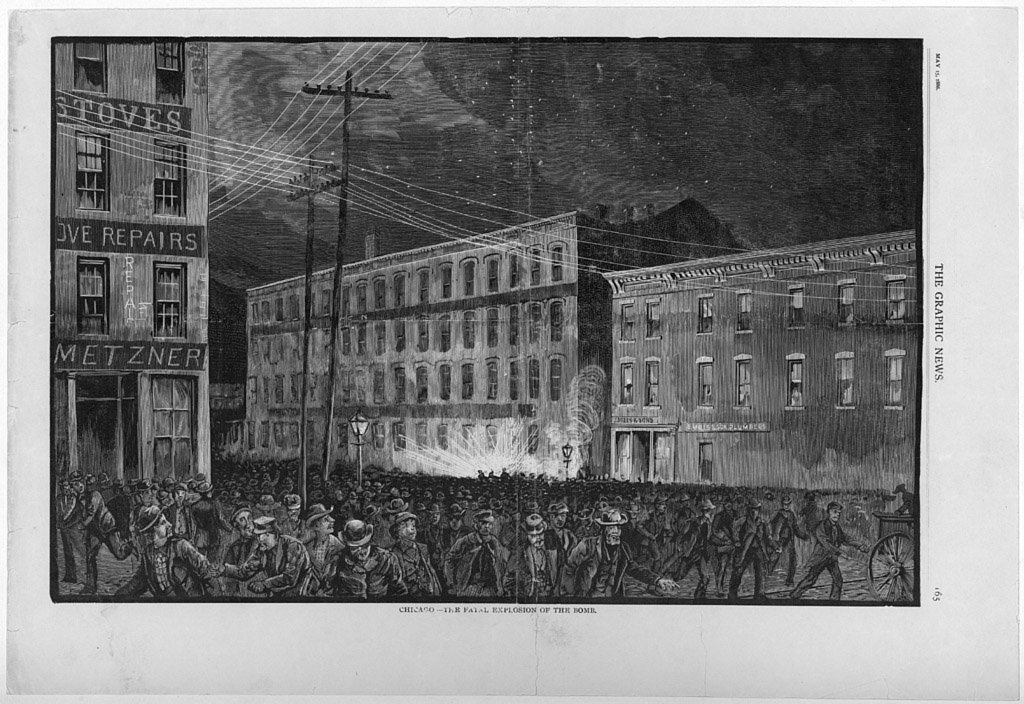
Historic engraving showing the Haymarket Riot, illustrating the violent clash between protesters and police officers during the labor movement unrest.
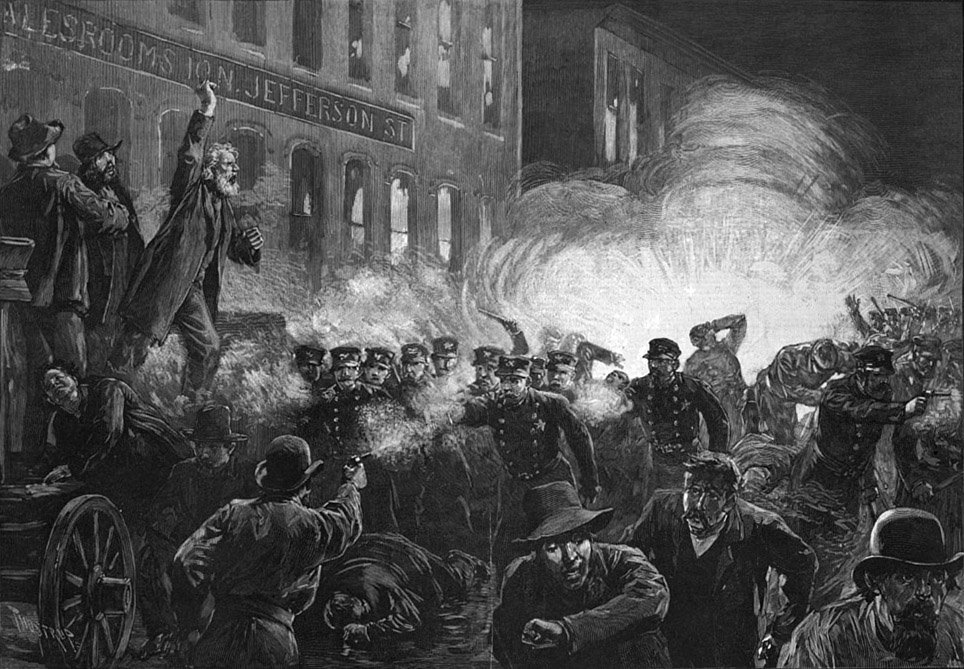
Historical illustration depicting the Haymarket Riot with police clashing with protesters in a tense street confrontation.
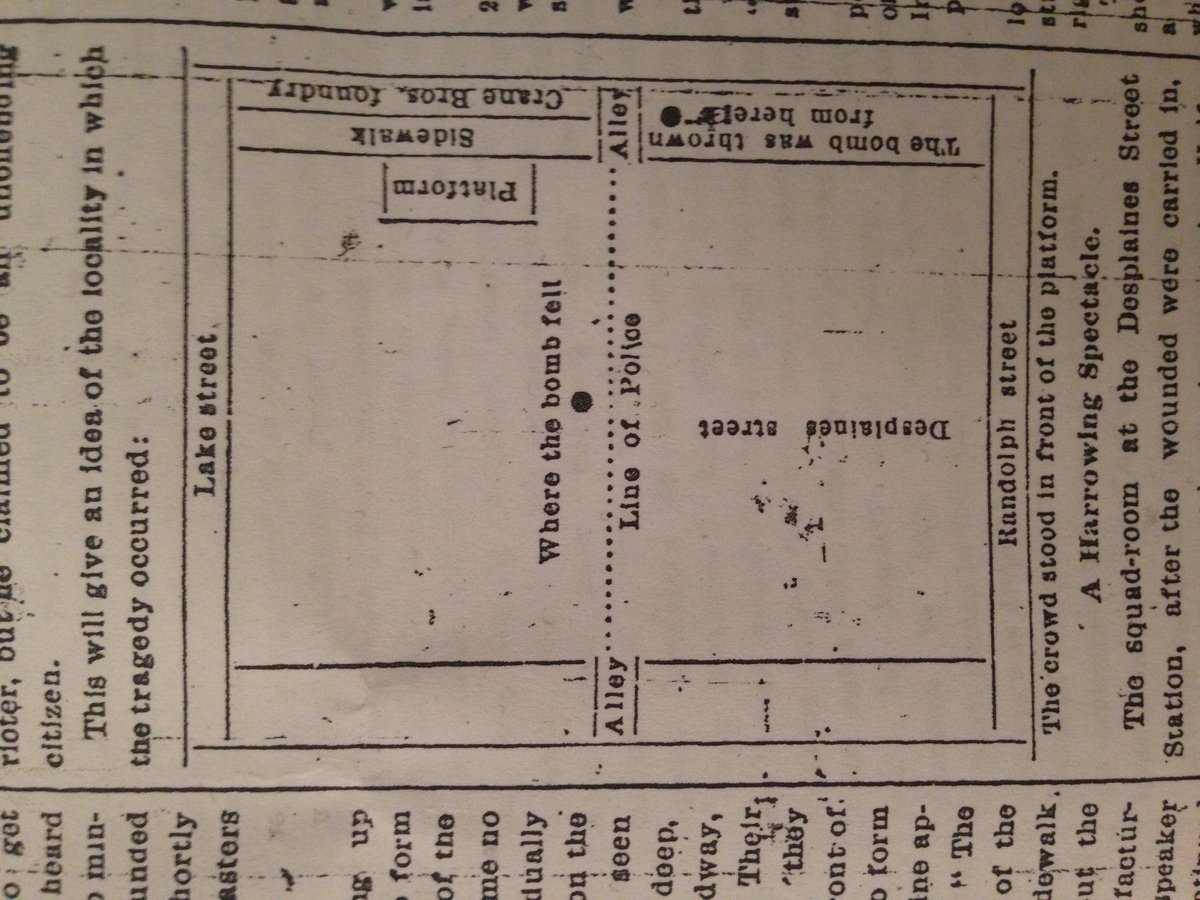
Detailed historical map depicting the Haymarket Affair event in Chicago, published by the Chicago Tribune on May 5, 1886
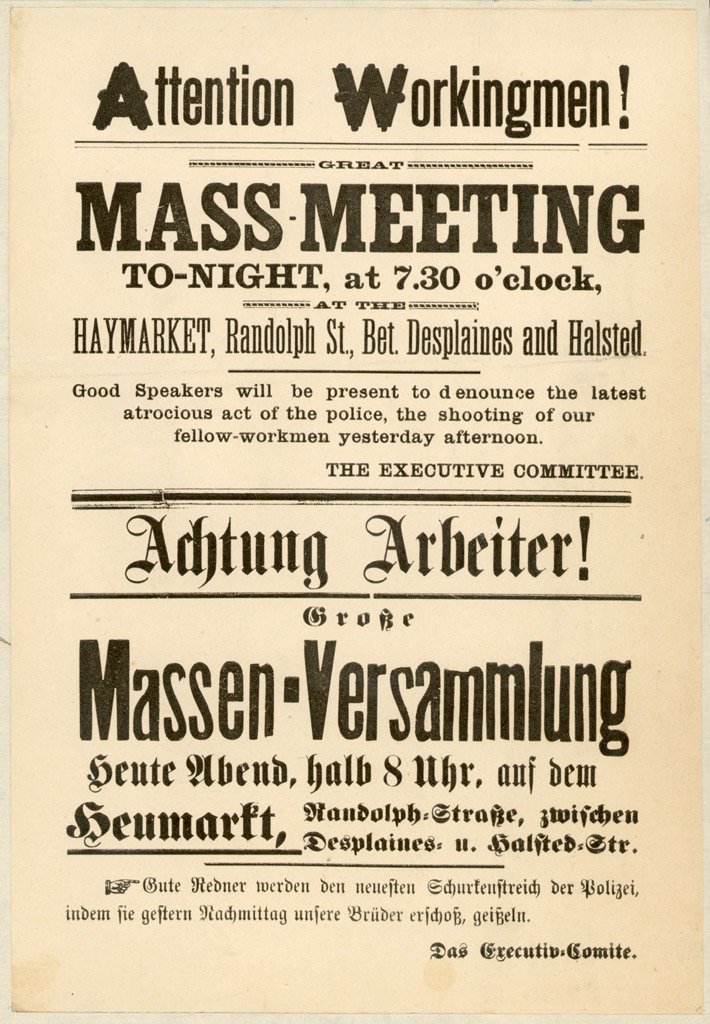
Historical bilingual English-German flier announcing a rally supporting striking workers in Chicago, 1886
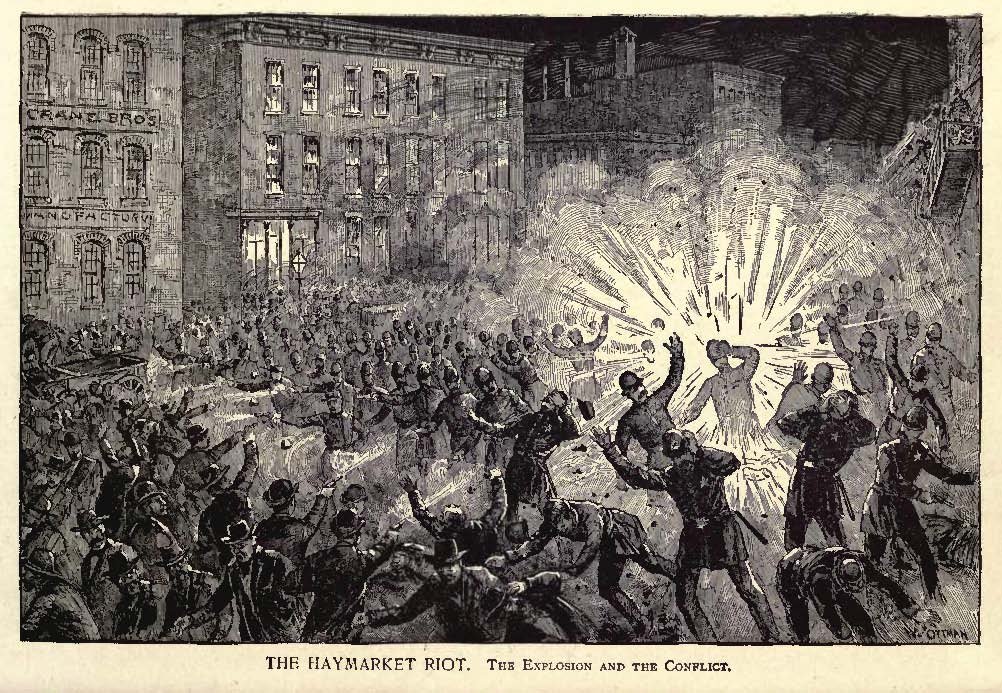
Historic explosion at Haymarket Square in 1886, marking the beginning of the Haymarket Riot, a key event in labor movement history.
Location and Setting of the Haymarket Affair Site
Situated in the heart of Chicago’s West Loop—a neighborhood known for its blend of historic warehouses and modern vibrancy—the Haymarket Affair site lies at the intersection of North Desplaines and West Randolph Streets. Once a bustling commercial hub, this area now features restaurants, cultural venues, and offices, reflecting Chicago’s evolution. The site’s proximity to downtown makes it easily accessible for both locals and visitors (Chicago Reader).
Memorials and Markers
The Haymarket Memorial Statue
Installed in 2004 at 175 North Desplaines Street, Mary Brogger’s bronze Haymarket Memorial sculpture depicts a speaker’s wagon—symbolizing the labor leaders’ rallying platform—surrounded by crates and figures. This semi-abstract work invites contemplation and dialogue, commemorating the labor activists and emphasizing the ongoing relevance of their struggle.
Interpretive Plaques and Landmark Status
Designated a historic landmark in 1992, the site features a commemorative plaque summarizing the events of May 4, 1886, and their legacy. Together, the statue and plaque serve as focal points for education and remembrance (Chicago Reader).
Visitor Information
Visiting Hours and Tickets
The Haymarket Memorial is an outdoor site accessible 24 hours a day, seven days a week. There is no admission fee or ticket required to visit the memorial or view the historical plaque.
Getting There
- Public Transit: The Clinton station (CTA Green and Pink Lines) is a short walk away, and multiple CTA bus routes serve the area.
- Parking: Metered street parking is limited; several public parking garages are within walking distance.
- Accessibility: The memorial area is wheelchair accessible, with curb cuts and paved sidewalks.
Guided Tours
Guided walking tours, often focusing on Chicago’s labor history and the Haymarket Affair, are offered by organizations such as the Illinois Labor History Society. Advance booking is recommended, especially around annual commemorations like May Day.
Photography and Special Events
Photography is permitted and encouraged. The memorial’s design and urban backdrop make it a compelling spot for photos, particularly during commemorative events on May 1 and May 4.
Haymarket Martyrs’ Monument at Forest Home Cemetery
Located approximately 10 miles west in Forest Park, the Haymarket Martyrs’ Monument at Forest Home Cemetery honors the eight men convicted in connection with the bombing. Dedicated in 1893, the monument features a granite shaft topped by a bronze figure of Justice, with powerful inscriptions. Seven of the martyrs are buried here (all but Samuel Fielden). The cemetery is open daily from 8 am to 4 pm and is accessible via the CTA Blue Line’s Forest Park station (Oak Park and Beyond, Wikipedia).
Annual Commemorations and Cultural Impact
Every May 1 (International Workers’ Day), the Haymarket site and Martyrs’ Monument become gathering points for global labor and social justice commemorations. Events include speeches, rallies, and educational programs, underscoring the ongoing relevance of the Haymarket Affair in contemporary discussions of fair labor practices and civil rights (Mexico Historico).
Visitor Etiquette and Recommendations
- Respect the Memorial: Observe the site with reverence; avoid climbing on the sculpture.
- Appropriate Photography: Be considerate of others, especially during events or moments of reflection.
- Combine Visits: The West Loop’s dining and cultural scene, as well as nearby historical sites like Union Station and the Chicago Cultural Center, can enrich your visit.
- Further Learning: Visit the Chicago History Museum or consult the Illinois Labor History Society for additional resources.
Frequently Asked Questions (FAQ)
Q: Is there an entrance fee or are tickets required?
A: No, the Haymarket Memorial is a public site with free, round-the-clock access.
Q: What are the best times to visit?
A: The memorial is open 24/7, but daytime visits are recommended for safety and optimal viewing.
Q: Is the site wheelchair accessible?
A: Yes, the memorial is fully accessible.
Q: Are guided tours available?
A: Yes, particularly through the Illinois Labor History Society, especially around May Day.
Q: Can I take photographs?
A: Yes, photography is encouraged for personal use.
Discover More
The Haymarket Affair site stands as one of Chicago’s most significant historical landmarks, offering free and open access to anyone wishing to connect with the city’s labor, immigrant, and social justice heritage. The memorial’s presence in the vibrant West Loop neighborhood, together with educational resources and annual commemorations, creates a meaningful experience for visitors of all ages and backgrounds.
To deepen your understanding and stay informed about upcoming events, download the Audiala app, explore nearby sites, and connect with organizations like the Illinois Labor History Society. Embrace the opportunity to reflect on the enduring legacy of the Haymarket Affair—a legacy that continues to inspire workers’ rights movements and social progress worldwide (Chicago Reader, Illinois Labor History Society).
Listen to the full story in the app
Your Personal Curator, in Your Pocket.
Audio guides for 1,100+ cities across 96 countries. History, stories, and local insight — offline ready.
Audiala App
Available on iOS & Android
Join 50k+ Curators
Sources
- verified
- verified
- verified
- verified
- verified
Last reviewed: