Introduction
Located in the culturally rich Hyde Park neighborhood, the First Unitarian Church of Chicago is one of the city’s oldest religious congregations and a prominent Chicago historic site. Established in 1836—just three years after Chicago’s incorporation—the church has played a critical role in the city’s social, cultural, and architectural development. Its legacy of progressive activism, architectural distinction, and inclusive community engagement makes it a must-visit for history buffs, architecture enthusiasts, and those interested in Chicago’s vibrant social landscape.
This guide provides a comprehensive overview of the First Unitarian Church of Chicago, including its history, architectural highlights, visiting hours, accessibility, and insider tips for making the most of your visit. For the latest details, refer to the First Unitarian Church of Chicago official website and trusted travel resources such as Holidify.
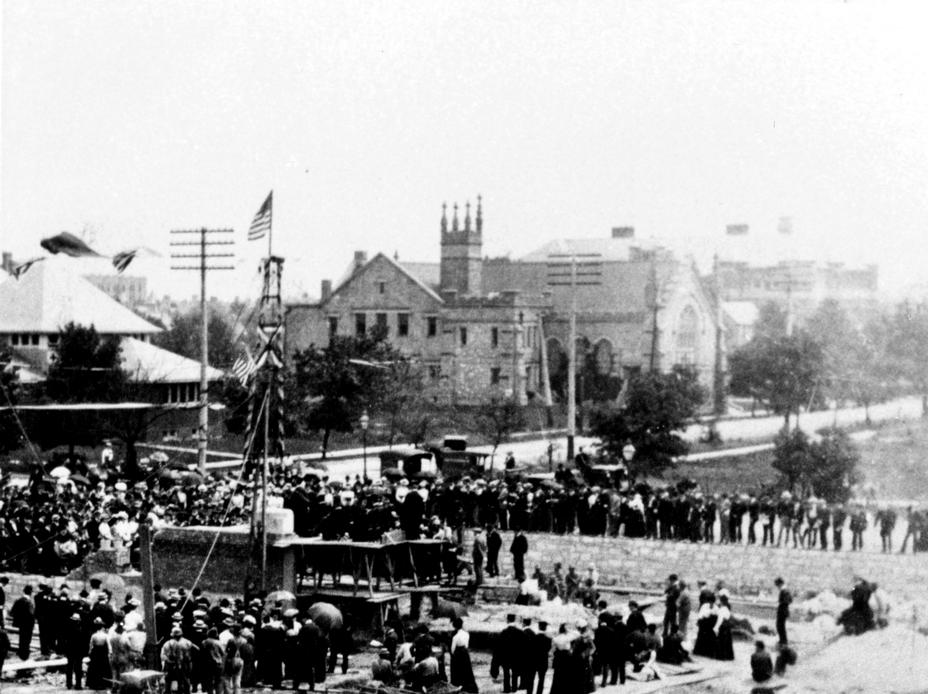
Founded in 1836, the First Unitarian Church of Chicago arose from the city’s earliest days as a town. Its founders—drawn by ideals of reason, tolerance, and social justice—helped shape Chicago’s civic and cultural landscape. Initially gathering in private homes, the congregation built its first structure in 1841, marking a commitment to education, abolition, women’s rights, and other progressive causes (First Unitarian Church of Chicago).
Throughout the 19th and 20th centuries, the church continued to champion social reforms and fostered a community of influential leaders and activists. Its enduring mission is reflected in its ongoing programming, inclusive worship, and vibrant engagement with Chicago’s evolving needs.
Architectural Significance
Early Structures
The congregation’s first building, constructed in 1841, was notable for housing Chicago’s first church bell. Subsequent fires and relocations led to the construction of new facilities, including an 1873 church at 23rd and Michigan and a mission chapel at 57th and Woodlawn in 1897 (Wikipedia; First U Chicago History).
The 1925 Sanctuary
The current sanctuary, completed in 1925 thanks to a gift from member Morton D. Hull, stands as an outstanding example of English Perpendicular Gothic Revival architecture. Designed with soaring vertical lines, intricate stonework, and luminous stained glass, the sanctuary embodies both spiritual aspiration and progressive community ideals. Hull’s ashes rest in the crypt beneath the sanctuary, underscoring his lasting connection to the church (Wikipedia).
Hull Chapel and the Columbarium
Adjacent to the sanctuary, Hull Chapel features Victorian oak woodwork and seats 100, offering an intimate space for reflection and smaller gatherings (Holidify). Beneath the nave lies Chicago’s first columbarium, a crypt for cinerary urns—an innovative approach to memorialization at the time (Wikipedia).
Notable Features
- Gray Stone Facade: Imparts a sense of permanence and gravitas.
- Tower & Steeple: The original belltower, once topped with a steeple, was removed in 2002 for safety reasons.
- Vaulted Ceilings & Stained Glass: The sanctuary’s vaulted ceilings and large stained glass windows create an uplifting atmosphere.
- Acoustics: The space is renowned for its acoustics, hosting performances by groups such as the Chicago Children’s Choir, founded at the church in 1956 (Wikipedia).
Social Justice & Community Impact
The First Unitarian Church of Chicago has a distinguished legacy of social activism:
- Abolition & Civil Rights: Early support for abolition, women’s suffrage, and public education.
- 20th Century & Beyond: Advocated for racial integration, LGBTQ+ inclusion, and community relief efforts.
- Arts & Education: Founded the Chicago Children’s Choir (now Uniting Voices Chicago), nurturing youth and bridging communities through music.
- Ongoing Engagement: Today, the church remains a hub for dialogue on social and environmental justice, partnering with local organizations and the University of Chicago.
Visiting Information
Hours & Admission
- Monday–Friday: 10:00 AM – 6:00 PM
- Sunday: 9:00 AM – 1:00 PM (Worship at 10:00/10:30 AM; check official schedule)
- Saturday: Closed
- Admission: Free; donations appreciated for programs and maintenance (Holidify)
Accessibility
The church is fully wheelchair accessible, with ramps, accessible restrooms, and assistive listening devices available. Large-print materials and childcare are also provided during Sunday services. For additional needs, contact the church office in advance (First U Chicago).
Tips & Nearby Attractions
- Location: 5650 S. Woodlawn Ave, Hyde Park, Chicago
- Transit: Easily reached by CTA buses, Metra Electric Line; street parking is available but limited.
- Nearby Sites: University of Chicago, Museum of Science and Industry, Frank Lloyd Wright’s Robie House, Jackson Park (Mapcarta).
- Best Visiting Times: Weekday mornings/afternoons for quiet exploration; Sundays for worship and tours.
Tours & Photography
- Guided Tours: Available by appointment and after Sunday services. Contact the church office to arrange a tour.
- Photography: Permitted outside of worship services and private events. Please be respectful; the interplay of stained glass and stone offers excellent photo opportunities.
Frequently Asked Questions (FAQ)
Q: What are the visiting hours at the First Unitarian Church of Chicago?
A: Monday–Friday, 10:00 AM–6:00 PM; Sunday, 9:00 AM–1:00 PM. Closed Saturdays.
Q: Is admission free?
A: Yes, entry is free. Donations are welcome to support programs and upkeep.
Q: Is the church accessible?
A: Yes, the building is fully wheelchair accessible, with additional accommodations upon request.
Q: Are tours available?
A: Guided tours can be arranged through the church office and are often offered after Sunday services.
Q: Can I photograph inside the church?
A: Yes, when no services are in progress and with respect to the congregation’s privacy.
Q: What nearby attractions should I visit?
A: The University of Chicago campus, Museum of Science and Industry, Robie House, and Midway Plaisance are all within walking distance.
Visuals & Media
For images of the church’s stunning sanctuary and exterior, visit the church’s website. Suggested alt text includes: “First Unitarian Church of Chicago sanctuary interior with stained glass” and “Exterior view of the First Unitarian Church of Chicago in Hyde Park.”
Listen to the full story in the app
Your Personal Curator, in Your Pocket.
Audio guides for 1,100+ cities across 96 countries. History, stories, and local insight — offline ready.
Audiala App
Available on iOS & Android
Join 50k+ Curators
Sources
- verified
- verified
- verified
- verified
- verified
Last reviewed: