Introduction
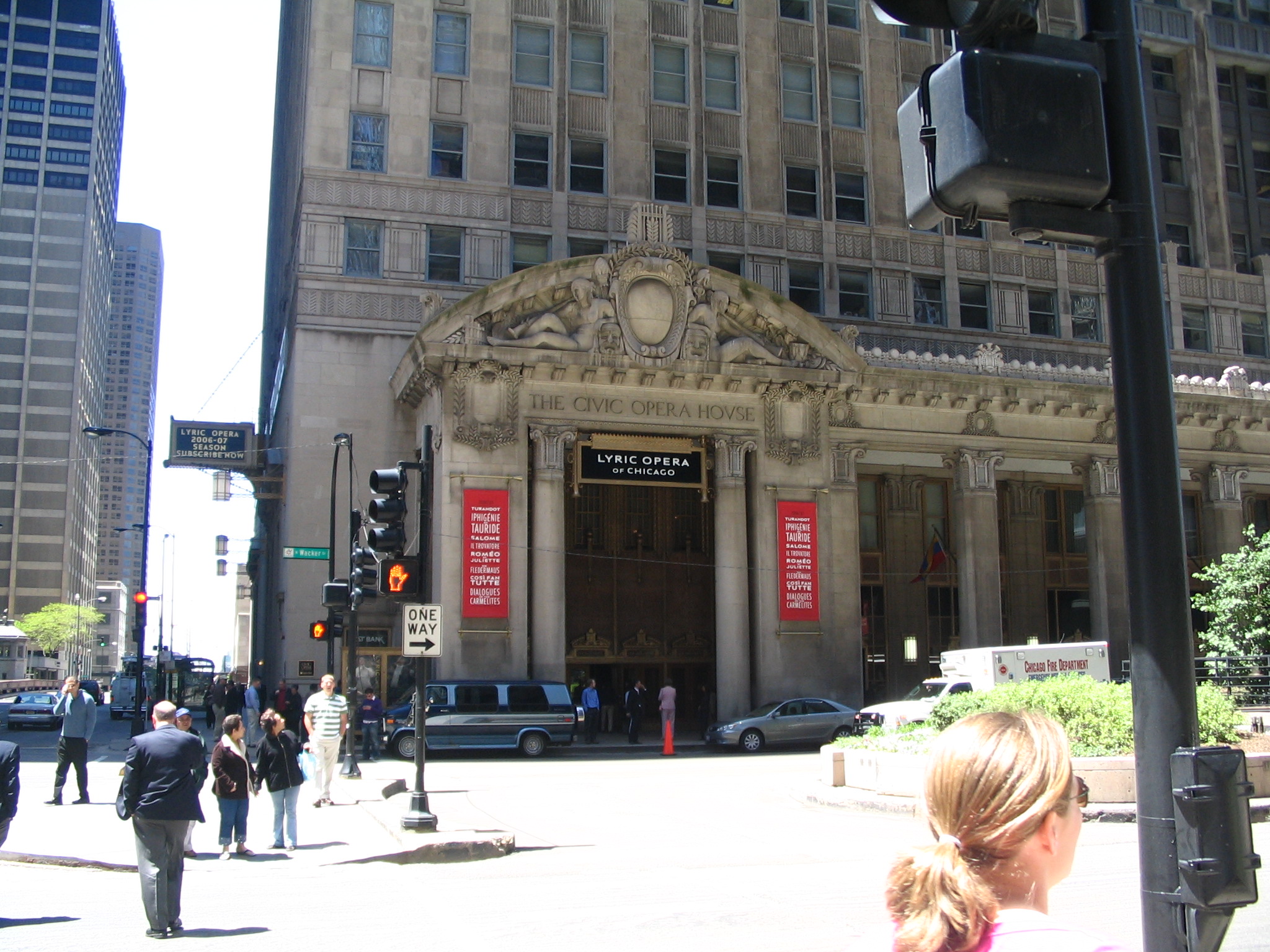
The Chicago Opera House, officially known as the Civic Opera House and currently home to the Lyric Opera of Chicago, is a defining symbol of the city's cultural and architectural legacy. Situated at 20 North Wacker Drive in downtown Chicago, this Art Deco landmark has hosted world-class performances and served as a hub of innovation since its grand opening in 1929. Conceived by visionary utilities magnate Samuel Insull and designed by the architectural firm Graham, Anderson, Probst & White, the building combines a majestic opera venue with a commercial office tower—a pioneering model for arts patronage in America (yourchicagoguide.com; wikipedia.org).
This comprehensive guide explores the Opera House’s fascinating history, unique architecture, visitor essentials (including hours, ticketing, and accessibility), and its ongoing impact on Chicago’s cultural landscape. Whether you are an opera enthusiast, architecture lover, or first-time visitor, this article equips you with everything needed for a memorable visit to one of Chicago’s premier landmarks.
Origins and Early Opera in Chicago
Opera has been integral to Chicago’s cultural identity since the 19th century. The city’s first major venue, Crosby’s Opera House, was destroyed in the Great Chicago Fire of 1871, prompting civic leaders to envision a new world-class space for opera (chicagology.com). The 1889 opening of the Auditorium Theatre marked a new era, but Chicago still lacked a permanent resident company, relying heavily on visiting troupes (encyclopedia.chicagohistory.org).
The formation of the Chicago Grand Opera Company in 1910, and support from patrons like Harold and Edith McCormick, helped solidify Chicago’s status as a national operatic hub. However, financial instability and frequent reorganizations characterized this period, underscoring the challenges of sustaining an opera company in early 20th-century America (yourchicagoguide.com).
The Vision of Samuel Insull and the Birth of the Civic Opera House
In the 1920s, Samuel Insull envisioned a permanent, self-sustaining home for grand opera in Chicago. His innovative solution: integrate a grand opera house into a commercial office building, using rental income to subsidize performances (yourchicagoguide.com; wikipedia.org). Insull acquired a prime riverside site and commissioned Graham, Anderson, Probst & White to design the Civic Opera Building—a 45-story tower flanked by two 22-story wings, with the opera house occupying the north end (buildingsdb.com). The building’s throne-like profile has fueled local legends about Insull’s ambitions, but its real legacy is as a lasting testament to civic and artistic vision (wikipedia.org).
Architectural Significance
The Civic Opera House is a celebrated example of Art Deco architecture, reflecting both modernist innovation and classical grandeur. Its limestone exterior features vertical piers, stylized reliefs, and a central tower that rises above the river (cinematreasures.org). Inside, the 3,563-seat auditorium—second largest in North America—was lauded for its acoustics, sightlines, and opulent décor, described as a “rose-colored grotto” at its debut (lyricopera.org).
Elaborate interior ornamentation, including works by sculptor Henry Hering, and a focus on audience comfort and technical excellence, make the venue both visually stunning and functionally advanced (yourchicagoguide.com). The building was designated a National Historic Landmark in 1998 (buildingsdb.com).
Visiting the Civic Opera House: Hours, Tickets & Accessibility
Visiting Hours
The Opera House is primarily open to the public during performances and special events. Typical box office hours are Monday–Friday, 10:00 AM–6:00 PM; on performance days, the box office may open earlier. Always check the Lyric Opera of Chicago website for the most current schedules.
Ticket Information
Purchase tickets online via the Lyric Opera’s official website, by phone, or at the box office. Prices generally range from $30 to $200, with discounts available for students, seniors, and groups. Early booking is recommended for popular events.
Accessibility
The venue is fully accessible, with wheelchair seating, assistive listening devices, and services for patrons with visual or hearing impairments. Elevators and ramps are available, and staff are trained to assist. Contact the box office for specific accommodation requests.
Travel Tips and Nearby Attractions
Located along the Chicago River in the city’s Loop, the Opera House is easily reached via CTA trains, buses, and nearby parking garages. Enhance your visit by exploring:
- Chicago Riverwalk
- Art Institute of Chicago
- Auditorium Theatre
- Chicago Cultural Center
Guided tours of the Opera House are occasionally available, offering behind-the-scenes access and historical insights. Photography is permitted in public areas outside performances.
Cultural Impact and Notable Events
Since its 1929 debut with Verdi’s “Aida,” the Opera House has been a cultural cornerstone, hosting operas, ballets, concerts, and even television broadcasts (cinematreasures.org). Despite economic challenges, including the Great Depression and the downfall of Insull, the venue endured, adapting to new uses and audiences.
The founding of the Lyric Opera of Chicago in 1954 cemented the building’s role as a premier arts hub. Today, the Opera House is home not only to the Lyric Opera but also the Joffrey Ballet, and continues to host premieres and innovative programming (lyricopera.org).
Transformations and Renovations
Significant restorations in the 1990s preserved the Opera House’s historic character while upgrading technical and audience amenities (lyricopera.org). Renovations have focused on accessibility, comfort, and state-of-the-art performance technology, ensuring the venue remains inviting and relevant for future generations.
Legacy and Continuing Significance
Today, the Civic Opera House—also known as the Lyric Opera House—embodies Chicago’s spirit of creativity, resilience, and inclusivity. As a home for world-class opera, ballet, and diverse cultural programming, it continues to inspire and unite audiences from around the world (wikipedia.org; lyricopera.org; lyricopera.org/press-room).
Frequently Asked Questions (FAQ)
Q: What are the Civic Opera House visiting hours?
A: Open during performances and select events. Box office hours are typically Monday–Friday, 10 AM–6 PM. Check the official website for up-to-date times.
Q: How can I purchase tickets?
A: Tickets are available online, by phone, or at the box office. Early purchase is recommended.
Q: Is the Opera House accessible?
A: Yes. The venue offers wheelchair seating, assistive listening devices, and other accessibility services.
Q: Are guided tours available?
A: Guided tours are occasionally offered. Check the Lyric Opera website for current availability.
Q: Where can I park?
A: Several public garages are nearby; public transportation is also recommended.
Listen to the full story in the app
Your Personal Curator, in Your Pocket.
Audio guides for 1,100+ cities across 96 countries. History, stories, and local insight — offline ready.
Audiala App
Available on iOS & Android
Join 50k+ Curators
Sources
- verified
- verified
- verified
- verified
- verified
- verified
- verified
- verified
- verified
- verified
- verified
Last reviewed: