Introduction to Chicago Coliseum History and Visitor Information
The Chicago Coliseum stands as a monumental chapter in the cultural, political, and sporting history of both Chicago and the United States. Although the original buildings no longer exist, their legacy is preserved through commemorative sites and Chicago's urban landscape. Spanning three distinct iterations from the late 19th to the 20th century, the Coliseum reflected the city’s growth and diversity, hosting groundbreaking events such as the 1896 Democratic National Convention—famous for William Jennings Bryan’s "Cross of Gold" speech—and serving as the birthplace of Roller Derby and a premier venue for sports and entertainment (Wikiwand).
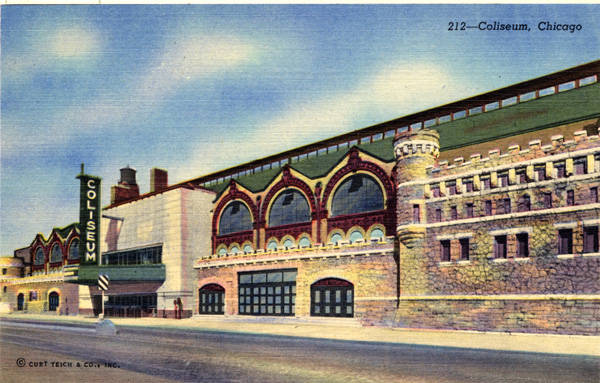
The third and most renowned Coliseum, built in 1900 on Chicago’s Near South Side, famously incorporated elements from the Civil War-era Libby Prison, giving it a distinct fortress-like appearance. It played host to significant national political conventions, major sporting milestones, and legendary music performances before its closure and eventual demolition in the late 20th century (Chicago Tribune). Today, the site is commemorated by Coliseum Park, a thoughtfully designed green space featuring plaques and architectural motifs that echo the arena’s historic grandeur (Chicago Park District). Visitors can further explore the Coliseum’s legacy at the Chicago History Museum, which preserves artifacts and chronicles its multifaceted history. This guide offers a comprehensive overview of the Chicago Coliseum’s vibrant history, practical visitor information, and tips for experiencing related attractions—an essential resource for history enthusiasts, sports fans, and cultural explorers alike (Choose Chicago).
- Introduction: Discover the Legacy of the Chicago Coliseum
- Historical Overview of the Chicago Coliseum
- Visiting the Chicago Coliseum Site and Related Historical Attractions
- Coliseum Park: Visiting Hours, History, and Things to Do
- Chicago Coliseum Historical Site: Cultural Legacy and Visitor Information
- Conclusion: Preserving the Spirit of the Chicago Coliseum
Origins and Early Development
The "Chicago Coliseum" refers to three distinctive indoor arenas that each contributed to the city's sporting, political, and cultural life. The first Coliseum, established in the late 1860s at State and Washington Streets, primarily hosted horse shows, boxing matches, and circus acts. This original venue was emblematic of Chicago's 19th-century urban vibrancy, though specific opening and closing dates remain unclear (Wikiwand).
The Second Coliseum: Woodlawn Era (1896–1897)
Constructed in the Woodlawn neighborhood at 63rd Street and Stony Island Avenue, the second Coliseum opened in 1896 with Buffalo Bill’s Wild West Show and quickly became a major events hub. It gained national attention as the site of the 1896 Democratic National Convention, where William Jennings Bryan delivered his famous "Cross of Gold" speech (Chicago Tribune). The venue also hosted indoor college football, roller derbies, bicycle races, and horse shows. Tragically, a fire in December 1897 destroyed the building after only 19 months of operation; the site later became the South Side YMCA (Chicago Tribune).
The Third and Most Famous Coliseum (1900–1971)
Construction and Architectural Features
The third Coliseum was built in 1900 at 1513 S. Wabash Avenue, incorporating a castellated wall from the Libby Prison War Museum—originally constructed from bricks of the Confederate Libby Prison, transported from Richmond, Virginia (Wikiwand). This unique design lent the arena its fortress-like appearance.
Political and Social Significance
Serving as a prominent stage for national affairs, the third Coliseum hosted five consecutive Republican National Conventions (1904–1920) and two Progressive Party conventions (1912, 1916). It was the site of the 1915 Lincoln Jubilee and the 1940 American Negro Exposition, which celebrated African American achievements (Wikiwand). The notorious First Ward Ball, known for its extravagance, was also held here until 1909.
Sports and Entertainment Hub
- Ice Hockey and Basketball: The Coliseum was the first home of the NHL’s Chicago Blackhawks (1926–1929) and later hosted professional basketball games, including the Chicago Packers NBA team (Wikiwand).
- Roller Derby and Wrestling: The birthplace of Roller Derby in 1935, the venue also hosted major wrestling and boxing events (Wikiwand).
- Concerts and Cultural Events: From the 1950s through early 1970s, the Coliseum featured performances by The Doors, Jimi Hendrix, Cream, and B.B. King, along with meetings for social and political groups (Wikiwand).
Decline and Demolition
Due to fire code violations, the Coliseum closed in 1971. The site was sold in 1982, but redevelopment never materialized. Remnants of the Libby Prison facade survived until the early 1990s, with some pieces preserved at the Chicago History Museum (Wikiwand). The Soka Gakkai USA Culture Center now occupies the site, and Coliseum Park across Wabash Avenue commemorates the legacy with a dedicated plaque (Chicago Tribune).
Visiting the Chicago Coliseum Site and Related Attractions
Visiting Hours and Tickets
The original Coliseum no longer stands and has no designated visiting hours or ticketing. However, you can visit Coliseum Park, a public green space, daily from sunrise to sunset. Entry is free.
Nearby Attractions and Museums
- Chicago History Museum: Explore artifacts and exhibits related to the Coliseum (Chicago History Museum Official Site).
- Chicago Cultural Center: Showcases local arts and history.
- South Side YMCA: Located near the former second Coliseum site.
Accessibility and Travel Tips
- Public Transit: CTA bus and train routes provide easy access to Coliseum Park (Chicago Transit Authority).
- Parking: Metered street parking is available nearby, but public transit is recommended.
- Accessibility: Coliseum Park is wheelchair accessible, with paved paths and ramps.
Coliseum Park: Location, Features, and Visitor Guide
Location and Layout
Coliseum Park is located at 1466 S. Wabash Ave., Chicago, IL 60605, on the Near South Side. Despite its modest 0.75-acre size, the park offers a meaningful connection to Chicago's past (Chicago Park District).
Historical Context
The third Chicago Coliseum, constructed in 1899, was notable for its Civil War-era Libby Prison bricks. It hosted political conventions, sporting events, and entertainment before closing in 1971 and being demolished in 1982 (Chicago Wiki; Flickr: chiski).
Park Features and Design
Transformed by Site Design Group in 2000, Coliseum Park incorporates cast-stone and metal details reminiscent of the original arena. Features include:
- Entrance pavilion with architectural motifs
- Playground with modern structures
- Perennial garden for seasonal color
- Passive lawn for picnics or relaxation
- Fenced, off-leash dog area
Visitor Experience and Amenities
- Hours: Open daily from sunrise to sunset; free admission.
- Seating: Benches and picnic tables throughout the park.
- Restrooms: None on-site; use nearby businesses.
- Safety: Well-lit and maintained by park staff.
Interpretive Elements
Design elements at the entrance and throughout the park commemorate the Coliseum’s heritage. For more historical context, visit the Chicago History Museum (Chicago History Museum).
Tips for a Memorable Visit
- Combine your visit with the Museum Campus or Grant Park.
- Bring your dog to the dedicated area.
- Pack a picnic or simply relax on the lawn.
- Capture photos of the unique entrance pavilion.
- Visit the Chicago History Museum for a deeper dive into the Coliseum’s story.
Frequently Asked Questions (FAQ)
What are Coliseum Park’s visiting hours?
Open daily from sunrise to sunset.
Is admission free?
Yes, Coliseum Park is free for all visitors.
Are dogs allowed?
Yes, with a dedicated, fenced dog-friendly area.
Is the park accessible for people with disabilities?
Yes, with paved walkways and ramps.
Are there restrooms?
No permanent restrooms on-site; nearby businesses may be used.
Getting There
- Public Transit: Close to CTA Red, Green, and Orange Lines (Roosevelt Station), plus bus routes on State Street and Michigan Avenue (Chicago Transit Authority).
- Parking: Limited street parking; public transit recommended.
- Biking: Bike lanes and racks nearby.
Events and Programming
While Coliseum Park does not host regular events, it occasionally supports community gatherings and dog meet-ups. For more organized programming, visit nearby parks such as Chicago Women’s Park & Gardens (Chicago Park District).
The Chicago Coliseum’s Cultural Legacy
Political and Social Movements
The Coliseum hosted pivotal national conventions and speeches, including William Jennings Bryan's "Cross of Gold," the Lincoln Jubilee, and the American Negro Exposition (Wikipedia). It served as a platform for civil rights organizations and was a stage for both progressive and mainstream political events.
Sporting and Entertainment Innovations
Home to the Chicago Blackhawks (1926–1929), the world’s first Roller Derby (1935), major wrestling and boxing matches, and concerts by rock legends including The Doors and Jimi Hendrix (The Stadiums Guide; Wikipedia).
Architectural and Cultural Symbolism
The Coliseum’s fortress-like design, using Libby Prison bricks, reflected Chicago’s layered history (Time Out Chicago).
Community Gatherings
The venue was a hub for auto shows, circuses, dance marathons, ethnic festivals, and community celebrations (Wikipedia).
Nearby Attractions and Cultural Events
- Museum Campus: Field Museum, Shedd Aquarium, Adler Planetarium.
- Grant Park & Millennium Park: Art, gardens, festivals (Travellers Worldwide).
- Riverwalk: Dining and architecture (Gateway Travel).
- Prairie Avenue District: Historic mansions, Glessner House.
Check Choose Chicago for up-to-date event listings and city festivals, such as Chinatown Summer Fair, Food Truck Festival, and Navy Pier Fireworks (Experism).
Visual Gallery
Suggested images:
- Historic photo of Chicago Coliseum circa 1920
- Coliseum Park commemorative plaque in Chicago
- Libby Prison facade at the Chicago History Museum
Listen to the full story in the app
Your Personal Curator, in Your Pocket.
Audio guides for 1,100+ cities across 96 countries. History, stories, and local insight — offline ready.
Audiala App
Available on iOS & Android
Join 50k+ Curators
Sources
- verified
- verified
- verified
- verified
- verified
- verified
- verified
- verified
- verified
- verified
Last reviewed: