What Bryn Mawr is
The Bryn Mawr Historic District is in Chicago’s Edgewater neighborhood. Known for its Art Deco and Revival-style apartment hotels, historic theaters, and community-led revitalization, it reflects Chicago’s early 20th-century urban development and changing cultural landscape. Its walkable streets, proximity to Lake Michigan, historic architecture, and diverse businesses contribute to a strong neighborhood identity (Chicago Studies: Neighborhoods).
History
Bryn Mawr’s origins date to the late 19th and early 20th centuries, when Chicago was expanding along its lakefront. The area was named “Bryn Mawr,” Welsh for “big hill,” after its Pennsylvania counterpart. It initially served as a suburban haven for Chicago’s elite.
The Chicago & North Western Railway and the extension of the “L,” now the CTA Red Line, made Edgewater and Bryn Mawr more accessible and spurred residential and commercial development. By the 1910s and 1920s, Bryn Mawr Avenue had become a busy corridor lined with apartment hotels, theaters, and shops (Chicago Planning and Development).
In the early 20th century, luxurious hotels, theaters, and jazz clubs drew crowds for entertainment and socializing. The Edgewater Beach Hotel and Apartments hosted celebrities and politicians, helping establish the district as a leisure destination (Edgewater History).
Following World War II, rising automobile ownership and suburban migration brought demographic change. Immigrants and working-class families joined the community, large apartment buildings provided affordable housing, and the commercial corridor adapted to new needs.
Community efforts and city initiatives—including the establishment of the Bryn Mawr/Broadway TIF district in 2003—have supported revitalization. Historic hotels have been converted into affordable housing, landmarks restored, and small businesses supported (Chicago Planning and Development). The district was listed on the National Register of Historic Places in 1995, and preservation and revitalization efforts continue.
What to see
Architecture and landmarks
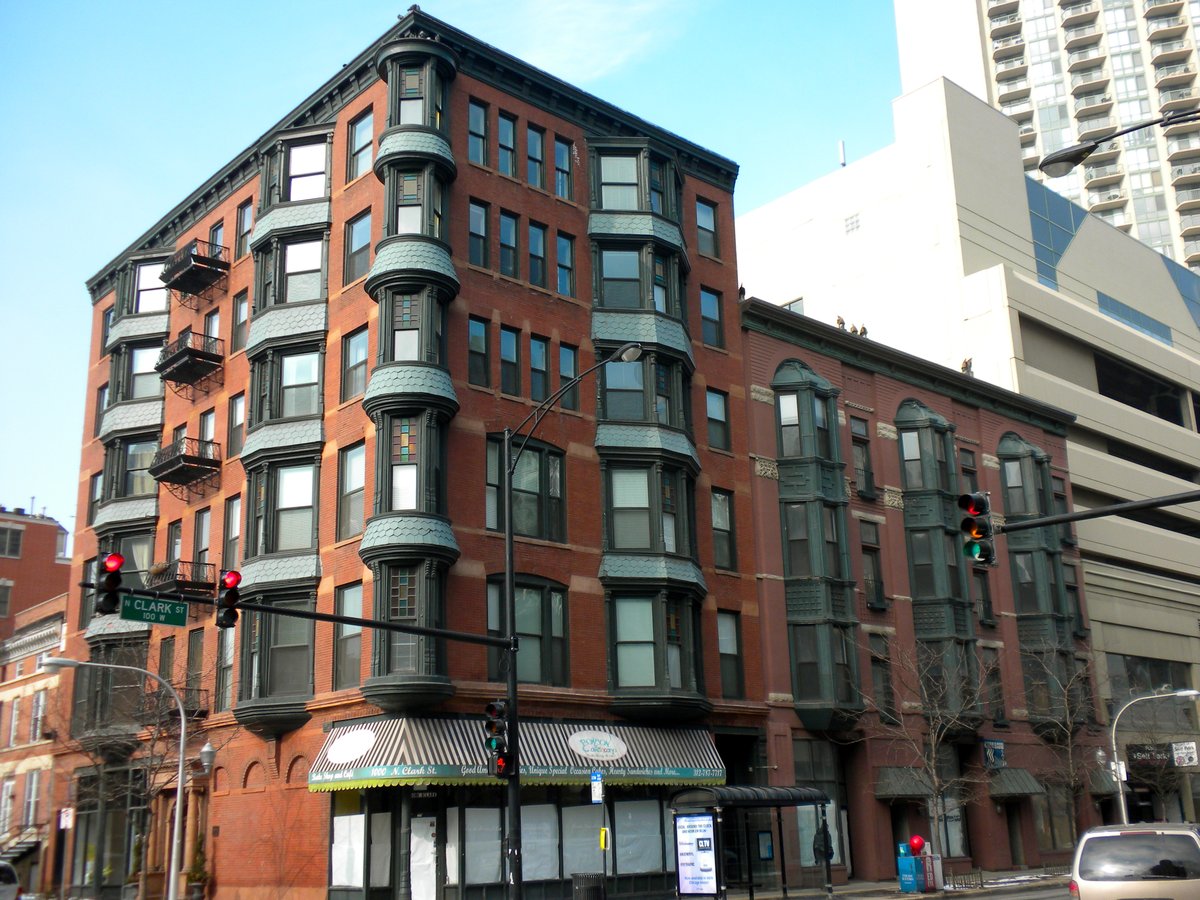
Bryn Mawr’s streetscape features Art Deco, Late Gothic Revival, Egyptian Revival, and Tudor Revival architecture. Many buildings have ornate terra cotta ornamentation, a Chicago signature material valued for its fireproofing and decorative potential after the Great Fire of 1871 (Chicago.gov PDF).
- Belle Shore Apartment Hotel (1929) This Art Deco building features green terra cotta and Egyptian Revival motifs. It was designed to attract attention along the corridor and has since been renovated for affordable housing (Chicago Planning and Development).
- Bryn Mawr Apartment Hotel (1928) Once a fashionable address, it features Late Gothic Revival terra cotta work and now serves as affordable housing.
- Edgewater Beach Apartments (1928) Designed by Benjamin H. Marshall, this salmon-pink, 20-story building is a National Register landmark. It echoes the grandeur of the demolished Edgewater Beach Hotel (Time Out Chicago, Transit Chicago PDF).
- Manor House (1908) A Tudor Revival apartment building with half-timbered gables and historic brickwork.
- Bryn Mawr Theatre (1912) Designed by Rapp & Rapp, the theater opened as a vaudeville and movie house. It was renamed the New Bryn Mawr Theatre in 1930, then later served as the Gar Wah Theatre, showing Chinese and Hollywood films until the 1980s. It also served Chicago’s Chinese community during that period (Cinema Treasures).
Historic preservation and adaptive reuse have allowed landmark buildings to be renovated for modern use while retaining their heritage (Chicago.gov PDF).
Community life
Public art, annual events, and cultural initiatives contribute to the neighborhood’s identity. The corridor’s local businesses and historic theaters are part of its community life.
Visiting information
- Getting there The CTA Red Line’s Bryn Mawr station is central to the district’s connectivity, with rapid transit to downtown and other neighborhoods. Several bus routes also serve the area, and it can be reached by bike or on foot. Transit improvements and infrastructure upgrades reflect Bryn Mawr’s role as a transit-oriented, sustainable community (Chicago Architecture & Cityscape).
- Hours The district is open year-round, and public outdoor spaces are accessible at all times.
- Tickets No general admission or tickets are required to explore Bryn Mawr. Some special tours or events may require advance booking.
- Tours Guided walking tours are offered seasonally by organizations such as the Edgewater Historical Society. Most of the district can also be explored on a self-guided visit year-round.
- Accessibility The neighborhood is walkable and transit-oriented, and most public spaces are accessible. Interiors of some historic buildings may have limitations.
Tips
Spring through fall offers the best weather for walking tours and lakeside activities. Evenings are ideal for dining and nightlife.
For guided tour schedules and local event updates, consult the Edgewater Historical Society. For personalized travel planning, the Audiala app offers related articles on Chicago’s historic districts, transportation tips, and dining guides.
Nearby places
Lake Michigan beaches, parks, local theaters, and antique shops are within walking distance.
Frequently asked questions
What are Bryn Mawr’s visiting hours?
The district is open year-round, and public outdoor spaces are accessible at all times.
Is there an entrance fee?
No. There is no general admission fee to explore Bryn Mawr.
Are there guided tours?
Yes. Guided tours are available seasonally; check with local organizations for schedules.
How do I reach Bryn Mawr?
Take the CTA Red Line to Bryn Mawr station or use area bus lines.
Is Bryn Mawr accessible for those with disabilities?
Streets and public spaces are generally accessible. Confirm accessibility at specific venues.
Can I visit the Bryn Mawr Theatre?
The theater is not regularly open but may be available during special events.