

Founding and Strategic Importance
In 1803, the U.S. Army built Fort Dearborn under the command of Captain John Whistler, following directives from Secretary of War Henry Dearborn. Its strategic location at the mouth of the Chicago River allowed the U.S. to control access between the Great Lakes and the interior, establishing a military and trading post at what would become the heart of modern Chicago (Windy City Ghosts).
Life at Fort Dearborn
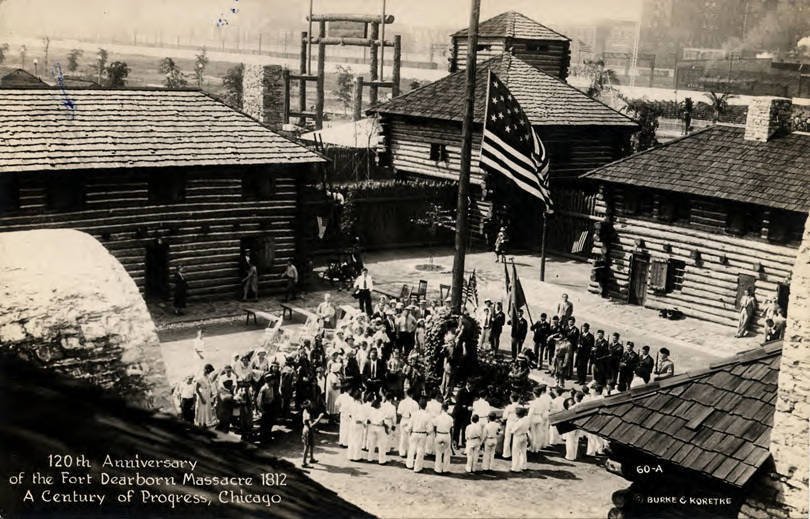
The original wooden fort included barracks, a powder magazine, and support buildings, surrounded by a growing community of settlers, interpreters, merchants, and fur traders such as John Kinzie. The fort signaled the beginning of permanent European-American settlement in the region, standing as a symbol of the city’s transformation from a Native crossroads to a frontier town.
The War of 1812 and the Battle of Fort Dearborn
Amid rising tensions during the War of 1812, the fort’s garrison, led by Captain Nathan Heald, was ordered to evacuate as British forces advanced. On August 15, 1812, the departing group was ambushed by about 500 Potawatomi warriors near present-day 18th Street and Calumet Avenue. The ensuing battle resulted in over 60 U.S. casualties, with survivors taken captive and the fort subsequently burned (Chicagology, Chicago Magazine, Wikipedia).
The battle had lasting consequences, accelerating government efforts to forcibly relocate Native American tribes, leading to the Potawatomi’s displacement by 1833.
Reconstruction and Urban Transformation
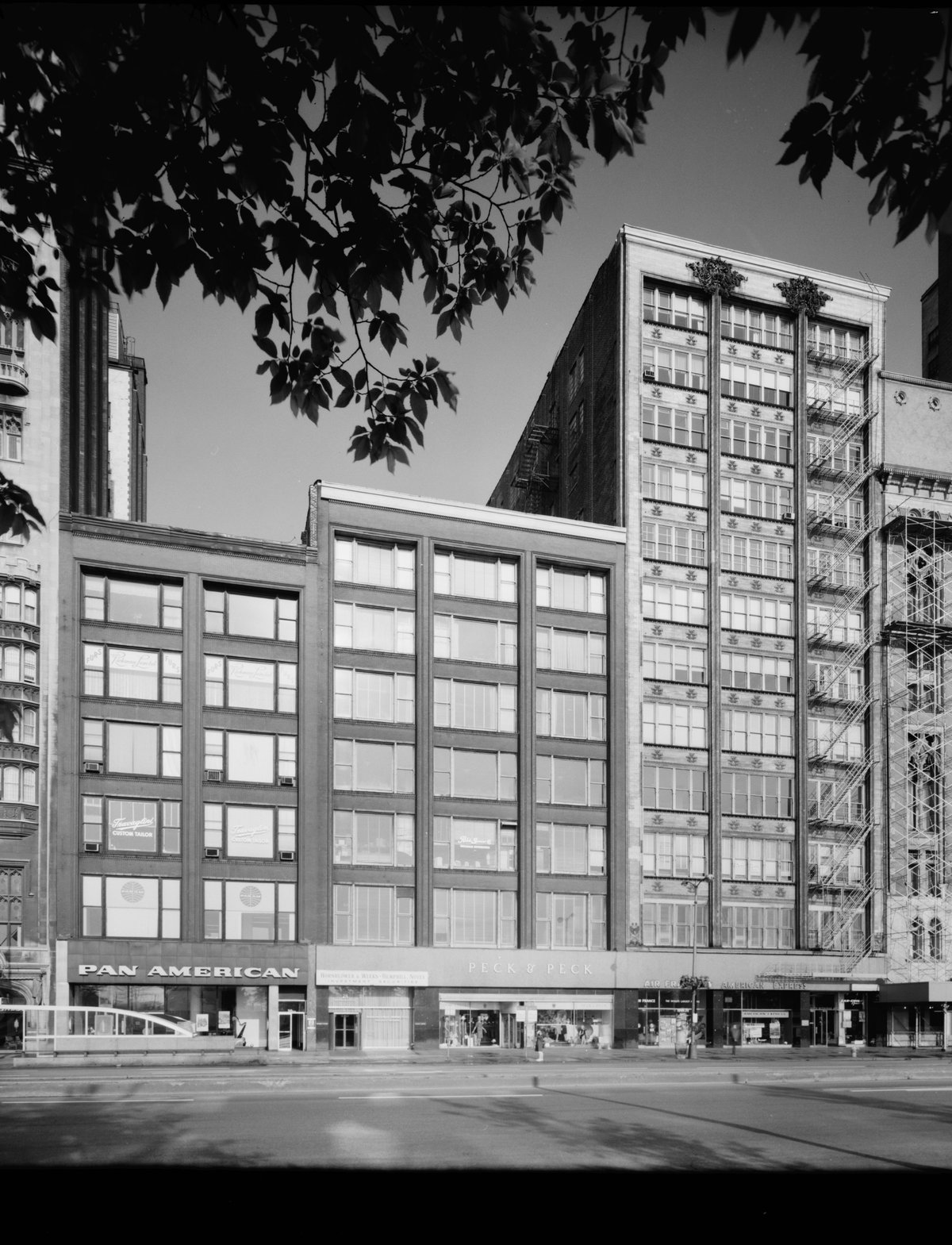
Fort Dearborn was rebuilt in 1816 with improved defenses and expanded facilities, briefly abandoned in 1823, and re-garrisoned in 1828. With Chicago’s incorporation in 1837, the fort was decommissioned in 1840. Urban growth, river engineering, fires, and the Great Chicago Fire of 1871 erased its physical remnants. Today, bronze plaques at Michigan Avenue and Wacker Drive, along with Battle of Fort Dearborn Park at 18th Street and Calumet Avenue, mark the fort’s legacy (Windy City Ghosts, Waymarking.com).
Commemoration and Legacy
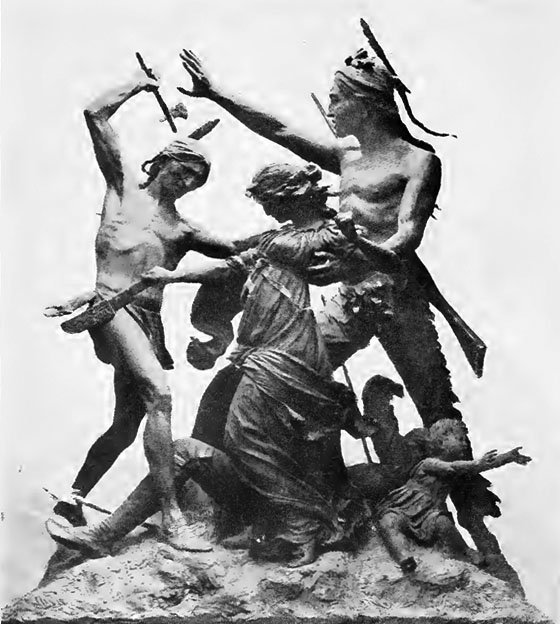
Fort Dearborn’s legacy is commemorated in Chicago’s city flag (the fourth red star), Chicago Landmark designations, and public art such as the “Defense” sculpture by Henry Hering and the now-lost Carl Rohl-Smith monument. These markers, along with artifacts in the Chicago History Museum, continue to educate and inspire visitors.
Visiting Information
Hours and Admission
- Battle of Fort Dearborn Park (1801 S. Calumet Ave.) is open daily from dawn to dusk (Chicago Park District).
- Historical markers at Michigan Avenue and Wacker Drive are accessible at all hours, as part of the public sidewalk.
- Admission Free; no tickets required.
Tours and Accessibility
- Guided tours Available seasonally through local historical societies and tour operators, including some offered by the Chicago Architecture Center. Advance booking is advisable for guided experiences.
- Accessibility Both the park and markers are wheelchair accessible, with paved paths and ramps. Nearby museums ensure ADA-compliant facilities.
Travel Tips and Getting There
- Public Transit Use the CTA Red Line (State/Lake or Chicago stations), or buses serving Michigan Avenue and the South Loop. Plan your trip with the CTA Trip Planner.
- Parking Limited street and garage parking nearby—public transit is recommended.
- Duration Allow 15–30 minutes at the park; combine with other attractions for a longer visit.
Best Times to Visit and Nearby Attractions
- Best time Spring through fall for comfortable walking and outdoor exploration.
- Nearby attractions
- Chicago Riverwalk
- Museum Campus (Field Museum, Shedd Aquarium, Adler Planetarium)
- Magnificent Mile
- Chicago History Museum
Cultural Significance and Interpretation
The legacy of Fort Dearborn is complex and multifaceted. While early narratives described the 1812 conflict as the "Fort Dearborn Massacre," modern scholarship and Indigenous voices emphasize its role as a military engagement within a broader struggle for sovereignty (University of Chicago Press, Great Warriors Path). Today, commemoration efforts strive for a balanced understanding, recognizing both the Potawatomi's resistance and the experiences of settlers.
The site also features in local folklore as one of Chicago’s most haunted locations, with reported sightings near the markers and park (Windy City Ghosts). Archaeological finds have periodically revealed remains from the era, further connecting the present to the past.
Frequently Asked Questions (FAQ)
Q: What are Fort Dearborn’s visiting hours?
A: Battle of Fort Dearborn Park is open daily from dawn to dusk; historical markers are always accessible.
Q: Is there an admission fee?
A: No, admission is free for all outdoor memorials and parks.
Q: Are guided tours available?
A: Yes, seasonal guided walking tours are offered by local operators and the Chicago Architecture Center.
Q: Is the site accessible for people with disabilities?
A: Yes, paved paths and ramps ensure accessibility.
Q: Where are the main sites located?
A: Markers are at Michigan Avenue and Wacker Drive; Battle of Fort Dearborn Park is at 1801 S. Calumet Ave.
Q: What nearby attractions can I visit?
A: Chicago Riverwalk, Museum Campus, Magnificent Mile, Chicago History Museum.