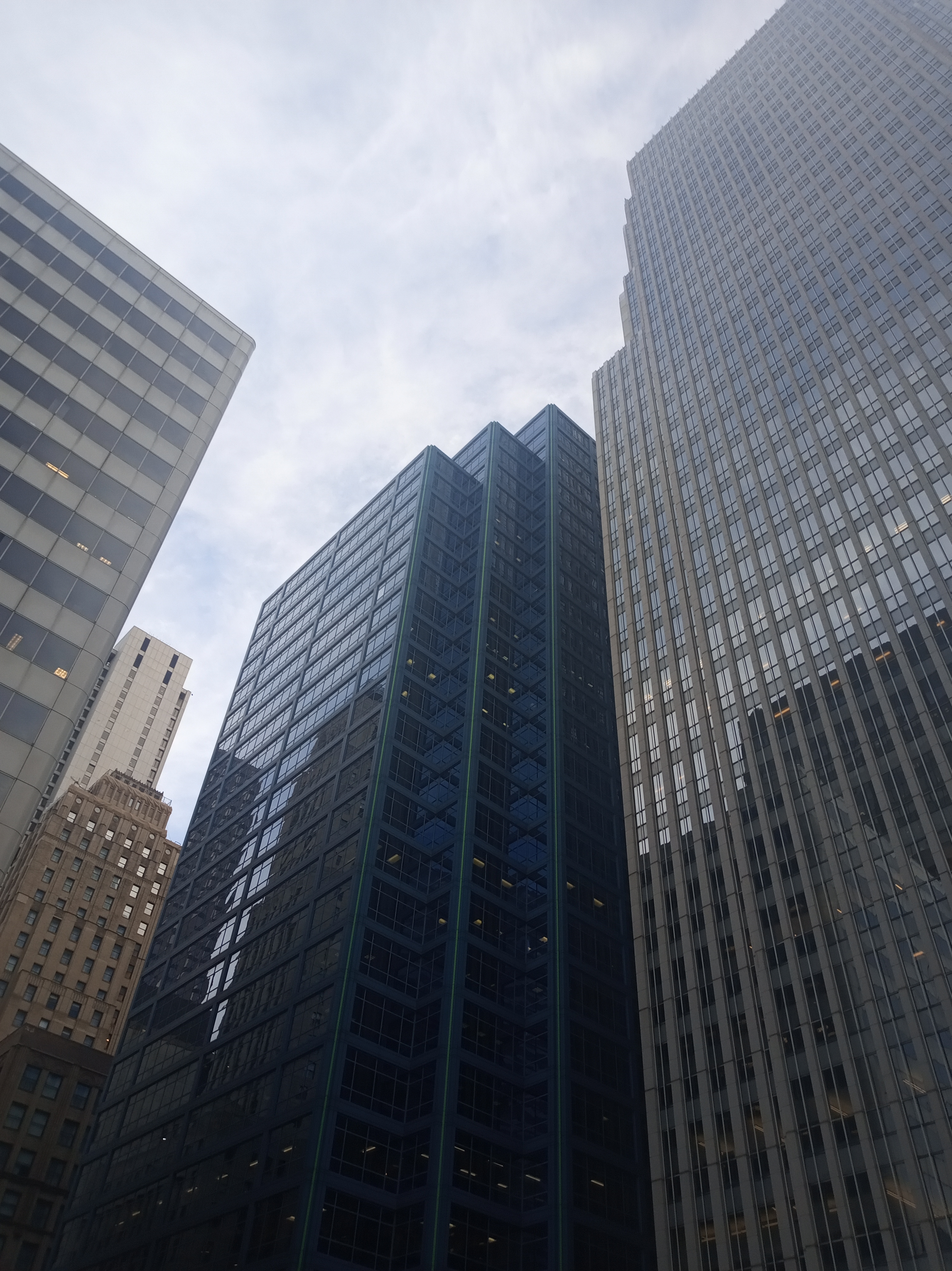
Plan and listen to 300 West Adams Building with Audiala
Audio guide in your pocket, itinerary in your browser. Built for the way you actually visit.
Introduction
Nestled in the heart of Chicago’s Loop and West Loop, the 300 West Adams Building is a compelling testament to the city’s architectural innovation and rich history. Completed in 1927, this 12-story landmark fuses Chicago School and Art Deco design, with distinctive terra cotta façades, geometric ornamentation, and pioneering steel-frame construction. Designed by Jens J. Jensen and William C. Jones, the building’s proximity to Union Station and the Chicago River reflects its importance in commerce and finance and its role in Chicago’s post-Great Fire reinvention (Chicago Loop Alliance, Chicago Architecture Center).
Today, visitors can admire the building’s marble and bronze-adorned lobby, its historic terra cotta exterior, and its integration into Chicago’s walkable urban core. While serving as an active office building, 300 West Adams offers free public access to its lobby during business hours. Guided architecture tours, available through organizations like the Chicago Architecture Center, provide deeper insights into its design and legacy (Choose Chicago). This guide covers the building’s historical significance, architectural features, practical visiting information, and the cultural context surrounding 300 West Adams.
- Historical Overview
- Architectural Significance
- Tenancy and Economic Impact
- Cultural and Urban Context
- Architectural Context and Style
- Practical Visitor Information
- Visitor Experience & Tips
- Frequently Asked Questions (FAQs)
- Conclusion
- References and Further Reading
Origins and Early Development
Completed in 1927, the 300 West Adams Building emerged during a period of economic growth, symbolizing Chicago’s architectural innovation and commercial vitality in the early 20th century. Designed by Jens J. Jensen and William C. Jones, the building contributed to the post-fire renaissance that established the Loop as a national commercial hub (Chicago Loop Alliance).
Situated near the Chicago River and Union Station, the building’s strategic location made it an attractive spot for businesses connected to transportation and trade, participating in a broader urban development that shaped Chicago’s skyline after the Great Fire of 1871.
Architectural Significance
Design and Style
A distinguished example of the Chicago School with Art Deco influences, 300 West Adams features terra cotta ornamentation, vertical piers, and decorative spandrels. Its vertical emphasis and rhythmic windows allow natural light to fill the interior, while the marble and bronze-accented lobby and ornate elevators exemplify 1920s craftsmanship (Chicago Architecture Center).
Innovations and Construction
The steel-frame structure permitted greater height and flexibility, incorporating modern heating, ventilation, and electrical systems. The architects also integrated retail spaces at street level, encouraging pedestrian activity and setting a precedent for mixed-use urban buildings.
Tenancy and Economic Impact
Early Tenants and Commercial Role
From its inception, the building housed law firms, insurance companies, and financial institutions, leveraging its proximity to Union Station and the financial district. Throughout the mid-20th century, it played a pivotal role in supporting firms that fueled Chicago’s economic growth (Loop Chicago).
Preservation and Adaptive Reuse
Renovations in recent decades have modernized amenities while preserving historic details, particularly in the lobby and façade. This adaptive reuse illustrates Chicago’s commitment to balancing heritage conservation with contemporary commercial needs.
Cultural and Urban Context
Relationship to the Loop
300 West Adams is integrated into the Loop’s dense, walkable urban fabric, close to attractions like the Chicago Riverwalk, Willis Tower, and the theater district (Choose Chicago). The building is a frequent highlight on architectural tours, offering context for the evolution of Chicago’s skyline (Chicago Architecture Center).
Symbolism and Legacy
Constructed during a time of optimism, the building has weathered economic changes and urban renewal. Its preservation and continued use highlight Chicago’s ability to honor its past while embracing progress.
Architectural Context and Style
Art Deco Features
The 300 West Adams Building epitomizes Chicago’s embrace of Art Deco in the late 1920s and early 1930s, with streamlined surfaces, geometric ornamentation, and a sense of modern luxury (Choose Chicago). The design draws from ancient motifs and modernist influences, reflecting the era’s forward-looking spirit.
Design Elements and Ornamentation
- Geometric Patterns: The façade’s vertical piers and horizontal spandrels create rhythmic patterns and accentuate height (Architecture.org).
- Material Palette: Limestone, terra cotta, and polished metals like bronze or nickel silver provide both durability and decorative appeal.
- Decorative Motifs: Look for chevrons, sunbursts, and stylized forms in the spandrels, cornices, and entrances, echoing Art Deco’s fascination with progress and technology (Tours & Boats).
Structural Innovations
- Steel Frame Construction: This technology enabled taller, more slender buildings with open interiors.
- Setbacks and Zoning: The building’s tiered setbacks comply with 1920s zoning, allowing sunlight at street level and creating distinctive silhouettes (Architecture.org).
Interior Spaces
- Lobby: Visitors are greeted by a grand lobby with marble, decorative metalwork, and sometimes murals depicting industrial themes.
- Use of Light: Expansive windows and custom lighting enhance the interplay of light and shadow across decorative surfaces.
Urban Significance
- Integration: 300 West Adams contributes to a cohesive streetscape among Chicago’s Art Deco skyscrapers, including the Board of Trade and Field Building (Curbed Chicago).
- Preservation: Ongoing efforts maintain original materials and features, ensuring the building’s continued relevance (Tours & Boats).
Practical Visitor Information
Visiting Hours and Access
- Lobby and public spaces: Monday–Friday, 8:00 AM–6:00 PM.
- No admission fee; access is limited to the lobby and exterior.
Guided Tours
- Guided tours, including in-depth Art Deco walks, are available through the Chicago Architecture Center. Advance booking is recommended.
Accessibility
- The building is ADA compliant, with accessible entrances and elevators. For specific needs, contact building management or your tour provider in advance.
Photography
- Photography is generally permitted in the lobby and exterior. Always respect tenant privacy and any posted restrictions.
Getting There
- Located at 300 W Adams St, Chicago, IL 60606, near Union Station and major CTA ‘L’ lines. Public transit is recommended (Chicago Transit Authority).
Nearby Attractions
- Willis Tower Skydeck (Time Out Chicago)
- Art Institute of Chicago
- Chicago Riverwalk
- Historic Rookery Building
- Dining and hotels in the Loop (Miss Tourist)
Visitor Experience & Tips
- Best Time for Photography: Early morning or late afternoon for the best light on the façade (Tours & Boats).
- Combine Your Visit: Pair with a visit to Millennium Park or the Art Institute for a full cultural experience.
- Special Access: Watch for Open House Chicago events for rare interior tours (Chicago Architecture Center).
- Travel Tips: The Loop is walkable and safe during the day, but use nearby cafes or hotels for restrooms.
Frequently Asked Questions (FAQs)
Q: What are the visiting hours?
A: Monday–Friday, 8:00 AM–6:00 PM.
Q: Is there an admission fee or tickets required?
A: No admission fee for lobby access; guided tours require booking.
Q: Is the building wheelchair accessible?
A: Yes, via ADA-compliant entrances and elevators.
Q: Can I photograph the building?
A: Yes, in public spaces; check for any restrictions.
Q: Are guided tours available?
A: Yes, through organizations like the Chicago Architecture Center.
Q: Are there public restrooms?
A: Not inside the building; use nearby cafes or hotels.
Listen to the full story in the app
Researched and written by the Audiala editorial team from historical records, architectural archives, and local expertise.
Last reviewed