Historical Background and Significance
Colonel William Prescott and the Battle of Bunker Hill
Colonel William Prescott played a crucial role in the early stages of the American Revolution. On June 17, 1775, he commanded colonial forces during the Battle of Bunker Hill, a pivotal conflict that took place primarily on Breed’s Hill. Prescott’s leadership, particularly his legendary command, “Don’t fire until you see the whites of their eyes,” became a symbol of tactical discipline and determination in the face of overwhelming British forces. Though the British eventually took the ground, they suffered heavy losses, and the colonials’ resistance became a rallying point for the revolutionary cause (stillunfold.com; tclf.org).
The Battle’s Misnomer
Despite its name, most of the action occurred on Breed’s Hill, not Bunker Hill. The confusion arose from initial colonial orders and later cartographic errors, but the name “Battle of Bunker Hill” persisted and is now firmly embedded in American history (stillunfold.com).
Artistic Creation and Details
Sculptor and Artistic Vision
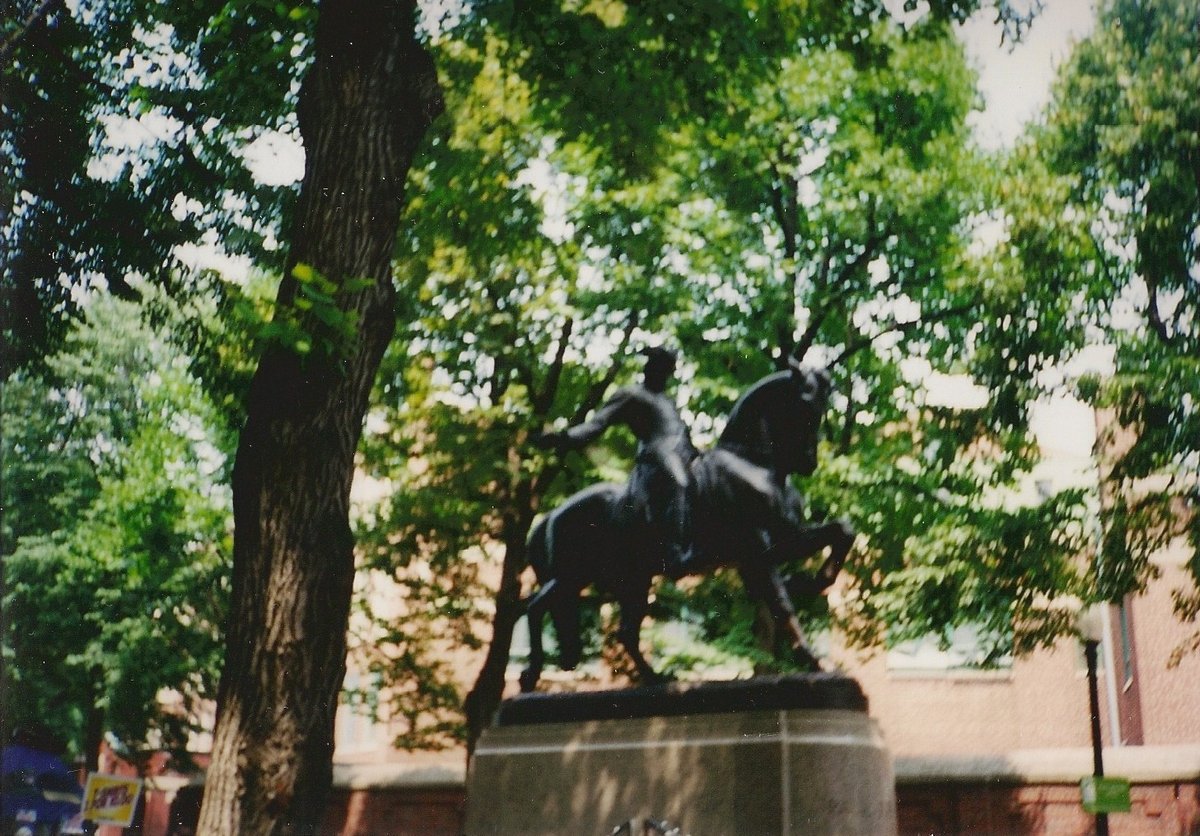
The statue was created by William Wetmore Story, an acclaimed American sculptor known for his neoclassical style. Cast in Rome in 1880 by Alessandro Nelli, it was dedicated in 1881. Story’s depiction shows Prescott in a dynamic stance, right arm extended and sword in hand, symbolizing courage and resolve. Notable details include his discarded tricorn hat and heavy coat at his feet, emphasizing readiness for battle and the intensity of the moment (culturenow.org).
Dimensions and Materials
The bronze statue stands approximately eight feet tall and is set atop a base of red and gray Quincy granite—the same granite used for the adjacent Bunker Hill Monument. The granite base measures about six feet high, further elevating the figure and enhancing its visual impact (culturenow.org).
The Bunker Hill Monument: Commemoration and Context
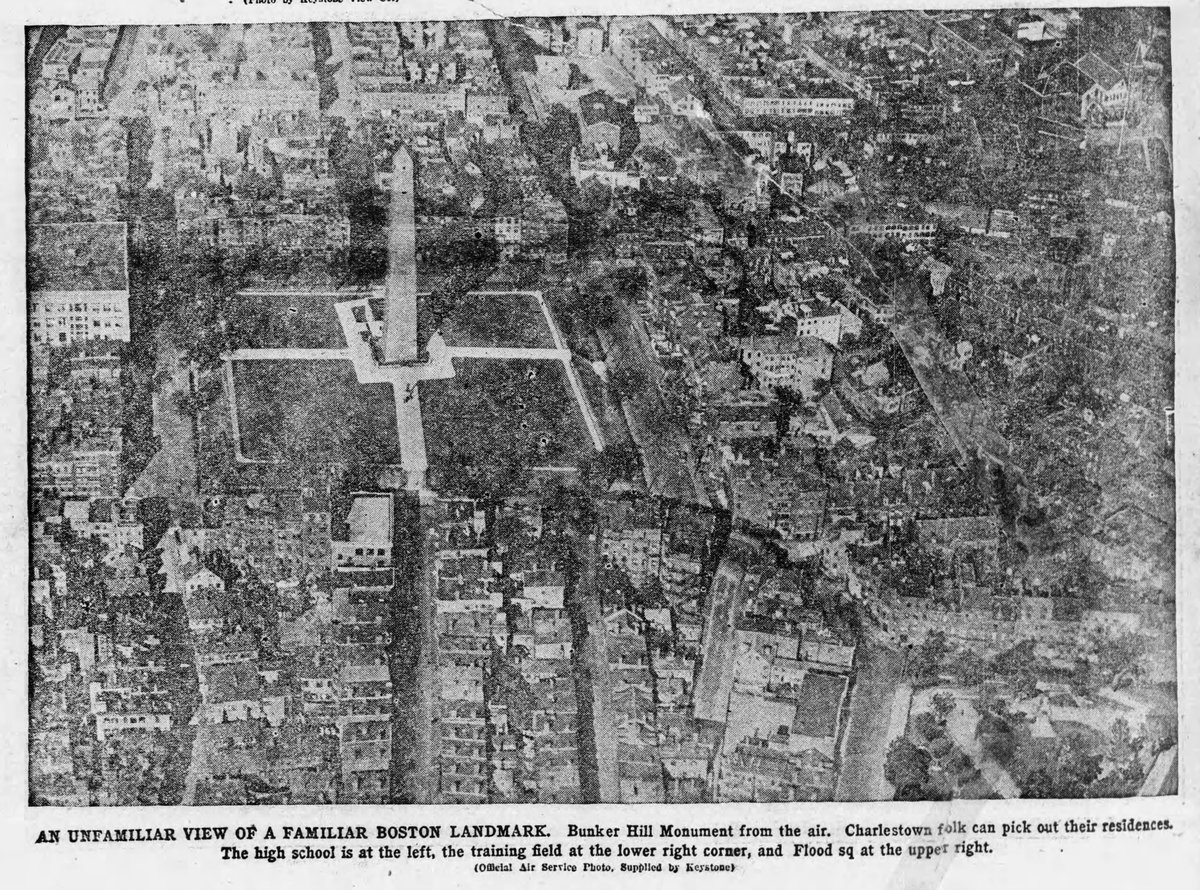
The Bunker Hill Monument is a 221-foot granite obelisk marking the site of the battle’s fiercest fighting. Construction began in 1825, with the cornerstone laid by the Marquis de Lafayette, and concluded in 1842. Upon completion, it was the tallest memorial in the United States. Today, it is a National Historic Landmark and a key stop on Boston’s renowned Freedom Trail (tclf.org).
Visitor Information: Hours, Tickets, and Accessibility
Hours
- Monument Grounds Open daily from 9:00 AM to 5:00 PM, year-round (except major holidays like New Year’s Day, Thanksgiving, and Christmas) (NPS).
- Monument Climb Hours for climbing the monument’s 294 steps may be seasonal; check the National Park Service website for the latest updates.
Tickets
- Grounds and Statue Free admission; no reservations required.
- Monument Climb Free, but tickets are required and should be reserved in advance during peak season. Tickets can be obtained online or at the visitor center.
Accessibility
- The grounds and statue area are wheelchair accessible, with paved paths and interpretive signage. The climb to the monument’s summit is not accessible for visitors with mobility impairments.
Travel Tips and Nearby Attractions
- Public Transportation Take the MBTA Orange Line to Community College station. Walking from there is easy, and the site is also a stop on the Old Town Trolley Tour (Trolley Tours).
- Parking Limited; public transit is highly recommended.
- Restrooms Available at the Bunker Hill Museum and Exhibit Lodge.
- Guided Tours Ranger-led talks and interpretive programs are available, especially during peak seasons.
- Best Times to Visit Early morning or late afternoon for fewer crowds and the best light for photography.
Nearby Attractions
- USS Constitution Museum Explore America’s oldest commissioned warship, a short walk away.
- Warren Tavern One of Boston’s oldest pubs, with ties to notable revolutionaries.
- Freedom Trail Continue your journey to Faneuil Hall, Paul Revere’s House, and the Old North Church (New England and Beyond).
Visuals and Interactive Elements
- High-quality images of the statue and monument are available on the National Park Service website.
- Interpretive plaques and ranger programs offer historical context.
- Virtual tours and interactive maps can enhance your planning (NPS).
- Early morning and late afternoon provide the best light for photography (Quirky Travel Guy).
Frequently Asked Questions (FAQ)
Q: What are the visiting hours for the Statue of William Prescott and Bunker Hill Monument?
A: Daily from 9:00 AM to 5:00 PM, except major holidays. Check the National Park Service website for seasonal changes.
Q: Is there an entry fee?
A: No, admission to the grounds and statue is free. Tickets are required for climbing the monument.
Q: Is the site wheelchair accessible?
A: Yes, the grounds and statue area are accessible. The monument climb is not.
Q: Are guided tours available?
A: Yes, ranger-led tours and educational programs are offered regularly.
Q: How do I get there by public transit?
A: Take the MBTA Orange Line to Community College station, or use the Old Town Trolley Tour.
Discover More
Visiting the Statue of William Prescott alongside the Bunker Hill Monument provides a powerful, immersive experience into one of America’s most defining moments. The site honors the valor and leadership of Colonel Prescott and the colonial militia, bridging the past with the present through evocative art, rich storytelling, and engaging educational opportunities.
Plan your trip by consulting the National Park Service website for current hours and ticketing information. Download the Audiala app for enhanced audio tours and historical content. Make the most of your Boston visit by exploring nearby sites and sharing your experiences to keep the spirit of the Revolution alive.
Essential Information
- Location Bunker Hill Monument, Monument Square, Charlestown, Boston, MA 02129
- Artist William Wetmore Story
- Material Bronze (statue), Quincy granite (base)
- Dimensions Approx. 8 ft x 4 ft x 5 ft 10 in (statue); 6 ft 2 in x 5 ft 4 in x 5 ft 10 in (base)
- Cast 1880 (Rome, by Alessandro Nelli)
- Dedicated 1881
- Admission Free
- Accessibility Wheelchair accessible grounds; monument climb not accessible for those with mobility impairments
- Facilities Bunker Hill Museum, restrooms, interpretive signage