Plan and listen to Statue Of Wendell Phillips with Audiala.
Audio guide in your pocket, itinerary in your browser. Built for the way you actually visit.
Introduction
The Statue of Wendell Phillips in Boston stands as a lasting tribute to one of America's foremost abolitionists and social reformers. Created by acclaimed sculptor Daniel Chester French, this bronze monument not only immortalizes Phillips’ commitment to justice and equality but also anchors Boston’s landscape as a city at the forefront of civil rights activism. Whether you are a history enthusiast, an admirer of public art, or a visitor exploring Boston’s rich heritage, this comprehensive guide provides everything you need to know about the statue’s history, artistic features, practical visiting information, and its broader significance in shaping social justice in America (Britannica; Friends of the Public Garden; New England and Beyond).

Historical Background
Wendell Phillips: Life and Legacy
Wendell Phillips (1811-1884) was born into a prominent Boston family. After graduating from Harvard and establishing a promising legal career, he was galvanized by the abolitionist movement, especially after hearing William Lloyd Garrison speak in 1835. Phillips quickly became renowned for his eloquence and unwavering advocacy for the abolition of slavery, as well as broader civil rights, including women’s suffrage and Native American rights. He was a pivotal figure in Boston’s, and indeed the nation’s, social reform movements throughout the 19th century (Britannica; Friends of the Public Garden).
The Statue: Artistry and Symbolism
Creation and Artistic Collaboration
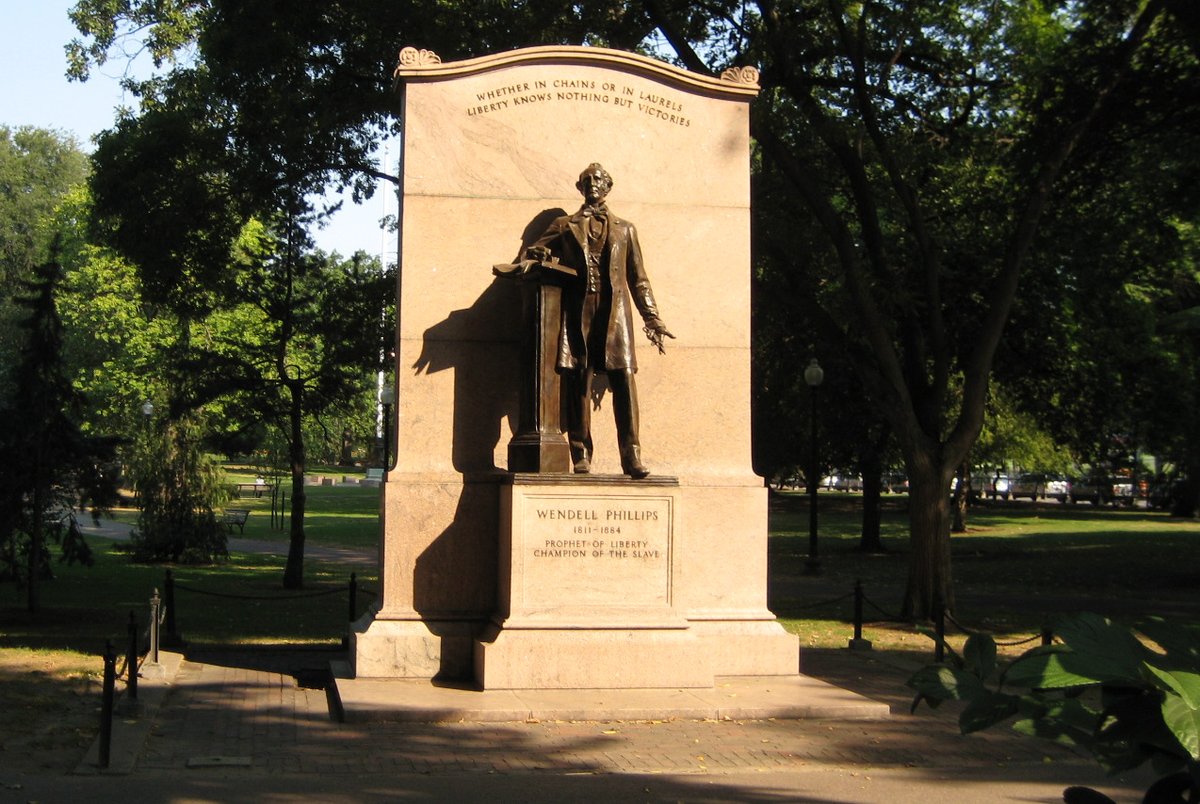
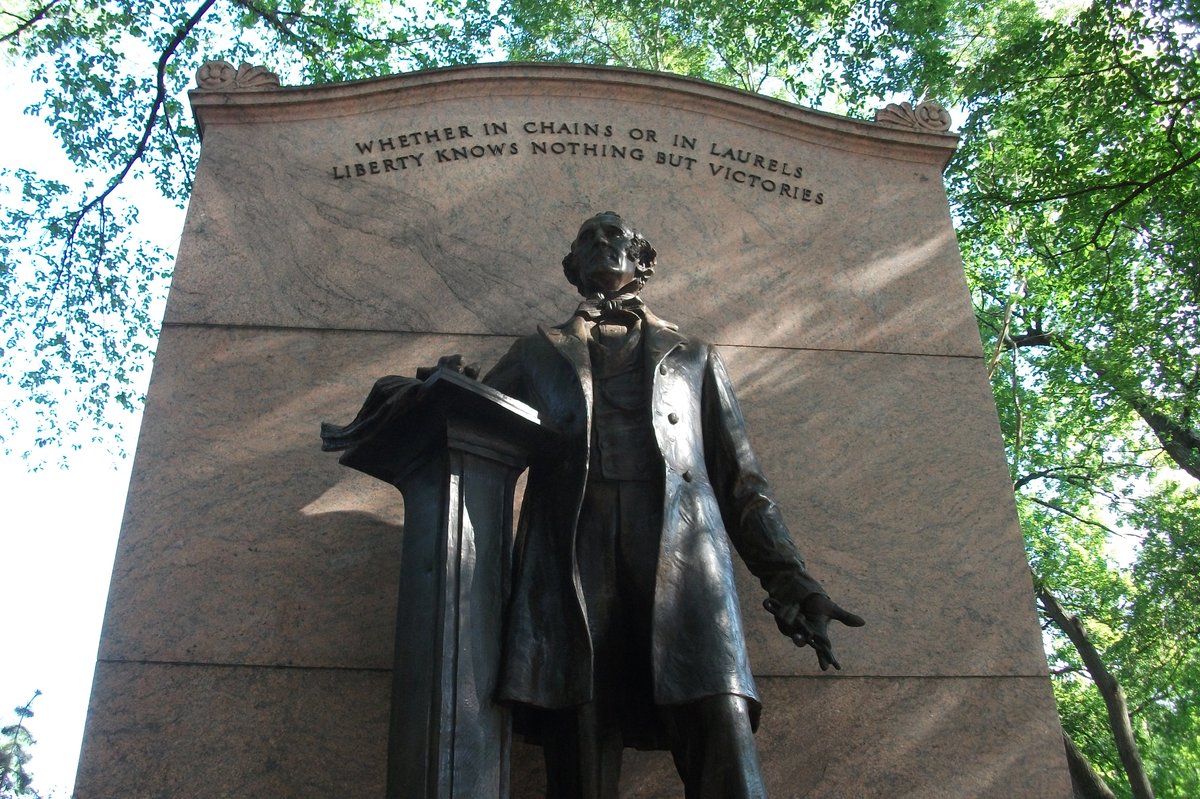
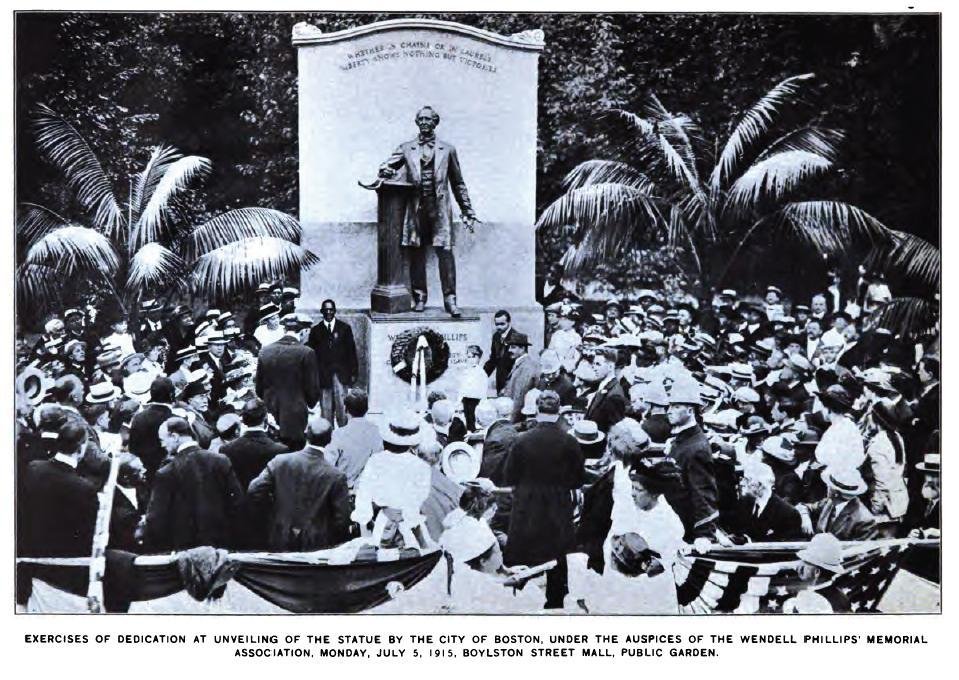
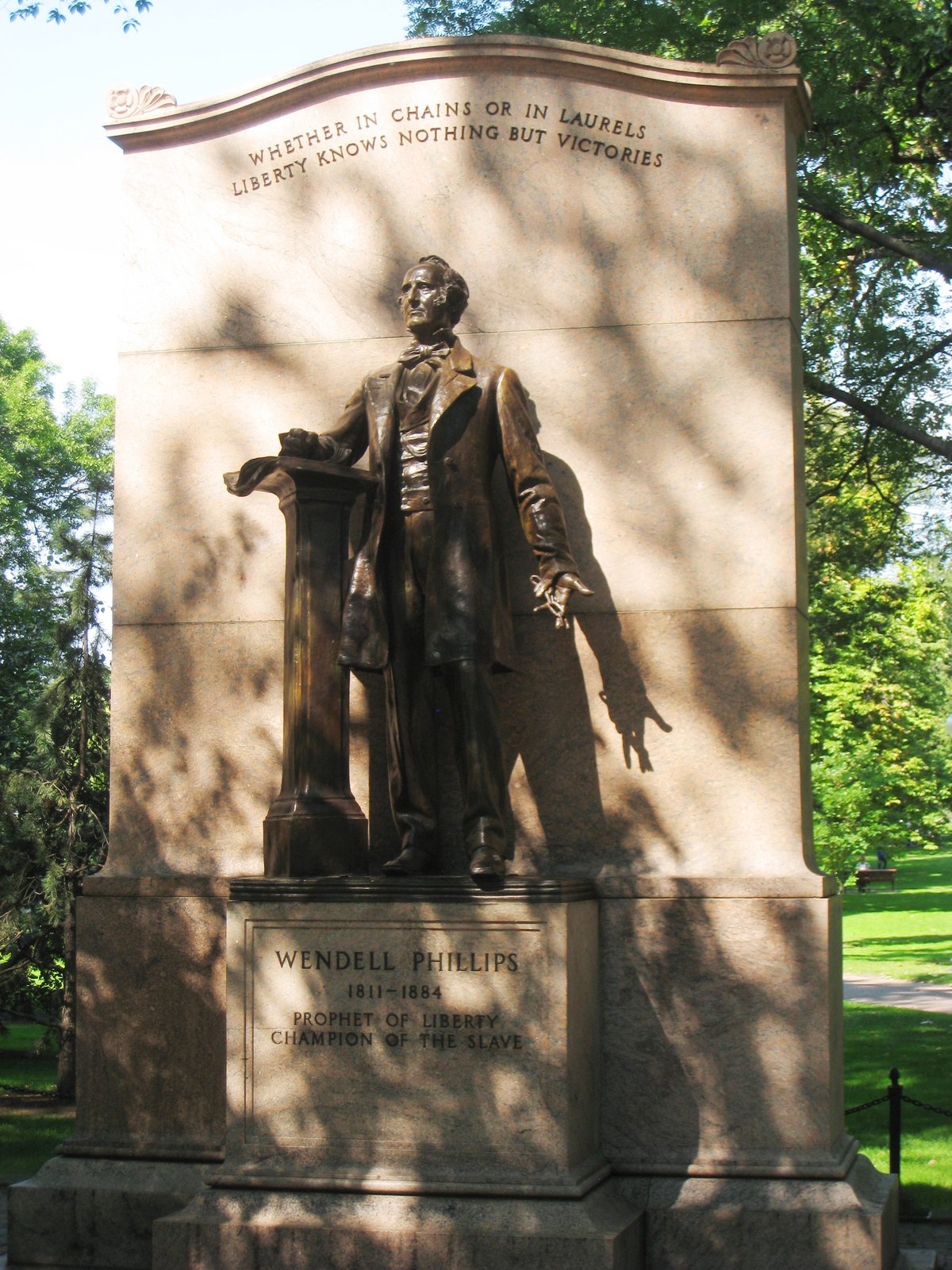
Commissioned by the City of Boston and completed in 1915, the statue was sculpted by Daniel Chester French, celebrated for his work on the Lincoln Memorial. French’s artistic vision—supported by architect Henry Bacon, who designed the granite base—was to capture the gravitas, moral passion, and oratorical power that defined Phillips (yeodoug.com).
Physical Description and Symbolic Elements
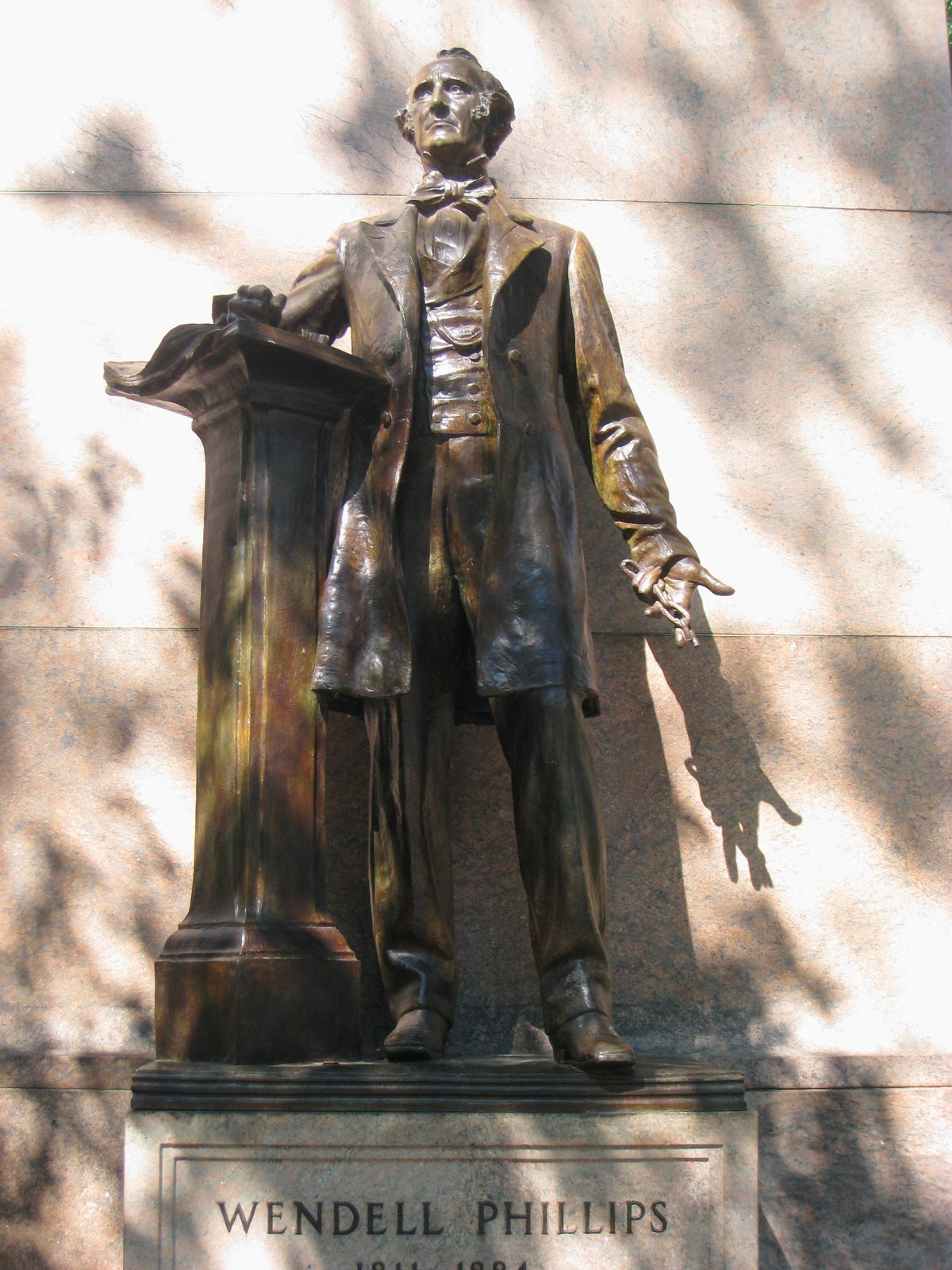
- Pose and Features: Phillips is depicted standing, with his right hand resting on a podium, referencing his reputation as a compelling orator (susanives.com).
- The Broken Chain: In his left hand, Phillips holds a broken chain, symbolizing the abolition of slavery and the triumph over oppression.
- Inscriptions: The granite base is inscribed with:
“Whether in chains or in laurels, liberty knows nothing but victories.”
and
“Prophet of Liberty, Champion of the slave.”
These words encapsulate Phillips’ philosophy and enduring impact (The Clio).
Location and Visitor Information
Location
The Statue of Wendell Phillips is located in the Boston Public Garden, facing Boylston Street. The Public Garden, established in 1837, is America’s first public botanical garden and is bordered by Arlington, Boylston, Charles, and Beacon Streets (Friends of the Public Garden).
Getting There
- By Public Transit:
- Arlington Station (Green Line): Steps from the Arlington Street entrance.
- Boylston Station (Green Line): A short walk from Boylston Street.
- From Logan Airport: Silver Line bus to South Station, then Red Line and Green Line connections (Boston.gov).
- By Foot/Bicycle:
Easily walkable from Back Bay, Beacon Hill, and Downtown Crossing. Bluebikes bike-share stations are nearby. - By Car:
Parking is limited. Nearby public garages include Boston Common Garage and Motor Mart Garage. Metered parking is scarce downtown.
Visiting Hours and Admission
- Hours: The Public Garden is open daily from dawn to dusk.
- Admission: Free; no tickets required.
Accessibility and Visitor Amenities
- Wheelchair Accessibility: Main pathways are paved and suitable for wheelchairs and strollers. Some secondary paths may be uneven.
- Restrooms: Available at the Boston Common Visitor Information Center (139 Tremont Street); seasonal portable toilets may be present in the Garden.
- Seating: Benches are provided throughout the park.
- Pets: Dogs are welcome but must be leashed at all times.
- Safety: The Public Garden is patrolled by park rangers and is safe during daylight hours.
Guided Tours and Photography Tips
- Guided Tours: While there are no tours dedicated solely to the statue, many local walking tours of Boston’s historical sites include the Wendell Phillips statue as a featured stop (Boston.gov).
- Photography: The statue is a popular spot for photos, especially in spring and summer when the floral displays are at their peak. Early morning and late afternoon provide the best lighting and fewer crowds.
Nearby Attractions
While visiting the Wendell Phillips statue, consider exploring:
- Boston Common: The oldest public park in the U.S., just across Charles Street.
- Swan Boats: Seasonal paddle boat rides on the lagoon (Boston.gov).
- Other Statues: Charles Sumner, Thomas Cass, Tadeusz Kosciuszko, and the George Washington equestrian statue.
- Japanese Lantern: A historic artifact gifted in 1904.
- Freedom Trail: Access historic sites like Faneuil Hall and Paul Revere’s House (New England and Beyond).
Frequently Asked Questions (FAQ)
Is the Wendell Phillips Statue free to visit?
Yes, there is no admission fee; the statue is in a public park.
What are the visiting hours?
The Public Garden is open from dawn to dusk daily.
Is the statue wheelchair accessible?
Yes, the main paths are paved and accessible.
Are guided tours available?
Many walking tours of Boston include the statue as part of their itinerary.
Can I take photos at the statue?
Yes, photography is permitted and encouraged.
Are pets allowed?
Dogs are allowed but must be on a leash.
Discover More
The Statue of Wendell Phillips is more than a memorial—it is a living symbol of the ongoing struggle for justice and equality in American society. It invites visitors to reflect on the enduring values of liberty and activism that shaped Boston’s, and the nation’s, history. With its accessible location, free admission, and integration into Boston’s cultural landscape, the statue is an essential stop for anyone seeking to understand the city’s legacy of reform.
For the latest visitor information, downloadable maps, and guided audio tours, visit the Friends of the Public Garden or the City of Boston’s official visitor site. Download the Audiala app for interactive experiences and follow us on social media for updates on events and historical insights.
Listen to the full story in the app
The whole Statue Of Wendell Phillips,
told well.
Audio guides for 1,100+ cities across 96 countries. History, stories, and local insight — offline ready.
Verified, and shown.
Researched and written by the Audiala editorial team from historical records, architectural archives, and local expertise.
Researched from Wikidata, Wikipedia & official sources · fact-checked · How we make our guides →