Plan and listen to Statue Of Alexander Hamilton with Audiala.
Audio guide in your pocket, itinerary in your browser. Built for the way you actually visit.
Introduction
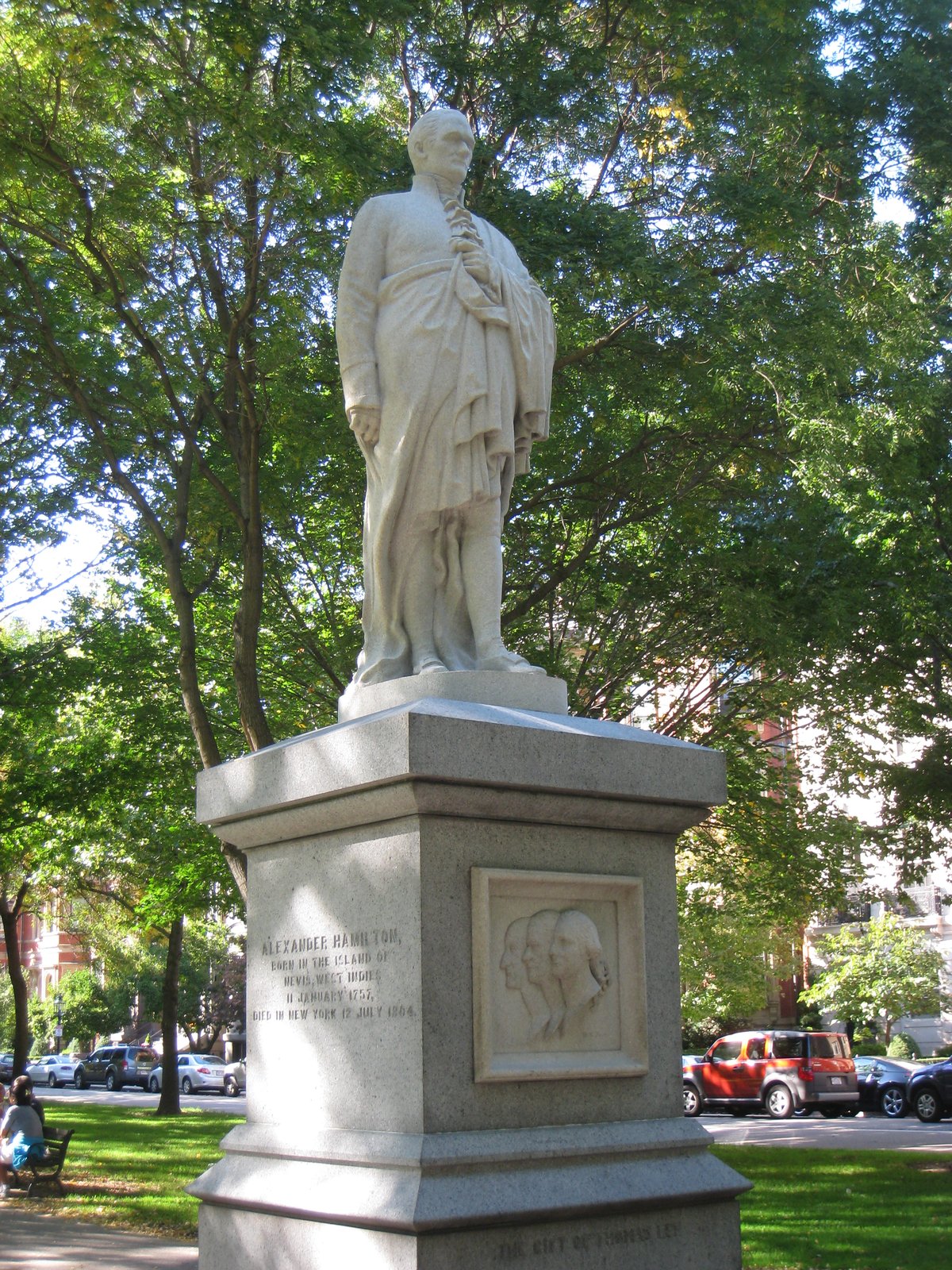
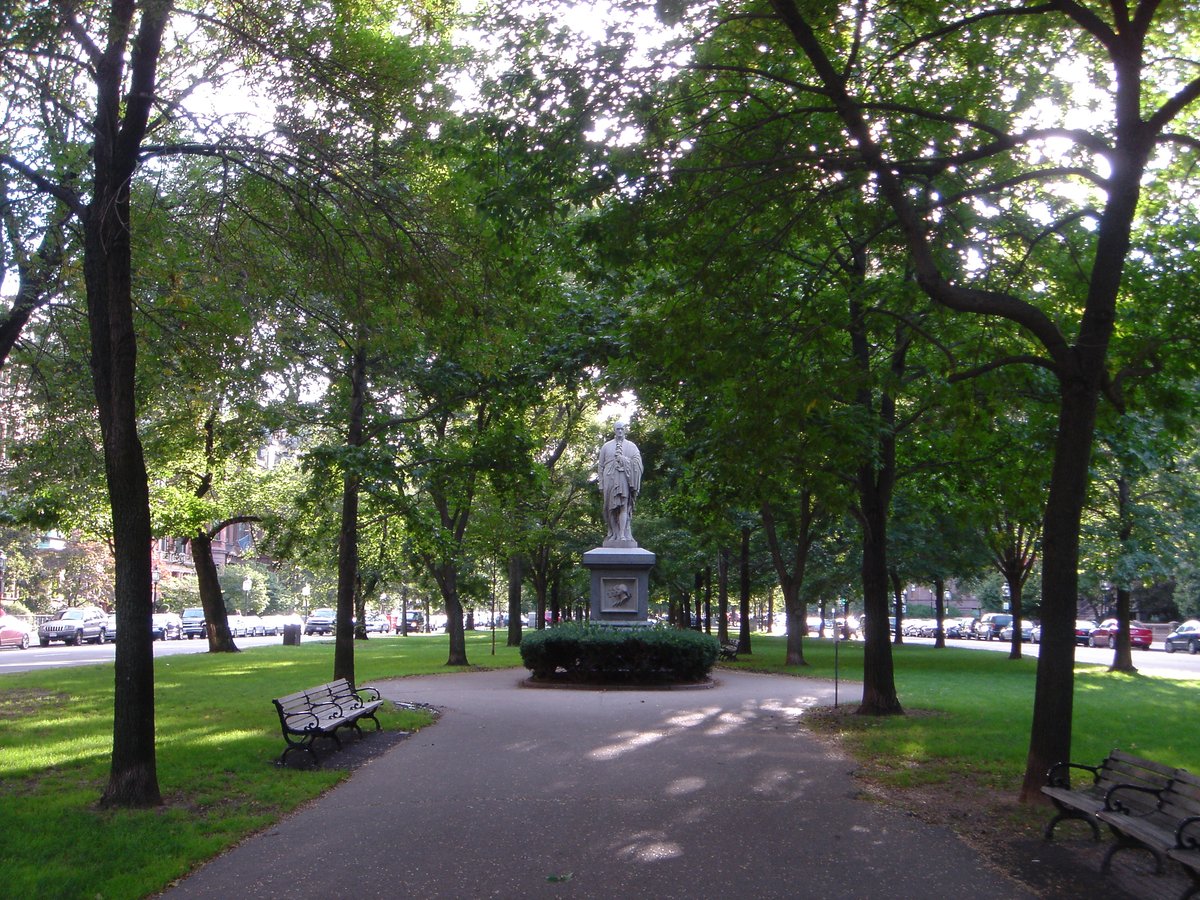
The Alexander Hamilton Statue on Boston’s Commonwealth Avenue Mall is a distinguished monument celebrating one of America’s most influential Founding Fathers. Situated in the heart of the Back Bay, the statue honors Hamilton’s lasting legacy and Boston’s own revolutionary history. While Hamilton is closely associated with New York, his vision for federal government and economic strength resonated deeply with Boston’s mercantile and intellectual circles, making its location particularly meaningful (Hamilton in Context). Crafted by William Rimmer from local Concord granite and unveiled in 1865, the statue blends neoclassical artistry with a robust sense of civic pride.
This guide provides an in-depth look at the statue’s historical and artistic significance, practical visitor information, accessibility, nearby attractions, and tips for making the most of your visit to this iconic Boston landmark.

The Historical Context of the Alexander Hamilton Statue
Hamilton’s Role in American History
Alexander Hamilton (1755/57–1804) was instrumental in shaping the United States’ federal government, serving as the first Secretary of the Treasury and laying the foundation for the nation’s financial system. His writings and policies contributed greatly to debates on federalism, economic strategy, and constitutional law, extending his legacy well beyond New York to every major city in the early republic—Boston included (Hamilton in Context).
Boston’s Revolutionary Heritage and Hamilton’s Influence
Boston, the cradle of the American Revolution, played a pivotal role in events leading to independence. Hamilton’s advocacy for a strong federal government and national bank resonated with Boston’s commercial elite, who stood to benefit from a robust, centralized economic system. The city’s intellectual and mercantile circles actively engaged in the foundational debates that defined Hamilton’s political career.
Statue Origins and Artistic Significance
Commission and Creation
The statue was commissioned by Boston merchant Thomas Lee and sculpted by William Rimmer (1816–1879), an American artist renowned for anatomical precision and innovative style (Lost New England). Rimmer’s neoclassical vision portrays Hamilton in classical robes, signifying both gravitas and timelessness.
Materials and Design
Carved from Concord granite, the statue stands 9 feet 4 inches tall on a base of blue Quincy granite, itself measuring 8 feet 5 inches by 5 feet 4 inches (Wikipedia). The use of local granite was unusual at the time and speaks to Boston’s commitment to durability and permanence. The base features a relief plaque with portraits of Hamilton, George Washington, and John Jay, symbolizing their collaborative role in America’s founding (Lost New England).
Dedication and Reception
Unveiled on August 24, 1865, the statue became one of the first public tributes to Hamilton. While initial reception was mixed—some critics found the drapery unconventional—later art historians praised Rimmer’s bold approach and the monument’s artistic weight (Wikipedia).
Visiting the Alexander Hamilton Statue
Location & Accessibility
- Address: Commonwealth Avenue Mall (between Arlington and Berkeley Streets), Back Bay, Boston
- Access: Wheelchair accessible via flat, paved walkways and nearby ramps
Hours, Admission & Tours
- Hours: Open 24/7, year-round (public park)
- Admission: Free, no tickets required
- Tours: Guided walking tours available through local historical organizations; the statue is a regular stop on Back Bay and Revolutionary Boston itineraries
Getting There
- Public Transit: MBTA Green Line (Arlington Station is closest), with several bus routes serving the area
- On Foot/Bike: The mall’s wide, tree-lined promenades are ideal for walking and cycling; Bluebikes docking stations are nearby
Visitor Tips
- Best Photo Times: Early morning or late afternoon for optimal light
- Signage/Info: Look for interpretive signage and QR codes for self-guided learning
- Accessibility: Benches along the mall provide rest spots; paths are suitable for strollers and wheelchairs
Nearby Attractions
- Boston Public Garden: America’s first botanical garden, adjacent to the mall
- Boston Common: Historic park and starting point of the Freedom Trail
- Newbury Street: Shopping, dining, and galleries in elegant brownstones
- Copley Square & Boston Public Library: Architectural landmarks and cultural venues within walking distance
- Other Statues: Commonwealth Avenue Mall is home to several other notable monuments
Symbolism and Legacy
Artistic and Historical Impact
Rimmer’s sculpture, with its neoclassical drapery and solemn pose, reflects both Hamilton’s stature as a statesman and Boston’s reverence for its revolutionary heritage. The inclusion of Washington and Jay on the base highlights the collaborative nature of the nation’s founding.
Civic Identity and Education
The statue is not only a work of art but also an educational resource, drawing school groups, tourists, and residents to reflect on Hamilton’s influence. Its presence among other monuments on the Commonwealth Avenue Mall affirms Boston’s identity as a city of innovation, liberty, and public memory (theclio.com).
Visitor Engagement and Public Programs
- Guided Tours: Offered by local historical societies and private tour operators
- Public Events: The statue serves as a backdrop for seasonal celebrations, educational programs, and Independence Day ceremonies
- Digital Resources: Many tours and self-guided experiences are enhanced by QR codes and online interpretive content
Commonwealth Avenue Mall: Context and Features
The Commonwealth Avenue Mall, designed as part of Boston’s Emerald Necklace park system, stretches 1.5 miles through Back Bay and features a series of landscaped lawns, mature trees, and historic statues (Wanderlog). The Hamilton statue is one of eight prominent monuments along this greenway, set amid a vibrant urban neighborhood with easy access to shops, restaurants, and cultural attractions (Boston.com).
- Amenities: Benches, shaded paths, bike lanes, nearby restrooms (at Boston Public Garden and Boston Common)
- Accessibility: Level, well-maintained walkways suitable for wheelchairs and strollers
Frequently Asked Questions (FAQ)
Q: What are the visiting hours for the Alexander Hamilton Statue?
A: The statue and the entire Commonwealth Avenue Mall are open to the public 24 hours a day, year-round.
Q: Is there an admission fee or ticket required?
A: No, the monument is free and open to all.
Q: Is the statue accessible for visitors with disabilities?
A: Yes, the promenade and surrounding paths are wheelchair accessible.
Q: Are guided tours available?
A: Yes, several local organizations offer walking tours that include the statue.
Q: Are there public restrooms nearby?
A: Restrooms are available at the Boston Public Garden, Boston Common, and nearby cafes.
Q: What are some nearby attractions?
A: Boston Public Garden, Boston Common, Newbury Street, Copley Square, Boston Public Library, and other statues along the mall.
Listen to the full story in the app
The whole Statue Of Alexander Hamilton,
told well.
Audio guides for 1,100+ cities across 96 countries. History, stories, and local insight — offline ready.
Verified, and shown.
Researched and written by the Audiala editorial team from historical records, architectural archives, and local expertise.
Researched from Wikidata, Wikipedia & official sources · fact-checked · How we make our guides →