Early Development and Urban Context
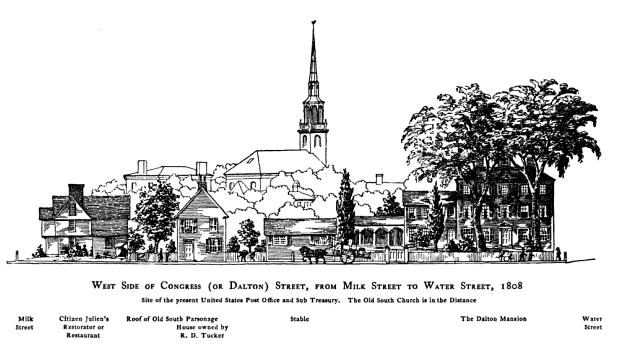
State Station stands beneath the historic intersection of State and Washington Streets, within Boston’s original colonial street grid (Britannica). The surrounding area has been a commercial and revolutionary epicenter for nearly four centuries, with the Old State House—just steps away—serving as the site of significant events like the Boston Massacre and the first reading of the Declaration of Independence (Boston National Historical Park).
Evolution of Public Transit
Boston pioneered American subway travel with the Tremont Street Subway in 1897. State Station opened in 1904 as part of the East Boston Tunnel (now the Blue Line), with the Orange Line platforms added in 1908 (MBTA History). Extensive renovations, including the 2011 modernization, have kept State Station accessible, efficient, and welcoming to tens of thousands of riders daily (MBTA).
Proximity to Revolutionary Landmarks
State Station is central to Boston’s revolutionary history:
- Old State House The seat of colonial government and site of the Boston Massacre, directly above the station (Boston Tea Party Ships & Museum).
- Freedom Trail The 2.5-mile red-brick path passes above the station, connecting 16 historic sites (Freedom Trail Foundation).
- Faneuil Hall & Quincy Market Five minutes away, these sites have served as public forums and marketplaces since the 18th century (NPS).
Architectural Evolution and Modernization
The station’s blend of historical elements and modern upgrades—such as new entrances, elevators, escalators, clear signage, and public art—ensures both accessibility and a sense of Boston’s layered past (MBTA). The station’s five exits provide direct access to historic sites, including an exit beneath the Old State House.
Civic and Cultural Significance
State Station is a key starting point for walking tours, such as the “Walk to the Sea,” and is surrounded by districts that host festivals, reenactments, and commemorations of Boston’s revolutionary milestones (Downtown Boston Events; NPS). Its central role fosters connections between Boston’s past and present.
Essential Visitor Information
Visiting Hours
- Daily Approximately 5:00 AM–1:00 AM (MBTA Service Hours)
- Note Hours may vary during holidays or maintenance; always check the MBTA website or app for updates.
Ticketing and Fares
- Single Ride $2.40 with CharlieCard ($2.90 with paper ticket)
- Unlimited Passes 1-day ($12.75), 7-day ($22.50) (MBTA Fares)
- Purchase Options Vending machines (cash/credit/debit), MBTA mTicket app, online orders
For bundled sightseeing and transit discounts, consider the Go Boston Card or CityPASS® (Tripster Boston Guide).
Accessibility
- Fully ADA-accessible: elevators, escalators, tactile paving, wide fare gates (MBTA Accessibility)
- Station maps and multilingual signage aid navigation
Safety and Amenities
- Staffed during operating hours
- Security cameras and emergency call boxes
- No restrooms inside the station; facilities available at Faneuil Hall and Boston Public Market (Boston.gov)
- Vending machines for snacks and drinks
Tourist Tips
- Avoid Rush Hours Best to visit midday or weekends
- Dress Comfortably Boston’s weather is variable; walking shoes recommended
- Travel Light No station lockers; use city luggage storage if needed
- Check Event Calendars Festivals and reenactments often occur nearby (Downtown Boston Events)
Photo Opportunities
- Old State House façade
- Faneuil Hall Marketplace
- Freedom Trail and Rose Kennedy Greenway
Nearby Attractions
Faneuil Hall & Quincy Market
Historic marketplace and food hall, open daily 10:00 AM–9:00 PM. Free admission, fully accessible (Faneuil Hall Marketplace).
Freedom Trail
Red-brick path connecting 16 sites. Free to walk; some museums charge admission (Freedom Trail Foundation).
Old State House
Museum open 10:00 AM–5:00 PM. Adults $15; accessible (Old State House Museum).
Boston Tea Party Ships & Museum
Interactive exhibits, open daily 10:00 AM–5:00 PM. Adults $30; fully accessible (Boston Tea Party Ships & Museum).
Boston Common & Public Garden
Oldest public park in the U.S., a 10-minute walk away. Free admission, accessible (Boston Public Garden).
Dining and Shopping
- North End Boston’s Little Italy, renowned for Italian bakeries and restaurants (Earth Trekkers)
- Downtown Crossing Shopping district with department stores and boutiques
- Historic Taverns Visit Union Oyster House and Bell in Hand Tavern for New England fare
Visitor Experience and Practical Tips
- Navigation Use MBTA maps and apps for route planning
- Safety Boston is generally safe; be mindful of belongings
- Etiquette Stand right on escalators, allow train passengers to exit before boarding, offer seats to those in need (Lonely Planet Boston Tips)
- Luggage No lockers; use city storage services
- Pets Service animals permitted; others allowed if not disruptive
Frequently Asked Questions
What are State Station’s hours?
5:00 AM–1:00 AM daily; check MBTA for updates.
How do I buy tickets?
At vending machines, online, or via the MBTA app (MBTA Fares).
Is State Station accessible?
Yes—elevators, escalators, tactile paving, and wide gates (MBTA Accessibility).
Which historic sites are nearby?
Old State House, Faneuil Hall, Quincy Market, Boston Common, and the Freedom Trail.
Where can I find restrooms?
Faneuil Hall and Boston Public Market.
Internal Links
Discover More
Ready to experience Boston’s rich history and vibrant city life? Download the Audiala app for real-time transit updates, ticketing, and exclusive city guides. Subscribe to our newsletter and follow us on social media for the latest Boston travel tips and events.