Historical Background and Origins
Old City Hall stands on a site of significant historic value. Before the current building, the Boston Latin School operated here from 1704 to 1748, a fact commemorated by plaques and the “City Carpet” hopscotch sidewalk in the courtyard. The school’s notable alumni include Benjamin Franklin and Charles Bulfinch (Lonely Planet). The first city hall at this location was designed by Bulfinch and later replaced by the Suffolk County Courthouse, which became the second city hall in 1841. The current Old City Hall was constructed between 1862 and 1865 (Wikipedia).
Architectural Significance and Features
Old City Hall is a pioneering example of the French Second Empire style in the United States. Designed by Gridley James Fox Bryant and Arthur Gilman, its hallmark features include a slate-covered mansard roof, ornate dormers, paired Corinthian columns, symmetrical granite façades, and a grand entrance pavilion (Historic Buildings of Massachusetts; HABS, p. 2). These architectural elements influenced numerous public buildings nationwide, including city halls in Providence, Baltimore, and Philadelphia.
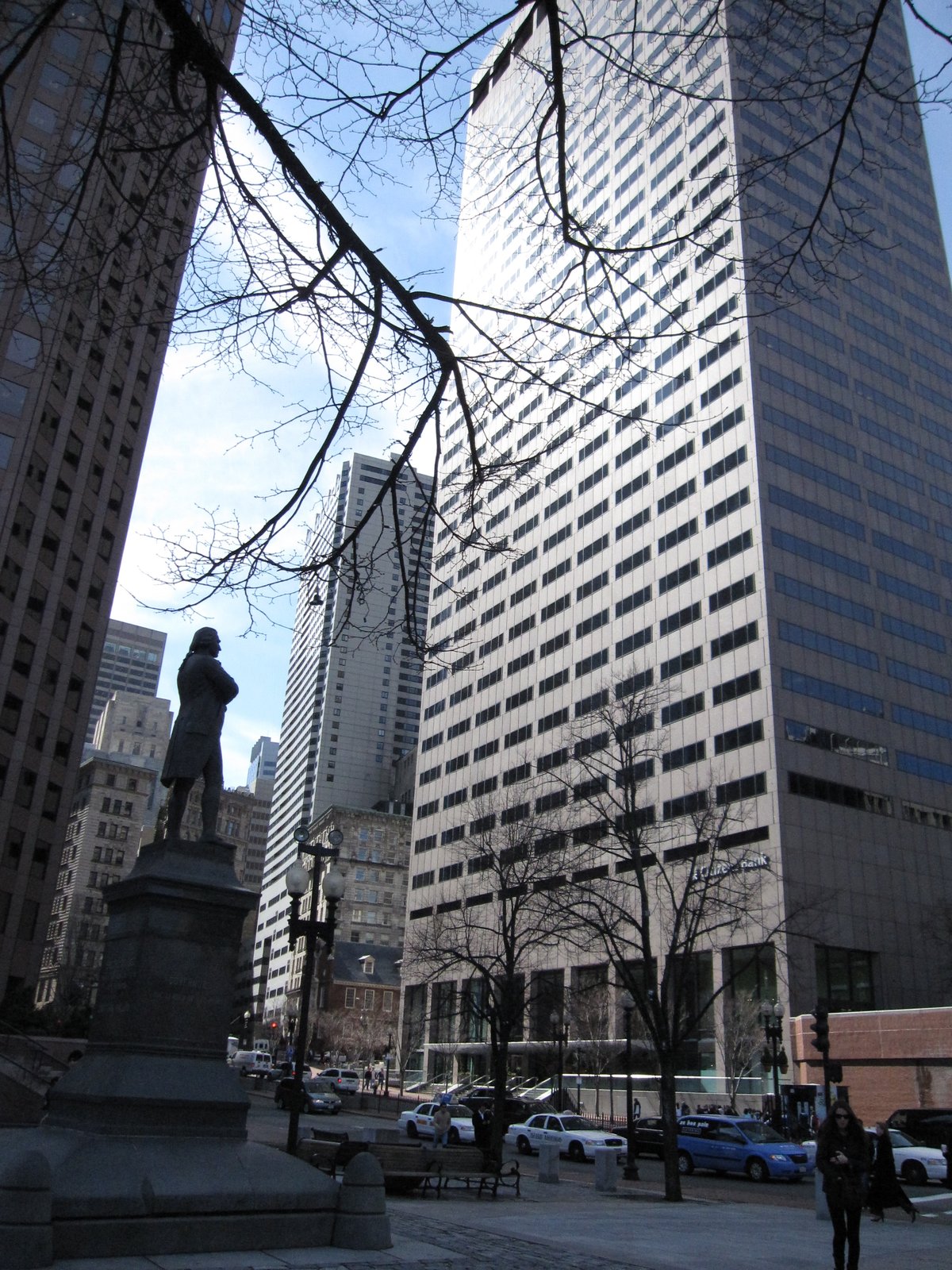
The building’s courtyard features statues of Benjamin Franklin and Josiah Quincy, as well as a donkey sculpture symbolizing the Democratic Party. Historic bronze footprints and plaques interpret the site’s significance (Lonely Planet).
Old City Hall’s Role in Boston’s Civic Life
From 1865 to 1969, Old City Hall served as the seat of Boston’s government, where 38 mayors—including John F. Fitzgerald and James Michael Curley—guided the city through periods of significant change (Wikipedia). Its prominent location on the Freedom Trail connects it to other historic sites, making it integral to Boston’s story of democracy and civic development (Historic Buildings of Massachusetts).
Visiting Information: Hours, Tickets & Accessibility
- Hours The courtyard and public lobby are generally open Monday–Friday, 8:00 am–6:00 pm. Weekend access may be limited. The exterior grounds are accessible daily, from early morning to evening.
- Tickets Admission to the exterior and courtyard is free; guided tours that include Old City Hall may have separate fees.
- Accessibility The site is wheelchair accessible, with ramps at the main entrance and elevators for upper floors.
- Getting There Old City Hall is easily reached by MBTA subway (Park Street and Government Center stations are nearby). Parking is limited; public transportation is recommended (MBTA Trip Planner).
Guided Tours & Special Events
While the building does not host regular guided tours, it is a featured stop on many Freedom Trail and Boston walking tours. Self-guided exploration is supported by interpretive panels and mobile apps. Seasonal events, such as art installations and historical reenactments, are occasionally held in the courtyard—check local listings for updates (Old City Hall Official Site; Meet Boston Events).
Adaptive Reuse and Modern Functions
Following the relocation of Boston’s city government to the new City Hall in 1969, Old City Hall underwent a pioneering adaptive reuse project (1969–1971), led by the Architectural Heritage Foundation and Anderson Notter Associates. This transformation preserved the building’s historic character while converting it for commercial office and restaurant use, establishing a national model for historic preservation (Wikipedia; FAA Inc.).
Recognition and Preservation Status
Old City Hall was designated a U.S. National Historic Landmark and listed on the National Register of Historic Places in 1970 (Wikipedia). It is also recognized as a Boston Landmark and has received awards for historic preservation, ensuring its continued protection and prominence (FAA Inc.).
Current Uses and Nearby Attractions
Old City Hall today accommodates commercial offices and restaurants, including the acclaimed Ruth’s Chris Steak House. The site is a short walk from major attractions such as Boston Common, the Old State House, Granary Burying Ground, and Faneuil Hall (Earth Trekkers Boston Guide).
Old City Hall on the Freedom Trail
A key stop on Boston’s 2.5-mile Freedom Trail, Old City Hall connects visitors to a broader narrative of American independence and civic history (Freedom Trail Foundation). Walking the trail provides a rich introduction to the city’s revolutionary past and architectural evolution.
Frequently Asked Questions (FAQ)
Q: What are the visiting hours for Old City Hall Boston?
A: The public lobby and courtyard are typically open Monday–Friday, 8:00 am–6:00 pm; exterior access is available daily from early morning to evening.
Q: Is there an admission fee or ticket required?
A: No, admission to the exterior and courtyard is free; some guided tours may charge fees.
Q: Is Old City Hall accessible for visitors with disabilities?
A: Yes, the site is wheelchair accessible with ramps and elevators.
Q: Are guided tours available?
A: While there are no official tours, Old City Hall is included on many Freedom Trail and Boston walking tours.
Q: Can I take photographs inside Old City Hall?
A: Photography is permitted in public spaces. Professional photography or use of tripods may require prior approval.
Q: What other historic sites are nearby?
A: Boston Common, Granary Burying Ground, Old State House, and Faneuil Hall are all within a short walk.
Summary and Visit Tips
Old City Hall Boston is a touchstone for the city’s civic and architectural history. Its French Second Empire design, association with Boston’s government, and adaptive reuse make it a model of historic preservation. Free and easily accessible, it is a must-see for anyone exploring Boston’s past. Enhance your visit by combining it with nearby Freedom Trail sites, using mobile apps, and checking for seasonal events.