Boston’s North End and Nearby Historic Neighborhoods
Boston’s North End is the city’s oldest continuously inhabited neighborhood, settled since the 1630s. Its colonial and Revolutionary-era landmarks, including the Paul Revere House and Old North Church, sit alongside the bakeries, trattorias, and Italian festivals associated with the area’s identity as “Little Italy.” Beacon Hill and Back Bay add further layers of Boston history, architecture, and culture.
Visitor resources include The Boston Day Book, Boston North End Tours, Meet Boston, The Boston Day Book, Meet Boston, and the Forbes Guide to Back Bay.
History
Colonial foundations and early settlement
The North End has been continuously inhabited since the 1630s and had developed a distinct identity by 1646. The North Meeting House, built in 1649, established North Square as the center of community life (Wikipedia; The Boston Day Book).
Beacon Hill was originally known as “Tri-mountain” or “Sentry Hill.” A beacon erected there in 1635 marked the area as a strategic lookout (The Boston Day Book). Back Bay, by contrast, was tidal marshland before land reclamation transformed it between 1857 and 1882. The work created its grid-patterned streets and Victorian brownstones (Forbes).
Revolution and urban growth
During the American Revolution, Beacon Hill’s elevated vantage point made it a place for revolutionary gatherings, while the North End was home to patriot Paul Revere. The Old North Church’s lantern signal—“One if by land, two if by sea”—became one of the Revolution’s most famous acts (Meet Boston).
In the 19th century, Beacon Hill became a prestigious residential area, and the North End developed into a busy trade district tied to Boston’s maritime economy. Back Bay attracted Boston’s elite, who built grand Victorian brownstones and made the neighborhood a symbol of affluence.
Immigration, culture, and preservation
Waves of Irish, Eastern European Jewish, and Italian immigrants arrived in the North End during the 19th and early 20th centuries. Italian culture remains vibrant, celebrated in annual festivals such as the Feast of Saint Anthony and the Fisherman’s Feast (Boston North End Tours).
Beacon Hill’s north slope was home to a significant free Black community. The African Meeting House, built in 1806, became a center of abolitionist activity (The Boston Day Book). In the 20th century, construction of the Central Artery disrupted the North End but did not erode the community’s resilience (Boston North End Tours).
Preservation efforts supported by the Beacon Hill Civic Association protect Beacon Hill’s historic character, including its Federal and Greek Revival architecture, gas lamps, and cobblestone streets (The Boston Day Book). Back Bay was added to the National Register of Historic Places in 1973 and combines historic character with modern amenities such as the Boston Public Library and Charles River Esplanade (The Boston Day Book).
What to See
North End landmarks
- Paul Revere House A historic North End site associated with patriot Paul Revere.
- Old North Church At 193 Salem St., the church is known for its Revolutionary-era lantern signal.
- Freedom Trail Connects 16 historic sites; it is free and available year-round. Guided tours are recommended (Freedom Trail Foundation).
- Italian-American businesses and restaurants The neighborhood is known for bakeries, trattorias, and Italian pastries, including Mike’s Pastry and Bova’s Bakery.
Beacon Hill landmarks
- Massachusetts State House A Federal and Neo-Classical landmark completed in 1798, with a gold dome (Massachusetts State House).
- Acorn Street A cobblestone lane lined with Federal-style rowhouses, often cited as America’s most photographed street (Acorn Street).
- Louisburg Square A private, exclusive 19th-century square surrounded by Greek Revival townhouses; visitors can walk its perimeter.
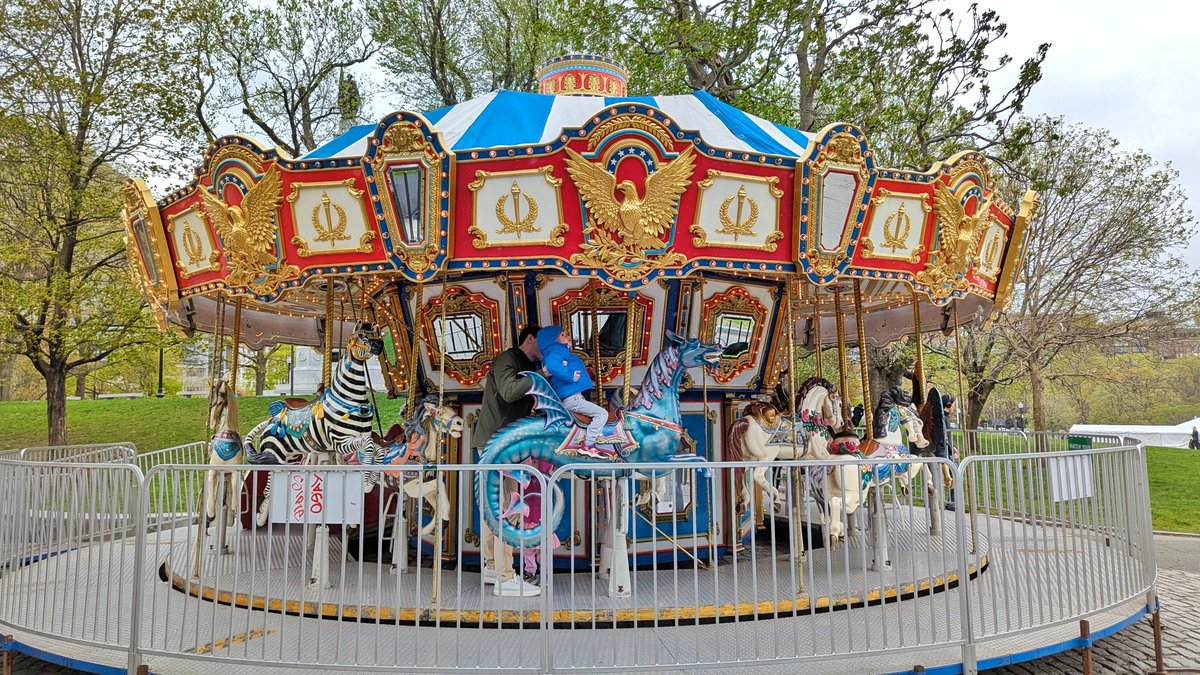
- Boston Common and Public Garden Boston Common is the oldest public park in the United States. The adjacent Public Garden is famous for its swan boats (Boston Common).
- Black Heritage Trail A 1.6-mile trail highlighting Beacon Hill’s African American history, including the African Meeting House (African Meeting House).
- Charles Street Shops, antique stores, cafés, and restaurants line the street; strolling and window-shopping are free.
- Vilna Shul Boston’s last immigrant-era synagogue, now a cultural center with guided tours and events that are free or by donation (Vilna Shul).
- Nichols House Museum A preserved townhouse museum offering tours by appointment.
- Park Street Church and Granary Burying Ground Historic sites at the foot of Beacon Hill, accessible via the Freedom Trail and free to visit (Park Street Church).
North End dining
The North End’s restaurants include:
- Pizzeria Regina, described as Boston’s oldest pizzeria (Classpop).
- Carmelina’s, serving Sicilian-inspired cuisine.
- Table, offering family-style, seven-course Italian dinners.
- Panza, serving Italian-American comfort food.
- Neptune Oyster, a seafood bar known for lobster rolls.
- Sail Loft, with coastal views and classic chowder.
- Mike’s Pastry and Bova’s Bakery, known for cannoli and Italian pastries (Reddit).
Practical Visiting Information
Reported hours, prices, and admission details vary between listings; the following values are retained as reported.
North End sites
- Paul Revere House Reported as open daily, 10 AM–5 PM, with admission of $6 for adults, $4 for seniors and students, and free entry for children under 6. Accessible options are available (The Boston Day Book). Other listings give a daily schedule and a price range of $3–$6 (Paul Revere House). A separate listing gives Tuesday–Sunday, 10 AM–5 PM, with tickets at $5 for adults and $3 for seniors and youth (Official Site). Another FAQ listing gives daily hours of 9 AM–5 PM; a separate answer says Tuesday–Sunday, 10 AM–5 PM, closed Mondays.
- Old North Church Open daily, 9 AM–5 PM, at 193 Salem St.; one listing gives a suggested donation of $5 (Meet Boston). Other listings describe admission as free, with guided tours available; guided or lantern tour tickets can be purchased online (Official Site).
- Guided walking tours in the North End cover Italian heritage and local history, are available year-round, and have extra tours during festivals (Boston North End Tours). Another listing describes guided tours as available daily; check with tour companies for schedules.
Beacon Hill and Back Bay sites
- African Meeting House Open Tuesday–Sunday, 11 AM–4 PM; admission is $3. It is at 8 Smith Court (The Boston Day Book).
- Massachusetts State House One listing gives tours Monday–Friday, 9 AM–5 PM, free of charge, at 24 Beacon St. (The Boston Day Book). Another gives Monday–Friday, 10 AM–3:30 PM, with free tours; the State House is wheelchair accessible.
- Boston Public Library Open daily, 9 AM–9 PM, free, at 700 Boylston St. (The Boston Day Book).
- Boston Common and Public Garden Open year-round, daily from dawn to dusk, and free. Both are wheelchair accessible.
- Nichols House Museum Tours are by appointment; admission fees apply.
- Vilna Shul Tours and events are free or by donation; check schedules.
- Black Heritage Trail Available year-round as a self-guided trail.
- Boston Athenaeum Public exhibitions are open during library hours and are free.
- Most outdoor attractions are open year-round and free. Check each venue’s website for current hours.
Other site hours and visitor details
- Boston African American National Historic Site visitor center Open daily, 9 AM–5 PM, free (Boston African American National Historic Site).
- Roxbury Heritage State Park Open from 8 AM to sunset (Roxbury Heritage State Park).
- SoWa Art + Design District Open weekends, May–October (SoWa Boston).
- JFK Presidential Library Open Tuesday–Saturday, 9 AM–5 PM (JFK Library).
- Piers Park Open from dawn to dusk.
- Bunker Hill Monument Open daily, 9 AM–5 PM. Free tickets are recommended during peak times (Meet Boston).
Tips and Events
Walking tours in Beacon Hill often cover abolitionist and Underground Railroad sites. Self-guided audio tours via mobile apps feature historic homes and cobblestone streets. Guided and self-guided options are available.
For Beacon Hill, spring and fall are described as mild-weather seasons; summer is crowded and winter is quieter. Wear comfortable shoes on cobblestones. Early morning and late afternoon offer useful light for photography. Charles Street has varied dining options, and reservations are recommended. Parking is limited. The State House, Boston Common, and Public Garden are wheelchair accessible, though some streets are steep and cobblestoned; some historic North End sites also have limited wheelchair access.
Reservations are highly recommended at popular North End restaurants (Boston Discovery Guide). Dress is mostly casual to smart-casual, and many Italian restaurants offer vegetarian and vegan options. Dine Out Boston offers prix-fixe menus citywide (Boston Discovery Guide).
North End festivals include the Feast of Saint Anthony and the Fisherman’s Feast. Listings place the Feast of Saint Anthony in August and the Fisherman’s Feast in September; another FAQ gives their usual timing as June and September, respectively. Annual food festivals celebrate Italian heritage with food, music, and parades.
Other Boston community events include North End Feasts, the Roxbury International Film Festival, the Boston Pride Parade, the Dragon Boat Festival, and the Juneteenth Emancipation Observance (Meet Boston; Boston Central).
Longstanding legacy businesses preserve local traditions (Boston.gov). Public art enriches neighborhoods such as Roxbury and the South End (SoWa Boston), and cross-cultural initiatives foster inclusivity (Meet Boston). Walking tours and community festivals offer ways to explore beyond tourist sites; respect local traditions and use public transit for convenient access (Travel Lemming).
Nearby Places
- Back Bay Features Trinity Church, the Boston Public Library, and the Museum of Fine Arts (The Boston Day Book). The Commonwealth Avenue Mall is especially photogenic in fall. The Green Line serves Copley. Nearby dining includes brunch spots and French bistros (Our Escape Clause).
- Beacon Hill Known for Federal-style rowhouses, gaslit streets, and historic architecture. It is reachable via the Red Line at Charles/MGH. Nearby dining includes newer restaurants (Boston Uncovered).
- Roxbury A center of African American culture, with events such as the Roxbury International Film Festival. Nubian Square is a hub for local businesses and public art.
- South End Known for Victorian architecture and the SoWa Art + Design District. The Orange Line serves the area at Back Bay.
- Dorchester Boston’s largest neighborhood. The JFK/UMass station on the Red Line provides access to the JFK Presidential Library.
- East Boston “Eastie” is known for Latinx businesses. The Blue Line’s Maverick station serves the area.
- Charlestown Home to the Bunker Hill Monument and USS Constitution.
- Jamaica Plain Known as “JP,” it is associated with progressive values and green spaces such as the Arnold Arboretum. The Orange Line serves Green Street.
- Fenway-Kenmore Home to Fenway Park and major museums; Red Sox tickets and tours are available (Travel Pug).
- South Boston Known for the St. Patrick’s Day Parade (South Boston Parade) and Castle Island.
- Chinatown A center for Asian American culture, best accessed via the Orange Line at Chinatown station.
- Downtown/Waterfront Home to the historic Union Oyster House (My Global Viewpoint).
Frequently Asked Questions
What are the North End’s main historical sites’ visiting hours?
The Paul Revere House is reported as open daily from 9 or 10 AM to 5 PM in some listings, and Tuesday–Sunday, 10 AM–5 PM, closed Mondays, in another. The Old North Church is open daily, 9 AM–5 PM.
How much does the Paul Revere House cost?
Reported prices include $6 for adults, $4 for seniors and students, free for children under 6; a range of $3–$6; and $5 for adults and $3 for seniors and youth.
Does the Old North Church charge admission?
Listings differ: one gives a suggested donation of $5, while others describe admission as free. Guided tours are available, and guided or lantern tour tickets can be purchased online.
Are tickets required for Beacon Hill landmarks?
The Massachusetts State House offers free tours, with no tickets required in one listing. The African Meeting House charges $3 admission.
Is Back Bay wheelchair accessible?
Many streets and landmarks, including the Boston Public Library, are accessible. Check with venues for specific access details.
How accessible are the North End, Beacon Hill, and transit?
The North End is walkable and accessible via public transit, though some historic sites have limited wheelchair access. Many attractions and transit stations are accessible, but some Beacon Hill streets are challenging for mobility; verify details with venues. The MBTA subway and buses serve most neighborhoods.
When are North End festivals held?
The Feast of Saint Anthony and Fisherman’s Feast are reported as typically held in June and September, respectively. Other listings place the Feast of Saint Anthony in August and the Fisherman’s Feast in September. North End Feasts take place in summer, and Boston Pride is in June.
Are guided tours necessary in Beacon Hill?
No, but they are recommended for deeper context.
Can I bring my dog to Boston Common?
Dogs are allowed in Boston Common if leashed.
Do major Boston sites require tickets?
Many museums require admission. Some monuments are free, though reservations may be recommended. Free tickets are recommended for the Bunker Hill Monument during peak times.