Plan and listen to King'S Chapel Burying Ground with Audiala.
Audio guide in your pocket, itinerary in your browser. Built for the way you actually visit.
Introduction
King’s Chapel Burying Ground, established in 1630, is Boston’s oldest cemetery and stands as a direct link to the city’s colonial foundation. Located on Tremont Street in downtown Boston, this historic site offers a vivid glimpse into the Puritan past and the individuals whose lives shaped early New England. With its evocative funerary art, notable burials, and unique urban setting along the Freedom Trail, King’s Chapel Burying Ground invites visitors to explore Boston’s layered history through its storied gravestones and tranquil pathways. Whether you’re a historian, a tourist, or a local, this guide provides comprehensive information on visiting hours, tickets, accessibility, and the site’s enduring cultural significance. For official details, refer to the City of Boston Historic Burying Grounds Initiative and the Freedom Trail Foundation.


Historical Background
Founding and Early Development
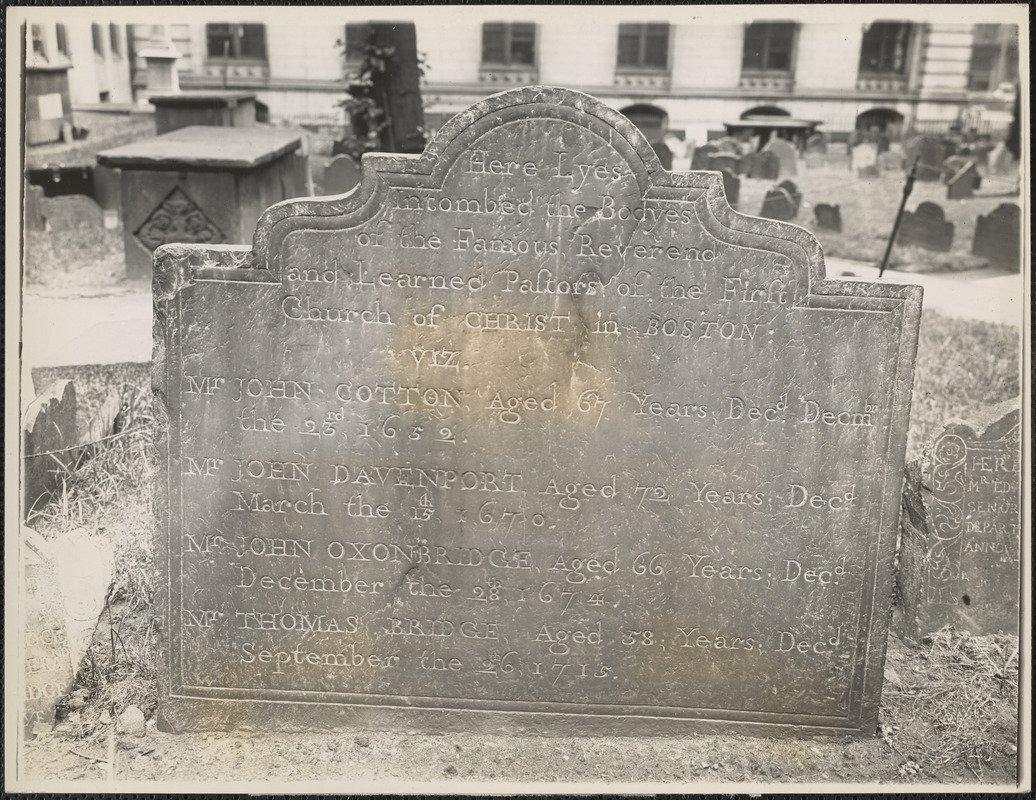
Established in 1630, King’s Chapel Burying Ground was Boston’s first and only cemetery for nearly thirty years, serving the entire community from the dawn of the Massachusetts Bay Colony (Wikipedia). The earliest burials, such as that of Isaac Johnson, a prominent Puritan settler and original landowner, are shrouded in some legend, with documented evidence appearing only decades later (Lost New England). The site reflects the Puritan emphasis on mortality, as seen in the somber iconography—skulls, crossbones, and hourglasses—found on many of the gravestones (Boston Discovery Guide).
Evolution of the Cemetery
The original layout was informal, with graves arranged as needed. Over the centuries, the cemetery underwent reconfiguration; in the 19th century, gravestones were moved into orderly rows, often disconnecting markers from actual burial sites (Lost New England). Today, 505 headstones, 59 footstones, and 78 tombs remain, though over a thousand individuals are believed to be interred here (Wikipedia). The oldest marked stone is that of William Paddy, dated 1658, though its original location is uncertain.
Connection to King’s Chapel
Despite its name, the burying ground is not affiliated with King’s Chapel or any religious institution. The cemetery predates the neighboring chapel by over fifty years. In 1686, the Anglican congregation, unable to secure land elsewhere, built the first chapel adjacent to the cemetery, with the current Georgian-styled stone edifice completed in 1754 (Wikipedia). While the two sites share a name and proximity, the cemetery has always been a civic, not ecclesiastical, property (Lost New England).
Notable Burials and Artistic Legacy
Among the prominent individuals buried here are:
- John Winthrop: First governor of Massachusetts Bay Colony (Boston Discovery Guide)
- Mary Chilton: Mayflower passenger, reputed first Englishwoman to step ashore in New England
- Joseph Tapping: His headstone is acclaimed for its elaborate imagery of a skeleton and Father Time (The Freedom Trail)
- Charles Bulfinch: Influential architect of the Massachusetts State House
- Elizabeth Pain: Her gravestone is said to have inspired Nathaniel Hawthorne’s The Scarlet Letter
Gravestone iconography at King’s Chapel Burying Ground provides insight into changing attitudes toward death. Early stones display grim “death’s head” motifs, while later markers incorporate cherubs and urns, reflecting a more hopeful perspective (Historic Burying Grounds Initiative).
Role in American History
King’s Chapel Burying Ground is not only a colonial relic but also a site deeply connected to the American Revolution. Figures such as William Dawes, who rode with Paul Revere to warn of British troop movements, are interred here (National Park Service). The cemetery’s location near key revolutionary landmarks underscores its importance in the narrative of American independence.
Visiting Information
Hours and Admission
- Opening Hours: Daily from 9:00 AM to 4:00 PM. Hours may vary seasonally or during city events—confirm before visiting (Tomb Travel).
- Admission: Free. No tickets are required for general entry (Boston.gov). Some guided tours may have separate fees.
Accessibility
The main entrance on Tremont Street is level with the sidewalk, but paths are gravel or packed earth and may be uneven. Wheelchair users and those with mobility concerns should exercise caution, especially in inclement weather (Step Boston). No public restrooms are available.
Guided Tours and Events
- Freedom Trail Tours: Many walking tours of the Freedom Trail include King’s Chapel Burying Ground (The Freedom Trail). These tours provide historical context and stories of notable residents.
- Bells and Bones Tour: Offered by King’s Chapel, this tour explores the church’s crypt and bell tower (Tomb Travel).
- Educational Programs: School and university groups can arrange hands-on learning about colonial history and funerary art.
Nearby Attractions
King’s Chapel Burying Ground is centrally located for easy access to:
- King’s Chapel: Renowned for its architecture and historic bell recast by Paul Revere (New England and Beyond)
- Old State House
- Faneuil Hall
- Boston Common
- Granary Burying Ground: Just a short walk along the Freedom Trail
Visitor Etiquette and Photography
- Respect the Site: Do not touch or lean on fragile headstones.
- Leave No Trace: Carry out trash and avoid disturbing plants or wildlife (Shaka Guide).
- Photography: Permitted for personal use; commercial shoots require permission (Boston.gov). Early morning and late afternoon provide the best light for photos.
- Quiet Reflection: Please keep noise to a minimum.
Frequently Asked Questions (FAQ)
What are the visiting hours for King’s Chapel Burying Ground?
The site is open daily from 9:00 AM to 4:00 PM, but hours may vary with the season or for special events.
Is there an admission fee?
No, admission is free.
Is the site wheelchair accessible?
The main entrance is accessible, but paths may be uneven due to gravel and packed earth.
Are guided tours available?
Yes, several organizations and the Freedom Trail Foundation offer guided tours, and King’s Chapel offers its own crypt tour.
Are restrooms available?
No public restrooms are on-site; the nearest facilities are in Boston Common or nearby businesses.
Can I take photographs?
Yes, for personal use. Please be respectful of the site and other visitors.
Summary and Visitor Tips
King’s Chapel Burying Ground is a foundational landmark in Boston’s history, representing the city’s earliest colonial days, its revolutionary heritage, and the evolution of its social and religious landscape. With free daily access, proximity to major downtown attractions, and a wealth of stories etched into its stones, it is a must-see for anyone interested in America’s past. Plan your visit during spring or fall for the best weather and consider joining a guided tour for deeper insights. Remember to wear sturdy shoes, respect the historic environment, and check official resources for the latest updates before your visit.
For more information, consult the City of Boston and the Freedom Trail Foundation. Enhance your experience with the Audiala app, and explore our related articles for further guidance on Boston’s historical sites.
Listen to the full story in the app
The whole King'S Chapel Burying Ground,
told well.
Audio guides for 1,100+ cities across 96 countries. History, stories, and local insight — offline ready.
Verified, and shown.
Researched and written by the Audiala editorial team from historical records, architectural archives, and local expertise.
Researched from Wikidata, Wikipedia & official sources · fact-checked · How we make our guides →