Indian Hunter in Boston: Visiting Hours, Tickets, and Historical Sites
Boston’s history is deeply interwoven with the enduring presence and influence of Indigenous peoples. The Indian Hunter statue outside the Museum of Fine Arts (MFA) is part of a wider network of Indigenous cultural sites, organizations, and public art initiatives in the city.
The Indian Hunter by John Quincy Adams Ward is often mistakenly associated with Boston, but it is located in Central Park, New York City. Boston’s Indian Hunter statue is by Paul Manship and stands outside the MFA (Wikipedia: Indian Hunter (Ward), MFA Boston). The statue and other sites around Boston offer ways to explore the region’s Indigenous heritage (Native Tribe Info).
History and Indigenous Heritage
Indigenous peoples of the Boston area
Greater Boston has been inhabited by Native American peoples for at least 10,000–12,000 years, as shown by archaeological sites in the Blue Hills Reservation and the Mattapan Rhyolite Quarry (Pluralism Project, City of Boston). These communities developed systems of agriculture, fishing, and land management well before European contact. The Mattapan Rhyolite Quarry, mined for thousands of years for toolmaking materials, is in the process of being recognized as Boston’s first Indigenous historical landmark.
The Massachusett, Boston’s namesake tribe, established settlements along the coast and played a central role in the region’s early history. Their influence remains evident in place names and community traditions (Native Tribe Info).
The Wampanoag, primarily associated with southeastern Massachusetts, also had a strong presence in Boston. They were skilled agriculturalists and played a significant part in early colonial history. The Nipmuc’s traditional territory included parts of Boston and central Massachusetts, where they sustained networks of trade and cultural exchange with neighboring tribes. Other groups, including the Pawtucket, Pokantoket, Pocumtuck, and Nipmuck, contributed to the region’s diverse Indigenous heritage (Pluralism Project).
Indigenous communities developed spiritual and cultural traditions rooted in respect for the land, communal stewardship, and seasonal ceremonies. Despite centuries of colonization, many traditions continue today, sustained by more than 6,000 Native Americans living in Greater Boston (Pluralism Project).
Colonization and contemporary recognition
The arrival of Europeans in the 17th century brought profound disruption through disease, land dispossession, and conflict. Indigenous communities adapted, maintained cultural practices, and continue to advocate for recognition and rights (City of Boston).
Boston’s Indigenous community remains active. The North American Indian Center of Boston (NAICOB) provides advocacy, cultural programming, and support (City of Boston). Boston has officially recognized Indigenous People’s Day and is working to preserve archaeological sites and expand Indigenous public art. Its initiatives include hiring public art consultants, landmarking sites such as the Mattapan Rhyolite Quarry, and supporting educational programs. Challenges remain in areas including land rights, cultural preservation, and social justice, alongside ongoing dialogue and city initiatives focused on reconciliation and partnership.
What to See
Indian Hunter statue at the MFA
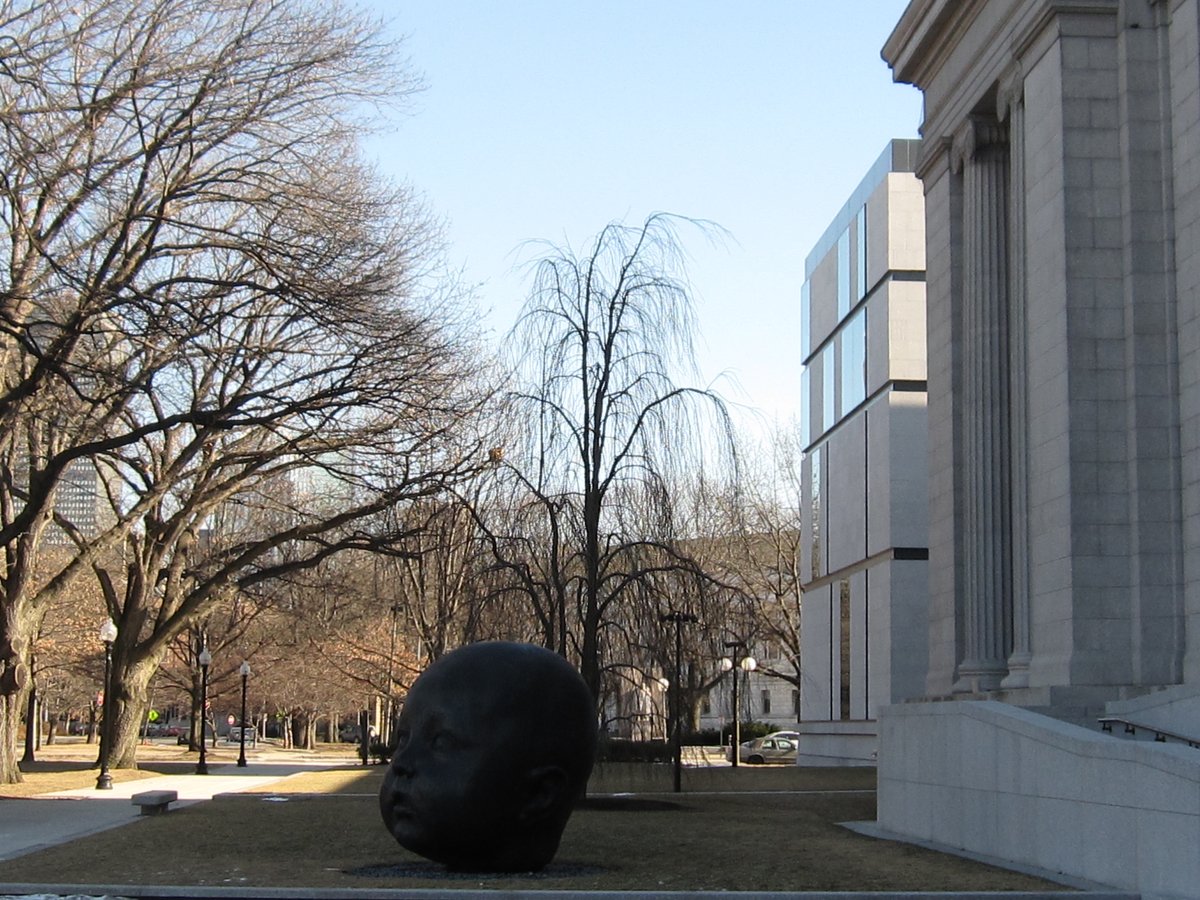
The Paul Manship Indian Hunter statue, modeled in 1917 and cast in 2002, depicts a Native American archer and a Pronghorn Antelope in a hunting scene. It stands outside the MFA. The museum also features Indigenous art and sculpture, including “Appeal to the Great Spirit” by Cyrus Dallin.
Other Indigenous heritage sites and institutions
- Mattapan Rhyolite Quarry An archaeological site mined for toolmaking materials for thousands of years.
- Boston Harbor Islands Accessible by ferry and featuring Indigenous historical sites.
- Museum of African American History Frequently hosts Indigenous history exhibits.
- Harvard Peabody Museum Holds extensive Native American collections (Boston By Foot).
- Boston Public Library Hosts Indigenous heritage events and reading lists.
- Massachusetts Native American Trail Project Boston is part of the project, which includes historical markers commemorating tribal heritage in places such as Canton and Newton (Boston Today).
Practical Visiting Information
Indian Hunter monument and public art
The Indian Hunter Monument is described as a public artwork honoring the region’s Indigenous heritage.
- Hours Open to the public year-round during daylight hours, from sunrise to sunset.
- Admission Free; no tickets required.
- Accessibility Located in public spaces with wheelchair-accessible paths and access via MBTA subway and bus lines.
Outdoor public art is free to visit. Museum tickets are required for indoor galleries.
MFA statue and museum
- Outdoor statue Accessible 24/7, free of charge.
- Museum galleries The MFA is typically open from 10:00 AM–5:00 PM, with extended hours on select days. Tickets are required for museum entry (MFA Boston).
- Address 465 Huntington Avenue, Boston, MA 02115 (Fenway Entrance).
- Public transit Green Line E branch, “Museum of Fine Arts” station; multiple bus routes.
- Parking Museum garage and nearby options; limited metered street parking.
- Accessibility and amenities The plaza and entrances are wheelchair accessible. Restrooms and water fountains are available inside the MFA during open hours. Bike racks and pedestrian-friendly routes are nearby.
Tours and educational programs
Guided tours are available through local museums and organizations such as NAICOB. Check with tour providers or the City of Boston for schedules and special events. Boston By Foot offers “Before Boston – Shawmut Peninsula through 1630” tours focusing on Indigenous history. The Boston Untold History Walking Tour includes Indigenous narratives (Travel Buddies).
Tips for Visiting
- Visit the statue during quieter hours for unobstructed views.
- Early morning or late afternoon offers ideal lighting for photographs. Photograph respectfully, acknowledging the monument’s cultural significance.
- Combine a visit to the statue with the MFA’s collections, especially the “Art of the Americas” wing.
- Confirm museum and tour hours in advance.
- Attend events during Native American Heritage Month for deeper engagement.
- Respect all sites and artworks as culturally significant spaces.
- Start at the Boston Visitor Information Center (Meet Boston).
Nearby Places
- Stroll through the Emerald Necklace parks.
- Explore Fenway Park, less than a mile away.
- Visit nearby art and cultural institutions.
- Consider the Boston Harbor Islands, which are accessible by ferry and feature Indigenous historical sites.
Frequently Asked Questions (FAQ)
Q: Where is the Indian Hunter statue in Boston?
A: It stands outside the Museum of Fine Arts at 465 Huntington Avenue and is accessible 24/7 without charge.
Q: What are the visiting hours for Boston’s Indian Hunter Monument and Public Garden statue?
A: The monument and Public Garden are open daily. Monuments are generally accessible during daylight hours; Public Garden hours are 6:00 AM–11:00 PM.
Q: Are tickets required for public art or the Indian Hunter statue?
A: No. Outdoor public art is free to visit. Museum tickets are required for indoor galleries.
Q: Are guided tours available?
A: Yes. Multiple local organizations offer Indigenous history and art tours. Advance booking is recommended.
Q: Are these sites accessible for people with disabilities?
A: Most public spaces and museums provide wheelchair access and amenities.