Plan and listen to Equestrian Statue Of Paul Revere with Audiala.
Audio guide in your pocket, itinerary in your browser. Built for the way you actually visit.
Introduction
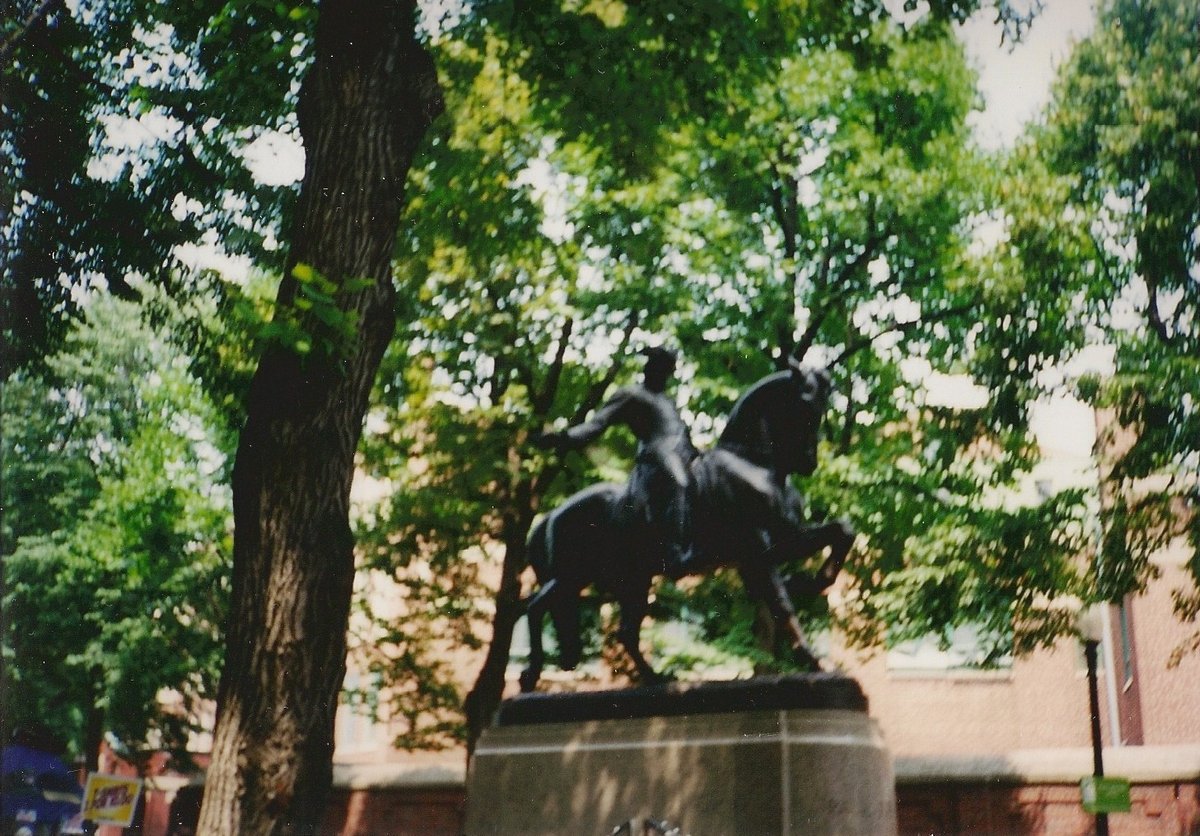
The Equestrian Statue of Paul Revere, crafted by Cyrus Edwin Dallin and located in Boston's historic North End, stands as a powerful symbol of American patriotism and the city’s revolutionary heritage. Commemorating Revere’s legendary midnight ride of April 18, 1775, this bronze monument serves as both a striking work of public art and a gateway to exploring Boston’s layered colonial history. This comprehensive guide covers everything visitors need to know, from practical details like visiting hours and accessibility to an in-depth historical and artistic context, ensuring a memorable visit to this iconic landmark (facts.net; Paul Revere Heritage Project; Boston Discovery Guide).

Origins and Artistic Journey
Conception and Realization
The idea for the Paul Revere statue was born in the late 19th century as Boston sought to honor its revolutionary past. Renowned sculptor Cyrus Edwin Dallin first modeled the statue in 1885, but it took over five decades and several design iterations before the final bronze was cast. Financial and bureaucratic hurdles repeatedly delayed the project, but Dallin’s persistence and the city’s renewed interest led to the statue’s unveiling on April 19, 1940, aligning with the anniversary of the Battles of Lexington and Concord (facts.net; Paul Revere Heritage Project; Waymarking.com).
Dallin’s Artistic Legacy
Dallin, who would go on to produce over 260 works, invested nearly six decades in perfecting the Paul Revere statue. His vision—tempered by both artistic ambition and historical fidelity—resulted in a dignified representation that would become one of Boston’s most recognized monuments (Paul Revere Heritage Project).
Paul Revere: Patriot, Artisan, and Legend
Paul Revere (1734–1818) was a Boston silversmith, industrialist, and a prominent figure in the American Revolution. He is best known for his midnight ride to warn colonial leaders of British troop movements—a mission immortalized by Longfellow’s poem, though later embellished. Beyond this famous act, Revere was active in the Sons of Liberty, participated in the Boston Massacre aftermath, and contributed to the colonial cause as a craftsman and community leader (history.com; Boston Discovery Guide).
Artistic Features and Symbolism
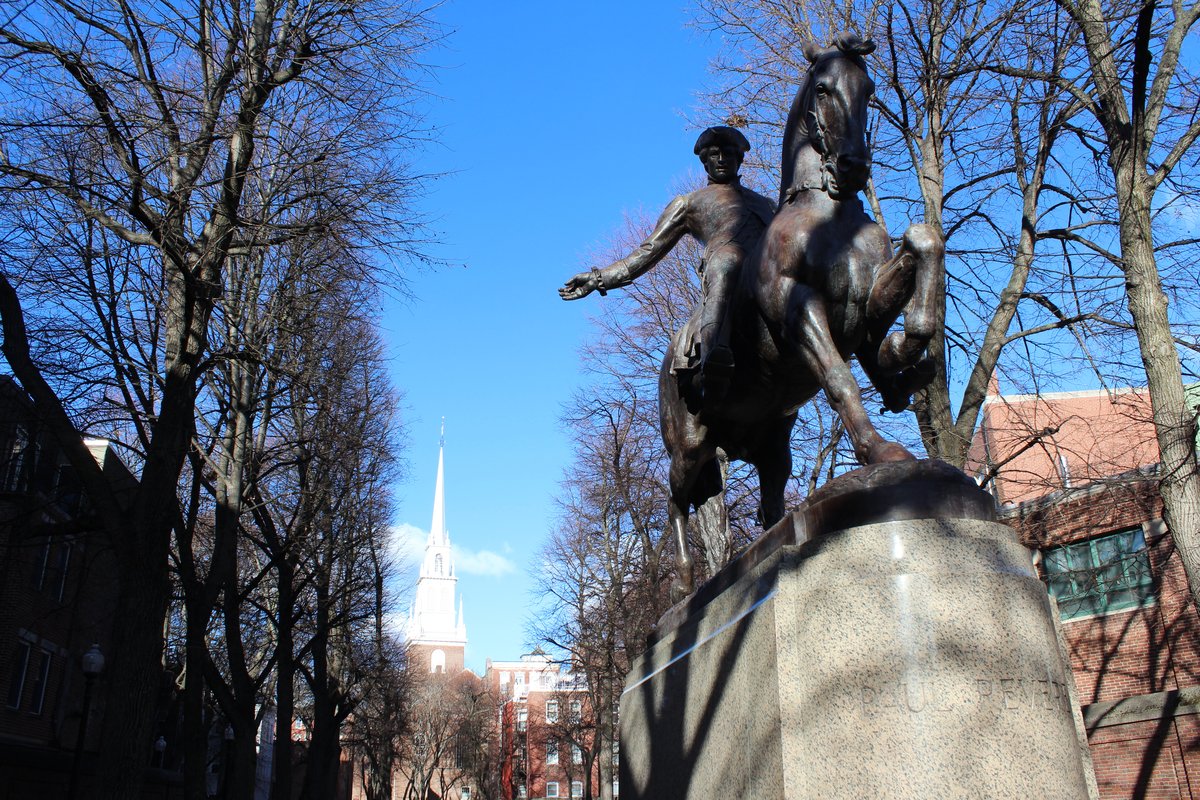
Dallin’s statue captures Revere atop his horse, arm raised in urgent warning. Notably, the composition conveys calm authority rather than reckless haste, reflecting both historical reality and Dallin’s vision. The bronze figure is mounted on a granite pedestal and weighs over 3,000 pounds. Subtle details—such as Revere’s trade tools—nod to his life as a silversmith, while the horse’s poised stance symbolizes the calculated courage of his mission (facts.net; Paul Revere Heritage Project).
Location, Historical Context, and Layout
Setting: Paul Revere Mall (The Prado)
The statue stands at the heart of Paul Revere Mall, a brick-paved, tree-lined plaza linking Hanover Street to the Old North Church. This urban oasis, inspired by Havana’s Paseo del Prado, is flanked by commemorative plaques honoring notable Bostonians and features the George Robert White Fountain. The mall forms a symbolic axis between two key sites on the Freedom Trail—the Paul Revere House and the Old North Church—allowing visitors to immerse themselves in the physical context of Revere’s historic ride (boboandchichi.com; bostonhiddengems.com).
North End Neighborhood
Boston’s North End is the city’s oldest residential neighborhood, known for its narrow streets, colonial architecture, and vibrant Italian-American culture. The area hosts annual festivals and offers a unique blend of historic preservation and contemporary life (boston-discovery-guide.com).
Visiting Hours, Tickets, and Accessibility
- Hours: The Paul Revere Mall is open daily from dawn to dusk, year-round.
- Admission: Visiting the statue and mall is free; no tickets are required.
- Accessibility: The plaza features flat, paved surfaces suitable for wheelchairs and strollers. Nearby public transportation includes Haymarket and North Station MBTA stops (Paul Revere House Visitor Info; MBTA Trip Planner).
For those driving, parking is limited; several garages are nearby, but public transport is recommended during peak times.
Special Events, Guided Tours, and Photography
- Guided Tours: The Paul Revere Statue is a highlight on many guided walking tours, including those offered by the Freedom Trail Foundation and private companies (The Freedom Trail Foundation).
- Special Events: Patriots’ Day in April features reenactments and ceremonies.
- Photography: The statue is especially photogenic in early morning or late afternoon light, with the Old North Church as a dramatic backdrop.
Visitor Experience and Amenities
Interpretive Elements
Bronze plaques along the mall’s brick walls provide historical context for Revere and other notable figures. Benches and shaded paths offer respite from the city bustle. The area is pedestrian-friendly and suitable for families, groups, and solo travelers.
Nearby Facilities
- Restrooms: Available at the Paul Revere House Visitor Center (19 North Square) and Faneuil Hall’s National Park Visitor Center.
- Food: While eating is discouraged near the statue, the North End offers renowned Italian restaurants, bakeries, and cafes. Christopher Columbus Park is nearby for picnicking.
Safety and Etiquette
The area is generally safe and well-patrolled. Visitors are asked to respect the statue and commemorative plaques, keeping noise and activity at appropriate levels, especially during events.
The Statue’s Place in Boston’s Revolutionary Heritage
The Equestrian Statue of Paul Revere anchors a constellation of Revolutionary War sites—Old North Church, Paul Revere House, and Copp’s Hill Burying Ground—connected by the Freedom Trail. Its presence transforms the Paul Revere Mall into both a scenic park and a curated historical space, embodying Boston’s commitment to preserving and interpreting its revolutionary story (Tourist Secrets; The Geographical Cure).
Frequently Asked Questions (FAQ)
Q: What are the statue’s visiting hours?
A: The Paul Revere Mall is open daily from dawn to dusk, year-round.
Q: Is there an admission fee or ticket required?
A: No, visiting the statue and mall is free.
Q: Are guided tours available?
A: Yes, several local tour groups and the Freedom Trail Foundation offer guided tours that include the statue.
Q: Is the site wheelchair accessible?
A: Yes, the mall’s paved paths and flat terrain make it accessible for wheelchairs and strollers.
Q: Where are restrooms located?
A: The nearest restrooms are at the Paul Revere House Visitor Center and Faneuil Hall’s National Park Visitor Center.
Q: What is the best time to visit?
A: Early mornings and late afternoons offer the best light and fewer crowds.
Listen to the full story in the app
The whole Equestrian Statue Of Paul Revere,
told well.
Audio guides for 1,100+ cities across 96 countries. History, stories, and local insight — offline ready.
Verified, and shown.
Researched and written by the Audiala editorial team from historical records, architectural archives, and local expertise.
Researched from Wikidata, Wikipedia & official sources · fact-checked · How we make our guides →