Plan and listen to Edwin Upton Curtis Memorial with Audiala.
Audio guide in your pocket, itinerary in your browser. Built for the way you actually visit.
Introduction
The Edwin Upton Curtis Memorial is a notable Boston landmark dedicated to the city’s influential mayor and police commissioner, Edwin Upton Curtis (1861–1922). Best known for his pivotal role during the 1919 Boston Police Strike, Curtis’s legacy is commemorated through a dignified memorial along the scenic Charles River Esplanade. This guide offers a thorough overview of the memorial’s historical significance, visiting details, accessibility, nearby attractions, and practical tips to enrich your Boston experience (Boston Art Commission; Massachusetts Historical Society; Library of Congress; Boston By Foot).


History and Cultural Significance
Edwin Upton Curtis was a Harvard graduate and a lifelong Bostonian who served as mayor (1895–1896) and later as Boston Police Commissioner (1918–1922). His refusal to recognize police unionization during the 1919 Boston Police Strike—a crisis that led to unrest, state intervention, and national debate over public-sector labor rights—cemented his reputation as a decisive, if controversial, civic leader (Massachusetts Historical Society; Library of Congress). The memorial serves as a tangible link to this era, inviting reflection on the complexities of governance, labor relations, and public order in early 20th-century America.
Memorial Design and Features
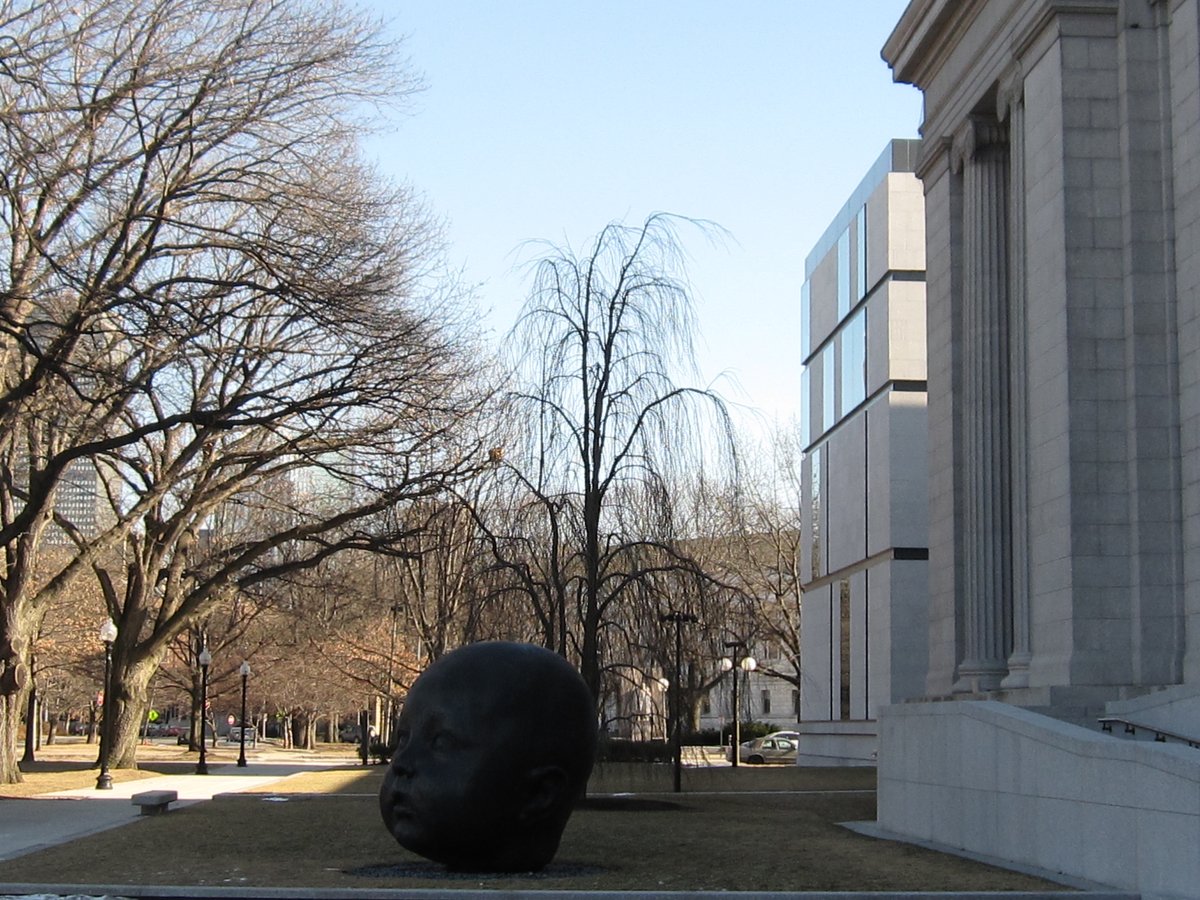
The Edwin Upton Curtis Memorial is characterized by understated classical elegance. Unlike grand statues, it features a pair of classical urns on pedestals, symbolizing remembrance and public service. The memorial is strategically placed within the Charles River Esplanade’s green space, offering tranquil views of the river and the city skyline. Its modest design echoes Boston’s tradition of honoring civic leaders through art that encourages contemplation and blends harmoniously with public spaces (Boston.gov Public Art).
Visiting Information: Hours, Tickets, Accessibility
Visiting Hours
The memorial is located within the Charles River Esplanade and is open to visitors daily from dawn to dusk. In practical terms, this generally means 6:00 AM to 8:00 PM, in line with park hours (Chamber of Commerce).
Tickets and Admission
- Admission: Free
- Tickets/Reservations: Not required
- Tours: While there are no regular guided tours devoted solely to the Curtis Memorial, it is often included on broader Boston history and Esplanade walking or biking tours (Boston By Foot).
Accessibility
- Wheelchair/Stroller Access: The memorial is accessible via paved park pathways suitable for wheelchairs and strollers.
- Seating: Benches and picnic tables are available nearby.
- Interpretive Materials: On-site signage may be limited; mobile resources and QR codes are available on some tours for deeper context.
Location, Transportation, and Directions
Address
47 David G. Mugar Way, Boston, MA 02108
(Chamber of Commerce)
Getting There
- MBTA Subway:
- Charles/MGH Station (Red Line): ~5-minute walk
- Arlington Station (Green Line): ~10–15-minute walk
- Parking:
- Limited metered street parking in Back Bay and Beacon Hill; public transit or walking is recommended.
- Walking/Biking:
- The Esplanade features paved, multi-use paths. Boston’s Bluebikes bike-share has docking stations nearby.
- Directions:
- The memorial is located near the Hatch Shell, a prominent concert venue on the Esplanade, between Back Bay and Beacon Hill.
For detailed route planning, use the MBTA Trip Planner.
Nearby Attractions
Make the most of your visit by exploring these points of interest, all within easy walking distance:
- Hatch Memorial Shell: Outdoor concert venue hosting events like the Boston Pops Fireworks Spectacular (Esplanade Events).
- Community Boating, Inc.: Oldest public sailing center in the U.S. (Community Boating).
- Longfellow Bridge: Historic bridge known for its “salt and pepper shaker” towers.
- Beacon Hill: Historic neighborhood with charming architecture and cobblestone streets.
- Boston Public Garden: Home to Swan Boats and lush landscapes, just across the river.
- Massachusetts State House: Iconic gold-domed seat of state government.
- Charles Eliot Memorial: Honors the landscape architect pivotal in Boston’s park history.
Visitor Amenities, Safety, and Tips
- Restrooms: Available near the Hatch Shell and other Esplanade facilities.
- Water Fountains: Operational in warmer months.
- Food & Beverage: Cafés and restaurants are plentiful in nearby Back Bay and Beacon Hill.
- Safety: The area is generally safe and well-patrolled; emergency call boxes are present.
- Best Time to Visit: Spring through fall for vibrant park activity and events; early mornings or late afternoons for optimal lighting and fewer crowds.
- Photography: The riverside setting is ideal for photos, particularly at sunrise or sunset.
Frequently Asked Questions (FAQ)
Q: What are the visiting hours?
A: The memorial is open daily from dawn to dusk, typically 6:00 AM to 8:00 PM.
Q: Is admission free?
A: Yes, there is no admission fee or ticket required.
Q: Are guided tours available?
A: The memorial is included in some broader walking or biking tours, but not as a stand-alone attraction.
Q: Is the memorial accessible for people with mobility challenges?
A: Yes, the Esplanade’s main paths are wheelchair and stroller-friendly.
Q: Where is the best place to park?
A: Parking is limited; public transit is recommended.
Q: Are there special events at the memorial?
A: The memorial itself does not host events, but the nearby Hatch Shell features many concerts and festivals throughout the year.
Summary and Recommendations
The Edwin Upton Curtis Memorial is a meaningful and accessible site, offering a quiet space for reflection within one of Boston’s most scenic parks. Its understated design honors a pivotal chapter in Boston’s civic history, serving as a window into the ongoing dialogue about public service, labor rights, and city leadership.
Combine your visit with exploration of nearby historic and cultural sites, especially during the lively spring and summer months. For a richer experience, consider joining a guided tour of the Esplanade or downtown Boston.
To stay up to date on events and Boston heritage sites, download the Audiala app and follow us on social media for insider tips and live updates.
Listen to the full story in the app
The whole Edwin Upton Curtis Memorial,
told well.
Audio guides for 1,100+ cities across 96 countries. History, stories, and local insight — offline ready.
Verified, and shown.
Researched and written by the Audiala editorial team from historical records, architectural archives, and local expertise.
Researched from Wikidata, Wikipedia & official sources · fact-checked · How we make our guides →