
Origins and Architectural Vision
The Charlesgate Hotel was conceived as a revolutionary “apartment hotel,” blending private residences with the luxury and convenience of hotel amenities. Architect John Pickering Putnam, influenced by the communal ideals in Edward Bellamy’s Looking Backward, designed the building to foster cooperation and well-being among its residents (SAH Archipedia). Features included communal dining rooms, a central garden, and hygienic terra-cotta lobbies—elements that set the Charlesgate apart in late 19th-century Boston.
Distinctive Architectural Features
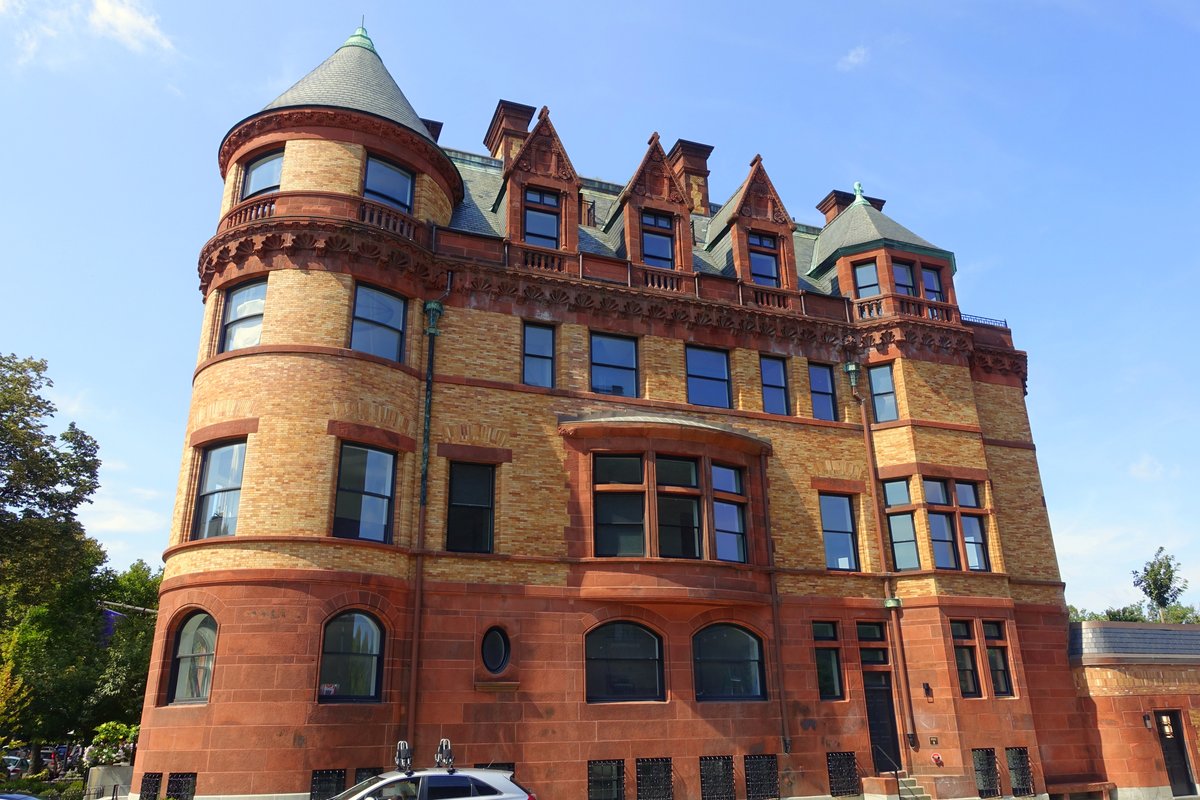
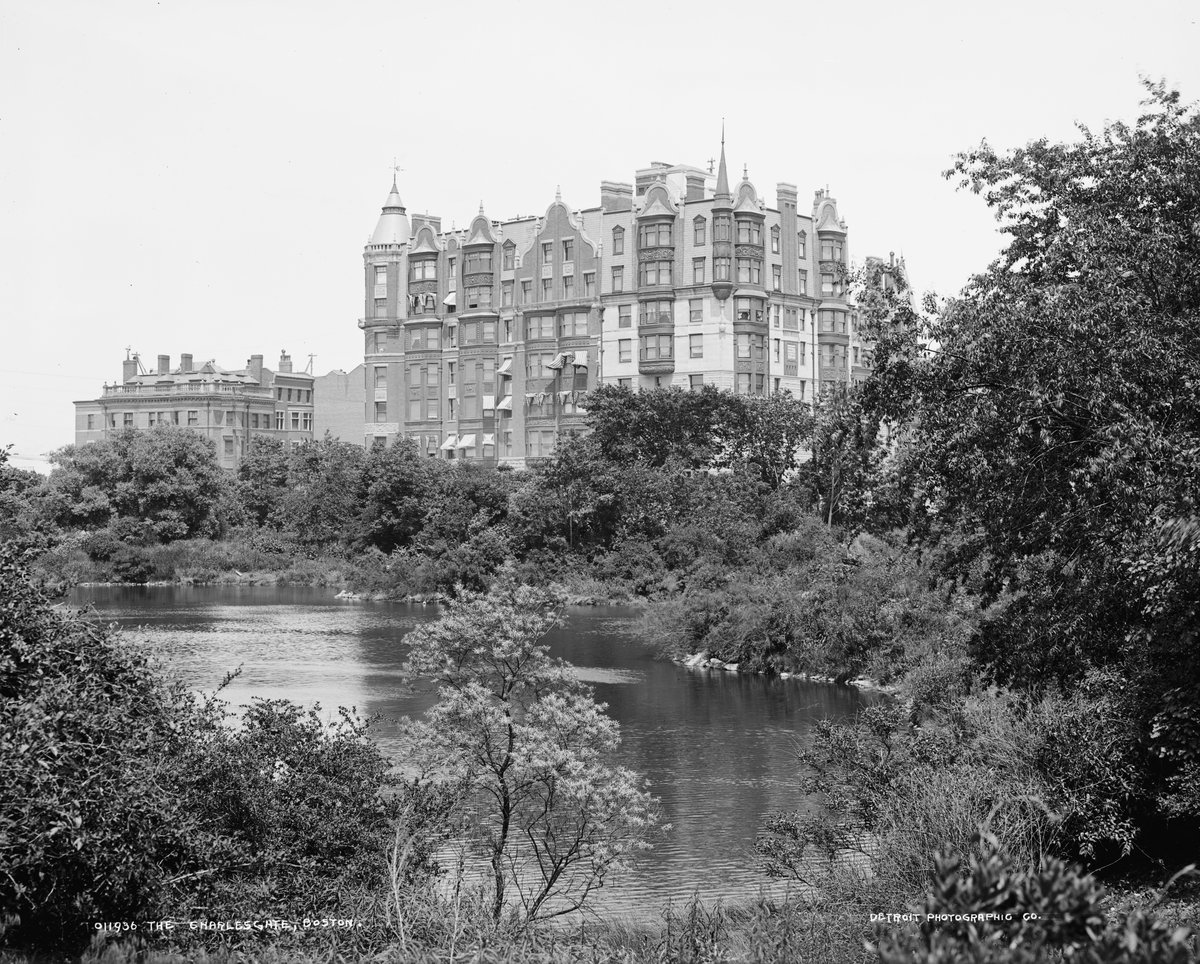
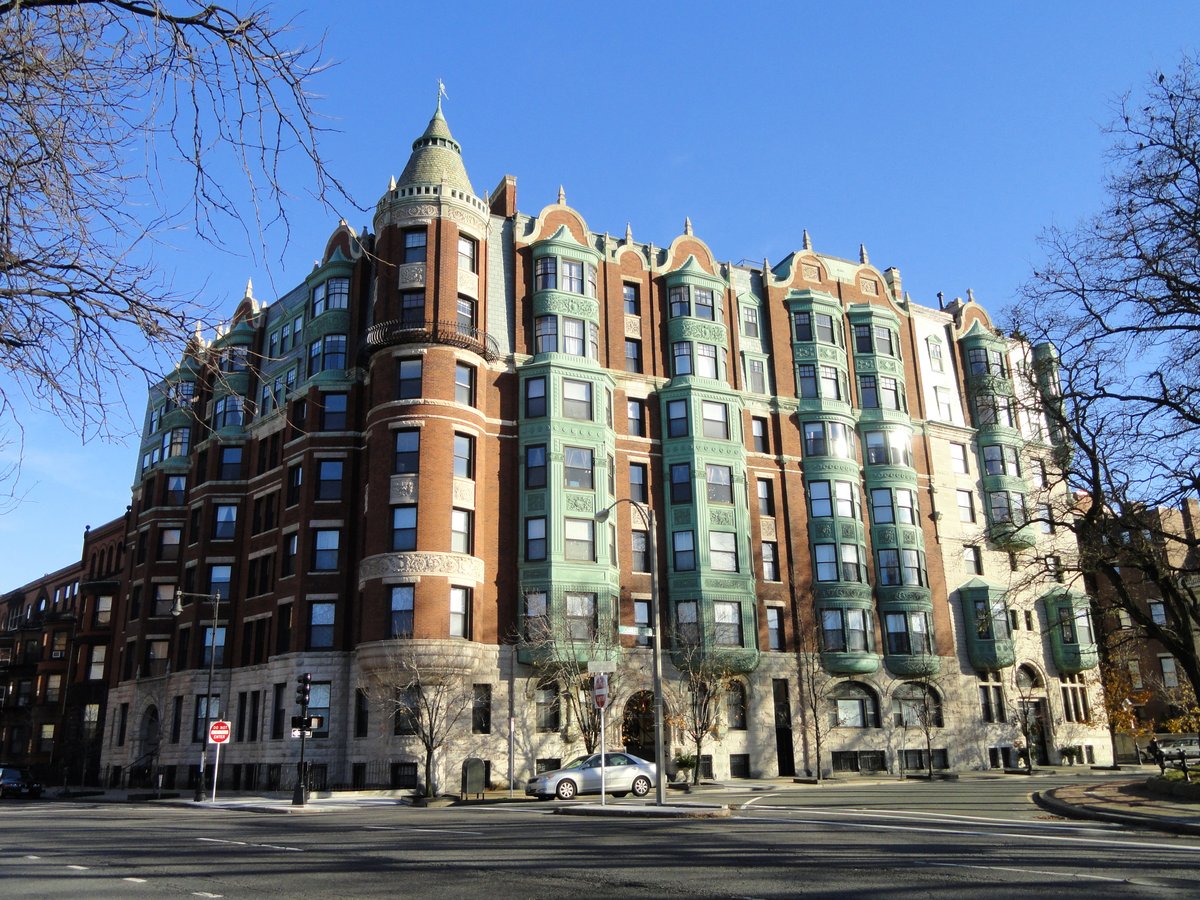
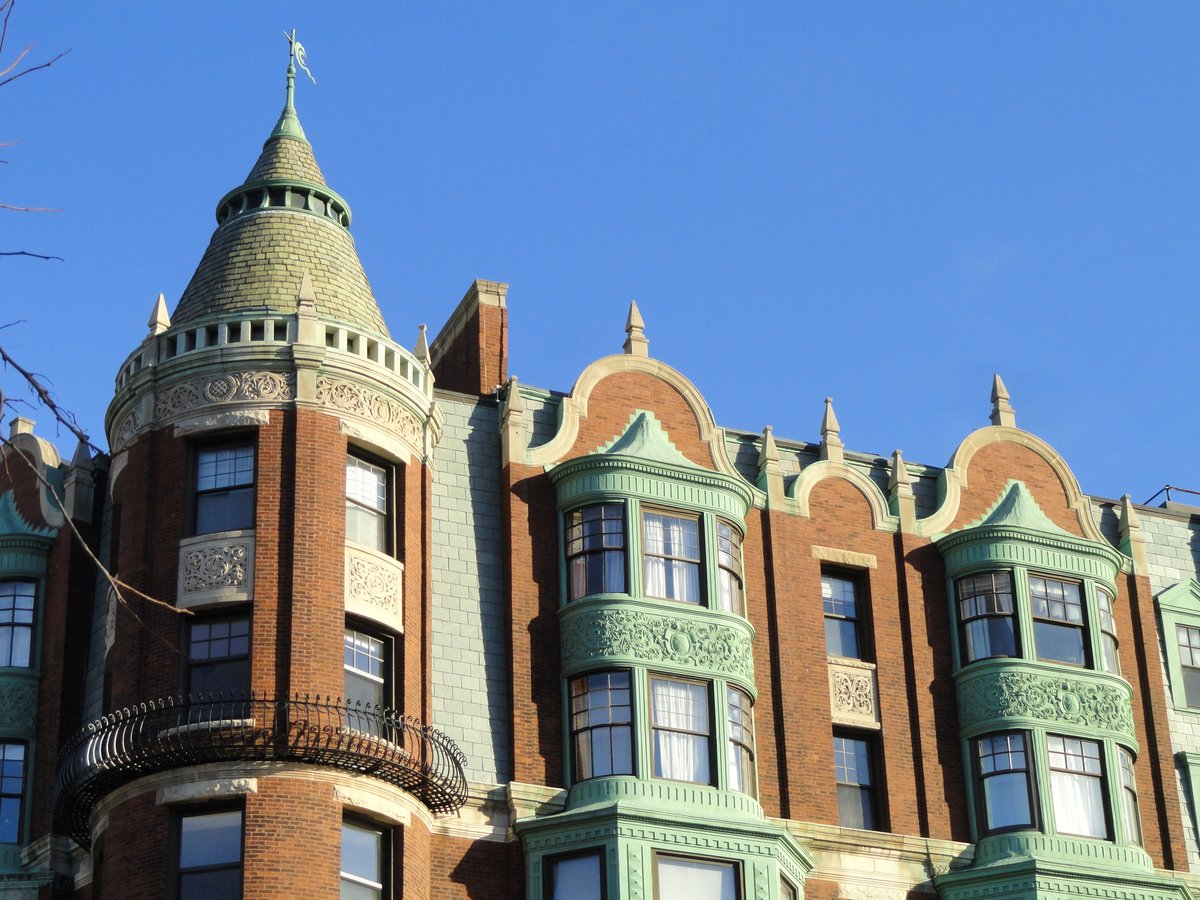
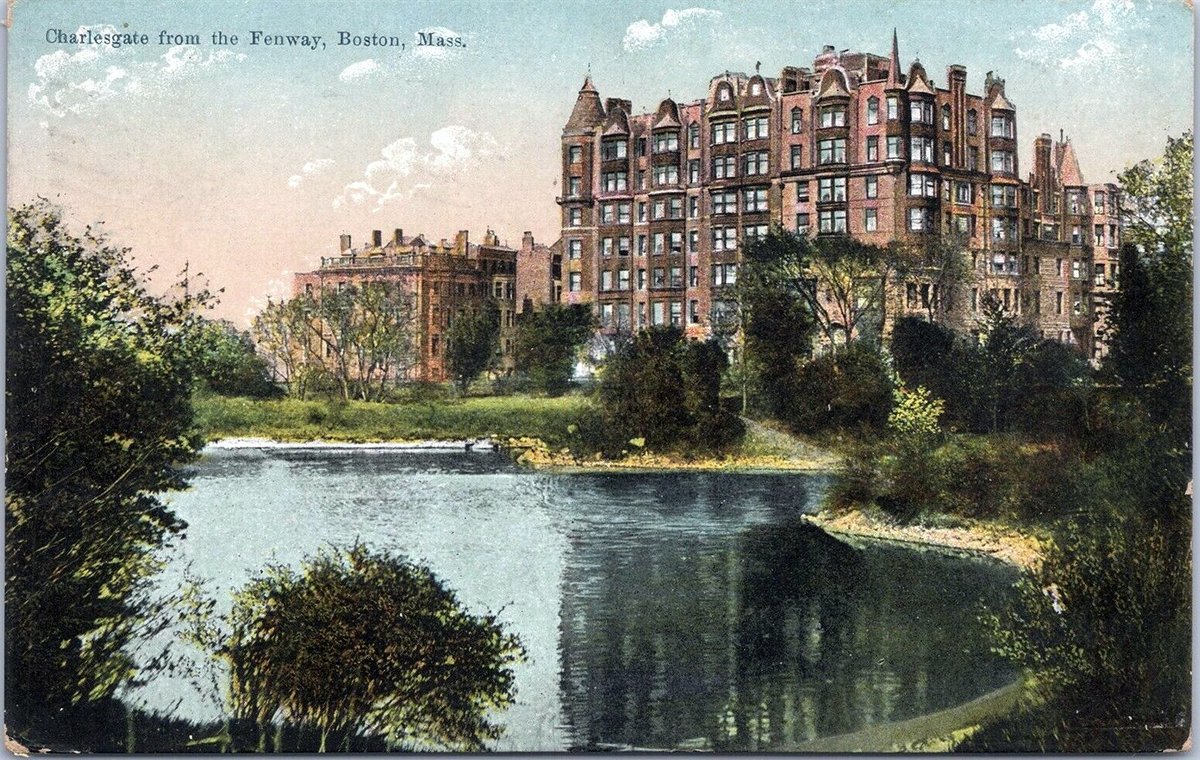
Constructed with Indiana limestone at its base and red brick with limestone accents above, the Charlesgate’s exterior is a striking assembly of bays, oriels, and turrets. Its curved glass windows, copper cladding, slate, tile, and glass details create an ever-changing interplay of light and shadow. The building’s prominent corner site at Beacon Street and Charlesgate East, overlooking Charlesgate Park and the Emerald Necklace, makes it a visual anchor in the Back Bay (Buildings of New England; Emerald Necklace).
From Apartment Hotel to Institutional Use
After opening in 1891, the Charlesgate quickly earned a reputation as an exclusive and well-managed residential hotel. Managed by Putnam and later by the Summers family, it maintained a strict, respectable atmosphere for decades (The Next Phase Blog). In 1947, Boston University acquired the building, converting it into a women’s dormitory. Later, Emerson College used it for student housing, during which time much of the original interior detail was altered. The building also served as a rooming house during the 1970s–1990s, before being converted to condominiums in 1998.
Condominium Conversion and Preservation
Following years of institutional use, the Charlesgate was transformed into 56 condominium units in 1998, preserving its iconic exterior and select interior features (The Next Phase Blog). Today, the building stands as a celebrated example of adaptive reuse, maintaining its architectural integrity while offering contemporary living in the heart of Boston.
Visiting Information
Access and Travel Tips
- Location Corner of Beacon Street and Charlesgate East, Back Bay, Boston.
- Public Access The Charlesgate Hotel is a private condominium; interior access is not permitted. Exterior viewing is available from public sidewalks at any time.
- Transportation Easily reached via MBTA Green Line (Kenmore Station), with nearby bus routes and access to major roadways.
- Parking Limited street parking; public garages nearby.
- Accessibility The exterior and adjacent park are wheelchair accessible.
Nearby Attractions
- Charlesgate Park Part of the Emerald Necklace, ideal for walks and photography.
- Kenmore Square Shops, dining, and Fenway Park.
- Back Bay Fens Historic parkland and gardens.
- Museum of Fine Arts & Boston University Both within walking distance.
Visitor Experiences
- Architecture Walks Many guided and self-guided tours of Back Bay include exterior stops at the Charlesgate.
- Ghost Tours Several evening walking tours recount the building’s haunted legends (Boston Uncovered; Real Paranormal Experiences).
- Photography Best light in early morning or late afternoon; the building’s unique angles and detailing are best captured from Charlesgate Park.
Legends, Lore, and Hauntings
The Charlesgate Hotel is prominent in Boston’s supernatural folklore. Tales of apparitions, unexplained noises, and poltergeist activity date primarily from its years as a student dormitory. While many stories are unsubstantiated, documented events—such as the 1908 suicide of resident Westwood T. Windram—lend a somber note to the building’s haunted reputation (Emerson Today). The Charlesgate frequently appears on local ghost tours and in articles about Boston’s most haunted places, adding a compelling layer to its appeal (Boston Uncovered; Real Paranormal Experiences).
Historical Impact on Boston’s Urban Landscape
As an early example of the apartment hotel typology, the Charlesgate Hotel played a pivotal role in shaping Boston’s approach to urban residential living. Its integration with the Emerald Necklace, proximity to the Charles River, and distinctive Victorian-era design reflect the city’s aspirations for modernity balanced with tradition (Buildings of New England). The building’s survival through various uses underscores the adaptability and lasting value of well-designed historic structures.
Key Dates and Figures
- 1891 Construction completed; designed and financed by John Pickering Putnam.
- 1917 Putnam’s death; his wife Grace continues residence.
- 1923–1947 Owned by Herbert and Fanny Summers.
- 1947 Acquired by Boston University as women’s dormitory.
- 1981–1995 Emerson College dormitory and rooming house.
- 1998 Converted to 56 condominiums (The Next Phase Blog).
Frequently Asked Questions (FAQ)
Q: Can I tour the interior of the Charlesgate Hotel?
A: No; the building is a private residence. Exterior viewing is allowed from public spaces.
Q: Are guided tours available?
A: While interior tours are not available, many Boston architecture and ghost tours include the Charlesgate as a featured stop.
Q: What are the best times to visit?
A: The building’s ornate details are especially striking during early morning or late afternoon light.
Q: Is the area accessible for those with mobility needs?
A: Yes, public sidewalks and adjacent parks are wheelchair accessible.
Q: Are there tickets or fees for visiting?
A: No tickets are required for exterior viewing.
Related Articles
- Discover more at Boston Preservation Alliance
- Explore the Emerald Necklace Park System
- Read about Haunted Places in Boston
- Check accommodation details at Booking.com