
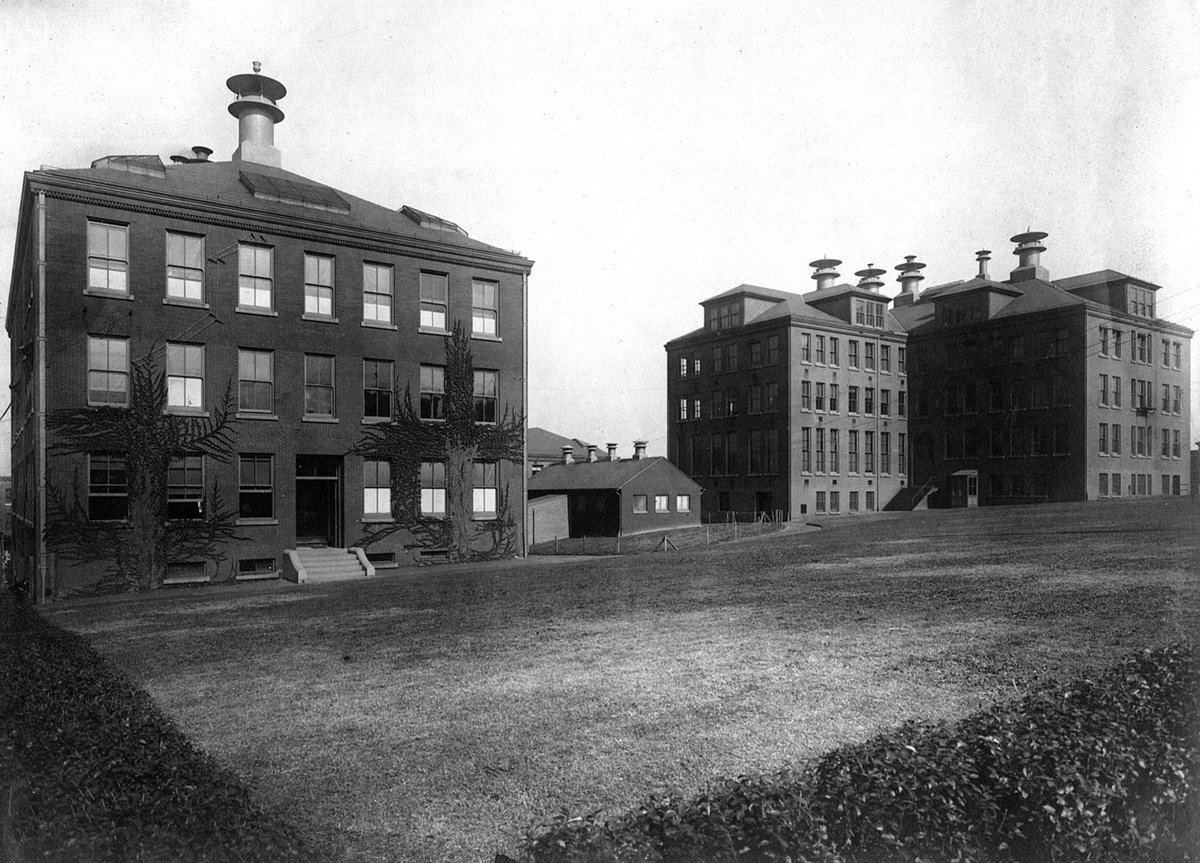
Johns Hopkins School of Medicine and Medical Campus
The Johns Hopkins School of Medicine in Baltimore, Maryland, is a world-renowned institution for medical education, research, and clinical care. Its East Baltimore Medical Campus welcomes visitors to explore its history and ongoing work through exhibits, tours, and interactive experiences. Located in Baltimore, the campus also offers access to the city’s historical and cultural attractions (Hopkins 125 Years; Johns Hopkins Medical Campus Guide).
History and legacy
Founding and early history
The Johns Hopkins School of Medicine was established in 1893 through the philanthropy of Johns Hopkins, whose vision was to combine scientific research with hands-on clinical training. Through the efforts of Mary Elizabeth Garrett and her peers, the school admitted women on equal terms. The “Big Four” founding faculty—William Welch, William Osler, William Stewart Halsted, and Howard Kelly—integrated laboratory science with direct patient care, establishing a model that influenced medical schools worldwide (Hopkins 125 Years).
Medical education and discoveries
Johns Hopkins made laboratory research and bedside clinical experience central to its curriculum. Today, its “Genes to Society” curriculum brings together genetics, molecular biology, and patient-centered care.
The school’s discoveries and innovations include:
- Medical genetics Pioneering personalized medicine.
- Cancer treatment Advances in targeted therapies and immunotherapy.
- Reproductive health Contributions to the modern pregnancy test.
- Sickle cell anemia and Marfan syndrome Improved understanding and management.
- ALS research Significant insights into neurodegenerative diseases.
- Infection prevention Development of a global infection prevention checklist.
- Organ and limb transplantation The first five-way kidney and bilateral arm transplants.
- Zika virus Early identification of links to microcephaly (Hopkins 125 Years).
Social impact and traditions
From its beginning, the school championed equal opportunity and community outreach. It was among the first to admit women and has long supported public health initiatives in Baltimore, including programs for healthier babies and free student eye exams (Hopkins 125 Years).
Annual events such as Commemoration Day on February 22 honor Daniel Coit Gilman, the university’s founding president. Special sesquicentennial events in 2026 will feature symposiums, interactive exhibits, and historical artifacts, including William Stewart Halsted’s surgical kit and “magic mirror” augmented reality displays (Hopkins 149 Years).
What to see
East Baltimore campus
The campus includes educational and research facilities such as the Traylor, Ross, Miller, and Smith Buildings, the BME Design Studio, Microscope Facility, and Carnegie 3D Printing (BME Facilities). Specialized research facilities include Tissue Culture Labs and the WSE Manufacturing and Microfabrication Lab (Tissue Culture Facilities).
Visitors can also see the Historic Dome Building and campus courtyards. The campus has retail and dining options, gift shops, ATMs, a chapel, and ADA restrooms.
Virtual tours and photo galleries are available on the Johns Hopkins Medicine website. Images feature historical artifacts, campus landmarks, and recent innovations.
Johns Hopkins Monument at Homewood
The Johns Hopkins Monument on the Homewood campus honors the university’s founder and his legacy of public service and innovation. It is at 3400 N. Charles Street, Baltimore, MD 21218, near Gilman Hall and the Milton S. Eisenhower Library.
The monument offers photo opportunities, especially during spring. Events such as Founder’s Day and public lectures often take place at or near it.
Visiting information
Hours, admission, and tickets
Hours vary by area:
- General campus access is listed as Monday–Friday, 9:00 AM–5:00 PM.
- Most public and clinical areas are listed as 7:00 AM–7:00 PM; check department-specific guidelines.
- Johns Hopkins Hospital is listed as 6:00 AM–10:00 PM.
- The Outpatient Center is listed as 8:00 AM–6:00 PM.
- Sidney Kimmel Comprehensive Cancer Center is listed as 8:00 AM–5:00 PM.
- The Johns Hopkins Monument at Homewood is open year-round during daylight hours.
Admission is free for the campus, standard exhibits, and the Homewood monument. Advance registration or tickets are required for guided tours and special events.
Campus entrances and navigation
The main hospital entrance is at 1800 Orleans Street (JHH Visitors Guide Map). Other entrances include the Outpatient Center at 601 N. Caroline St., the Weinberg Building at 401 N. Broadway, and the Rubenstein Child Health Building at 200 N. Wolfe St.
Buildings are labeled A–K, and indoor corridors and skywalks connect major areas (Campus Map PDF). See the interactive campus map.
Tours and events
Tours explore the school’s history, scientific breakthroughs, and current innovations. General tours can be booked online or through the visitor center. Medical campus tours are offered Monday–Friday and on select Saturdays; book at least 15 business days in advance (Tours and Events). The campus FAQ also advises submitting an online tour request at least 15 days in advance (Tours and Events).
The Homewood monument and campus tours are bookable through the visitor center and are listed as running Monday–Friday, 10:00 AM–4:00 PM. Virtual tours include 360-degree narrated tours (Virtual Tour).
Check the events calendar for anniversary exhibitions, symposiums, and interactive displays, including historical artifacts and augmented reality experiences.
Accessibility, safety, and services
The East Baltimore campus is described as ADA-compliant, with accessible entrances, facilities, restrooms, pathways, routes, elevators, and parking. Public transportation and campus shuttles are available, and guest services can provide assistance (Accessibility Map). The campus is accessible by public transportation and car. Parking and shuttle details are provided on the campus website.
Security patrols operate on campus. Visitor badges are used, and lost and found is available at information desks. Photography is allowed in public spaces; restrictions apply in clinical and research areas.
The Homewood monument is wheelchair accessible. Public transportation serves the area, and parking is available.
Contact information
- General 410-955-5000
- Patient information 410-502-4000
- Appointments Adult: 410-955-5464 | Pediatric: 410-955-2000
- TTY 410-955-6217
Tips for visitors
- Review campus maps and parking information ahead of time.
- Arrive early.
- Dress for the weather and wear comfortable shoes for walking.
- Book events and tours in advance.
- Find hotel options on the university’s visitor page (Find Hotels Near Campus).
- At Homewood, the monument is best visited during daylight hours, particularly in spring or fall.
- Photography is encouraged at the Washington Monument in Washington, D.C.; bring water and sun protection when visiting.
Nearby places and other sites
Nearby Baltimore attractions include Johns Hopkins Hospital, the Inner Harbor, the Maryland Science Center, and historic neighborhoods. At Homewood, nearby sites include the Homewood Museum, Wyman Park Dell, and Charles Village; dining and parking are available.
Washington Monument, Washington, D.C.
The Washington Monument is an iconic national symbol honoring President George Washington. Completed in 1884, it stands 555 feet tall and is the world’s tallest stone obelisk.
- Address 2 15th St NW, Washington, D.C.
- Nearby attractions Lincoln Memorial, WWII Memorial, National Museum of American History, and U.S. Capitol Building.
- Transportation The closest Metro stations are Smithsonian and Federal Triangle. Parking is limited; public transit is recommended.
- Hours Daily, 9:00 AM–5:00 PM, with last entry at 4:30 PM. It is closed on major federal holidays.
- Tickets Admission is free, with a small service charge for online reservations. Same-day tickets are available, but advance booking is recommended (National Park Service Washington Monument page).
- Accessibility The monument is ADA-compliant, with ramps, an elevator, accessible restrooms, and assistive listening devices.
- Tours and events Seasonal guided tours and special events are listed on the National Park Service site.
- Photography Photography is encouraged.
Frequently asked questions
Johns Hopkins School of Medicine and Medical Campus
What are the visiting hours?
General campus access is listed as Monday–Friday, 9:00 AM–5:00 PM. Most public and clinical areas are listed as 7:00 AM–7:00 PM; department-specific guidelines may differ.
Is admission free?
Yes. General campus access and standard exhibits are free. Some tours and events require tickets or advance registration.
Are guided tours available?
Yes. They can be booked online or through the visitor center. Medical campus tours are offered Monday–Friday and on select Saturdays; booking is advised at least 15 business days in advance. The tour request information also says at least 15 days.
Is the campus accessible?
Yes. The campus is ADA-compliant, with accessible entrances, restrooms, and pathways.
How do I get there?
The campus is accessible by public transit, car, and campus shuttle.
Are photos allowed?
Photos are allowed in public spaces; restrictions apply in clinical and research areas.
Where can I park?
Multiple garages are available; rates vary (Campus Map PDF).
Johns Hopkins Monument at Homewood
Is there an admission fee?
No.
Are guided tours available?
Yes, through the visitor center.
When is the best time to visit?
During daylight hours, particularly in spring or fall.
Is the monument accessible?
Yes.
For current hours, tours, and events, see the Johns Hopkins University Visitor Center and Baltimore Tourism Official Site.
Washington Monument
Is admission free?
Yes; a small fee applies for online reservations.
Is the monument wheelchair accessible?
Yes.
Are pets allowed?
Only service animals.
How long is the elevator ride?
About 70 seconds.
Can I visit at night?
The monument is lit at night but is open only during the day.
For current information and tickets, see the National Park Service Washington Monument page.