Introduction
Bolton Hill, situated in the heart of Baltimore, is a distinguished historic neighborhood renowned for its 19th-century architectural heritage, tree-lined boulevards, and vibrant cultural life. Once a residential enclave for Baltimore’s elite, Bolton Hill has evolved into a diverse and welcoming community, drawing history lovers, architecture enthusiasts, and travelers seeking an authentic city experience. This guide provides detailed information on visiting hours, ticketing, accessibility, and highlights must-see historical sites, landmarks, and community events. For up-to-date resources, visit the Bolton Hill Community Association.
Photo Gallery
Explore Bolton Hill in Pictures

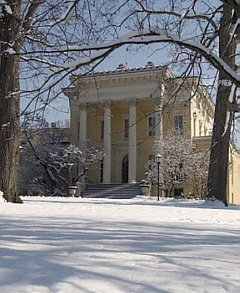
Photograph of the historic Bolton Hill Nursery School Former Family and Child Services of Central Maryland Offices, located at 204 W. Lanvale Street, Baltimore. Captured by Eli Pousson on November 28, 2022, showcasing the classic architectural style from the 1840s.

Photograph of the Bolton Hill Nursery School, formerly Family and Child Services of Central Maryland Offices, a historic building from the 1840s located at 204 W. Lanvale Street, Baltimore, MD, taken by Eli Pousson in November 2022.

Photograph of the historic Bolton Hill Nursery School Former Family and Child Services of Central Maryland Offices building located at 204 W. Lanvale Street, Baltimore, Maryland, taken by Eli Pousson in November 2022.

Photograph showing scaffolding erected on the roof of Bolton Hill Nursery School located at 204 W. Lanvale Street, Baltimore, MD 21217, taken by Eli Pousson on August 21, 2017.

The Lieutenant Colonel William H. Watson memorial statue located at West North Avenue and Mount Royal Terrace in Baltimore honors the commander of Baltimore and District of Columbia Volunteers in the Mexican-American War (1846-1848). Sculpted by Edward Berge and dedicated in 1903 on the 57th anniver

The historic Wilson House in Baltimore's Bolton Hill Historic District, where future President Woodrow Wilson lived as a graduate student. Adjacent house belonged to a President of Johns Hopkins University.
Early History and Urban Development
Bolton Hill’s origins can be traced to the early 19th century, developing from the Bolton estate owned by George Grundy and later Dr. Thomas E. Bond. Its name likely honors Bolton-le-Moors in England. The neighborhood rapidly grew after the Civil War, as Baltimore’s industrial growth led affluent residents to seek homes away from the city center. Planned with broad avenues and smaller side streets, Bolton Hill soon became synonymous with refined urban living.
By the late 1800s, the area was characterized by elegant Italianate, Second Empire, and Queen Anne rowhouses, set along landscaped boulevards such as Park Avenue and Eutaw Place. The arrival of the railroad and construction of Mount Royal Station further cemented Bolton Hill’s standing as a premier address (Bolton Hill Community Association).
Architectural Heritage and Urban Design
Bolton Hill is a showcase for Baltimore’s Gilded Age architecture, with over 20 blocks of preserved rowhouses, mansions, and civic buildings (Architectural Trust). Architectural highlights include:
- Italianate, Queen Anne, and Second Empire Rowhouses: Distinctive features include marble steps, ornate cornices, and decorative ironwork.
- Beaux-Arts Mount Royal Station: Now part of MICA, this 1896 train station is an architectural and historic landmark (Mount Royal Station - Wikipedia).
- Urban Mansions: Grand homes with lush gardens and intricate designs, reflecting the prosperity of their original owners.
The neighborhood’s unique diagonal street plan, a legacy of Thomas Poppleton’s 1821 survey, sets it apart from Baltimore’s typical grid and is complemented by landscaped medians, pocket parks, and historic fountains (Bmore At Home Properties).
Social and Cultural Evolution
Historically, Bolton Hill was an exclusive, predominantly white Protestant neighborhood, but changing demographics in the 20th century led to increased diversity. The Great Migration, civil rights movement, and urban renewal efforts transformed Bolton Hill’s social fabric. Today, it is a vibrant, inclusive community known for creativity and activism, with cultural life enriched by proximity to the Maryland Institute College of Art (MICA), the Lyric Opera House, and other institutions.
Events such as First Fridays at the Fountain and the Arts in the Parks concert series reflect the community’s commitment to inclusion and engagement.
Key Landmarks and Notable Residents
Historic Landmarks
- Mount Royal Station (1896): Beaux-Arts terminal, now part of MICA, pivotal in Baltimore’s transportation history (Mount Royal Station - Wikipedia).
- Eutaw Place Temple (1892): Former synagogue, symbolizing the neighborhood’s Jewish heritage.
- Brown Memorial Presbyterian Church (1861): Known for Tiffany stained glass windows.
- Memorial Episcopal Church (1861–1864): Significant religious and architectural site.
- Friends Meeting House (1889): Former Quaker meeting house, now Old Friends Apartments.
Notable Residents
- F. Scott Fitzgerald: Lived here in the 1930s.
- Woodrow Wilson: Resided in Bolton Hill while at Johns Hopkins.
- Cone Sisters: Art collectors whose works now form a core of the Baltimore Museum of Art’s Cone Collection.
- Lillie Carroll Jackson: Civil rights leader, honored by the local museum.
Plaques and markers throughout the neighborhood commemorate these figures (Bmore At Home Properties).
Visiting Hours, Tickets, and Tours
Streets and Parks: Publicly accessible year-round; best visited from 9 a.m. to sunset.
Churches and Landmarks: Individual sites have their own hours. For example:
- MICA Galleries: Usually open Monday–Friday, 9 a.m.–5 p.m. (MICA)
- Lillie Carroll Jackson Civil Rights Museum: Open Tuesday–Saturday, 10 a.m.–4 p.m.; free or donation-based.
Guided Tours: Offered seasonally by local organizations. Booking in advance is recommended. Check the Bolton Hill Community Association for schedules.
Tickets: Walking the neighborhood is free. Some museums or events require tickets or suggested donations.
Accessibility and Transportation
- Public Transit: Served by Maryland Transit Administration Light RailLink (Mount Royal/MICA station), Metro Subway (State Center station), and bus routes.
- By Car: Accessible via North Avenue, Mount Royal Avenue, and I-83.
- Parking: Most streets require Area 3 Residential Parking Permits (Monday–Friday, 7 a.m.–midnight). Visitor placards can be arranged by residents (Baltimore City Parking Authority). Limited public lots and metered parking nearby.
- Walking and Biking: Compact and walkable with bike lanes on major streets.
- Accessibility: Most sidewalks and public spaces are accessible; some historic sites may have limited wheelchair access.
Events and Community Life
Bolton Hill is known for its lively community calendar:
- Arts in the Parks: Free Thursday evening concerts in summer (Bolton Hill Community Association).
- Annual Crab Feast and Picnic: Celebrating Baltimore’s culinary heritage.
- Garden Club Tours: Showcasing public and private gardens.
- First Fridays at the Fountain: Monthly gatherings with music and food.
Check the Bolton Hill Community Association for event schedules and ticket details.
Preservation and Modern Identity
Designated a Baltimore City Historic District in 1967 and listed on the National Register of Historic Places in 1971, Bolton Hill’s preservation is managed by local associations and the Baltimore City Commission for Architectural Preservation (Bolton Hill Community Association; Baltimore Fishbowl). The community actively promotes both historical stewardship and inclusivity, as reflected in recent renaming efforts and the removal of markers honoring segregationist figures.
Practical Tips for Visitors
- Best Times to Visit: Spring and fall offer mild weather and vibrant foliage.
- Photography: Historic facades and tree-lined streets provide excellent photo opportunities, especially during “golden hour.”
- Dining: Local favorites include CookHouse, On the Hill Cafe, The Tilted Row, and Mt. Royal Tavern. Many options are within walking distance or in adjacent neighborhoods.
- Accommodations: No hotels in Bolton Hill, but numerous options are available nearby in Mount Vernon and downtown Baltimore.
- Safety and Etiquette: Generally safe and friendly; respect residential privacy and parking rules.
- Accessibility: Most venues are accessible; confirm with individual sites if needed.
- Restrooms and ATMs: Available in restaurants and nearby commercial centers.
FAQ
Q: Are there entrance fees to visit Bolton Hill?
A: No. Streets and parks are free to explore. Some churches, museums, or events may request donations or require tickets.
Q: Are guided tours available?
A: Yes. Walking tours focused on architecture and history are offered seasonally by local organizations.
Q: Is Bolton Hill family- and pet-friendly?
A: Yes. Parks, safe pedestrian routes, and community events are suitable for families and pets (leashed).
Q: How do I get to Bolton Hill using public transportation?
A: Take the Light RailLink to Mount Royal/MICA or the Metro Subway to State Center station.
Q: Do I need a parking permit in Bolton Hill?
A: Yes, most streets require a residential parking permit. Visitor placards can be obtained through local residents.
Summary Table: Key Attractions in Bolton Hill
| Attraction/Landmark | Description | Features/Notes |
|---|---|---|
| Historic Rowhouses | 19th-century homes with ornate details | Marble steps, ironwork, high ceilings |
| Urban Mansions | Grand homes from Baltimore’s Gilded Age | Lush gardens, intricate facades |
| Parks & Squares | Pocket parks and landscaped boulevards | Fountains, monuments, mature trees |
| Houses of Worship | Churches and synagogues from 19th–20th centuries | Tiffany windows, architectural variety |
| Mount Royal Station | Beaux-Arts landmark, now part of MICA | Public exhibitions |
| Community Events | Concerts, crab feasts, garden tours | Family-friendly, free or ticketed |
| Notable Residents | F. Scott Fitzgerald, Woodrow Wilson, Cone sisters | Historic plaques, literary connections |
Listen to the full story in the app
Your Personal Curator, in Your Pocket.
Audio guides for 1,100+ cities across 96 countries. History, stories, and local insight — offline ready.
Audiala App
Available on iOS & Android
Join 50k+ Curators
Sources
- verified
- verified
- verified
- verified
- verified
- verified
- verified
Last reviewed: