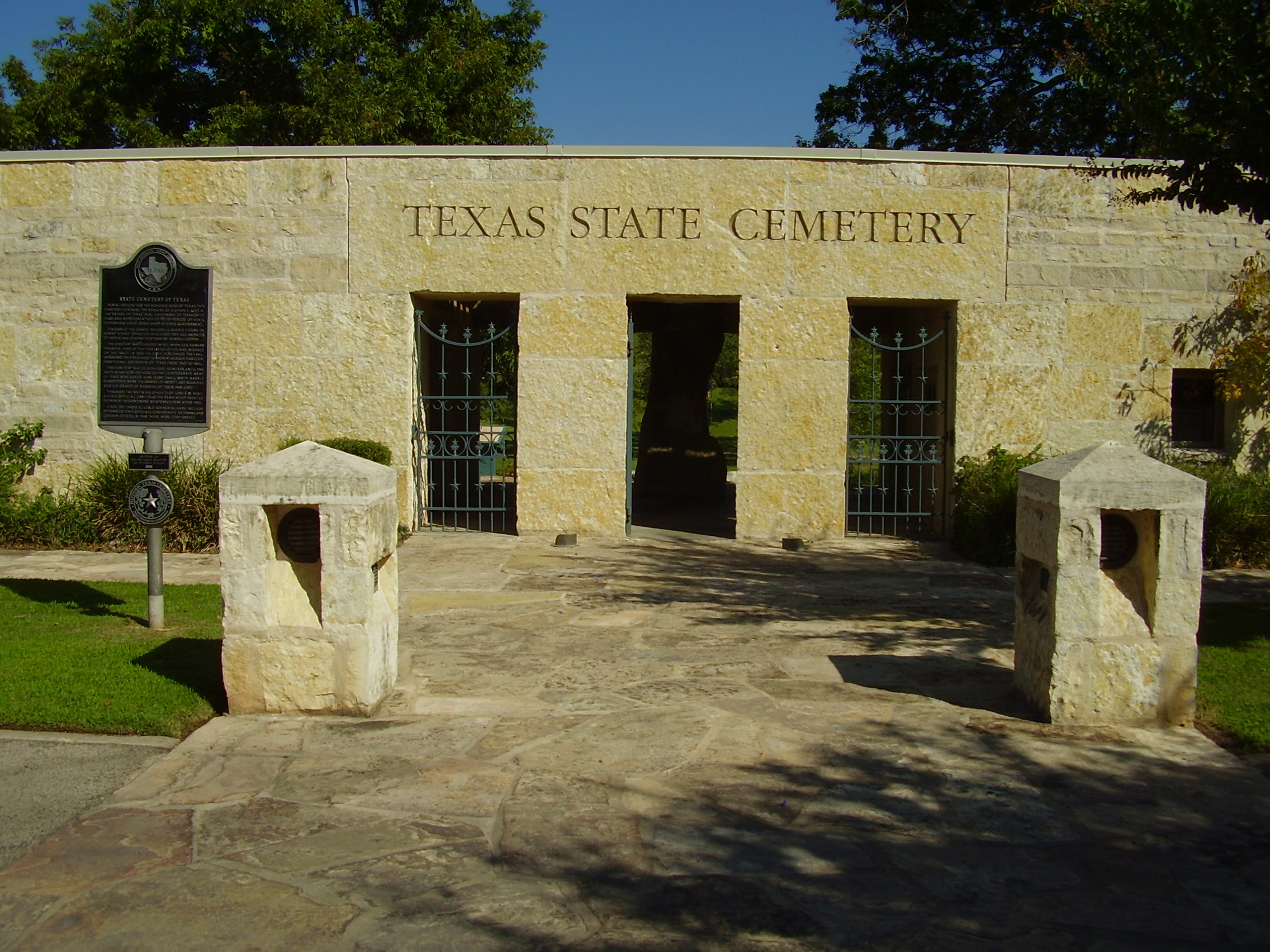
Plan and listen to Texas State Cemetery with Audiala.
Audio guide in your pocket, itinerary in your browser. Built for the way you actually visit.
Introduction
The Texas State Cemetery, located just east of downtown Austin, is one of the state’s most significant historical landmarks. Established in 1851 with the burial of Texas Revolution hero General Edward Burleson, it has evolved into a revered resting place for many of Texas’s most influential figures. Often dubbed the “Arlington of Texas,” the cemetery commemorates not only Confederate veterans but also a diverse array of public servants, cultural leaders, and influencers who shaped the Lone Star State. This guide provides a comprehensive overview of visiting hours, admission, accessibility, notable interments, and practical tips—ensuring you make the most of your visit to this iconic Austin site.
For official details and further historical background, consult the Texas State Cemetery website and the Texas State Historical Association.
Discovering the Texas State Cemetery
Just blocks from the Texas State Capitol, the Texas State Cemetery offers visitors a tranquil park-like environment steeped in history. The grounds are beautifully maintained, with mature trees, manicured lawns, and a variety of monuments and statuary that invite reflection on Texas’s storied past.
This site is more than a burial ground—it’s an open-air museum chronicling the lives and contributions of leaders, artists, military heroes, and trailblazers.
Origins and Early Development (1851–Civil War Era)
The Texas State Cemetery began in 1851 with the burial of General Edward Burleson, vice-president of the Republic of Texas and a prominent Texas Revolution figure (Texas State Cemetery History). In 1854, the State of Texas officially took control, establishing it as a state burial ground (Find a Grave).
During the Civil War, the cemetery became a prominent site for the interment of Confederate veterans and their widows, particularly after the establishment of the Texas Confederate Men’s and Women’s Homes in Austin. Major expansions after 1889 reflected the state’s commitment to honoring those who served in the Confederacy (Wikipedia).
Expansion and Notable Reinterments
In the early 20th century, the cemetery’s mission expanded to include lawmakers, artists, scientists, and other notable Texans. Historian Louis Wiltz Kemp was instrumental in relocating the remains of key Texas Revolution figures, including Stephen F. Austin, in time for the 1936 Texas Centennial (TSHA Handbook).
The cemetery is divided into sections: a smaller plot with around 234 graves of prominent individuals and their spouses, and a larger section with over 2,000 marked graves of Confederate veterans and widows (Wikipedia). This underscores its dual legacy as both a state shrine and a memorial to Texas’s Confederate past.
Architectural Features and Monuments
The cemetery features significant monuments and works of art, such as Elisabet Ney’s statue of General Albert Sidney Johnston and bronze works by Enrico Cerracchio and Pompeo Coppini (TSHA Handbook). In 1932, accessibility improved with the paving of State Highway 165, thanks to the advocacy of Louis Kemp (Wikipedia).
Renovation and Preservation Efforts
By the 1990s, the cemetery required revitalization. In 1994, a comprehensive renovation included a new visitor center, gallery, pond, and improved landscaping (Find a Grave). The Texas Historical Commission designated it a Historic Texas Cemetery in 1998 (Texas Historical Commission), ensuring ongoing preservation and stewardship.
Visiting Information
Hours, Admission, and Location
- Hours: Open daily, Tuesday–Saturday from 8:00 a.m. to 5:00 p.m., and Sundays from 1:00 p.m. to 5:00 p.m. Closed Mondays and major holidays (Texas State Cemetery Directions).
- Admission: Free; no tickets or reservations are required for general entry.
- Location: 909 Navasota Street, Austin, TX 78702.
During daylight saving time, hours may extend to 7:00 p.m. (Local Adventurer).
Guided and Self-Guided Tours
- Guided Tours: Available by appointment, led by knowledgeable staff; ideal for those seeking detailed historical insight. Tours last 60–90 minutes (Tour Reservations).
- Self-Guided Tours: Maps and brochures are available at the visitor center or can be downloaded (Cemetery Interactive Map). Audio tours and mobile apps such as GPSmyCity are recommended for independent exploration (GPSmyCity).
Accessibility and Facilities
- Wheelchair Accessibility: Paved walkways and ramps are available; some areas may have uneven terrain.
- Restrooms: Located at the visitor center.
- Parking: Free on-site parking; spaces may be limited during special events. Public transportation via Capital Metro is available (GPSmyCity).
- Visitor Amenities: Shaded benches, drinking fountains, and interpretive exhibits enhance comfort.
Rules, Etiquette, and Photography
- Respectful Conduct: Speak quietly, avoid recreational activities, and respect active burials.
- Photography: Allowed for personal use; professional equipment requires prior approval. Please be discreet, especially during ceremonies or funerals.
- Pets: Only service animals permitted.
- Prohibited Activities: Smoking, alcohol, picnicking, and loud music are not allowed to preserve the site’s dignity.
Notable Interments and Cultural Significance
The Texas State Cemetery honors a diverse array of individuals, including:
- Stephen F. Austin: The “Father of Texas” (Texas State Cemetery History).
- Barbara Jordan: Trailblazing legislator and U.S. Congresswoman (Austin Visitor Guide).
- Chris Kyle: Decorated Navy SEAL (Ranker).
- Ann Richards: Former Texas governor.
- Medal of Honor Recipients, Texas Rangers, and Legislators: Representing a cross-section of Texas’s military and political history.
The cemetery also features cenotaphs and memorials to groups previously underrepresented, reflecting an evolving and inclusive narrative (Historical Monuments).
Frequently Asked Questions (FAQs)
Q: What are the Texas State Cemetery visiting hours?
A: Tuesday–Saturday, 8:00 a.m.–5:00 p.m.; Sunday, 1:00 p.m.–5:00 p.m. Closed Mondays and major holidays.
Q: Is there an admission fee or tickets required?
A: No. Admission is free; guided tours require advance reservation.
Q: Is the cemetery wheelchair accessible?
A: Most main paths are accessible; wheelchairs are available upon request.
Q: Can I take photos?
A: Yes, for personal use. Professional shoots must be pre-approved.
Q: Are pets allowed?
A: Only service animals.
Q: Where do I park?
A: Free on-site parking is available; public transit options exist.
Nearby Austin Attractions
Enhance your visit by exploring these nearby sites:
- Texas State Capitol
- Bullock Texas State History Museum
- LBJ Presidential Library
- Blanton Museum of Art
- Other historic cemeteries: Oakwood and Evergreen (Sparkly Maid Austin)
Final Thoughts
The Texas State Cemetery stands as a testament to the people and stories that shaped Texas. With free admission, accessible facilities, and an abundance of history, it’s a must-see destination for anyone interested in the state’s heritage. Plan your visit, explore nearby attractions, and use available resources to enrich your experience. For updates, event schedules, and interactive guides, visit the official cemetery website.
Listen to the full story in the app
The whole Texas State Cemetery,
told well.
Audio guides for 1,100+ cities across 96 countries. History, stories, and local insight — offline ready.

Verified, and shown.
Researched and written by the Audiala editorial team from historical records, architectural archives, and local expertise.
Texas State Cemetery
Texas State Cemetery
State Cemetery
Historic Texas Cemetery Designation
Texas State Cemetery
Texas State Cemetery Tours
Things to Do in Austin Bucket List
25 Best Things to Do in Austin Texas
Texas State Cemetery
Untold Stories of Austin’s Historic Burial Grounds
Famous People Buried in Texas State Cemetery
Last reviewed
Researched from Wikidata, Wikipedia & official sources · fact-checked · How we make our guides →


