Plan and listen to Texas Legislature with Audiala.
Audio guide in your pocket, itinerary in your browser. Built for the way you actually visit.
Introduction: The Texas State Capitol’s Legacy in Austin
Rising in downtown Austin, the Texas State Capitol is a powerful symbol of the state’s history, culture, and political life. Since its completion in 1888, this Renaissance Revival structure—built from distinctive pink granite quarried in Marble Falls—has served as the seat of Texas government and as a beacon of Texas pride. Home to both chambers of the bicameral Legislature (Senate and House of Representatives) and the Governor’s office, the Capitol is a living monument to democracy, drawing millions of visitors to its storied halls and scenic grounds each year (Austin Historical Society).
The Capitol’s 22-acre grounds, adorned with more than 20 monuments and memorials, tell the story of Texas’s journey from an independent republic to a leading U.S. state. Nearby, an array of significant Austin historical sites—the Governor’s Mansion, Bullock Texas State History Museum, Driskill Hotel, and Texas State Cemetery—expand the visitor experience, all within walking distance via the historic Congress Avenue corridor (Austin Insider Blog).
This guide provides everything you need to plan an enriching visit: Capitol visiting hours, ticketing, tour options, accessibility, parking, and tips for exploring Austin’s historic heart. Whether you’re a history buff, architecture enthusiast, or a first-time traveler, the Texas State Capitol is a must-see destination that embodies the Lone Star State’s past, present, and future.
- Welcome to the Texas State Capitol: Your Ultimate Visitor’s Guide
- Origins and Early Development of the Texas Legislature
- Visiting Hours, Tickets, and Accessibility
- Capitol Construction and Architectural Highlights
- The Legislature’s Role in Texas History
- Exploring Nearby Austin Historical Sites
- Events, Photography, and Visitor Tips
- Preservation and Heritage
- Frequently Asked Questions (FAQ)
- Conclusion: Plan Your Visit Today







Welcome to the Texas State Capitol: Your Ultimate Visitor’s Guide
The Texas State Capitol offers an engaging mix of history, architecture, and civic activity. Visitors can explore awe-inspiring spaces like the iconic dome crowned by the Goddess of Liberty, ornate rotundas, and the legislative chambers. The Capitol grounds, landscaped with native trees and commemorative monuments, provide a tranquil retreat in the heart of Austin (State Preservation Board).
Origins and Early Development of the Texas Legislature
The legacy of the Texas Legislature began with the Republic of Texas in 1836, following independence from Mexico. Early sessions were held in Columbia and Houston before Austin was named the capital in 1839 for its strategic, central location (Austin Historical Society). The Legislature, modeled after the U.S. Congress, is bicameral, comprised of a Senate and a House of Representatives.
Following Texas’s admission to the Union in 1845, the Legislature’s structure was formalized. Since 1846, regular biennial sessions have taken place in odd-numbered years, each lasting 140 days. Special sessions may be convened by the Governor as needed (City Cast Austin).
Visiting Hours, Tickets, and Accessibility
Admission: Entry to the Capitol and its grounds is free. No tickets are required for general visits or for guided tours (State Preservation Board).
Operating Hours:
- Capitol Building: Monday–Saturday, 8 a.m.–5 p.m.; Sunday, 1 p.m.–5 p.m.
- Capitol Grounds: Open daily, 7 a.m.–8 p.m.
Guided Tours: Complimentary tours are available daily, providing in-depth information about Capitol history, architecture, and the legislative process. Self-guided tours are also supported with free maps and brochures (State Preservation Board).
Accessibility: The Capitol is fully wheelchair accessible, with ramps, elevators, and assistive listening devices available. Most historic areas are accessible, though some sections have narrow stairs or uneven floors (Travel Realist).
Parking and Transportation: Limited parking is available nearby, with the Capitol Visitors Parking Garage offering free parking for the first two hours. Public transit via Capital Metro and various rideshare options make access convenient (Travel Realist).
Capitol Construction and Architectural Highlights
The Texas State Capitol, completed in 1888, was designed by architect Elijah E. Myers in a Renaissance Revival style. The building’s distinctive pink granite exterior and its 302-foot dome distinguish it as one of the tallest state capitols in the United States, even surpassing the U.S. Capitol in Washington, D.C. (Facts.net). The rotunda features portraits of every Texas President and Governor, and terrazzo floors display the six national seals that have ruled Texas.
The 22-acre grounds include over 400 tree species, monuments honoring the Alamo heroes, Texas African Americans, Tejanos, and more. The 1993 underground Capitol Extension added modern legislative offices and facilities while preserving the building’s historic character (State Preservation Board).
The Legislature’s Role in Texas History
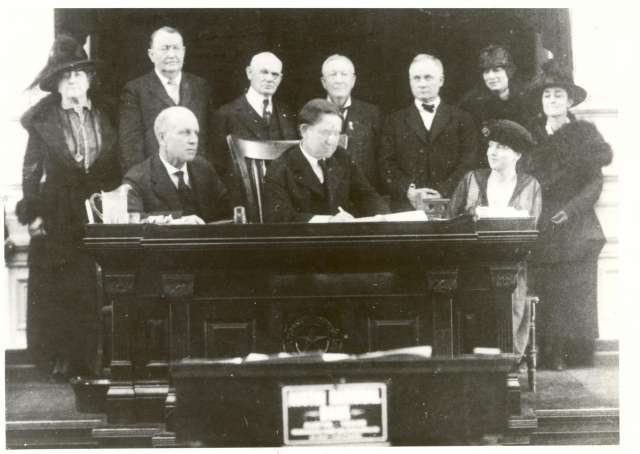
The Texas Legislature has played a pivotal role in shaping state policies—from public education and water conservation to civil rights and infrastructure. Landmark moments include the impeachment of Governor James E. Ferguson in 1917 and the commemoration of Texas’s centennial in 1936 (TSHA Handbook; Austin Historical Society). Legislative sessions are open to the public, offering a front-row seat to Texas democracy in action.
Exploring Nearby Austin Historical Sites
The Capitol is surrounded by some of Austin’s most important historical landmarks, all easily accessible by foot:
- Governor’s Mansion: Built in 1856, this Greek Revival residence is the oldest continuously occupied governor’s mansion west of the Mississippi.
- Bullock Texas State History Museum: Interactive exhibits narrate Texas’s rich past.
- Driskill Hotel: An 1886 landmark with opulent interiors.
- Texas State Cemetery: The final resting place for many notable Texans (Austin Insider Blog).
Congress Avenue forms the ceremonial spine of downtown, connecting these sites to the Capitol’s doors (Austin Insider Blog).
Events, Photography, and Visitor Tips
Special Events: The Capitol hosts legislative sessions, rallies, and cultural events throughout the year. Visitors can observe proceedings from public galleries or participate in public hearings (Texas Tribune: 2025 Session).
Photography: Non-commercial photography is allowed throughout the Capitol and grounds; tripods and commercial shoots require advance approval.
Visitor Tips:
- Arrive early for tours, especially during legislative sessions or weekends.
- Wear comfortable shoes for exploring the expansive grounds.
- Review the State Preservation Board website for the latest event and schedule updates.
- Bring photo ID for security screening.
Preservation and Heritage
The Capitol’s status as a National Historic Landmark ensures rigorous preservation. Major restoration and expansion projects have maintained the building’s structural and architectural integrity while updating facilities for public access (Facts.net). Ongoing conservation efforts protect this emblematic site for future generations.
Frequently Asked Questions (FAQ)
Q: What are the Texas State Capitol visiting hours?
A: Monday–Saturday, 8 a.m.–5 p.m.; Sunday, 1 p.m.–5 p.m.
Q: Is there a cost or are tickets required?
A: Admission and tours are free; no tickets required.
Q: Are guided tours available?
A: Yes, free tours run daily; self-guided tours are also supported.
Q: Is the Capitol accessible for visitors with disabilities?
A: Yes, with ramps, elevators, and assistive devices.
Q: Where can I park?
A: The Capitol Visitors Parking Garage is nearby; public transit is also available.
Q: What other Austin historical sites are close by?
A: The Governor’s Mansion, Bullock Museum, Driskill Hotel, and Texas State Cemetery, among others.
Q: Can I photograph inside the Capitol?
A: Yes, as long as it does not disrupt official business.
Listen to the full story in the app
The whole Texas Legislature,
told well.
Audio guides for 1,100+ cities across 96 countries. History, stories, and local insight — offline ready.
Verified, and shown.
Researched and written by the Audiala editorial team from historical records, architectural archives, and local expertise.
Researched from Wikidata, Wikipedia & official sources · fact-checked · How we make our guides →