Plan and listen to Texas Governor'S Mansion with Audiala.
Audio guide in your pocket, itinerary in your browser. Built for the way you actually visit.
Introduction: The Texas Governor’s Mansion—A Symbol of Texas Heritage
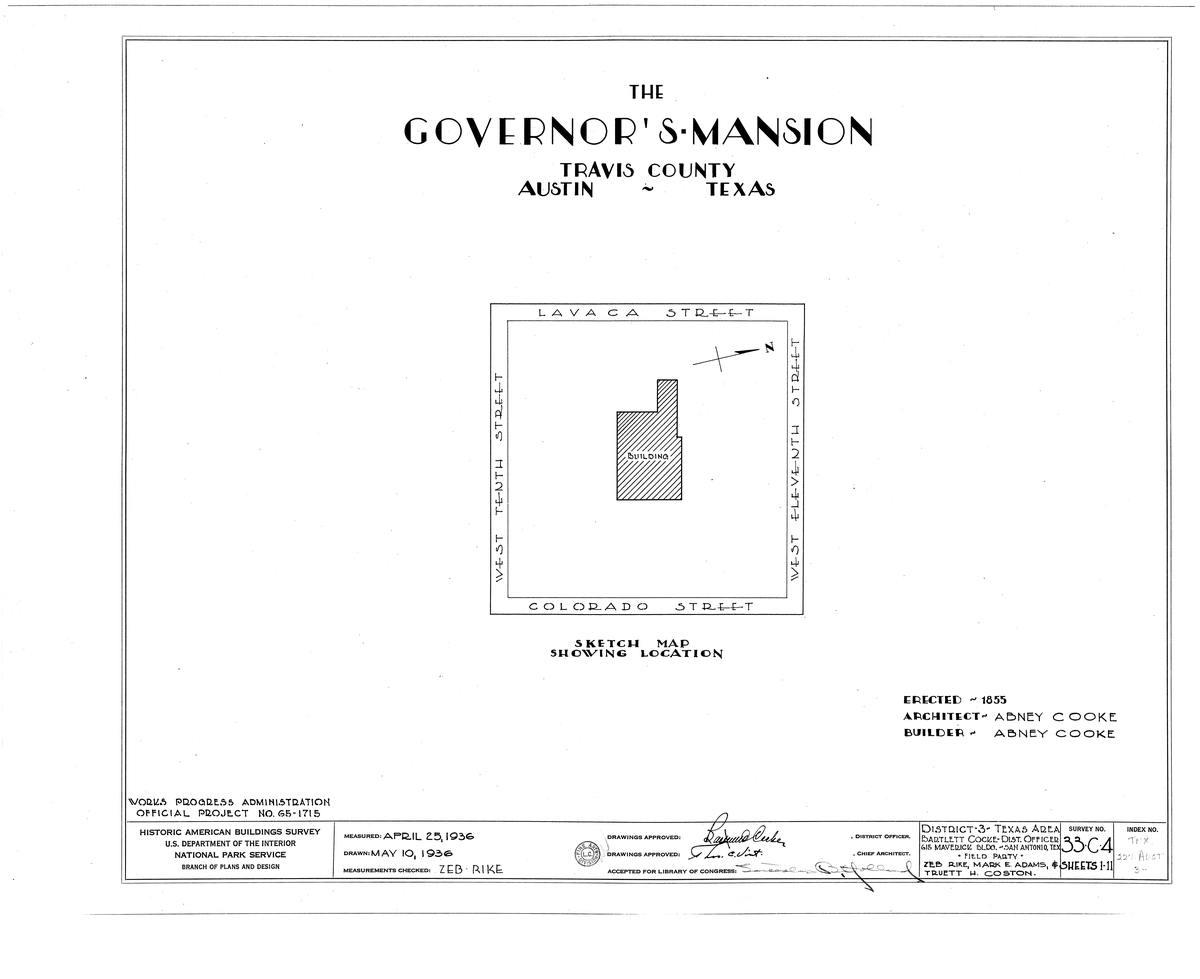
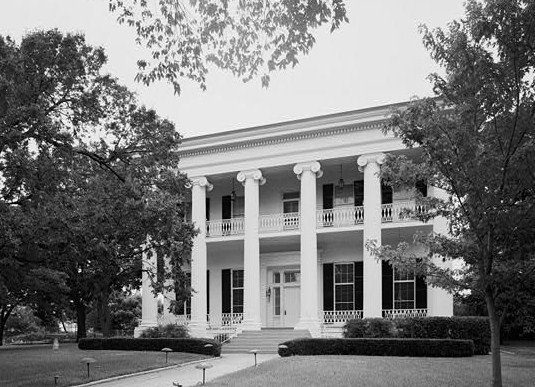
The Texas Governor’s Mansion, nestled in downtown Austin, is an enduring symbol of the state’s political, architectural, and cultural history. Built in 1856 and continuously inhabited by Texas governors since then, it stands as the oldest executive residence west of the Mississippi River. Designed by the self-taught architect Abner Cook, the mansion is a masterpiece of Greek Revival architecture, featuring six towering Ionic columns and a symmetrical facade that exemplify mid-19th-century elegance adapted to Texas’s climate. The mansion has witnessed pivotal moments in Texas history, from the early years of statehood to the present day, and has undergone significant restoration efforts, most notably after a devastating arson fire in 2008 (Texas Governor’s Mansion History; Texas State Preservation Board; Explore Austin Living).
Open to the public for guided tours by reservation, the mansion offers visitors an immersive experience into Texas governance, culture, and heritage. Its beautifully maintained grounds and central location make it a must-visit destination for history enthusiasts, architecture lovers, and travelers seeking to explore Austin’s rich landscape of historic sites.
- Origins and Early Construction
- Architectural Significance
- Evolution and Renovations
- Notable Events and Residents
- The 2008 Arson and Restoration
- Role in Texas History and Public Life
- Visiting the Texas Governor’s Mansion
- Frequently Asked Questions (FAQ)
- Conclusion and Travel Tips
- References
1. Origins and Early Construction
The Texas Governor’s Mansion was authorized by the Legislature in 1854, less than a decade after Texas joined the Union. Abner Hugh Cook, a prominent architect, was awarded the contract, and construction was completed in 1856. Cook sourced local clay for bricks and designed the mansion to suit Texas’s climate, with broad central halls, deep verandas, and floor-length windows for cross-ventilation. The original structure featured four main rooms on each floor, arranged symmetrically around a central hallway, and a grand front porch supported by six 29-foot Ionic columns—an iconic element of Greek Revival style (Texas Governor’s Mansion - Wikipedia; Abner Cook - Wikipedia).
2. Architectural Significance
The mansion stands as a premier representation of Greek Revival architecture in the South and Southwest. Cook’s design included classical Ionic columns, symmetrical facades, and his distinctive “X-and-Stick” porch railings. The mansion’s original 11-room layout has expanded over time but retains its historic charm. Its location in the heart of Austin is complemented by carefully maintained gardens and mature trees. In recognition of its significance, the mansion was designated the first Texas Historic Landmark in 1962 and later listed on the National Register of Historic Places and as a U.S. National Historic Landmark (Texas Governor’s Mansion - Wikipedia).
3. Evolution and Renovations
Over the decades, the mansion has seen several expansions and renovations to accommodate growing needs. In 1914, a major remodel expanded the mansion to 8,920 square feet, increasing the number of rooms and adding modern amenities. The Board of Mansion Supervisors was established in 1931 to oversee upkeep—a role later assumed by the Texas Commission on the Arts (Texas Governor’s Mansion - Wikipedia).
4. Notable Events and Residents
Since its opening, the mansion has been home to every Texas governor except the first two, making it the fourth-oldest executive residence in the United States. Notable residents include Sam Houston, and historic furnishings such as Houston’s four-poster bed and Stephen F. Austin’s writing desk remain on display. The mansion has hosted state dinners, political negotiations, and family celebrations, serving as a backdrop to Texas’s evolving political narrative (Texas Governor’s Mansion History).
5. The 2008 Arson and Restoration
On June 8, 2008, the mansion was severely damaged by a four-alarm arson fire during a period of deferred maintenance. Although many valuable artifacts had been removed for safekeeping, the fire destroyed portions of the roof and porch. Restoration efforts were swift and comprehensive, with $22 million allocated for repairs—funded by federal grants and private donations. The restoration, completed in 2012, preserved the mansion’s historic character while updating it for modern use, including the installation of state-of-the-art safety systems (Texas Governor’s Mansion - Wikipedia; Texas State Preservation Board).
6. Role in Texas History and Public Life
The mansion is more than a residence—it is a living symbol of Texas’s political and cultural heritage. It houses collections of art, antiques, and furnishings that reflect the state’s history. The mansion regularly hosts official receptions, legislative events, and public tours, serving as a center for civic engagement and educational programming (Texas Governor’s Mansion History; Explore Austin Living).
7. Visiting the Texas Governor’s Mansion
Visiting Hours
- Public tours are available by advance reservation only.
- Tours typically run Wednesday through Friday from 2:00 pm to 4:00 pm, and select Saturdays monthly.
- Schedules may vary due to official events or holidays; check the official website for the latest information.
Tickets and Guided Tours
- Admission is free, but advance reservations are required (at least one week ahead).
- Tours last approximately 20–30 minutes and are led by knowledgeable docents.
- To reserve, call (512) 305-8524, email [email protected], or use the online reservation system.
Security and Visitor Guidelines
- All adults must present a government-issued photo ID.
- Security screening is required; large bags and backpacks are not allowed.
- Photography inside the mansion is generally not permitted; exterior photography is welcome.
Accessibility
- The mansion is wheelchair accessible, including accessible restrooms and entrance ramps.
- Notify staff of special needs when reserving your tour to ensure appropriate accommodations.
Travel Tips
- Arrive at least 10 minutes before your scheduled tour.
- Dress comfortably for the weather and wear walking shoes.
- Combine your visit with nearby attractions, such as the Texas State Capitol and Bullock Texas State History Museum.
Nearby Historical Sites
- Texas State Capitol
- Bullock Texas State History Museum
- Historic Driskill Hotel
- Paramount Theatre
- Downtown Historical Walking Tour
8. Frequently Asked Questions (FAQ)
Q: Are tours of the Texas Governor’s Mansion free?
A: Yes, but advance reservations are required.
Q: How do I reserve tickets for a tour?
A: Use the official online reservation system, call, or email the reservationist.
Q: What are the visiting hours?
A: Typically Wednesday–Friday, 2:00 pm–4:00 pm, with select Saturdays. Confirm current schedule online.
Q: Is the mansion accessible for visitors with disabilities?
A: Yes. Notify staff of any special requirements when booking.
Q: Can I take photos inside the mansion?
A: No, indoor photography is not permitted; exterior photos are welcome.
Q: What should I bring?
A: A government-issued photo ID and only essential small items.
Listen to the full story in the app
The whole Texas Governor'S Mansion,
told well.
Audio guides for 1,100+ cities across 96 countries. History, stories, and local insight — offline ready.

Verified, and shown.
Researched and written by the Audiala editorial team from historical records, architectural archives, and local expertise.
Researched from Wikidata, Wikipedia & official sources · fact-checked · How we make our guides →