
Historical Background
Origins and Vision
The Littlefield Fountain memorial was conceived in 1919 by Major George Washington Littlefield, a former Confederate officer, banker, and university regent. Littlefield envisioned a grand gateway at the campus’s south entrance to commemorate UT Austin’s World War I casualties and assert a distinctive Southern identity for the university (SAH Archipedia; Wikipedia; Jim Nicar; KUT).
Commissioning the Monument
Littlefield selected Pompeo Coppini, known for his classical approach and previous Confederate memorials, to execute the project. Coppini, however, urged a shift from a Confederate-themed gateway to a broader World War I tribute, warning against memorializing sectional conflict (KUT; The Texas Orator). The final design balanced Littlefield’s vision with Coppini’s artistic and social sensibilities (Racial Geography Tour).
Design and Symbolism
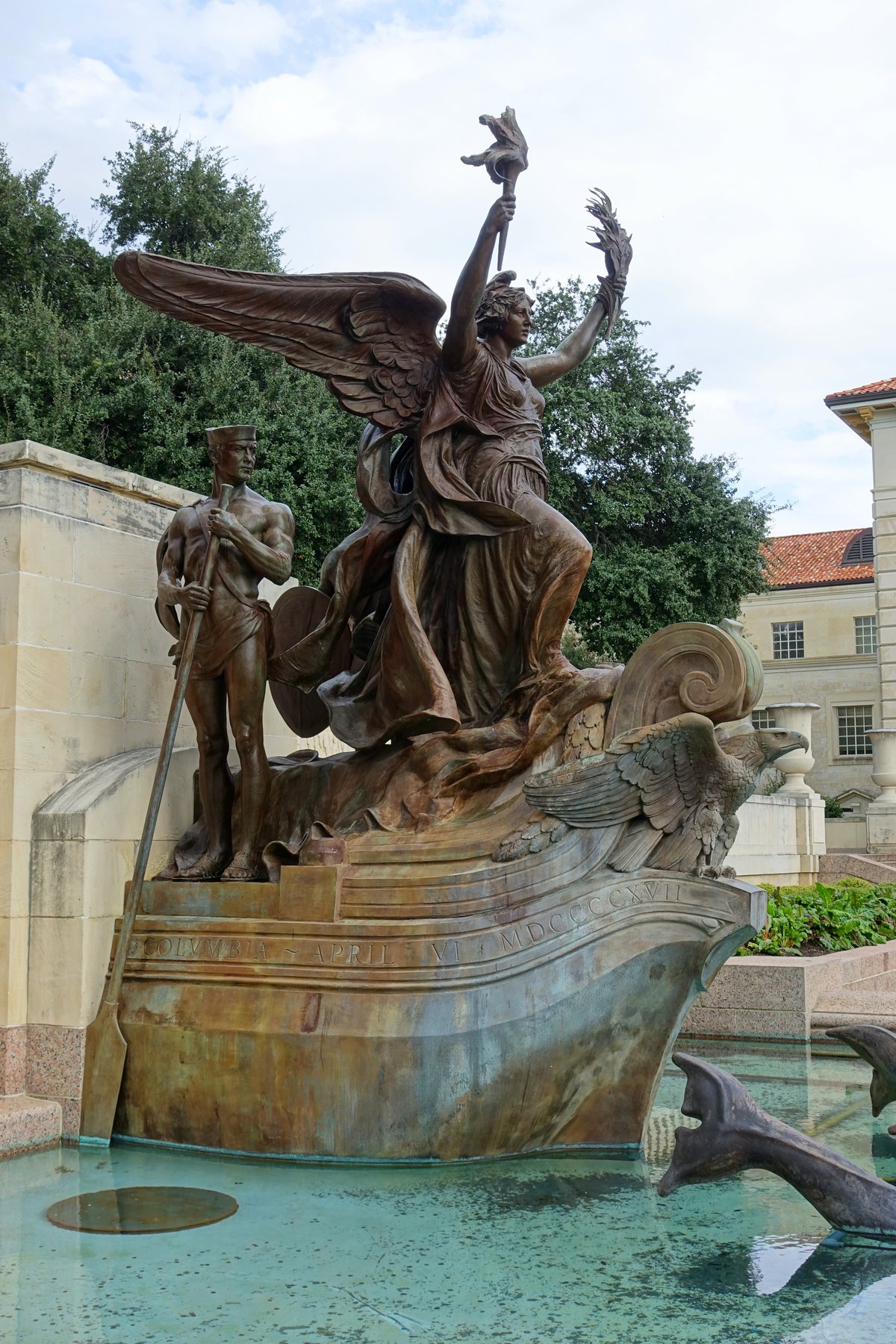
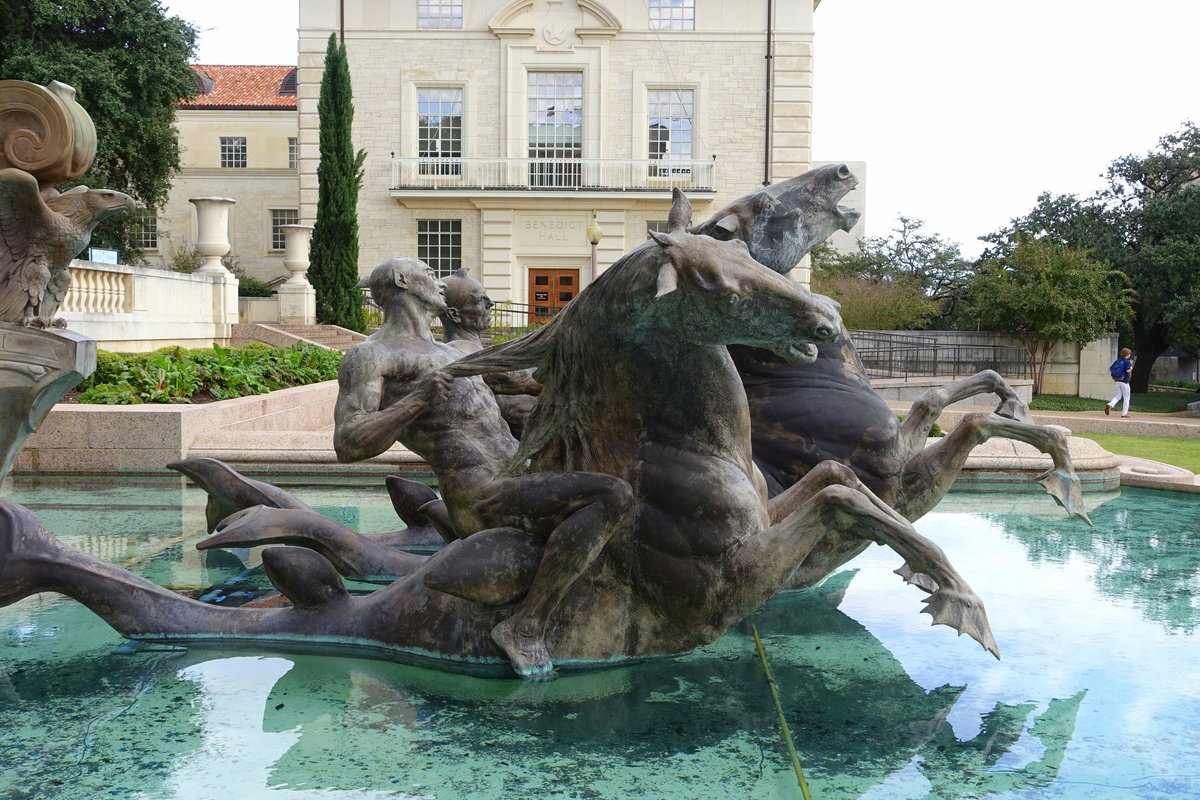
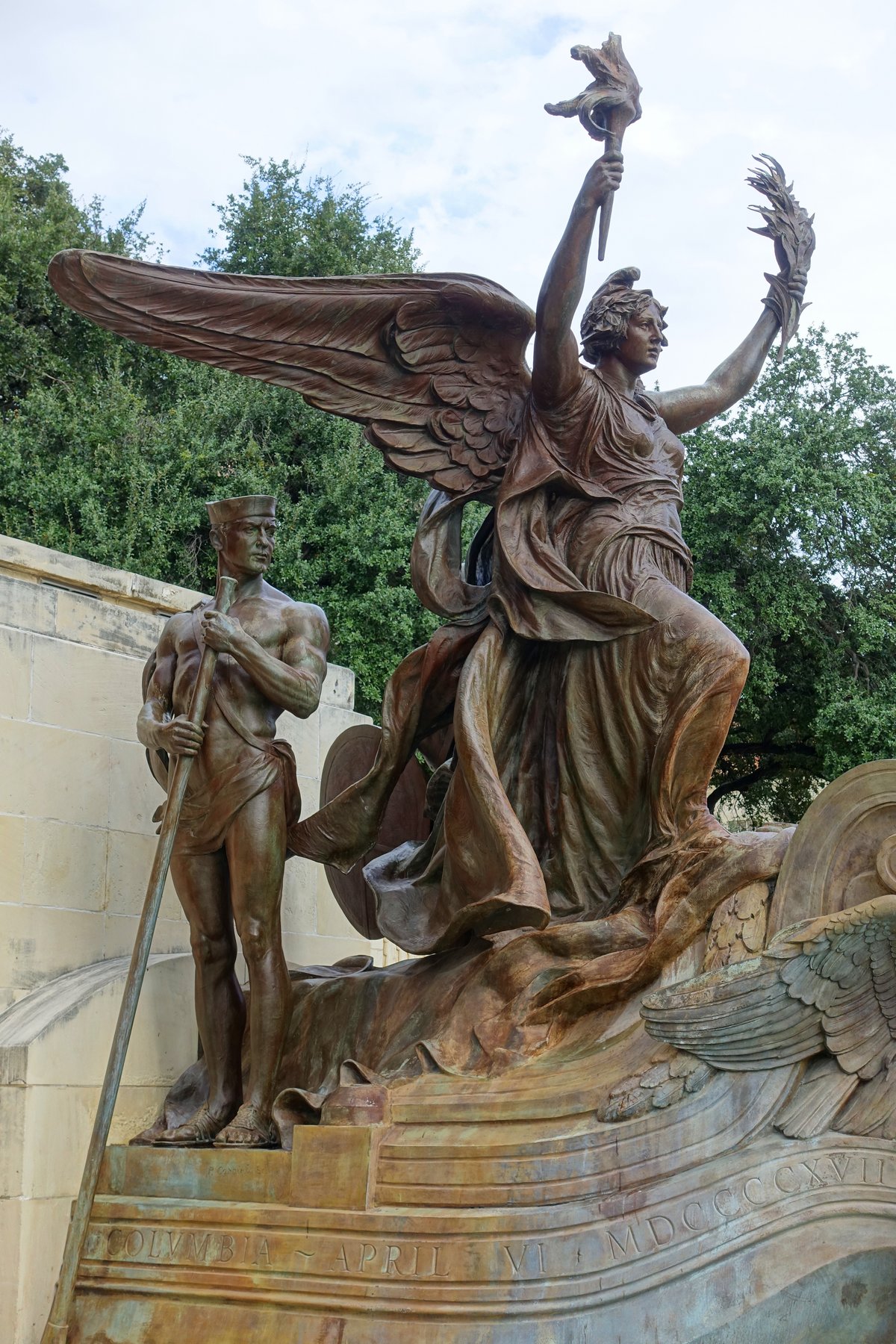
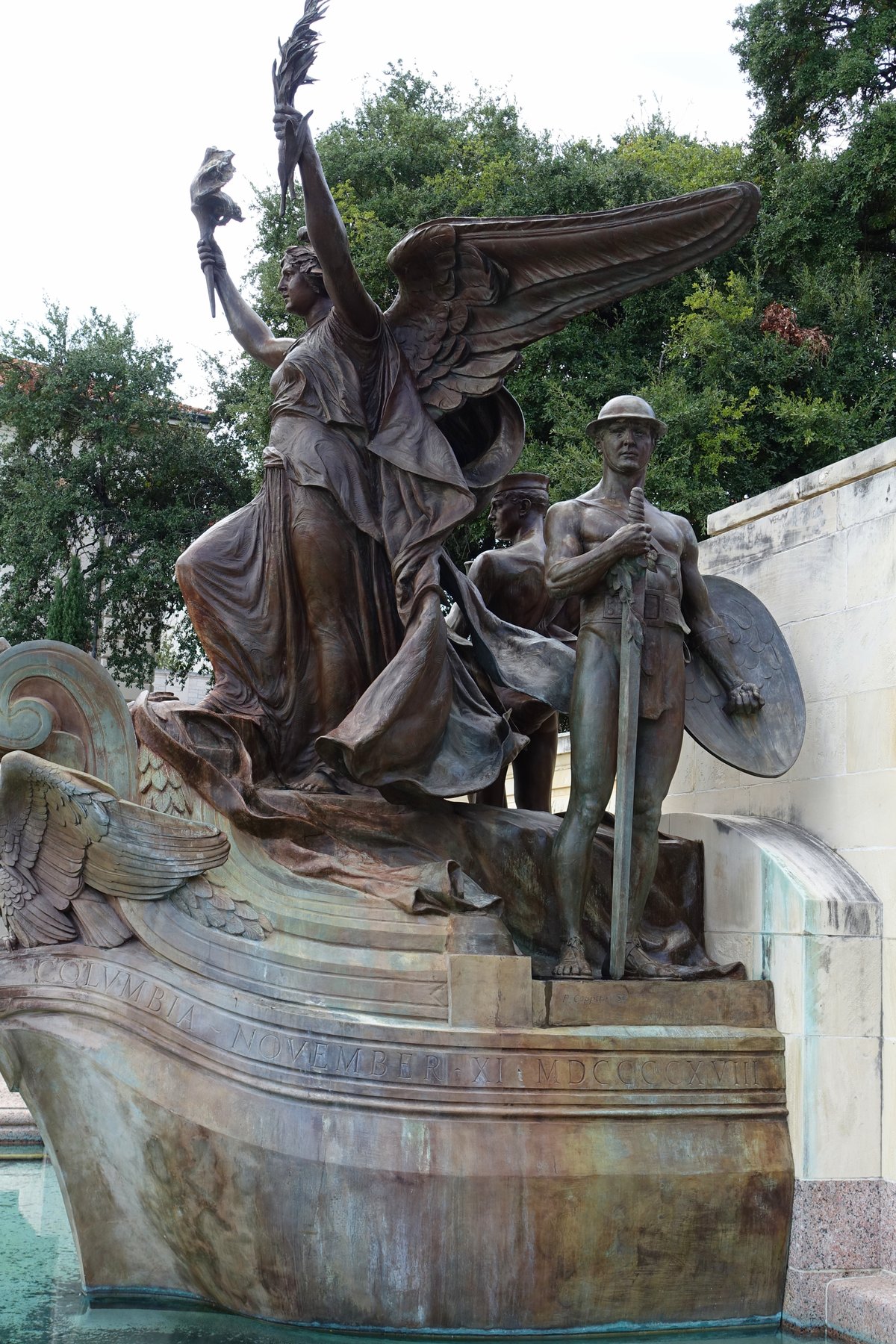
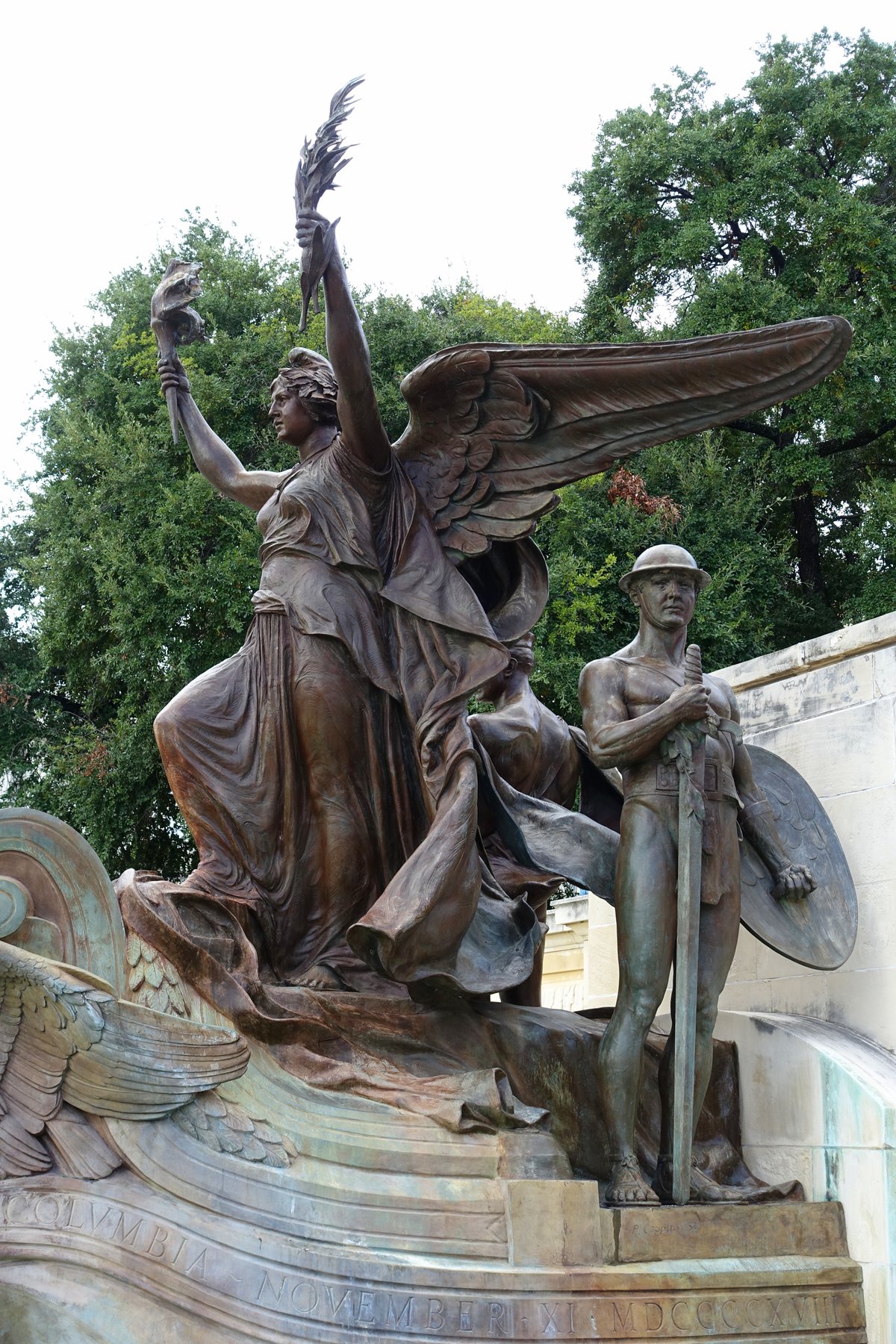
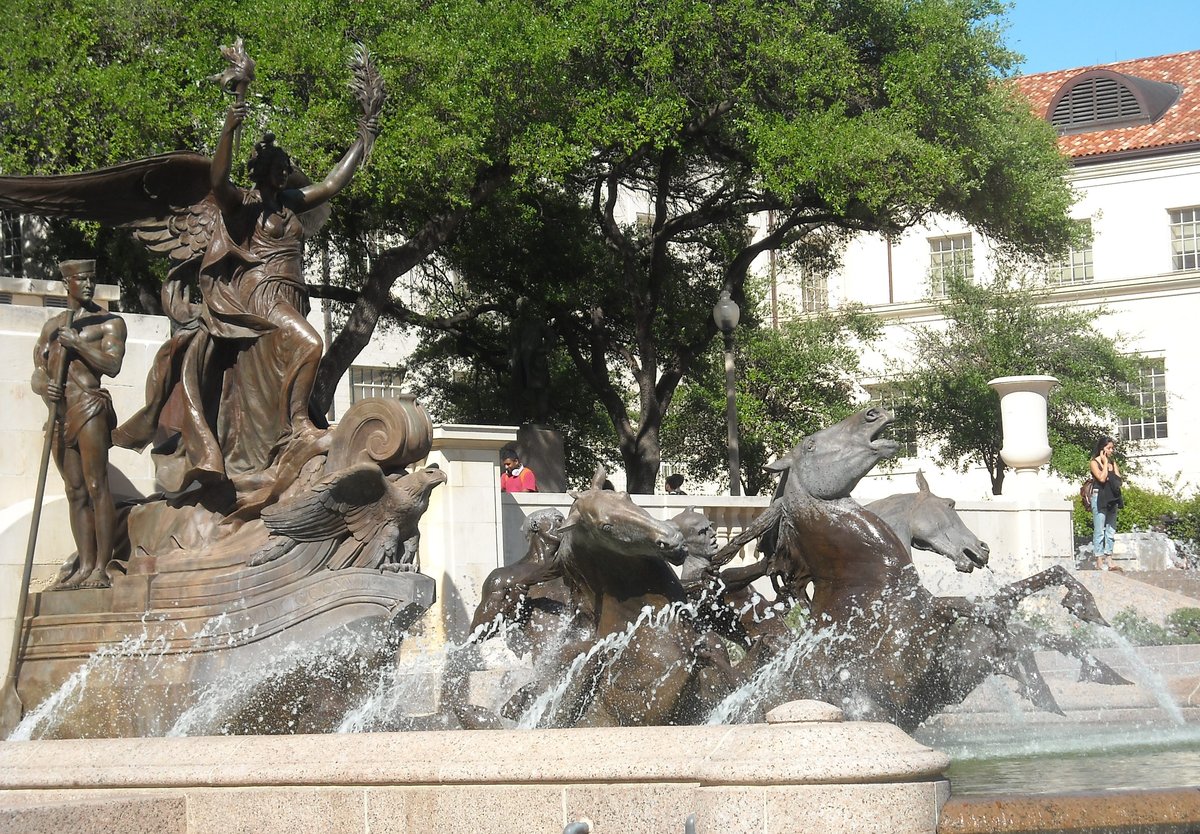
At the heart of the fountain stands Columbia, the personification of the United States, holding the torch of freedom and the palm of peace. She rides the prow of a ship, symbolizing America’s entry into World War I, flanked by bronze figures representing the Army and Navy. The ship is drawn by sea horses, referencing mythological and maritime themes, and the date of U.S. entry into the war is inscribed in Roman numerals (UT Austin Classical Myth; UT Austin Tumblr; Racial Geography Tour).
Construction Challenges and Modifications
Following Littlefield’s death in 1920, the project faced delays due to budget constraints and labor disputes. Architectural revisions by Paul Philippe Cret led to a simplified design, omitting the original arch and obelisks. Confederate statues originally intended for the fountain’s gateway were instead placed along the South Mall (Jim Nicar; The Texas Orator). The fountain was dedicated in April 1933 (Wikipedia).
Historical Context and Legacy
The fountain’s construction reflected both commemorative trends of the early 20th century and the political climate of the American South. Littlefield’s endowment also funded the Littlefield Fund for Southern History, emphasizing his desire to shape historical narratives (SAH Archipedia). The fountain’s prominent placement established it as a central ceremonial and social landmark (Tex Painting). Over time, debates surrounding the Confederate statues led to their removal, prompting ongoing reflection on public memory (KUT; Racial Geography Tour).
Preservation and Continuing Significance
Regular restoration ensures the fountain’s artistic and historical integrity (Tex Painting). Today, it remains a focal point for university events, Veterans Day ceremonies, and community gatherings (Evendo).
Visiting the Littlefield Fountain
Location and Access
- Address 201 W. 21st St., University of Texas at Austin campus, at the entrance to the South Mall (Austin Insider Blog).
- Transportation Accessible by walking, CapMetro bus routes 1 and 7, or by bicycle using Austin’s B-cycle system. Parking is available nearby.
Visiting Hours and Admission
- Hours Open to the public 24/7, year-round, as an outdoor monument on campus (CampusReel).
- Admission Free; no tickets required.
Accessibility
- Fully wheelchair accessible with paved paths, ramps, and nearby seating (Evendo).
Guided Tours and Events
- Campus Tours Included in most UT Austin campus walking tours (check UT Visitor Center)
- Special Events Veterans Day ceremonies, public performances, and student gatherings are regularly held at the fountain.
Photography Tips
- Best Light Early morning and late afternoon offer dramatic lighting for photography.
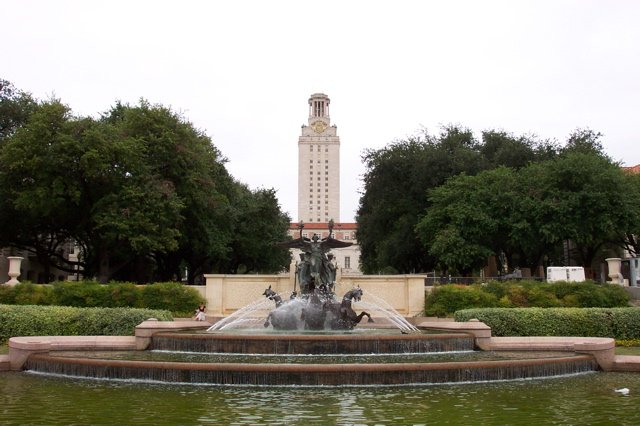
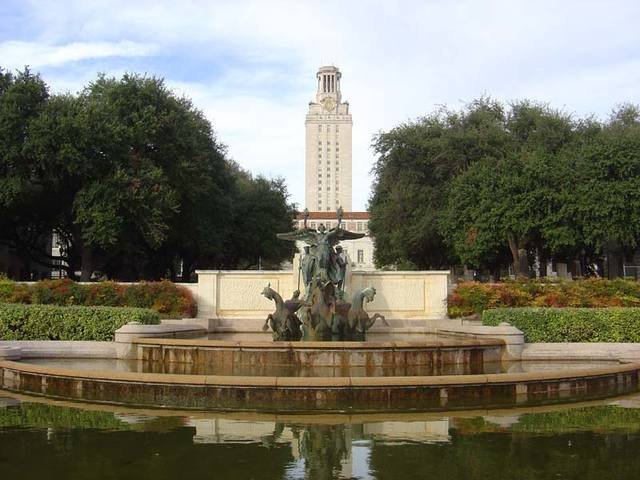
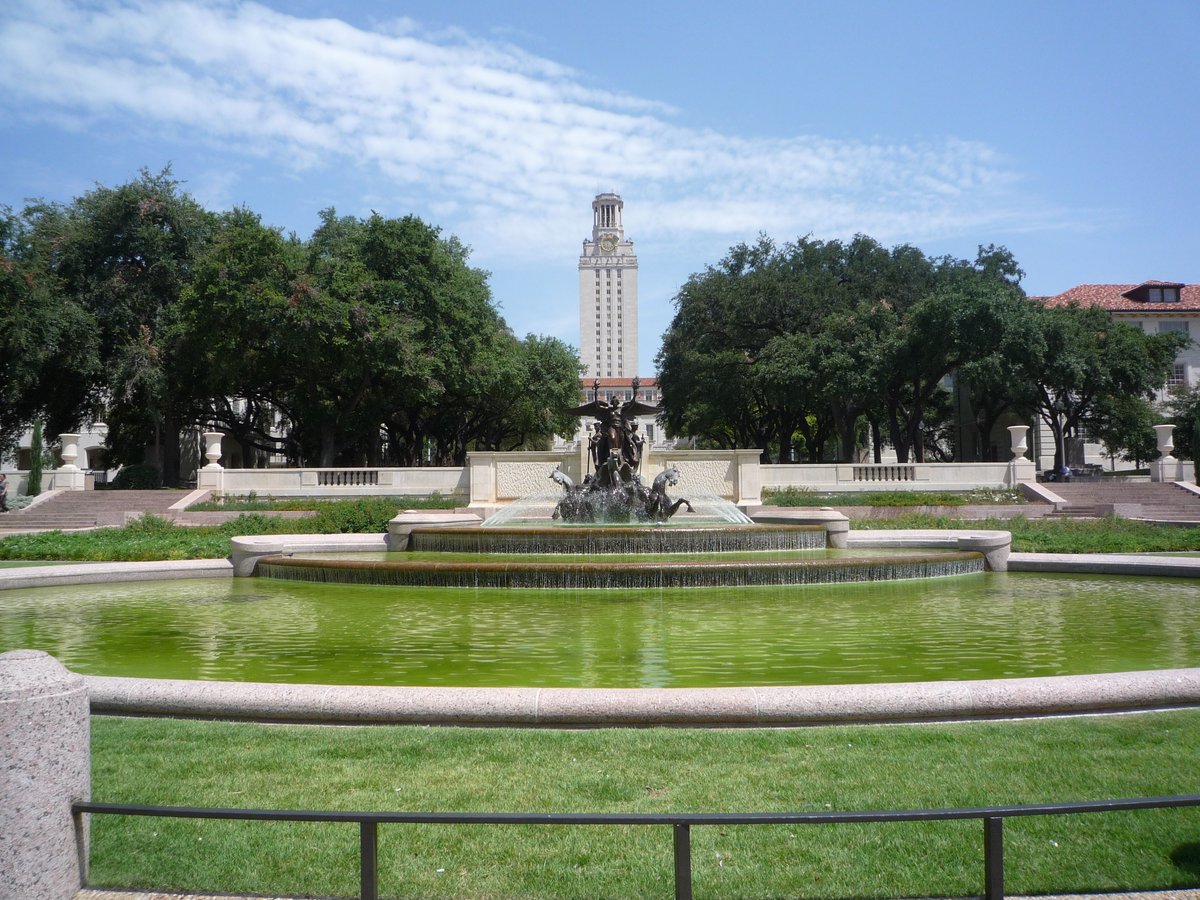
- Popular Scenes The fountain with the UT Tower or Texas State Capitol in the background; close-ups of the bronze figures (Austin Insider Blog).
Nearby Attractions
- UT Tower Panoramic campus views (tours may be limited; Travel Realist).
- Blanton Museum of Art Modern and classical art exhibitions (Austin Insider Blog).
- Texas State Capitol Historic tours and scenic grounds.
- The Drag (Guadalupe Street) Dining, shopping, and local culture.
- Other UT Landmarks Barbara Jordan statue, Battle Hall, Turtle Pond.
Visitor Experience and Etiquette
- Atmosphere Serene, with the sound of cascading water and shaded lawns.
- Respect As a war memorial, visitors should be mindful during ceremonies.
- Pets Leashed pets are welcome; owners should clean up after them.
- Amenities Restrooms in Texas Union and Blanton Museum; food nearby on Guadalupe Street.
Cultural and Ceremonial Importance
Memorial Purpose and Traditions
Littlefield Fountain is a site for remembrance and university tradition, serving as a backdrop for commencement ceremonies, Veterans Day events, and important university milestones (Texas Exes; UT News; Austin American-Statesman).
Controversy and Evolving Significance
The fountain’s proximity to former Confederate statues has made it a focal point for dialogue on historical memory and evolving values. The 2017 removal of Confederate monuments reflects shifting perspectives and the university’s commitment to inclusivity (NPR; Austin Chronicle; The Daily Texan).
Frequently Asked Questions (FAQ)
Q: Are tickets required to visit Littlefield Fountain?
A: No, visiting the fountain is free and open to the public.
Q: What are the visiting hours for Littlefield Fountain?
A: The site is accessible 24/7 as it is outdoors on the UT Austin campus.
Q: Is the fountain wheelchair accessible?
A: Yes, paved paths and ramps provide easy access for all visitors.
Q: Are guided tours available?
A: Yes, most official and self-guided campus tours include the fountain.
Q: Can I take photos at Littlefield Fountain?
A: Yes, the fountain is a favorite photo spot, especially during graduation season.
Q: Can I bring pets?
A: Leashed pets are allowed; please be considerate of others.