Plan and listen to James D. Pfluger Pedestrian And Bicycle Bridge with Audiala.
Audio guide in your pocket, itinerary in your browser. Built for the way you actually visit.
Introduction
Nestled in the vibrant heart of Austin, Texas, the James D. Pfluger Pedestrian and Bicycle Bridge is a celebrated urban landmark that elegantly blends architectural innovation, community connectivity, and scenic beauty. Spanning Lady Bird Lake, this bridge offers pedestrians and cyclists a safe, accessible, and picturesque crossing, linking the north and south shores and integrating seamlessly into Austin’s extensive trail system. Open 24/7 and free to the public, the bridge provides panoramic views of the downtown skyline, connects visitors to Austin’s dynamic outdoor culture, and offers easy access to nearby historical and recreational attractions (Wikiwand; City of Austin).

Historical Background
Origins and Motivation
The James D. Pfluger Bridge was conceptualized in response to the hazardous conditions for non-motorized traffic on the nearby Lamar Boulevard Bridge, which lacked adequate sidewalks and bike lanes. Tragic incidents, including a fatal cyclist accident in 1991, highlighted the urgent need for a safer crossing over Lady Bird Lake. Alternatives to altering the historic Lamar Bridge led to the decision to build a new, dedicated pedestrian and bicycle bridge (Guide to Austin Architecture).
Design and Community Involvement
A collaborative public design process in the late 1990s produced the bridge’s distinctive double-curve configuration, which echoes natural travel paths and creates a central plaza for gatherings and overlooks. The bridge was named in honor of architect James D. Pfluger, a champion of Austin’s urban trails (Wikiwand; Guide to Austin Architecture).
Construction and Legacy
Construction began in 2000, and the bridge opened in June 2001. Later enhancements, such as the northwestern ramp completed in 2011, improved access to downtown. The bridge is now a model for urban non-motorized infrastructure and a catalyst for further development in surrounding neighborhoods (ATX Today; Seaholm Condos).
Architectural Vision and Structural Features
The bridge’s signature double-curve (hourglass) design provides multiple access points and sightlines, creating natural gathering spaces and maximizing views of downtown and Lady Bird Lake. Its structure consists of a reinforced concrete deck supported by weathering steel girders, with a prominent ADA-compliant helix ramp, ensuring universal accessibility (American Galvanizers Association).
Key structural features:
- Total length: approximately 810 feet
- Deck width: varies between 23 and 42 feet
- ADA-compliant spiral ramp for barrier-free access
- Durable, low-maintenance materials, including hot-dip galvanized steel for handrails and superstructure
- Minimal pier design to protect the lake’s ecosystem
Accessibility and Visitor Experience
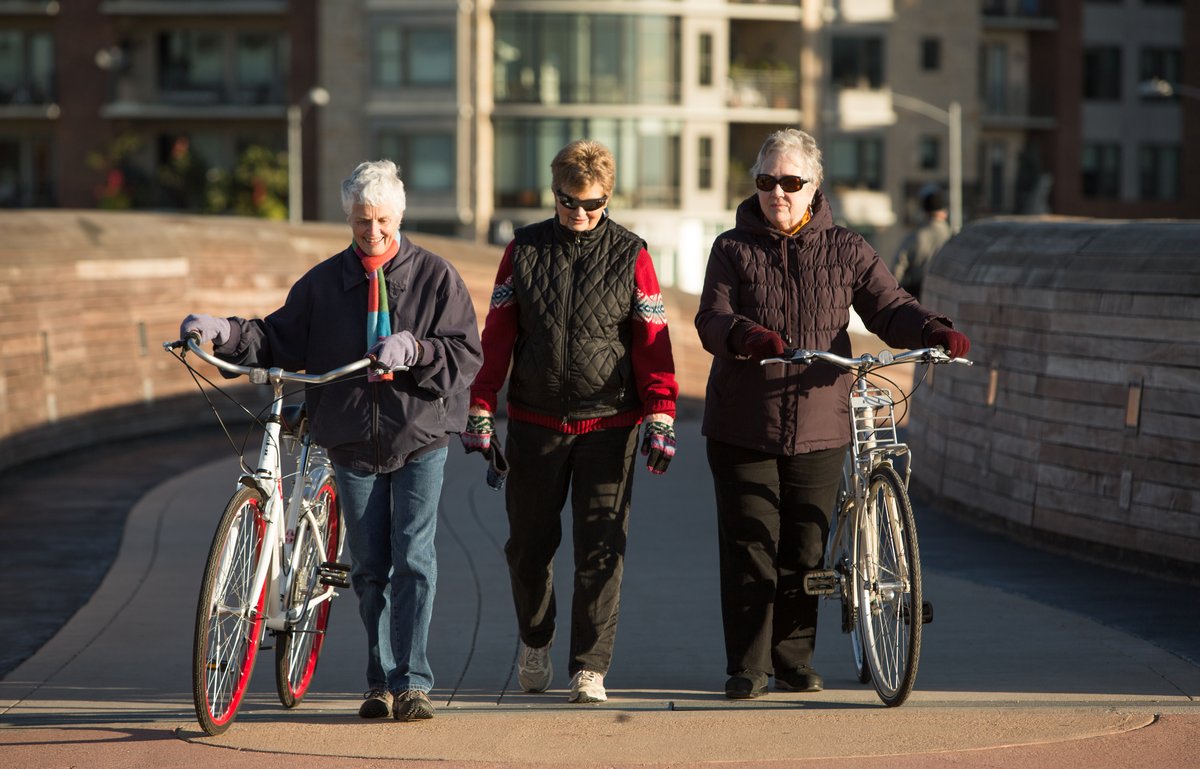
The Pfluger Bridge is fully ADA-compliant, with gentle slopes, wide lanes, and smooth surfaces accommodating all visitors, including those using wheelchairs, strollers, or mobility devices. The bridge is well-lit at night and features seating areas for relaxation and photography (seesight-tours.com).
Visiting Hours and Access
- Hours: Open 24/7, year-round
- Admission: Free for all visitors; no tickets required
- Access: Easily reached from both north and south shores of Lady Bird Lake; connects directly to the Ann and Roy Butler Hike-and-Bike Trail (Austin Parks Foundation)
Travel Tips and How to Get There
Best Times to Visit
- Sunrise and sunset offer the most stunning views and comfortable temperatures.
- Weekdays are less crowded than weekends.
Getting There
- By Car: Public parking is available near West Cesar Chavez Street, Austin City Hall, and other downtown garages. Metered street parking is also available but limited during peak times.
- By Public Transit: Capital Metro buses have stops within walking distance; the downtown MetroRail station is also nearby (austintexas.org).
- By Bike or Foot: The Ann and Roy Butler Hike-and-Bike Trail provides direct access for cyclists and pedestrians.
Amenities and Facilities
- Benches and seating areas along the bridge
- Water fountains and bike repair stations on the adjacent trail
- Restrooms available at nearby parks (Auditorium Shores and Butler Park)
- Well-lit paths for nighttime use
Safety and Security
- Wide, separated lanes for pedestrians and cyclists
- Non-slip surfaces and sturdy railings
- Regular patrols by Austin Police Department bike unit; security cameras in place
- Emergency call boxes at key locations (Austin Police Department)
Events and Community Activities
The bridge is a focal point for community events, charity walks, city festivals, and organized runs. It also serves as a gathering spot during major Austin events such as the Austin City Limits Music Festival and the Trail of Lights (austintexas.org).
Nearby Attractions
- Ann and Roy Butler Hike-and-Bike Trail: Over 10 miles of scenic urban trails
- Seaholm EcoDistrict: Dining, shopping, and entertainment
- Zilker Metropolitan Park and Barton Springs Pool: Outdoor recreation just to the south
- Downtown Austin and Market District: Shopping, restaurants, and cultural venues
- Texas State Capitol, Bullock Texas State History Museum, South Congress Avenue: Iconic Austin historical sites within easy reach
Environmental and Sustainability Contributions
The Pfluger Bridge reduces car dependency, encourages active transportation, and supports Austin’s climate goals. Its construction minimized environmental impact by using durable, low-maintenance materials and preserving sensitive lakefront habitat (Austin Climate Equity Plan). Landscaping with native plants enhances biodiversity and ecological value (Texas Parks & Wildlife).
Impact on Urban Development
The bridge has spurred investment and revitalization in adjacent neighborhoods, particularly the Seaholm District and South Central Waterfront. It serves as a model for future pedestrian and bicycle infrastructure in Austin’s strategic mobility and urban development plans (Urban Land Institute Austin; Austin Strategic Mobility Plan).
FAQs
Q: Are tickets required?
A: No, the bridge is free to access at all times.
Q: What are the hours?
A: The bridge is open 24/7, year-round.
Q: Is the bridge ADA accessible?
A: Yes, with gentle slopes, a helix ramp, and wide paths.
Q: Can I bring my pet or bicycle?
A: Yes, pets (on leash) and bicycles are welcome.
Q: Are guided tours available?
A: While there are no official tours, some local companies may include the bridge in city tours.
Q: Is parking available nearby?
A: Yes, public lots and garages are available near the bridge.
Practical Contact Information
- Austin Visitor Center: 103 E. Fifth St, Austin, TX 78701
- Phone: (512) 478-0098
- Online Guide: Austin Visitors Guide
Listen to the full story in the app
The whole James D. Pfluger Pedestrian And Bicycle Bridge,
told well.
Audio guides for 1,100+ cities across 96 countries. History, stories, and local insight — offline ready.
Verified, and shown.
Researched and written by the Audiala editorial team from historical records, architectural archives, and local expertise.
Pfluger Pedestrian and Bicycle Bridge: Hours, History, and Tips, 2025,
Pfluger Bridge in Austin, Texas: Architectural Significance, Visitor Information, and Urban Impact, 2025,
Pfluger Pedestrian and Bicycle Bridge in Austin: Visiting Hours, Tips & Nearby Attractions, 2025,
Researched from Wikidata, Wikipedia & official sources · fact-checked · How we make our guides →